Carl (CJ) Litif, Ph.D.'s Avatar

Carl (CJ) Litif, Ph.D.

@litif

Postdoc (Telese Lab - UCSD) 🐭🧠 Investigating the molecular underpinnings of substance use disorder

271
Followers
327
Following
6
Posts
05.12.2024
Joined
Posts Following

Latest posts by Carl (CJ) Litif, Ph.D. @litif

Preview
A neuromodulatory circuit-to-molecular pathway for reformatting aversive memories during recall Tan et al. identify a neuromodulatory circuit-to-molecular pathway in rats that updates aversive memories when they are recalled. Noradrenaline from the locus coeruleus triggers synapse-to-nuclear tra...

Excited to share our new paper:
We uncover a locus coeruleus→amygdala circuit linking β-adrenergic signaling to transcription regulation in defined amygdala cells during memory reconsolidation—+ stress or elevated noradrenergic signaling at recall can strengthen memory.
www.cell.com/neuron/abstr...

03.03.2026 23:34 πŸ‘ 80 πŸ” 36 πŸ’¬ 3 πŸ“Œ 3
Preview
Dopamine Supports Reward Prediction to Shape Reward-Pursuit Strategy Reward predictions not only promote reward pursuit, they also shape how reward is pursed. Such predictions are supported by environmental cues that signal reward availability and probability. Such cue...

πŸš¨πŸ“ƒNew Wassum Lab Paper πŸ“ƒπŸš¨

Out today, Melissa Malvaez, Nick Griffin, Andrea Suarez & team discovered that dopamine can enable reward predictions to shape how we pursue reward.

Surprisingly, we find that dopamine can constrain instrumental reward seeking.

www.jneurosci.org/content/46/8...

πŸ§΅πŸ‘‡πŸ»

25.02.2026 23:47 πŸ‘ 61 πŸ” 25 πŸ’¬ 5 πŸ“Œ 0

Reln haploinsufficiency alters fentanyl-induced striatal activity and adaptive responding without affecting opioid reinforcement https://www.biorxiv.org/content/10.64898/2026.02.21.707172v1

23.02.2026 21:16 πŸ‘ 1 πŸ” 1 πŸ’¬ 0 πŸ“Œ 0

First work as a postdoc is live! Here we looked out the effect of Reln haploinsufficiency during contingent and non-contingent models of opioid use disorder πŸ§¬πŸ’‰ 🐁 check it out! www.biorxiv.org/content/10.6...

24.02.2026 02:00 πŸ‘ 0 πŸ” 0 πŸ’¬ 0 πŸ“Œ 0
Post image

πŸ‘ Investigadores del @ibis-investigacion.bsky.social demuestran que el fΓ‘rmaco Ibudilast protege contra la pΓ©rdida de neuronas en ratones con Parkinson

πŸ” El estudio abre nuevas vΓ­as para el desarrollo de terapias modificadoras de esta patologΓ­a neurodegenerativa

ℹ️ tinyurl.com/USIbudilast26

20.01.2026 08:49 πŸ‘ 211 πŸ” 72 πŸ’¬ 3 πŸ“Œ 1

Estimating thresholds for risk of cannabis use disorder using standard delta-9-tetrahydrocannabinol (THC) units

20.01.2026 11:33 πŸ‘ 2 πŸ” 1 πŸ’¬ 0 πŸ“Œ 0
Post image

🧠 New year, new preprint!

Why does motor learning involve multiple brain regions? We propose that the cortico-cerebellar system learns a "map" of actions where similar movements are nearby, while basal ganglia do RL in this simplified space.

www.biorxiv.org/content/10.6...

05.01.2026 12:54 πŸ‘ 98 πŸ” 25 πŸ’¬ 4 πŸ“Œ 3
Preview
How basic neuroscience has paved the path to new drugs A growing list of medicationsβ€”such as zuranolone for postpartum depression, suzetrigine for pain, and the gepants class of migraine medicinesβ€”exist because of insights from basic research.

Awesome article on medical breakthroughs that came from basic neuroscience research in rodents. Major success examples in postpartum depression, non-opioid pain and migraine treatment.

This is exactly why funding basic science is so important!

www.thetransmitter.org/drug-develop...

31.12.2025 15:31 πŸ‘ 45 πŸ” 19 πŸ’¬ 0 πŸ“Œ 1
Post image

Strikingly different neurotransmitter release strategies in dopaminergic subclasses.
buff.ly/Jr3RdzA

14.12.2025 23:28 πŸ‘ 25 πŸ” 7 πŸ’¬ 0 πŸ“Œ 2
Preview
Top-down control of sustained attention by the medial prefrontal cortex (mPFC)- locus coeruleus (LC) circuit during the rodent continuous performance task (rCPT) The medial prefrontal cortex (mPFC) plays a pivotal role in attention by exerting top-down control to allocate cognitive resources toward behaviorally relevant stimuli based on learned context and exp...

Finally on Bluesky and I’m really excited to share this latest preprint with @jorge-miranda.bsky.social in which we functionally examined the role of a medial prefrontal cortex (mPFC)- Locus Coeruleus (LC) circuit in regulating sustained attention.

1/7

www.biorxiv.org/content/10.6...

15.12.2025 21:53 πŸ‘ 25 πŸ” 11 πŸ’¬ 2 πŸ“Œ 2
Preview
Locus coeruleus norepinephrine neurons facilitate orbitofrontal cortex remapping and behavioral flexibility Ogg et al. use in vivo imaging techniques to record activity in the locus coeruleus (LC) and the orbitofrontal cortex (OFC) during a reversal learning task in freely moving rodents. They show that man...

Thrilled this is out, led by former PD Cameron Ogg (now with her own lab at @rhodescollege.bsky.social!). It was a driven by a desire to see, in real-time, how LC activity/NE release influences downstream targets in behaving animals. SO hard to do, but Cameron did it! www.cell.com/cell-reports...

15.12.2025 14:47 πŸ‘ 63 πŸ” 31 πŸ’¬ 6 πŸ“Œ 0
Preview
Microglial MyD88-dependent signaling influences extracellular matrix development and interneuron maturation in the hippocampus Parvalbumin interneurons (PVIs) are disrupted across diverse neurodevelopmental disorders, highlighting their vulnerability to developmental perturbations. Inflammation can perturb PVI development and...

Super excited to share this new story led by @jedziabis.bsky.social where she defines a critical role for microglial innate immune signaling in PV cell and perineuronal net (PNN) development in hippocampus, and consequences for plasticity and behavior in adulthood www.biorxiv.org/content/10.6...

11.12.2025 16:02 πŸ‘ 34 πŸ” 13 πŸ’¬ 1 πŸ“Œ 0

We will still consider applications submitted today and tomorrow!

02.12.2025 20:38 πŸ‘ 17 πŸ” 9 πŸ’¬ 0 πŸ“Œ 0

0/10 Thanks for the interest in our preprint. Some takes say it negates or fully supports the β€œmanifold hypothesis”, neither quite right. Our results show that if you only focus on the manifold capturing most of task-related variance, you could miss important dynamics that actually drive behavior.

02.12.2025 07:48 πŸ‘ 50 πŸ” 22 πŸ’¬ 1 πŸ“Œ 1
Preview
Neural dynamics outside task-coding dimensions drive decision trajectories through transient amplification Most behaviors involve neural dynamics in high-dimensional activity spaces. A common approach is to extract dimensions that capture task-related variability, such as those separating stimuli or choice...

β€œOur findings challenge the conventional focus on low-dimensional coding subspaces as a sufficient framework for understanding neural computations, demonstrating that dimensions previously considered task-irrelevant and accounting for little variance can have a critical role in driving behavior.”

23.11.2025 13:38 πŸ‘ 143 πŸ” 41 πŸ’¬ 8 πŸ“Œ 9
Post image

We’ve come a full circle

27.11.2025 20:04 πŸ‘ 2 πŸ” 0 πŸ’¬ 0 πŸ“Œ 0
microcentrifuge tube racks with Rack names

microcentrifuge tube racks with Rack names

I was lucky enough to inherit a bunch of racks where a graduate student had labelled all of them with Rack jokes πŸ˜‚, perfect. I am dead at Racksputin.

26.11.2025 17:37 πŸ‘ 44 πŸ” 9 πŸ’¬ 1 πŸ“Œ 1
Post image

The Neuro Latine community invites you!

Sunday, November 16
7–9 p.m.
Marriott Marquis San Diego Marina – Grand Blrm 5

#NeuroLatine #SfN2025

12.11.2025 19:51 πŸ‘ 3 πŸ” 3 πŸ’¬ 0 πŸ“Œ 2
Application Process :: Center on Alcohol, Substance use, And Addictions (CASAA) | The University of New Mexico

We have at least TWO postdoctoral fellowship openings on our @unm.edu @casaa.bsky.social T32 NIAAA Training Grant, best consideration date for applications is Nov 15 2025. Join our phenomenal community and enjoy incredible quality of life in beautiful New Mexico. casaa.unm.edu/training/ins...

05.11.2025 22:30 πŸ‘ 26 πŸ” 28 πŸ’¬ 0 πŸ“Œ 2
Preview
a woman with gray hair is sitting in front of a sign that says por 10 on it ALT: a woman with gray hair is sitting in front of a sign that says por 10 on it

When you happily start the day with not a single meeting scheduled but only manage to write one paragraph of your manuscript because of all the little things that came up during the day

23.10.2025 21:28 πŸ‘ 9 πŸ” 1 πŸ’¬ 1 πŸ“Œ 0
Preview
Superior colliculus projections drive dopamine neuron activity and movement but not value To navigate dynamic environments, animals must rapidly integrate sensory information and respond appropriately to gather rewards and avoid threats. It is well established that dopamine (DA) neurons in...

Check out our latest, online now at @sfnjournals.bsky.social www.jneurosci.org/content/earl...

15.10.2025 20:39 πŸ‘ 56 πŸ” 18 πŸ’¬ 2 πŸ“Œ 2
Preview
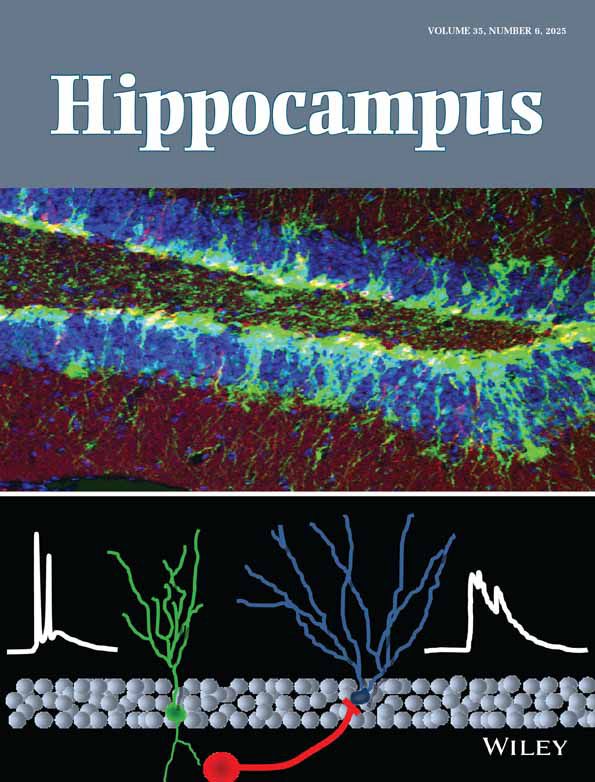
Drug‐Related Engrams and Their Role in the Persistence and Recurrence of Drug‐Related Behaviors Memory is a cornerstone of human behavior, and addiction offers a compelling model of its persistence and plasticity. The scope of engram research has rapidly expanded to include addiction-related ph....

First lab paper out today! Student authors: Mikayla Cutler and Abhi Thati πŸŽ‰πŸ€©

Hippocampus | Neuroscience Journal | Wiley Online Library onlinelibrary.wiley.com/doi/10.1002/...

06.10.2025 15:38 πŸ‘ 40 πŸ” 19 πŸ’¬ 3 πŸ“Œ 1

Long post ahead! I am very excited to be recruiting 1 to 2 #PhD students during this upcoming application cycle for Fall 2026 admission! The Clinical Psychology PhD program at The University of New Mexico (UNM) is absolutely stellar and accredited by both #APA and #PCSAS (Clinical Science model). 1/

30.09.2025 17:14 πŸ‘ 19 πŸ” 10 πŸ’¬ 11 πŸ“Œ 1

So basically all the science that helps humanity…. πŸ€¦β€β™‚οΈ

27.09.2025 01:09 πŸ‘ 1 πŸ” 0 πŸ’¬ 0 πŸ“Œ 0
A diagram showing dozens of brain regions densely interconnected by complicated loops

A diagram showing dozens of brain regions densely interconnected by complicated loops

I think about this diagram a lot. This is a *simplified* schematic of *some of* the brain regions and circuits involved in behavioral control. (From: www.sciencedirect.com/science/arti...)

15.09.2025 07:53 πŸ‘ 98 πŸ” 20 πŸ’¬ 5 πŸ“Œ 2
Post image

#eNeuro: @mattjwanat.bsky.social‬ et al. show that the cue-evoked dopamine response in rats signals the duration of the trace period between cue and reward, and relates to the response latency.
https://doi.org/10.1523/ENEURO.0016-25.2025

27.08.2025 11:32 πŸ‘ 8 πŸ” 2 πŸ’¬ 0 πŸ“Œ 0
Models as Prediction Machines: How to Convert Confusing Coefficients into Clear Quantities

Abstract
Psychological researchers usually make sense of regression models by interpreting coefficient estimates directly. This works well enough for simple linear models, but is more challenging for more complex models with, for example, categorical variables, interactions, non-linearities, and hierarchical structures. Here, we introduce an alternative approach to making sense of statistical models. The central idea is to abstract away from the mechanics of estimation, and to treat models as β€œcounterfactual prediction machines,” which are subsequently queried to estimate quantities and conduct tests that matter substantively. This workflow is model-agnostic; it can be applied in a consistent fashion to draw causal or descriptive inference from a wide range of models. We illustrate how to implement this workflow with the marginaleffects package, which supports over 100 different classes of models in R and Python, and present two worked examples. These examples show how the workflow can be applied across designs (e.g., observational study, randomized experiment) to answer different research questions (e.g., associations, causal effects, effect heterogeneity) while facing various challenges (e.g., controlling for confounders in a flexible manner, modelling ordinal outcomes, and interpreting non-linear models).

Models as Prediction Machines: How to Convert Confusing Coefficients into Clear Quantities Abstract Psychological researchers usually make sense of regression models by interpreting coefficient estimates directly. This works well enough for simple linear models, but is more challenging for more complex models with, for example, categorical variables, interactions, non-linearities, and hierarchical structures. Here, we introduce an alternative approach to making sense of statistical models. The central idea is to abstract away from the mechanics of estimation, and to treat models as β€œcounterfactual prediction machines,” which are subsequently queried to estimate quantities and conduct tests that matter substantively. This workflow is model-agnostic; it can be applied in a consistent fashion to draw causal or descriptive inference from a wide range of models. We illustrate how to implement this workflow with the marginaleffects package, which supports over 100 different classes of models in R and Python, and present two worked examples. These examples show how the workflow can be applied across designs (e.g., observational study, randomized experiment) to answer different research questions (e.g., associations, causal effects, effect heterogeneity) while facing various challenges (e.g., controlling for confounders in a flexible manner, modelling ordinal outcomes, and interpreting non-linear models).

Figure illustrating model predictions. On the X-axis the predictor, annual gross income in Euro. On the Y-axis the outcome, predicted life satisfaction. A solid line marks the curve of predictions on which individual data points are marked as model-implied outcomes at incomes of interest. Comparing two such predictions gives us a comparison. We can also fit a tangent to the line of predictions, which illustrates the slope at any given point of the curve.

Figure illustrating model predictions. On the X-axis the predictor, annual gross income in Euro. On the Y-axis the outcome, predicted life satisfaction. A solid line marks the curve of predictions on which individual data points are marked as model-implied outcomes at incomes of interest. Comparing two such predictions gives us a comparison. We can also fit a tangent to the line of predictions, which illustrates the slope at any given point of the curve.

A figure illustrating various ways to include age as a predictor in a model. On the x-axis age (predictor), on the y-axis the outcome (model-implied importance of friends, including confidence intervals).

Illustrated are 
1. age as a categorical predictor, resultings in the predictions bouncing around a lot with wide confidence intervals
2. age as a linear predictor, which forces a straight line through the data points that has a very tight confidence band and
3. age splines, which lies somewhere in between as it smoothly follows the data but has more uncertainty than the straight line.

A figure illustrating various ways to include age as a predictor in a model. On the x-axis age (predictor), on the y-axis the outcome (model-implied importance of friends, including confidence intervals). Illustrated are 1. age as a categorical predictor, resultings in the predictions bouncing around a lot with wide confidence intervals 2. age as a linear predictor, which forces a straight line through the data points that has a very tight confidence band and 3. age splines, which lies somewhere in between as it smoothly follows the data but has more uncertainty than the straight line.

Ever stared at a table of regression coefficients & wondered what you're doing with your life?

Very excited to share this gentle introduction to another way of making sense of statistical models (w @vincentab.bsky.social)
Preprint: doi.org/10.31234/osf...
Website: j-rohrer.github.io/marginal-psy...

25.08.2025 11:49 πŸ‘ 1007 πŸ” 288 πŸ’¬ 47 πŸ“Œ 22

Very excited to share this major update to our paper delineating VTA GABA neuron encoding of valence and decision conflict. Studies led by the amazing @margestelzner.bsky.social. We leaned in here, taking the opportunity to add a lot of cool new data. www.biorxiv.org/content/10.1...

21.08.2025 15:23 πŸ‘ 50 πŸ” 16 πŸ’¬ 2 πŸ“Œ 2
Post image

Congrats to Sven Bervoets and co-authors for our paper on fly Arc now out in @currentbiology.bsky.social !! This was an awesome collaboration with @thecaronlab.bsky.social’s lab @utah.edu

authors.elsevier.com/c/1lZlk3QW8S...

08.08.2025 23:01 πŸ‘ 45 πŸ” 10 πŸ’¬ 2 πŸ“Œ 2
Preview
The many benefits of the LPU A Daniel Sarewitz wrote an opinion piece in Nature awhile back to argue that the pressure to publish regularly has driven down the quality of science. Moreover, he claims to have identified ……

Why publishing early and often advances science faster than complete story bullshit.

This is related to replication and generalization.

From the Archive: The many benefits of the LPU drugmonkey.wordpress.com/2016/06/29/t...

08.08.2025 17:19 πŸ‘ 21 πŸ” 4 πŸ’¬ 1 πŸ“Œ 2