Did the superbowl affect seismology? Yes, especially in Seattle (and not in the way you might think!).
New pre-print out now: eartharxiv.org/repository/v...
12.02.2026 19:03
👍 1
🔁 0
💬 0
📌 0
Did the superbowl affect seismology? Yes, especially in Seattle (and not in the way you might think!).
New pre-print out now: eartharxiv.org/repository/v...
More or less! They normally measure ground velocity which is a little different than an accelerometer, but same idea.
More instruments would be great! They are a really cheap way of monitoring these things too.

In April 2024, burning remnants of a defunct Chinese spacecraft fell to Earth. As the space junk tumbled through the atmosphere, the fragments created a series of sonic booms.
Seismic stations on Earth were listening. https://scim.ag/49Lsc2w
This is a great question aha! Space debris tends to be: 1. slower (7-8 km/s rather than 11-70 km/s), 2. shallower (1-2 degrees rather than mean of 45), and fragments very differently (this is easiest to see in videos).
We can see all of that in the N-wave move-out!
Great question! And no, not really - it will always outrun its own sonic boom. But it can help us figure out where it ended up, and on that point sooner is better than later!
Achievement unlocked: a paper in Science!
My friend and colleague Constantinos Charalambous & I showed how seismic data can be used to track and characterise the break-up of re-entering space debris.
Also features a beautiful graphic by @jhuartssciences.bsky.social Sophia Economon.
(This from @spacequakes.bsky.social's excellent @royalastrosoc.bsky.social talk)
YESSSS! We’re going (back) to the Moon! Big win for our SaveVIPER campaign! 🐍

Locked beneath a single-plate crust, Mars’ mantle holds a frozen record of the red planet’s primordial past, according to a new Science study of Martian seismic data collected by NASA’s InSight mission. https://scim.ag/47jTkWX
Can confirm that’s the view from 555 Penn!

Conferences are key enablers of community building and can provide constructive environments for open discussions of cultural issues within science, write @spacequakes.bsky.social @jhuartssciences.bsky.social and Mariama Dryák-Vallies @ciresceee.bsky.social
eos.org/opinions/eig...

Huge explosion at SpaceX's Starbase this evening! Detected what looks like Rayleigh waves and airwaves from hundreds of miles away.
(will make a better-looking plot when I'm less sleepy haha).

HMS Challenger

This project will involve manually preparing, isolating, and examining material from the Challenger seafloor samples. Potential micrometeroids will be identified through their morphology (using optical light microscopes) and advanced analytical techniques including a scanning electron microscope (SEM). The student should be comfortable with the manual aspects of this work, and the attention to detail and patience required for sample work. Students from a variety of degree backgrounds are welcome, including but not limited to geology, geophysics, mathematics, physics, chemistry, or computer science. Experience with or enthusiasm for microscopy, meteoritics, or planetary science would be an advantage. The student will produce a written report on completion of the project. Particulars: This project will last eight weeks during the summer of 2025. Exact dates are negotiable. This position will be in-person only, based at Natural History Museum sites in London (South Kensington and Wandsworth) as well as Imperial College. Dates and hours per week will be flexible to work around the schedule of the student. A £250 per week bursary is being provided by the Paneth Trust. Completed applications (a CV + 1 page statement describing your background/interests/relevant skills) should be sent to Dr Benjamin Fernando (bfernan9@jh.edu). The deadline is Wednesday 11 June at 17:00 BST.
We're recruiting a undergraduate research intern to work part-time in London with me and @nhm-london.bsky.social this summer on analysing micrometeroids from the world's first deep-sea ocean expedition (HMS CHALLENGER, 1873-76).
Pease encourage your undergrads to apply!

Slide showing the moveout of a sonic boom from the reentry of a large piece of space debris across the seismic network in southern California, that could be used to track its movement across the sky

Ben Fernando
Ben Fernando (Johns Hopkins): Impact seismology can give us a sense of the trajectories, speeds and numbers of impacting objects in the Solar System. We can use "insights" gained from observations on Mars and the Moon to learn about high velocity objects moving in Earth's atmosphere.
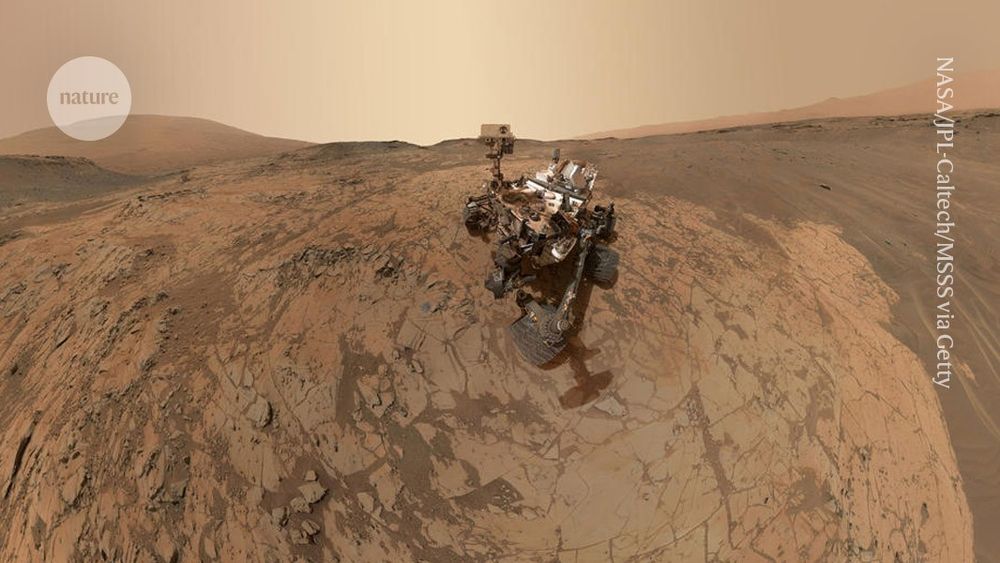
Researchers say that a NASA-funded institute is over-interpreting Trump’s anti-DEI order
https://go.nature.com/3YD039e
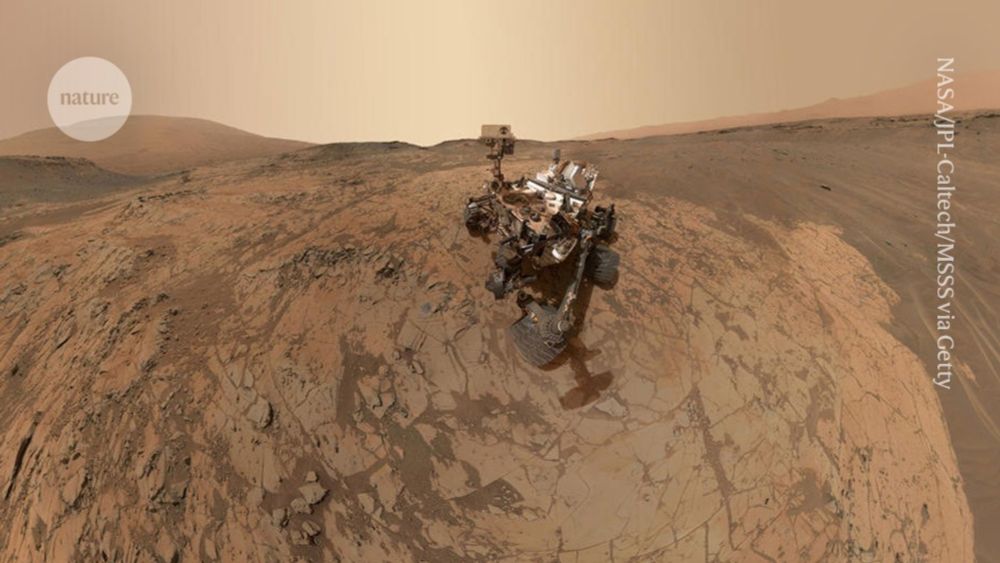
Planetary scientists have been really, really mad about DEI-related conference abstracts being taken down from LPI meeting sites. I wrote about it: www.nature.com/articles/d41...
I hope this is what I think it is :)

Horrific news. Hopkins research helps some of the most in-need communities around the world.
This will cost lives. 🤬🤬🤬

Interesting signal recorded on the northern Cuban coast post-Starship 8 last night - looks like a sonic boom (and a big one at that!) to me...

A team led by Johns Hopkins University scientists has dispelled fears that Iran conducted a nuclear test following a Magnitude 4.5 earthquake last October, showing these concerns were unfounded.
Read more: doi.org/10.26443/sei...
spacequakes.bsky.social

Road trip day #2 - Raleigh, NC!
Ticked off my 5k in state number 25. Very wet and very very windy…

About to set off on a road trip to Johnson Space Center to drop off some non-flyable equipment.
Looking forward to ticking off some new states!
🚗🚀🪐

How much of a bang did OSIRIS-REx make when it re-entered the atmosphere?
Take a look at our new paper to found out!
doi.org/10.1785/0220...
w/ @neerajac.bsky.social @tomrivlin.com and others!

Screencap of top of research article from journal Seismica, titled "The propagation of seismic waves, misinformation, and disinformation from the 2024-10-05 M 4.5 Iran earthquake" by Benjamin Fernando, Ross Maguire, Brianna Fernandez, Saman Karimi, Elizabeth Koenck, Göran Ekström, Tom Rivlin, & Celeste Labedz. Abstracts in English & Persian: "The 2024-10-05 Iran M 4.5 earthquake took place at a time of heightened tensions in the Middle East. We perform a discrimination and moment tensor analysis and identify a shallow-dipping, reverse fault source commensurate with the compressional setting of the Iranian interior. Nonetheless, the event's aftermath saw widespread dissemination of misinformation, and potentially active disinformation, concluding that it was in fact a test of an Iranian nuclear weapon. The `evidence' for many of these claims was based on inaccurate interpretation of seismic data. In this paper, we analyse how geophysical `fake news' propagated through social media (mainly Twitter/X) following this event, eventually gaining traction in mainstream, earned media. This event is an illustrative warning of how seismic data can be misinterpreted and/or manipulated in public discourse." "هنایمرواخرداهشنتنتفرگلاابنامزرد،دادخرناریارد۲۰۲۴لاسربتکامجنپخیراترد۴.۵یگرزبهبهکیاهزرلنیمزویراشفراتخاسابهکمیدرکنیعمدادیورنیاعبنمناونعهباریقمعمکسوکعملسگ،هدادماجنارواتشگیروسناتلیلحتام.داتفاقافتاتروصهب)هنادماع(طلغتاعلاطاو)هنادماعریغ(تسردانتاعلاطاهثداحنیایپرد،دوجونیااب.درادتقباطمناریالخادیمکارتنیازایرایسبردهدشهیارادهاوش.تساناریاردیاهتسهحلاسشیامزآهبطوبرمهثداحنیاهکیریگهجیتننیاابدششخپیاهدرتسگرابخاهنوگچهکمیهدیمناشننامیاهلیلحتردوهلاقمنیاردام.دوبهثداحنیاهبطوبرمیاهزرلیاههدادتسردانریسفتساسارباهاعداردوتفرگرارقهجوتدرومروطچ،)سکا/رتییوتردصوصخلایلع(دششخپیعامتجایاههکبشردهثداحنیاهبطوبرمیکیزیفوئژیلعجایوهابتشاروطهبدناوتیمیاهزرلیاههدادهنوگچهکدشابیرادشهدننامهبدناوتیمهثداحنیا.دیسراههناسروتاعوبطمهبروطچتیاهن.دوشهعماجیمومعناگمتفگدراووهدشیراکتسدهنادما"
New paper alert! 🧪⛏️
Led by the amazing @spacequakes.bsky.social, here's a seismologically ordinary earthquake that got outsized attention due to some misinformation. It was cool to be a small part of this work!
Open access in @weareseismica.bsky.social :
seismica.library.mcgill.ca/article/view...

This was a fun thing to be part of, in an otherwise grim week.
TL;DR - we can use seismometers to track space junk re-entering the atmosphere in close to real-time.
www.washingtonpost.com/climate-envi...

Some interesting signals from Grand Turk in the TCI last night, a few minutes after the Starship explosion. Possible/likely sonic booms from re-entering debris I suspect!


The Moon occulting Mars a few minutes ago from Baltimore, MD!

Went running with some Baltimore friends round St James’ Park yesterday. Cold but stunning.
I do miss having open green space to run in!
Interested in a free, one-day workshop with @markpanning.seismology.space, I, and others, on how to access and use InSight seismic data?
More info/application here! forms.office.com/r/TNRCKfP8yp