
Deadline extended until 9 February! #EAA2026 #Session256
03.02.2026 12:21
👍 0
🔁 0
💬 0
📌 0
Deadline extended until 9 February! #EAA2026 #Session256
Turns out that if you use a broom to scratch yourself everyone thinks you're a weirdo but if a cow does it they end up in the cover of Current Biology

white translucent bladder shaped like a molar about 100mm x 100mm
puffer fish gas bladder looks like a molar 👍🏻

Dr Kareem Carr man: i wish to publish @kareem_carr Jan 21 reviewer 2: your paper is no good man: i'll do anything to improve reviewer 2: it's simple. you must read the work of the great scientist Pagliarini man: *bursts into tears* but i am Pagliarini Andre Pagliarini @apagliar Jan 21 a first: in rejecting an article I submitted to a journal, reviewer 2 noted I failed to engage the work of one Andre Pagliarini Jan 21, 2026 • 3:47 PM UTC
I just thought everyone should see this

Springer Nature post on the birthday of Sofia Kovalevskaya, with a fun fact "Did you know? Sofia Kovalevskaya was not only a groundbreaking mathematician but also a novelist and advocate for women’s education. Her work opened doors for women in academia across Europe", and a quote by her: "It is impossible to be a mathematician without being a poet in soul."
Born #OnThisDay in 1850, Sofia Kovalevskaya became the first woman in Europe to earn a doctorate in mathematics and a pioneer in analysis and partial differential equations. Join us in celebrating her brilliance and perseverance. 🌟
Yes, we all love body fossils of giant ground sloths. But how about fossil footprints of giant ground sloths? OFF THE SCALE EXCITEMENT!! New study of South American ground-sloth tracks & their classification by Silverio & colleagues. (Attn: @slothgirlmel.bsky.social @docsloth.bsky.social )
🧪🦥🐾

Seven naturally mummified cheetahs found in caves northern Saudi Arabia show at least two subspecies once roamed the Arabian Peninsula, offering hope for future reintroduction of cheetahs to the peninsula.
spklr.io/633218itZR
@commsearth.nature.com 🌍 #EcoSky

How long did it take for T. rex to grow from a hatchling into a bus-sized bone-cruncher?
Longer than we used to think! Maybe up to 40 years!
Exciting new research by @histo-holly.bsky.social & team. My thoughts @cnn.com
edition.cnn.com/2026/01/15/s...

This newly discovered Iron Age instrument may have been played in the Celtic resistance against the Roman Empire

KNM-ER 64061, most complete Homo habilis skeleton yet (Koobi Fora) shows primitive limb proportions: long forearms, thick cortices, small body mass & ~160 cm stature. Upper limbs like early Homo, but proportions differ from H. erectus
Grine et al anatomypubs.onlinelibrary.wiley.com/doi/10.1002/...

🔴 La población ibérica de lobo será incluida en el Libro Rojo de las Especies Vulnerables.
Esta decisión se apoya, según nuestro investigador Alberto Fernández Gil, «en un proceso científico reglado y en la mejor información disponible, muy alejado de decisiones políticas o territoriales».

Session #256 COLLAPSE, MOBILITY, AND RENEWAL: RETHINKING THE CHALCOLITHIC–BRONZE AGE TRANSITION IN SOUTHEASTERN EUROPE AND THE BLACK SEA REGION From the end of the 5th millennium BC through the 4th millennium BC, the transition from the Late Neolithic and Chalcolithic to the Early Bronze Age in Southeastern Europe and around the Black Sea marks one of the most dynamic and debated periods in Eurasian prehistory. Across this geographical area, a dramatic decline in the density of archaeological evidence occurred: long-lived settlements were abandoned, new types of material culture appeared, and population movements—both local and longdistance—reshaped social and economic networks. This session aims to explore what triggered these transformations and how they unfolded in different regions. We invite contributions employing a wide range of analytical, contextual, and interpretative approaches to investigate this crucial turning point: refined chronologies through radiocarbon dating; bioarchaeological, isotopic, and ancient DNA data to trace population mobility, diet, and provenance; studies of ceramic residues and environmental proxies (pollen, sediments, fauna) to reconstruct subsistence strategies and landscape change; as well as archaeological, zooarchaeological, and anthropological perspectives addressing material culture, settlement patterns, and social organisation. By integrating these diverse datasets, the session seeks to address fundamental questions: Was there a demographic replacement, or rather an adaptation of existing groups to new cultural paradigms and economic lifeways? What role did climate fluctuations play in settlement reorganisation and mobility? And how can interdisciplinary research help to build a more nuanced picture of this transformative era? The Romanian contribution to this session was supported by a grant from the Romanian Ministry of Education and Research, CNCS-UEFISCDI, project number PN-IV-P1-PCE-2023-1899 (BioArhSteppe).
📢Call for abstracts #EAA2026 Athens
We invite contributions to our #Session256: COLLAPSE, MOBILITY, AND RENEWAL: RETHINKING THE CHALCOLITHIC–BRONZE AGE TRANSITION IN SOUTHEASTERN EUROPE AND THE BLACK SEA REGION
🗓 Deadline: 5 February 2026
🔗https://www.e-a-a.org/EAA2026


We couldn't help but put an archaeological twist on the Colour of the Year for 2026: Cloud Dancer 💭

On the Factor Fexcectorn and autism bicycle AI slop study: I got an answer from Springer Nature this morning that this scientific paper will be retracted! 🧪
Full story: nobreakthroughs.substack.com/p/riding-the...

🚨 PNAS Special Feature 🐕
We analysed genomes of historical German Shepherds to reveal how bottlenecks linked to WWII and the use of popular sires led to significant declines in genomic health. We also found an early 20th century wolf-dog hybrid!
🔗 Full paper here: www.pnas.org/doi/10.1073/...

(A) Genomic inbreeding coefficient (FROH) of imputed and modern dogs plotted as a function of time, calculated based on ROH. Imputed samples are colored based on their geographic grouping, while modern samples are colored in gray. A loess regression was applied with each colored shaded area depicting the SE. (B) Total number of ROH segments plotted against total ROH length for the imputed dogs. Colors correspond to age of imputed samples in years before present (ybp)., while modern samples belonging to each dog group are colored in gray. (C) Map of imputed dog samples colored by their inbreeding coefficient (FROH). Samples with FROH values above 0.1 are indicated.
Delighted to see our paper characterising the inbreeding history of dogs and wolves over the past 10,000 years published this week in @pnas.org. Work led by the excellent @katiabou.bsky.social, and co-supervised by me, Laurent Frantz and Fernando Racimo www.pnas.org/doi/10.1073/...


Wonderful days at #SVP2025, where I presented my work on the phylogeography and paleodiet of Iberian brown bears, and was a co-author on Dario Estraviz’s poster about Portugal’s bears. I absolutely loved the conference (best logo ever!) and the chance to visit Birmingham #2025SVP

My photo collage shows four pottery vessels, all a creamy yellow in colour, with black painted decoration depicting underwater sea-life featuring lively stylised octopuses with writhing tentacles (arms), All on display at Heraklion Archaeological Museum, Crete. Top L - Minoan pithoid storage jar decorated in the “Marine Style” with wide-eyes octopus, argonauts, rocks, and coral. Rounded top tapering down to a narrower base. Short cyclindrical neck flaring out at the mouth with black wavy decoration reminiscent of waves. Loop handles attached to the shoulders of the body. Height 55 cm. From Zakros. 1500-1450 BC Top R - Minoan flask with a rounded body, short cyclindrical neck which flares at the rim, and two small curved handles attached between the top of the spout and the shoulders of the body. Decorated in “Marine Style” which depicts an almost cartoon-like octopus with wide eyes and sucker-lined tentacles which writhe around the vase. Other decorative sea-motifs include sea urchins, seaweed and rocks. Height 27cm. From Palaikastro, 1500-1450 BC Bottom L - alabastron, broad at the base, swelling outwards into a fuller belly before narrowing near the top with a very short cyclindrical neck and a wider flat rimmed mouth. Decorated in “Marine Style” with a wide-eyed octopus among rocks. From Knossos Little Palace, 1450-1370 BC Bottom R - krater with rounded body narrowing at the bottom towards the foot. Wide flaring mouth and rim with black painted wavy decoration, and two sturdy handles attached on each side between the top of the mouth and shoulders of the vessel. Decorated with a central very stylised wide-eyed octopus whose tentacles loop up and down around the body of the pot, 1370-1300 BC
Something lovely to start the week! 🐙🏺❤️
Ancient clay pots with octopus decoration, made by artisans from Bronze Age Crete some 3,500 years ago!
Heraklion Archaeological Museum 📷 by me
#Archaeology

1,400-year-old ice storage from Baekje Kingdom unearthed beneath Busosanseong Fortress in South Korea
Archaeologists in South Korea have uncovered the first ice storage facility ever recorded from the Baekje Sabi period at the Busosanseong Fortress...
More info: archaeologymag.com/2025/10/1400...

Early Neolithic farmers in Central Europe diversified cereal cultivation earlier than expected, study finds
A new study has revealed that early farming communities in Central Europe began diversifying their cereal crops much earlier than previously thought...
archaeologymag.com/2025/10/neol...

Let's have a little séance so we can thank the dead vultures who saved all these historical artefacts by nicking them for their nests!
esajournals.onlinelibrary.wiley.com/doi/10.1002/...
Today my @nytimes.com colleagues and I are launching a new series called Lost Science. We interview US scientists who can no longer discover something new about our world, thanks to this year‘s cuts. Here is my first interview with a scientist who studied bees and fires. Gift link: nyti.ms/3IWXbiE
Amazing results!

🦴🧬🦴🧬🦴
Abstract submission is now open for the 1st International Conference on Palaeogenomics!
June 23–26 2026, in Stockholm.
Join researchers from across the field for 4 days and >100 talks (+ poster sessions)!
Submit abstracts here 👉
icp2026.palaeogenomics.org/abstracts/
Deadline: Nov 30th

Tell Sultana-Malu Roșu, located on the banks of the Mostiștea River, now turned into an artificial lake that threatens to destroy the tell
The study of Tell Sultana-Malu Roșu (Chalcolithic, Romania), result of the collaboration between Institute for Prehistoric and Protohistoric Archaeoloy (Kiel University) and the ArchaeoSciences Platform (ASp) (University of Bucharest), is now published!🏺 doi.org/10.12766/jna...
I regret to announce that the collection has been cancelled, as STAR will cease publication 😔📚

Hominin footprints in Pleistocene coastal deposits.
78,000-year-old footprints from Neanderthal man, child and toddler discovered on beach in Portugal 🏺🧪
www.nature.com/articles/s41...
At Monte Clérigo, dated to 78 ± 5 ka, trackways of three individuals demonstrate how Neanderthals navigated dune landscapes.

Aereal picture of the Yunatsite Tell
#EAA2025 Tomorrow at 14:45 (session 169, room 19) I’ll be talking about "Subsistence strategies in Copper Age Southeastern Europe: insights from δ¹³C and δ¹⁵N isotope analysis at Tell Yunatsite (Bulgaria)". See you there!
Essential reading.
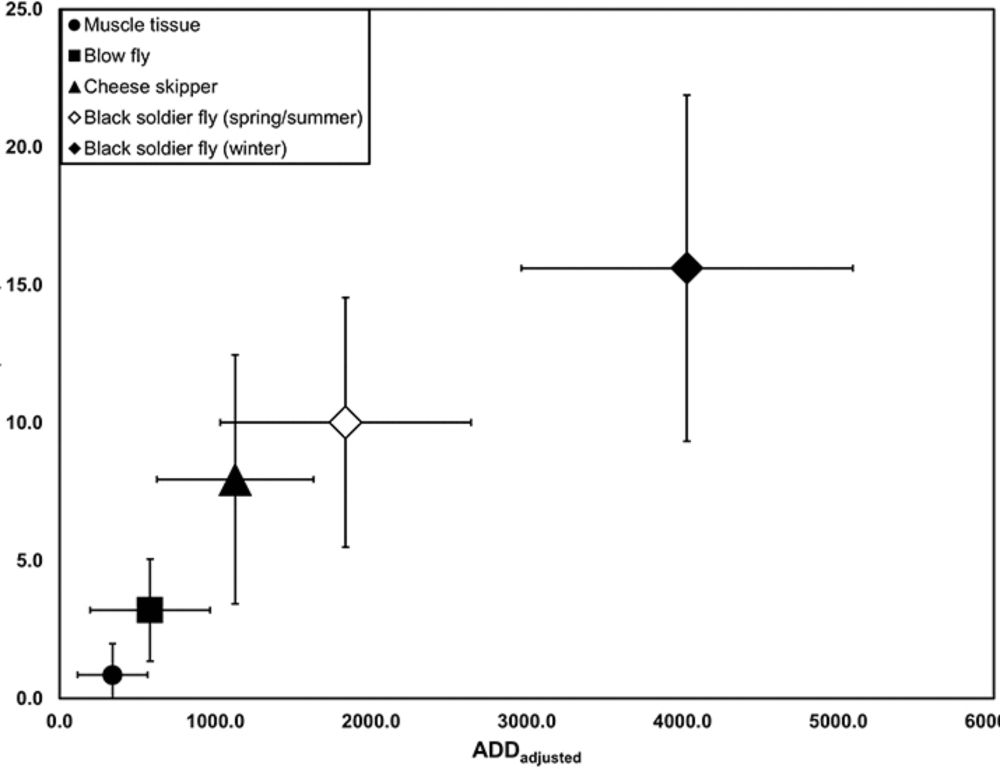
Neanderthals, hypercarnivores, and maggots: Insights from stable nitrogen isotopes | Science Advances www.science.org/doi/10.1126/...
