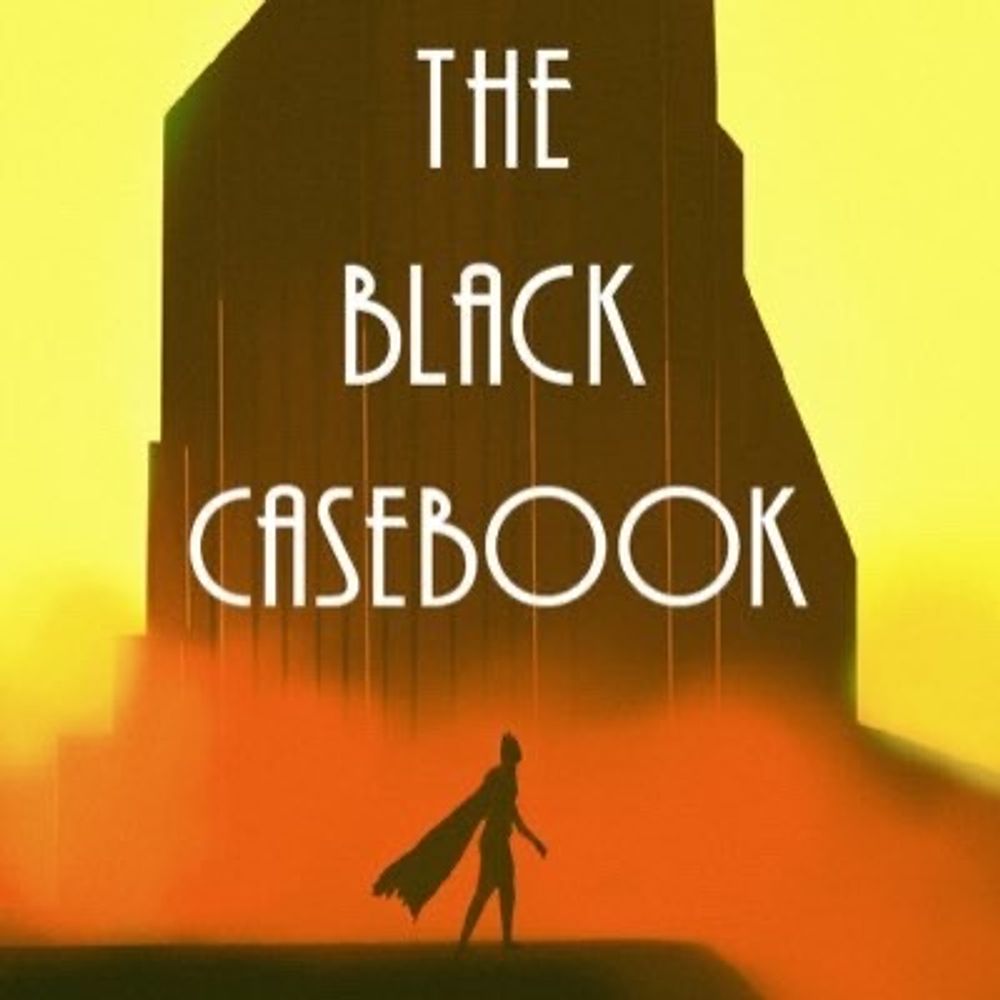
youtu.be/wIE5wwvicew?...
06.03.2026 21:22
👍 15
🔁 1
💬 0
📌 0
youtu.be/wIE5wwvicew?...
Yakubian birthright program sponsoring free trips to Patmos
Perfectly balanced, like Starcraft


Choose your fighter
Markwayne: Revengeance
The Bear collapsed with remarkable efficiency. It didn't have all the flashing indicator lights and blaring klaxons of a Game of Thrones, just a suspicious rattling sound in the background of Season 2 that turned out to be a reactor core meltdown in the S3 premiere
Obviously he was already a historically bad president, but the Trump 1 experience was something the US could bounce back from. Not so sure about Trump 2
God only knows what will happen in the weeks to come, but even if we avoid nuclear war, it’s safe to say that Trump has entered the Commodus/Charles I/Nicholas II tier of world-historically catastrophic rulers. Always knew he had it in him
I...worked on this story for a year...and...he just...he tweeted it out.

The U.S. has been operating by this logic for at least 25 years now, using corrupt institutions to mystify reality and manipulate markets and voters alike. Image over substance, word over fact. It now appears that reality is triggering a margin call on this magical thinking.
“The forces we are up against have made peace with mass death. They are treasonous to this world and its human and non-human inhabitants.”
Slaughtering a bunch of little girls in the hopes of provoking what has the potential to be the most catastrophic war in decades. Another sacrifice to Moloch
I’m the best Diplomacy player I know, and he’d demolish me. I’m going Salieri mode
Rob Rausch is a mythic figure in my eyes. First-ballot inductee to the Male Manipulator Hall of Fame. Bowled a perfect game in The Traitors and became America’s answer to Napoleon, King Arthur, Odysseus, Milton’s Lucifer, etc. in the process
A Sephiroth spread. I map each card onto the Tree of Life

It really is crazy how therapeutic this little ritual is for me. Encouraging spread
Too much performative progressivism in the Absolute line for your taste? Get ready to see what AI spits out after it’s fed two decades of Bill Willingham scripts
Have to imagine that a Paramount acquisition is bad news for Detective Comics Comics, in addition to everything else
BPRD. But in a deeper, truer sense, yes

Mother Russia rain down down down


99% of people suffering from emotional problems haven't tried listening to Floodland by Sisters of Mercy while gazing out over a cityscape
Describe your favorite games poorly
- a desperate search for a brain surgeon in the Early Modern
- a desperate search for your adoptive sister in the Early Modern
- a desperate search for high quality iron in the Early Modern
I’ve had Black Mesa forever, I need to give that a playthrough one weekend
“- Physicist has a really bad day in The Future” is definitely on my list
I’m not proud of my CK2 obsession, but I have to acknowledge reality
Describe your favorite games poorly
- Imperial agent infiltrates indigenous independence movement
- Forgetful man solves riddle
- Forgetful man solves crime, own despair
- Map of Eurasia changes colors
- Failson wages epic campaign to beat up dad
- Disgruntled postal worker walks to Las Vegas

On Sunday, February 25, during the writing of this episode, a 25-year-old US airman named Aaron Bushnell walked calmly up to the fence of the Israeli Embassy in Washington D.C., doused himself with an accelerant, and lit himself on fire. “I am an active duty member of the United States Air Force,” he said in his valediction. “I will no longer be complicit in genocide. I’m about to engage in an extreme act of protest, but compared to what people have been experiencing in Palestine at the hands of their colonizers, it’s not extreme at all. This is what our ruling class has decided will be normal. Free Palestine.” I read that he shouted “Free Palestine!” six times before he was consumed. I haven’t been able to bring myself to seek out the entire video. Aaron Bushnell was of sound mind when he decided to give his life for the cause. His words cut through the haze of distraction that separates us from each other. His words force us to make a choice: do you believe that Palestinians are human beings, or do you not? Do you believe that all human beings have a right to love and security and hope for the future, or do you not? Do you believe that there can be justice, and that we owe it to each other to fight for it together—or do you not? Aaron Bushnell made of himself a spectacle. Whoever he was in the years leading up to that day vanished in the span of a few moments. What remained was an image, a chant. In burning, Aaron joined tens of thousands of Gazans—possibly hundreds of thousands—in becoming a historical document instead of living the life they deserved. He joined men and women crushed trying to pull loved ones and strangers alike out of the rubble; or shot, lying defenseless in their hospital beds; or blown to pieces by cruelly specific airstrikes and random tank blasts alike; or starved into walking skeletons.

Everything feels frivolous in the shadow of this evil. Everything feels fated. The spectacle of heroism, like the spectacle of horror, has the power to pierce the veil of hopelessness. To bring life to our necropolis of failed gods and inspire action. There haven’t been a lot of American heroes in my lifetime. There have been far too many Palestinian ones. Right or wrong, heroism is a source of meaning in a meaningless world. Meaning is the difference between an empty slogan and an incantation. Meaning allows the words to reach us—to change us—to wake us—when we hear that all men are brothers. That none of us are free until all of us are free. That it doesn’t have to be like this. Heroism is a dangerous thing; superheroism, in its own way, can be just as toxic. In one issue of his comic adaptation of 2001: A Space Odyssey, Jack Kirby shares the story of a man in a near-dystopian future who becomes addicted to playing out generic power fantasies, dressing up in costumes to save princesses and foil evil schemes. Even as the fantasies become less and less satisfying, the protagonist turns down real opportunities at connection to keep the dream alive. The alternative is to accept the truth: “I’m a captive—in a man-made cage of illusions—a worldwide Comicsville—which has less substance than my own dreams.” Kirby feared, not without reason, that his life’s work had stifled his young readers’ sense of political engagement and social responsibility. Perhaps, by crafting these utopian visions of the cosmos, all the King had managed to do was create a Lotus-Eater busybox for stunted adolescents.

Alan Moore, perhaps Kirby’s true successor, has repeatedly bemoaned the cultural fascination with superheroes, citing Batman in particular. “I said round about 2011 that I thought that it had serious and worrying implications for the future if millions of adults were queueing up to see Batman movies. Because that kind of infantilisation—that urge towards simpler times, simpler realities—that can very often be a precursor to fascism.” At the same time, this is the same Jack Kirby who was able to escape the grim realities of his impoverished childhood through the stories of Norse mythology. This is the same Alan Moore who, seeing Jack Kirby’s art in a spinner rack, opened his eyes to worlds far beyond the deprivation of Northampton. Tom King’s Batman wasn’t a psyop. There wasn’t any grand conspiracy involved in its construction, unless you count some slipshod editing. But in its demoralizing effect, in its curtailing of possibility, the book is in the lineage of The God that Failed. Not even superhero fiction is allowed to offer a window into a better world. In-universe and out, the status quo is god. Postmodernity isn’t going anywhere anytime soon. The sooner we accept that, the happier (and more effective) we’ll all be.
![To quote Fred Jameson one last time: “In a well-known passage, Marx powerfully urges us to do the impossible, namely to think [of the historic development of capitalism] positively and negatively all at once; to achieve, in other words, a type of thinking that would be capable of grasping the demonstrably baleful features of capitalism along with its extraordinary and liberating dynamism simultaneously, within a single thought, and without attenuating any of the force of either judgement. We are, somehow, to lift our minds to a point at which it is possible to understand that capitalism is at one and the same time the best thing that has ever happened to the human race, and the worst. The lapse from this austere dialectical imperative into the more comfortable stance of the taking of moral positions is inveterate and all too human: still, the urgency of the subject demands that we make at least some effort to think the cultural evolution of late capitalism dialectically, as catastrophe and progress all together.”
Even avowedly leftist postmodern texts and techniques can be coopted, absorbed, twisted to evil purposes. But in a postmodern context, we can take advantage of the obliterated distinction between high art and low art to find meaning in something as impermanent as an issue of Batman. In life and in fiction, we will always have a need for heroes, wherever we can find them. Something to remind us, in the cold still depths of winter, that spring is on its way.](https://cdn.bsky.app/img/feed_thumbnail/plain/did:plc:xufme2croputv6fecdh3py3i/bafkreifdlazqxj5wy5b7w4updeaw6jai5yocmbysz3x2fxlz2qumlzc4aa@jpeg)
To quote Fred Jameson one last time: “In a well-known passage, Marx powerfully urges us to do the impossible, namely to think [of the historic development of capitalism] positively and negatively all at once; to achieve, in other words, a type of thinking that would be capable of grasping the demonstrably baleful features of capitalism along with its extraordinary and liberating dynamism simultaneously, within a single thought, and without attenuating any of the force of either judgement. We are, somehow, to lift our minds to a point at which it is possible to understand that capitalism is at one and the same time the best thing that has ever happened to the human race, and the worst. The lapse from this austere dialectical imperative into the more comfortable stance of the taking of moral positions is inveterate and all too human: still, the urgency of the subject demands that we make at least some effort to think the cultural evolution of late capitalism dialectically, as catastrophe and progress all together.” Even avowedly leftist postmodern texts and techniques can be coopted, absorbed, twisted to evil purposes. But in a postmodern context, we can take advantage of the obliterated distinction between high art and low art to find meaning in something as impermanent as an issue of Batman. In life and in fiction, we will always have a need for heroes, wherever we can find them. Something to remind us, in the cold still depths of winter, that spring is on its way.
Today marks two years since Aaron Bushnell sacrificed himself in front of the Israeli embassy. I wrote this eulogy of sorts—and thesis statement for my show—shortly afterward. Even after every horrible thing that's happened in the last 24 months, I still believe spring is coming.

made fan art for my favourite horror movie
"I was not born to live a man's life, but to be the stuff of future memory...a fair time that cannot be forgotten. And because it will not be forgotten, that fair time may come again. Now once more, I must ride with my knights, to defend what was...and the dream of what could be."
The tyranny of the superego: because your subjective experience is validated by following the rules, any irruption of the Real that undermines said rules puts your ego at hazard. Better to look away, better to shield your emotions, better to abstract and rationalize.