Hahaha. I do think a case can be made that "old school" methods using gas collection (Tissot tanks/Douglas bags) may be better than most appreciated - but simply using a mixing chamber so flow is measured on on expiration probably works just fine
01.02.2026 18:01
👍 1
🔁 0
💬 1
📌 0
We have this same calibrator in my lab now and are working on a methods paper. Spoiler: to @superalex-c.bsky.social point, above a resp freq of ~60bpm, breath by breath measures break down and effect likely magnified with high extractions
01.02.2026 16:04
👍 2
🔁 0
💬 1
📌 0
Interesting thread, Jem. Fun for us nerds to debate. If his peak power is about 440W, applying the Hawley-Noakes equation, he would be expected to have a VO2 of approx 5.5L/min (70-75ml/kg/min). Granted, the equation was derived from data on "trained" cyclists not outliers
31.01.2026 19:22
👍 3
🔁 0
💬 1
📌 0
Recently had the same. Tempted to run our original manuscript through myself to see if we get the same output! Given there is no real incentive to accept a review assignment it's befuddling to me why a reviewer would accept in the first place if they don't want to do it
26.10.2025 15:17
👍 1
🔁 0
💬 0
📌 0
Welcome Back to Campus: Fall 2025 | University of Guelph
YouTube video by University of Guelph
youtu.be/XiB-MMt32EM?...
03.09.2025 18:12
👍 0
🔁 0
💬 0
📌 0


Congratulations to Alexa Robertson on successfully defending her MSc today - Investigating the Physiological Effects of a Six-day Ultramarathon on Glycemic Regulation
An ambitious study tackling the complex metabolic demands of ultra-endurance sport. Well done Alexa, excited to see what’s next
18.08.2025 17:59
👍 3
🔁 0
💬 0
📌 0

Great to have former HPL trainee, Dr. Heather Petrick, back at Guelph for convocation after completing her joint PhD with Maastricht (Drs Holloway and Van Loon).
An impressive body of work—and a well-earned Governor General’s Gold Medal to show for it. Congrats!
13.06.2025 15:16
👍 2
🔁 0
💬 0
📌 0
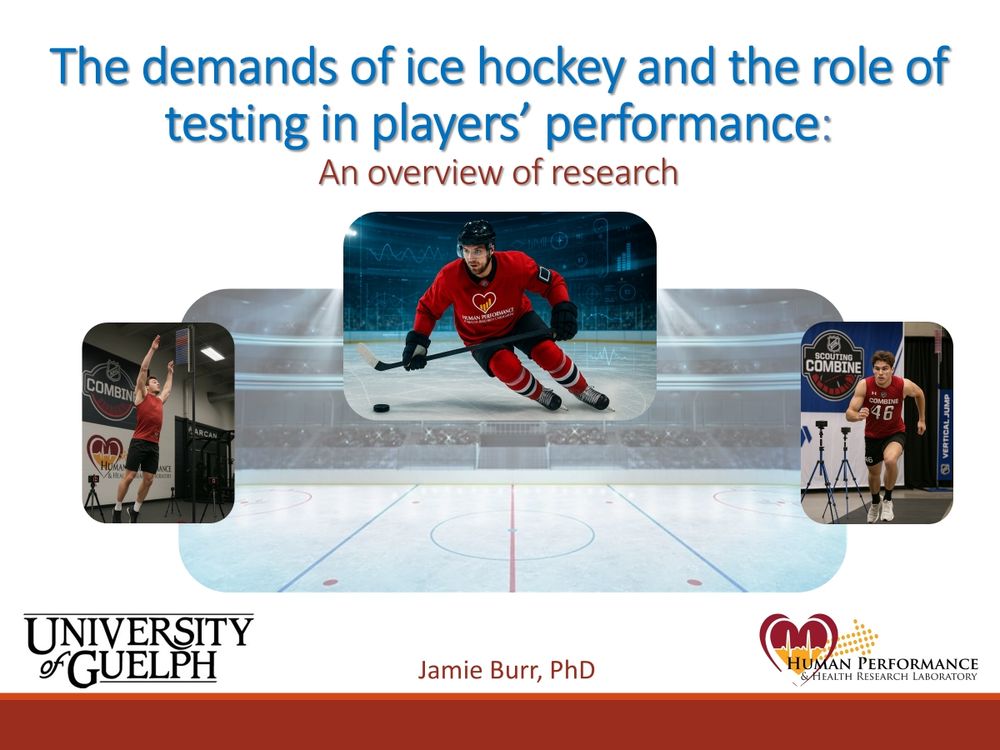
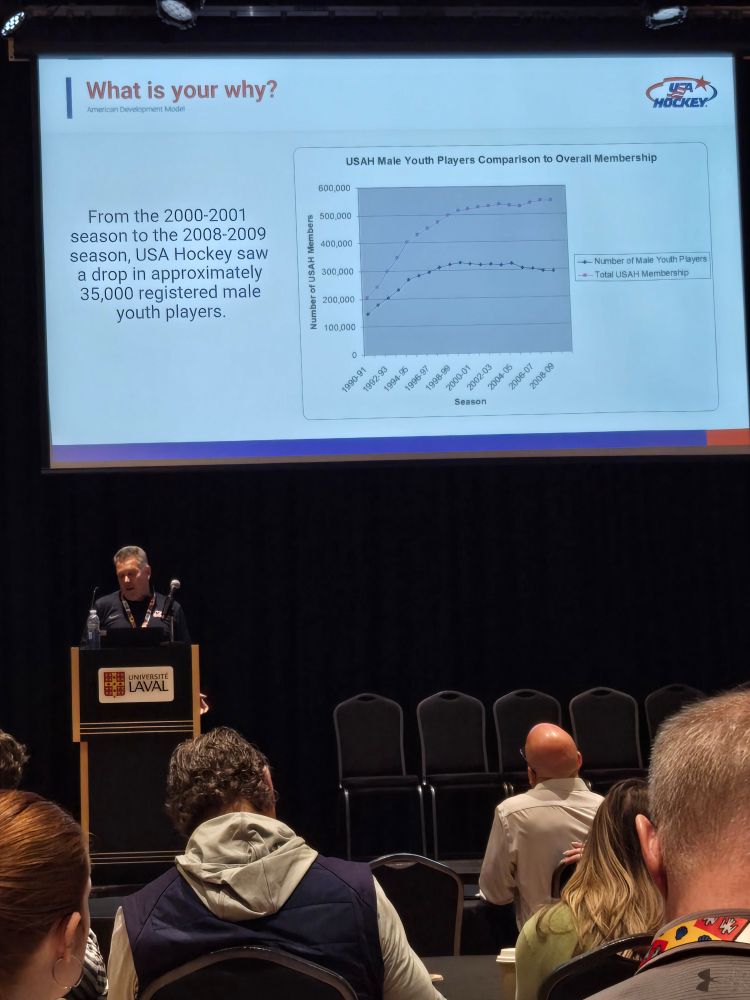
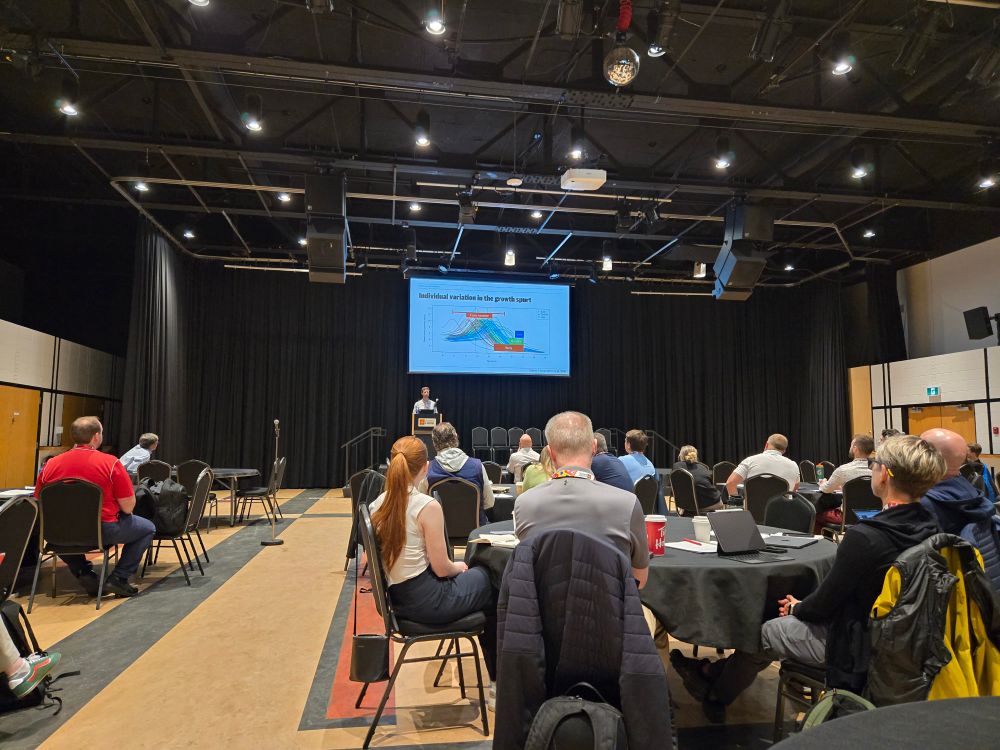
In Québec City for a fantastic long weekend of ice hockey research—great conversations with Canadian and international experts bringing diverse backgrounds and fresh perspectives to the game 🏒
02.06.2025 13:57
👍 7
🔁 1
💬 0
📌 0
Interesting thread, and nice work, Michele!
I'm curious, how do you think we optimally approach this with athletes?
Testing is pretty severe - do you anticipate results would improve individualized presecription sufficiently to make it worthwhile? Would love to hear your thoughts on application
20.05.2025 13:20
👍 0
🔁 0
💬 1
📌 0

Our new durability paper is out in SJMSS!
We tested how endurance performance determinants change after heavy-intensity running (90 and 120 min) in well-trained marathoners.
📌Below details of what we’ve found.
🆓 Open-Access
📄 onlinelibrary.wiley.com/doi/10.1111/...
🧵1/14
19.05.2025 09:15
👍 7
🔁 9
💬 1
📌 0

Dr. Geoffrey A. Power
I completed my undergraduate and MSc degrees at Memorial University of Newfoundland (MUN). During my graduate training at MUN I became quite interested in neuromuscular physiology which coupled with…
Phys Reports announces the appointment of Dr. Geoffrey Power, University of Guelph, Canada as a new Associate Editor!
Dr. Power will handle manuscripts on #musculoskeletal #physiology and #neural control of movement
www.uoguelph.ca/hhns/people/...
@physoc.bsky.social
@apspublications.bsky.social
02.05.2025 09:02
👍 23
🔁 4
💬 0
📌 0

This made me smile.
Two past HPL trainees, Dr. Petrick and Dr. Cheung, messaged to say hi from Maastricht where they continue to collaborate - years later and halfway around the world- as post docs
01.05.2025 14:21
👍 4
🔁 0
💬 0
📌 0
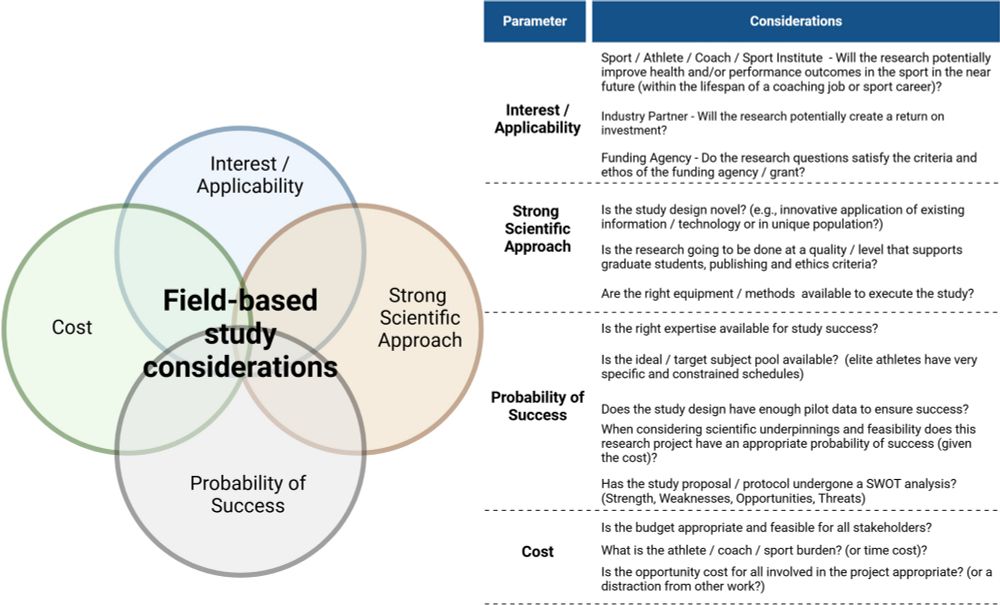
Integrative Field-Based Health and Performance Research: A Narrative Review on Experimental Methods and Logistics to Conduct Competition and Training Camp Studies in Athletes - Sports Medicine
Field-based sport research involves studies that collect data from athletes and/or teams during competition and/or their daily training environments. Over the last decade, sport-specific field-based research projects have significantly increased in number and complexity, partially owing to the further development of more portable measurement equipment (e.g., indirect calorimetry, desktop blood/gas analyzers, portable laboratories, etc.) and/or wearable or consumable technologies (e.g., smart watches, sensors, core temp pills, etc.). However, given these rapid advances and novelty, challenges remain in the validity and applicability of these devices. Unfortunately, there are no global ethical or best-practice standards for the use of portable devices and/or wearables in sport; however, this review will outline various opportunities and challenges. Many decision trade-offs are required when designing field-based research studies to balance gold-standard scientific rigor and strict research control with highly applied, but less-controlled, “real-world” conditions. To our knowledge, there are no narrative reviews that take a wholistic view of the logistical and methodological considerations of field-based research in athletes. Accordingly, this review takes a multi-disciplinary methodological approach (physiological, nutritional/energetic, biomechanical, musculoskeletal, cognitive, and psychosocial factors), along with the logistical considerations involved in project planning, research design, and ethics of field-based research with elite athletes and/or teams. We also provide practical guidance for characterizing the extreme demands of elite training and competition to support research that ultimately catalyzes improved understanding of the limits of human capacity. We hope this review can serve as a practical guide for researchers undertaking elite athlete field-based research.
Excited to see this one published.
“Integrative Field-Based Health and Performance Research” dives into the challenges and best practices of doing high-quality science in real-world sport. Grateful to work with an amazing group of authors on this!
link.springer.com/article/10.1...
29.04.2025 17:54
👍 7
🔁 3
💬 0
📌 0

Poster board outside a lecture hall showing the title of symposium
"Pushing limits, preserving health? The impact of endurance exercise on multiple organ systems: insights from the marathon and beyond"
Fun speaking in this symposium today with a great line-up of presenters!
Thanks @ausrob-phd.bsky.social and @matt-babcock.bsky.social for organizing and moderating
27.04.2025 00:47
👍 11
🔁 3
💬 1
📌 0
Went by the poster this morning and it looks great! Well done, Amanda!
25.04.2025 17:44
👍 1
🔁 0
💬 0
📌 0
Lab News
Human Performance and Health Research Laboratory University of Guelph
New summary post and podcast:
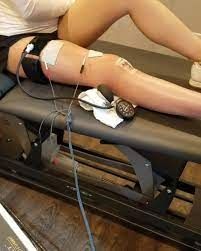
Can EMS combined with BFR offset the effects of physical inactivity? Dr. Chris Pignanelli’s research suggests it's not a full substitute for exercise, but offers key insights for future interventions
hplguelph.weebly.com
25.04.2025 13:18
👍 1
🔁 1
💬 0
📌 0
JUST VOTE
27.02.2025 18:43
👍 855
🔁 367
💬 36
📌 73
The headline doesn't tell the whole story. The short version is that Poilievre has mentioned controlling funds to unis similar to what is happening in the US. Scientists were muzzled under Harper. We cannot allow this to happen again.
19.04.2025 17:35
👍 13
🔁 11
💬 0
📌 0

Mark Carney shakes hands with a woman holding a sign at a meet and greet event.
Students, you can vote now on campus, from April 13 to 16.
Visit lpc.ca/how2vote to learn more.
13.04.2025 20:32
👍 948
🔁 235
💬 22
📌 24

This is figure 3, which shows the effects of meal timing intervention on cardiac vagal modulation and circulating prothrombotic PAI-1 concentration following simulated night work.
Circadian misalignment, which typically occurs in shift work, is associated with cardiovascular diseases. A paper in Nature Communications reports that eating only in the daytime during simulated night work mitigates adverse changes in cardiovascular risk factors. https://go.nature.com/4i7NABb 🧪
13.04.2025 13:39
👍 30
🔁 7
💬 0
📌 1

National Letter
Open Letter from Canadian Researchers to the Federal party leaders Click here to sign this letter See who has signed - version française se trouve à page 3 - Dear Party Leaders We, the undersigne...
Dear Canadian researchers, faculty, RAs, PDFs and grad students, this letter is for the federal party leaders asking them to defend and expand Canadian research sovereignty with a historic investment in science, please sign and share
docs.google.com/document/d/1...
12.04.2025 14:06
👍 75
🔁 79
💬 4
📌 13


Big day at BPK Research Day for the Lab! Congrats to Alicia who won the 3MT on her work examining glycemic control in overtrained athletes, and 3rd place for Zaeema in the poster competition for her work examining academic stress & training fatigue in varsity soccer players! @sfuscience.bsky.social
04.04.2025 23:41
👍 7
🔁 2
💬 0
📌 0

Oral Ozempic reduced major adverse cardiovascular events in a large randomized trial of 9,650 participants with T2 diabetes and high-risk
@nejm.org #ACC25
www.nejm.org/doi/full/10....
29.03.2025 18:33
👍 903
🔁 136
💬 34
📌 7