
It's not a finished solution; there's still engineering work to do. But it's the kind of foundational breakthrough that changes what's possible.
05.03.2026 19:12
👍 0
🔁 0
💬 0
📌 0
It's not a finished solution; there's still engineering work to do. But it's the kind of foundational breakthrough that changes what's possible.
Why it matters: This "plug-and-play" protein could be a simpler route to engineering CO₂-boosting compartments into wheat, rice, and other food crops—potentially raising yields while reducing agriculture's environmental footprint.
They tested it in Arabidopsis (a standard lab plant). Rubisco formed dense compartments inside the chloroplasts—structures never seen before in a land plant. Even attaching just the STAR tail to Arabidopsis's own Rubisco triggered the same clustering.
Instead of a separate "packing protein" (the algae approach), hornworts evolved a modified Rubisco component, called RbcS-STAR, with a built-in "molecular velcro" tail that causes Rubisco to self-cluster. The clumping function is built into Rubisco itself.
Enter hornworts. They're the only land plants known to have pyrenoid-like compartments. Researchers just figured out HOW they do it—and the answer was unexpected.
Algae solved this long ago with pyrenoids, microscopic compartments that concentrate CO₂ around Rubisco. Scientists have wanted to engineer this into food crops for decades. But algae machinery doesn't translate well to land plants.
The problem: Rubisco, the enzyme that captures CO₂ during photosynthesis, is surprisingly slow and easily "distracted" by oxygen. This inefficiency limits how productive crops can be—and it's one of agriculture's biggest unsolved challenges.

An odd little plant—the hornwort—just gave scientists a blueprint for how to make crops more efficient.
New paper out today in Science from BTI, Cornell & the University of Edinburgh. Here's why it matters: btiscience.org/explore-bti/...

Graphic with the headline “We’re Hiring! Controller” in green and black text. The posting states that BTI is seeking an experienced Controller to oversee day-to-day financial operations, fiscal management, compliance, and reporting. It describes working in a small, collaborative finance team and interacting with the Board of Directors, management, auditors, banks, investment managers, and service providers. The lower portion features a photo of a modern brick office building surrounded by trees and flowers, with green geometric design elements and a small leaf-themed logo in the corner. Image credit: Simon Wheeler.
BTI is seeking an experienced Controller to lead financial operations, reporting, compliance, and budgeting in a mission-driven nonprofit research environment. Join a team advancing plant science and global food security.
Learn more & apply recruiting.paylocity.com/Recruiting/J...

Black-and-white studio photograph of a laboratory clinostat machine with rotating circular plates holding potted plants, labeled “A Continuous and Intermittent Clinostat” from the Boyce Thompson Institute for Plant Research in Yonkers, New York, used to rotate plants to study the effects of gravity on growth.
Throwback science! 🌿We found this fascinating piece of equipment while digging into the BTI archives. Think you know what it was used for? Take a guess in the comments!
Roses are red, violets are blue, our research keeps growing, and so does our love for you! 💚 Happy Valentine’s Day from BTI.

Green graphic from the Boyce Thompson Institute (BTI) celebrating the International Day of Women and Girls in Science. The BTI logo appears at the top, followed by the headline “International Day of Women and Girls in Science.” Text below reads: “Today we honor all the women of BTI’s past, present and future, whose work furthers science at BTI and beyond.” At the bottom, four illustrated women of diverse skin tones and backgrounds stand side by side in profile, facing right.
Today we celebrate International Day of Women and Girls in Science by recognizing the scientists at BTI whose curiosity, creativity, and leadership are shaping the future of plant science and agriculture. Their work drives discovery, innovation, and real-world impact.

Cucumber genetics got a 172,000-piece upgrade. That's how many large DNA rearrangements BTI scientists catalogued by combining 39 cucumber genomes into one mega-map—the most comprehensive genetic map of cucumber ever created.
Now breeders have a powerful tool to work with.
https://cstu.io/c5350b
We were glad to welcome the Wegmans Food Markets sustainability team and Organic Farm & Orchard leaders to BTI for a visit, sharing ideas on sustainable agriculture and resilient food systems. A great day with partners who care deeply about a healthier, more sustainable future.

Our 10-week Research Experiences for Undergraduates program offers hands-on research, mentorship, and professional development in a collaborative research community. Applications for the 2026 program close Feb 2.
Apply: reu.btiscience.org
youtube.com/shorts/bdKj7...
#PlantScience #REU

80% of Earth's plant species partner with soil fungi for nutrients—including staple crops that feed billions.
BTI's Harrison Lab developed tools to identify the proteins controlling this exchange.
Next step: crops needing less synthetic fertilizer.
btiscience.org/explore-bti/...

Our 2026 Research Experiences for Undergraduates application is open! This experience provides undergraduate students with an opportunity to engage in research and professional development with a community of researchers. Visit reu.btiscience.org. Applications close 2/2.
youtu.be/RkDryO8O05Y

Flyer for an online workshop titled “Automation for Plant Bioengineering: Opportunities, Considerations, & Emerging Solutions.” The design has a dark green background with a photo of an orange robotic arm working among green plants in a greenhouse. Event date is February 5, from 10:30 AM–12:30 PM ET (7:30–9:30 AM PT), described as a two-hour workshop followed by discussion. Speakers listed are Chris Bagley (Inari Agriculture), Veena Veena (Donald Danforth Plant Science Center), Micah Stevens (Sierra Gold Nurseries), Suzane Pols (Viscon Group), Kelly Chapman (Viscon Group), and Michael Henzler (Ball Horticultural Co.). The event is hosted on Zoom, with registration at www.plantgene.sivb.org , and includes the Plant Gene logo.
Join PlantGENE and industry + research experts for a live Zoom workshop on Automation for Plant Bioengineering
Feb 5 | 10:30 AM–12:30 PM ET
Includes a 30-min interactive discussion
Register: cam-ac-uk.zoom.us/meeting/regi...

2025 was a year of bold discoveries at BTI. Check out our Top 5 stories of the year and join us in celebrating the research that is shaping agriculture, health, and science. We can’t wait to see what discoveries 2026 will bring. https://cstu.io/9766ce
Warmest wishes for a joyful holiday season. We're grateful for your support of our mission to advance plant science for a more sustainable, resilient, and healthy world. Thank you for being part of our community and helping build a future where plant science nourishes both people and planet.

A graphic with a green border and a quote in black text. The quote reads: "As a student who wants to pursue research as a career, an REU was a great opportunity to ensure my confidence in that career path. REUs are designed to act as a stepping stone." Below the quote, the name Hazel Frans is displayed in green text. A small circular photo of a person wearing a pink top appears at the bottom left corner.

A graphic with a green border containing a quote in black text. The quote reads: "My first offer came from the Boyce Thompson Institute (BTI) & Cornell University Plant Genome REU, which I happily accepted. The opportunity to intern at a world-renowned Ivy League University would show graduate schools that my research skills are worth investing in. How could I say no to that!" Below the quote, the name Hazel Frans is displayed in green text. There is a small circular photo of a person wearing a pink top at the bottom left corner.
2025 REU alum Hazel Frans shares tips for crafting a strong application, from highlighting your strengths to building confidence in your personal statement: https://cstu.io/1df4ea. Interested in plant science and research? Our 2026 REU application is open until Feb 2! https://cstu.io/9e8602.


Proud of our REU alumni! Several members of our 2025 cohort attended ABRCMS in Seattle—and huge congrats to Ankai Jin for earning an Outstanding Poster Award for work in the Kelly Robbins Lab! Applications for our 2026 REU Program are OPEN! https://reu.btiscience.org/

Several individuals working at a long metal table with potted plants, likely tomato seedlings. The table has colorful rolls of plant tags and boxes of green twist ties. One person is wrapping a plant in a clear plastic bag.

Close-up of a person holding a small potted plant with green leaves, while others work with similar plants on a metal table. Pink plant tags and trays are visible on the table.

Three individuals gathered around a large blue bin, potting plants. Several potted seedlings and gardening tools are on the bin’s surface. The background includes industrial equipment and cardboard boxes.

A person standing in front of a projection screen giving a presentation. The screen displays a slide titled “Phenosight Data” with a blue 3D model and a chart. Several chairs are arranged in rows in the foreground.
BTI was delighted to host the 2025-2026 cohort of Cornell University Humphrey Fellows for a hands-on tour of our facilities last week. Fellows re-potted tomatoes, experienced the Phenosight, and discussed portable DNA sequencing technology.

A new feature in @knowablemag.bsky.app explores the remarkable strategies animals use to meet their nutritional needs. The story highlights insights from BTI’s Georg Jander, who discusses how plants may actively shape their amino acid profiles as a defense against seed-eaters. https://cstu.io/3333cb

Four crops dominate global food. Hundreds of nutritious alternatives sit underutilized. BTI researchers just showed how #CRISPR can change that—engineering compact goldenberry plants that are 35% shorter and ready for commercial farming. btiscience.org/explore-bti/...
#PlantScience

Fay-Wei Li was interviewed by Ologies Podcast, a top 5 science show in Apple podcasts! Tune in to hear about fern evolution, ferns not to have in your house, the most expensive ferns, tastiest ferns, mathematical mysteries, and a genome that makes no sense. podcasts.apple.com/us/podcast/p...

A graphic from the Boyce Thompson Institute (BTI) with a green, glowing bokeh background. At the top is the BTI logo and the text “Top 2% Cited Scientists Worldwide.” Below are seven circular portraits of BTI scientists arranged in three rows. Each portrait is outlined in green or yellow. The individuals are smiling and shown against dark backgrounds, except for one photographed outdoors.
We're thrilled to share that 8 BTI faculty members were named among the top 2% of most cited scientists worldwide. Congrats to our recognized researchers: Zhangjun Fei, Jim Giovannoni, Maria Harrison, Georg Jander, Lukas Mueller, Eric Richards, David Stern, and Joyce Van Eck.

View through a circular frame into a greenhouse with rows of tall sunflowers in black pots. Overhead, orange grow lights illuminate the plants. The words 'Thank You' appear at the top left, and a white plant-themed logo is in the bottom right corner.
On this Giving Tuesday, we thank you for sharing our journey of scientific discovery. Your belief in the power of science strengthens our work to advance sustainable agriculture, protect the environment, and improve human health. Together, we are creating lasting change for people and the planet.

A cozy autumn-themed scene featuring a wooden table decorated with pumpkins, colorful fall leaves, and cranberries. On the table are two spiral-bound cookbooks, one titled Plant-Powered Thanksgiving and another opened to recipes for “Maple Candied Sweet Potatoes” and “Ground Cherry Tart.” A white coffee cup filled with a warm beverage sits nearby. At the top left, the word “THANKFUL” is written in large orange script inside an oval shape.
Today we’re grateful for everyone who believes in the power of plant science to build a healthier, more resilient world. Your support fuels discoveries that protect our food systems and help communities thrive. Enjoy a bonus recipe from our Plant-Powered Thanksgiving series: recipes.btiscience.org

A close-up view of a latte topped with frothy steamed milk and sprinkled with cinnamon. Below the image, text reads: FIRESIDE FALL LATTE Ingredients: 1 ounce apple syrup 1/2 ounce cinnamon syrup 2 teaspoons honey 1 fluid ounce espresso steamed milk whipped cream ground cinnamon, for garnish cinnamon stick, for garnish
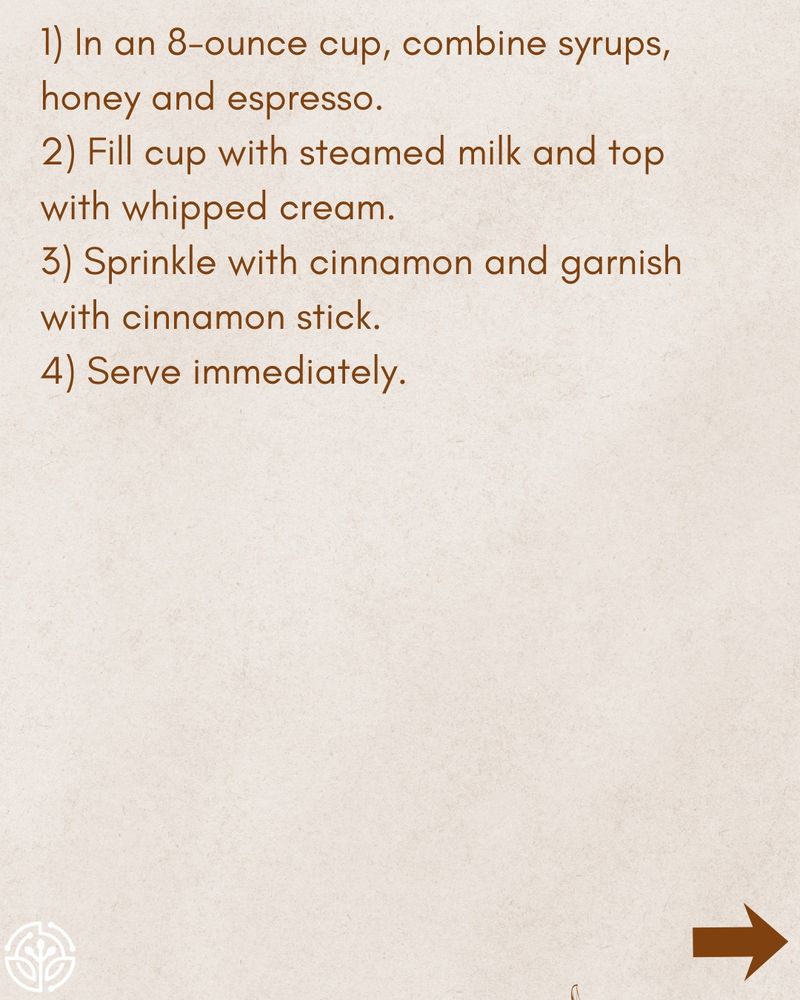
Text on a beige background with instructions for making the latte: In an 8-ounce cup, combine syrups, honey, and espresso. Fill cup with steamed milk and top with whipped cream. Sprinkle with cinnamon and garnish with cinnamon stick. Serve immediately.

A close-up of roasted coffee beans with text below: COFFEE BTI scientists study how plant defense compounds like caffeine shape both ecosystems and human experience. Understanding these natural chemical strategies reveals how plants interact with their environment and highlights the transformative power of plant science education and discovery to connect society with the systems that sustain us.
Warm up with our Fireside Fall Latte. BTI scientists study plant defense compounds like caffeine to understand how plants interact with their environment and shape our lives. We hope you’ve enjoyed the series! Find more at recipes.btiscience.org


