Andrew Barnes 's Avatar

Andrew Barnes

@barnesecodiv

Researcher in functional ecology & biodiversity, EcoDiv research lab leader @University of Waikato, Aotearoa - interested in all things ecology and beyond! he/him More about our lab here: www.ecodivlab.com

1,684
Followers
1,052
Following
45
Posts
11.10.2023
Joined
Posts Following

Latest posts by Andrew Barnes @barnesecodiv

Preview
Iwi can lead us through the climate crisis | E-Tangata “It is remarkable that our country has commenced recognising Indigenous ancestors in some significant lands and waters. It’s time to be next-level courageous with general conservation and environmenta...

It is time all colonial nations, like Aotearoa NZ, recognise an equal role of indigenous governance if we are to tackle the great environmental challenges of our time. "We need all the knowledge and solutions at our fingertips to combat the crises of climate change." e-tangata.co.nz/comment-and-...

01.03.2026 08:50 👍 1 🔁 0 💬 0 📌 0
Preview
Newly formed Bioeconomy Science Institute to cut 134 jobs The downsizing comes after several agencies earlier cut 152 jobs and were merged to create the Bioeconomy Science Institute.

This is death by a thousand cuts (excuse the pun) for NZ #science. How much more can our Science system handle?
The long-term impacts for society, environment, and innovation will likely be felt for many years to come!
www.rnz.co.nz/news/busines...

27.02.2026 05:20 👍 1 🔁 0 💬 0 📌 0
Preview
Degradation of fish food webs in the Anthropocene The decrease in body size driven by the selective species turnover is widely altering fish food web topology and function.

New paper out examining fish food web degradation in the Anthropocene. We show the structure of aquatic food webs are changing-- even when species richness doesn’t. These signals are strongly associated with decreases in body size within fish communities. www.science.org/doi/10.1126/... 🌐🐠🐡🦈🐟

19.02.2026 19:06 👍 113 🔁 65 💬 0 📌 1
Preview
New Zealand bug of the year: moth named Avatar after mining threat crowned winner Arctesthes avatar moth, which won nearly half of the votes, was discovered in 2012 and is critically endangered

Well, unfortunately the hellraiser mite didn't win #BugOfTheYear, but I suppose the Avatar moth is pretty deserving too... www.theguardian.com/world/2026/f...

20.02.2026 08:23 👍 1 🔁 1 💬 0 📌 0
Preview
Fossil isotope evidence for trophic simplification on modern Caribbean reefs - Nature Using nitrogen isotopes from ancient and modern fish otoliths and corals, the study shows Caribbean reef food webs are now 60–70% shorter and functionally less diverse, indicating human-driven trophic simplification and increased risk of collapse.

The food chains on modern Caribbean coral reefs may have shortened by up to 70% compared with those on their prehistoric counterparts, according to research in Nature. The findings suggest that modern reefs could be increasingly vulnerable to external stressors and ecosystem collapse. 🌍 🧪

18.02.2026 02:46 👍 77 🔁 44 💬 0 📌 1
Entomological Society of New Zealand

Entomologists of Aotearoa! Please save the date to join @barnesecodiv.bsky.social & our local committee for the annual conference at @waikatouniversity.bsky.social September 2-4th 2026. We have fantastic plenary speakers inc Ang Mcgaughran, Neil Birelle & Giselle Clarkson.

More soon at ento.org.nz

17.02.2026 04:17 👍 8 🔁 5 💬 0 📌 0
Post image

Weak trophic position–body mass relationships undermine simple size-spectrum models for coral reefs 🦑🧪

royalsocietypublishing.org/rspb/article...

11.02.2026 04:58 👍 23 🔁 10 💬 0 📌 0
Fig. 3. Percentage of reads attributed to carabid, prey and other for Nebria salina and Poecilus cupreus for samples from 2013 to 2019 and 2021. Colors distinguish between (a) prey reads (green), (b) carabid reads (blue) and (c) other reads (contaminants and not assigned – orange). Proportions are given as percentages of the total number per sample (after filtering the singletons).

Fig. 3. Percentage of reads attributed to carabid, prey and other for Nebria salina and Poecilus cupreus for samples from 2013 to 2019 and 2021. Colors distinguish between (a) prey reads (green), (b) carabid reads (blue) and (c) other reads (contaminants and not assigned – orange). Proportions are given as percentages of the total number per sample (after filtering the singletons).

Fig. 5. Prey diversity in the diet of Nebria salina (a) and Poecilus cupreus (b) through time. Each dot represents the diet of one carabid specimens, dots are jittered horizontally and vertically for more clarity. The curve corresponds to a linear regression with the grey area displaying the 95 % confidence interval.

Fig. 5. Prey diversity in the diet of Nebria salina (a) and Poecilus cupreus (b) through time. Each dot represents the diet of one carabid specimens, dots are jittered horizontally and vertically for more clarity. The curve corresponds to a linear regression with the grey area displaying the 95 % confidence interval.

🪲 New BAAE article:

Metabarcoding of stored carabid beetles reveals declining prey diversity over the last decade. Temporal diet shifts highlight long-term invertebrate declines and the value of historical collections for monitoring.

DOI: doi.org/10.1016/j.ba...
@gfoesoc.bsky.social

11.02.2026 07:00 👍 13 🔁 8 💬 0 📌 0
Preview
Warming Reduces Parasitoid Success and Narrows Their Diet Breadth Warming may have a major impact on trophic networks, but few interactions are typically studied. Here we show that experimental warming strongly decreased the success of parasitoid development across...

Warming Reduces Parasitoid Success and Narrows Their Diet Breadth onlinelibrary.wiley.com/doi/10.1111/...

01.02.2026 02:08 👍 4 🔁 1 💬 1 📌 0
Preview
Home - Global Soil Biodiversity Conference 2026 Victoria, British Columbia, Canada 12 – 15 April, 2026 GSB 2026 Key Dates 15 Dec, 2025 Early-Bird Registration Deadline 30 Jan, 2026 Late Breaking Poster Abstract Submission Deadline February, 2026 Ac...

We are pleased to announce that 4 special issues will be published as a major scientific output of the upcoming #GSB2026, to be held in Victoria, Canada, on April 12–15, 2026. More information will be posted on our webpages soon globalsoilbiodiversity2026.org @thegsbi.bsky.social #Soil #Biodiversity

28.01.2026 15:29 👍 12 🔁 10 💬 0 📌 0
Preview
Pesticide residues alter taxonomic and functional biodiversity in soils Nature - A wide survey of pesticide effects on soil biodiversity across 373 sites in Europe reveals that pesticide residues occur in 70% of sites and have major effects on soil biodiversity and...

Pesticide residues found to be the second strongest driver of soil biodiversity (after soil properties) across European ecosystems! 🌐🌏🪱🦠🍄 rdcu.be/e1cOL

28.01.2026 20:19 👍 19 🔁 9 💬 0 📌 0

interesting new paper on community effects of invasive species👩‍🔬🧪🌍🪲🌐🐜🌱🐞🌾

15.01.2026 15:19 👍 16 🔁 6 💬 0 📌 0
Client Challenge

New paper out! We review the effects of soil biodiversity on ecosystem functioning: www.nature.com/articles/s44...

12.01.2026 07:22 👍 14 🔁 8 💬 0 📌 0
Preview
Contrasting effects of temperature across trophic levels in geothermally warmed soil food webs Global warming is altering the structure and dynamics of ecological communities, with significant consequences for soil food webs. Rising temperatures are expected to accelerate metabolic rates in or...

First EcoDiv Lab paper of 2026, and first PhD paper by Estela Folch Chaos! 🎉 Contrasting effects of temperature across trophic levels in geothermally warmed soil food webs - @oikosjournal.bsky.social nsojournals.onlinelibrary.wiley.com/doi/10.1002/...

09.01.2026 22:48 👍 3 🔁 1 💬 0 📌 0
Preview
Tiny forests, huge claims: The evidence gap behind the Miyawaki method for forest restoration To scale up restoration effectively, practitioners and policymakers should prioritize methods supported by robust empirical evidence rather than relying on untested claims. Our findings highlight the...

I often get asked about the Miyawaki method of forest restoration, usually by people who have heard extraordinary claims for it. Morales et al. (2025) have reviewed the evidence and found it to be weak or absent. 🌏🧪🌳🌲 besjournals.onlinelibrary.wiley.com/doi/10.1111/...

05.01.2026 08:33 👍 90 🔁 35 💬 8 📌 5

Oh no way!? This is awful Benjamin, I'm so sorry! That seems unbelievable they could do this!

19.12.2025 20:47 👍 0 🔁 0 💬 0 📌 0
Hypothesised scaling relationships between body size and population density and energy use (metabolism and energy flux) for predators and secondary consumers

Hypothesised scaling relationships between body size and population density and energy use (metabolism and energy flux) for predators and secondary consumers

❗New paper alert❗
The 2nd publication from Poppy Romera's Masters is just out in @natcomms.nature.com
We find that adherence of 180 soil food webs to the energy equivalence rule strongly depends on the measure of energy use, trophic level, and food web structure. www.nature.com/articles/s41...

19.12.2025 10:00 👍 17 🔁 5 💬 1 📌 0
Preview
Herbivory Modifies the Role of Spatial Processes in a Grassland Plant Metacommunity We empirically examined how mammalian herbivory interacts with habitat size and connectivity to affect plant diversity in a natural grassland metacommunity. We found that herbivory increased plant di...

New study out in Ecology Letters 🌱🐑!

Using long-term Åland monitoring data, we found that herbivory increases plant diversity across scales and flips the diversity–area relationship: a positive relationship is found in grazed sites while a negative one in ungrazed sites.

🔗 doi.org/10.1111/ele....

24.11.2025 08:30 👍 53 🔁 19 💬 1 📌 0
Preview
Meta-analysis-derived estimates of stressor–response associations for riverine organism groups - Nature Ecology & Evolution This global meta-analysis of freshwater stressor–response relationships reveals that the biodiversity loss of five riverine organism groups reflects elevated salinity, oxygen depletion and fine sedime...

This global meta-analysis of freshwater stressor–response relationships reveals that the biodiversity loss of five riverine organism groups reflects elevated salinity, oxygen depletion and fine sediment accumulation 🧪 www.nature.com/articles/s41...

14.11.2025 09:49 👍 13 🔁 6 💬 0 📌 1
Preview
Earthworm invasion reduces above-belowground biodiversity and ecosystem multifunctionality Global change alters abiotic and biotic conditions across the globe with unprecedented consequences for the functional integrity of affected ecosystems. However, most studies addressing global-change ...

Check out our brand-new preprint on how #earthworm 🪱 #invasion alters forest #multidiversity and #multifunctionality. Very rewarding collaboration with Olga Ferlian @eisenhauerlab.bsky.social @idiv-research.bsky.social.
www.biorxiv.org/content/10.1...
@globalchangeeco.bsky.social @uni-wuerzburg.de

08.11.2025 07:39 👍 15 🔁 5 💬 0 📌 0
Post image

🦋 How will #insects respond to #climatechange? A global review of 351 studies shows no consistent pattern. Some species expand, others shrink, partly due to varied #methodologies. Standardised approaches are crucial to predict future insect ranges. 🌐

🔗 doi.org/10.1111/ddi....

04.11.2025 12:55 👍 24 🔁 11 💬 1 📌 0
Preview
The global biomass of mammals since 1850 - Nature Communications Here, the authors estimate mammalian biomass from the 1850’s to today, tracking an increase of over five-fold in human and domesticated mammal biomass and a two-fold decrease in wild mammal biomass. R...

Check this out: the global biomass of mammals since 1850
just out in @natcomms.nature.com
www.nature.com/articles/s41...
🌐

28.10.2025 10:49 👍 24 🔁 9 💬 0 📌 1
Redirecting

Just published: Selective predation by nematodes drives energy fluxes and ecosystem multifunctionality in soil food webs
doi.org/10.1016/j.so...

23.10.2025 18:38 👍 3 🔁 0 💬 0 📌 1
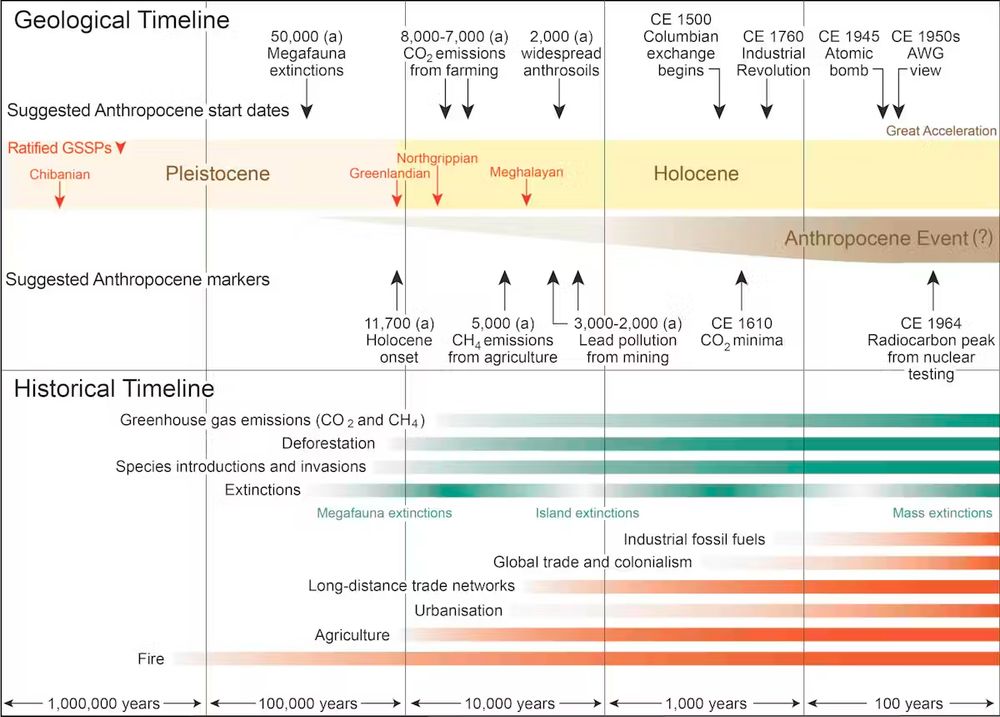
Post image

Anthropocene Canceled? 🚯 @ecosocialism1.bsky.social
monthlyreview.org/articles/has...
>>> Of course NOT <<<
The evidence speaks for itself.
No geologists, epochs or hype required.
theconversation.com/the-anthropo... 🌍⚒️🌐🧪

08.10.2025 16:54 👍 13 🔁 6 💬 0 📌 0
Preview
Global warming reduces the carrying capacity of the tallest angiosperm species (Eucalyptus regnans) - Nature Communications Climate change threatens mountain ash (Eucalyptus regnans) forests, which are among Earth’s most carbon-dense ecosystems. This study finds that a projected 3∘ C warming by 2080 could reduce tree density and carbon storage in these forests by 24%

www.nature.com/articles/s41...

09.10.2025 23:04 👍 15 🔁 6 💬 0 📌 0
Preview
Harms of introduced large herbivores outweigh benefits to native biodiversity - Nature Communications Using impact assessment frameworks, this study shows that the introduction of large mammalian herbivores outside their native range has predominantly caused negative impacts on native biodiversity globally. The authors advise caution regarding their further intentional introduction for conservation purposes.

Trophic rewilding depends on the assumption that replacing lost megafauna with alternative species can generate similar benefits. This new review by Bescond-Michel et al. challenges that belief. 🌏🌐🧪

02.10.2025 11:12 👍 50 🔁 21 💬 3 📌 3

@derekhennen.bsky.social can you please add me? Thanks!

06.10.2025 09:10 👍 1 🔁 0 💬 1 📌 0

Haha OK fine, yes I am actually pretty damn excited to see this list 🤭

06.10.2025 09:09 👍 2 🔁 0 💬 0 📌 0
A screenshot of a webpage making a call for papers announcement for a special issue of the New Zealand Journal of Zoology, focussed on soil and litter invertebrates. The page has a banner image photograph of a globular springtail facing towards the camera, with its head down, feeding on fungi on a decaying log.

A screenshot of a webpage making a call for papers announcement for a special issue of the New Zealand Journal of Zoology, focussed on soil and litter invertebrates. The page has a banner image photograph of a globular springtail facing towards the camera, with its head down, feeding on fungi on a decaying log.

Are you researching the conservation, ecology or taxonomy of soil & litter invertebrates?

Submit your paper to this Special Issue of NZ Journal of Zoology, edited by me, @carlosbarreto.bsky.social & @barnesecodiv.bsky.social!

More info: www.royalsociety.org.nz/news/nzjz-so...

#SoilBiodiversity 🧪

24.09.2025 06:35 👍 31 🔁 19 💬 0 📌 2

See also the excellent @theconversation.com article by University of Melbourne colleagues, Raphael Trouve, Craig Nitschke & Patrick Baker—decades of data provide evidence of reduced forest carrying capacity as trees are subject to a range of stressors from a warming climate

22.08.2025 01:44 👍 41 🔁 32 💬 2 📌 0