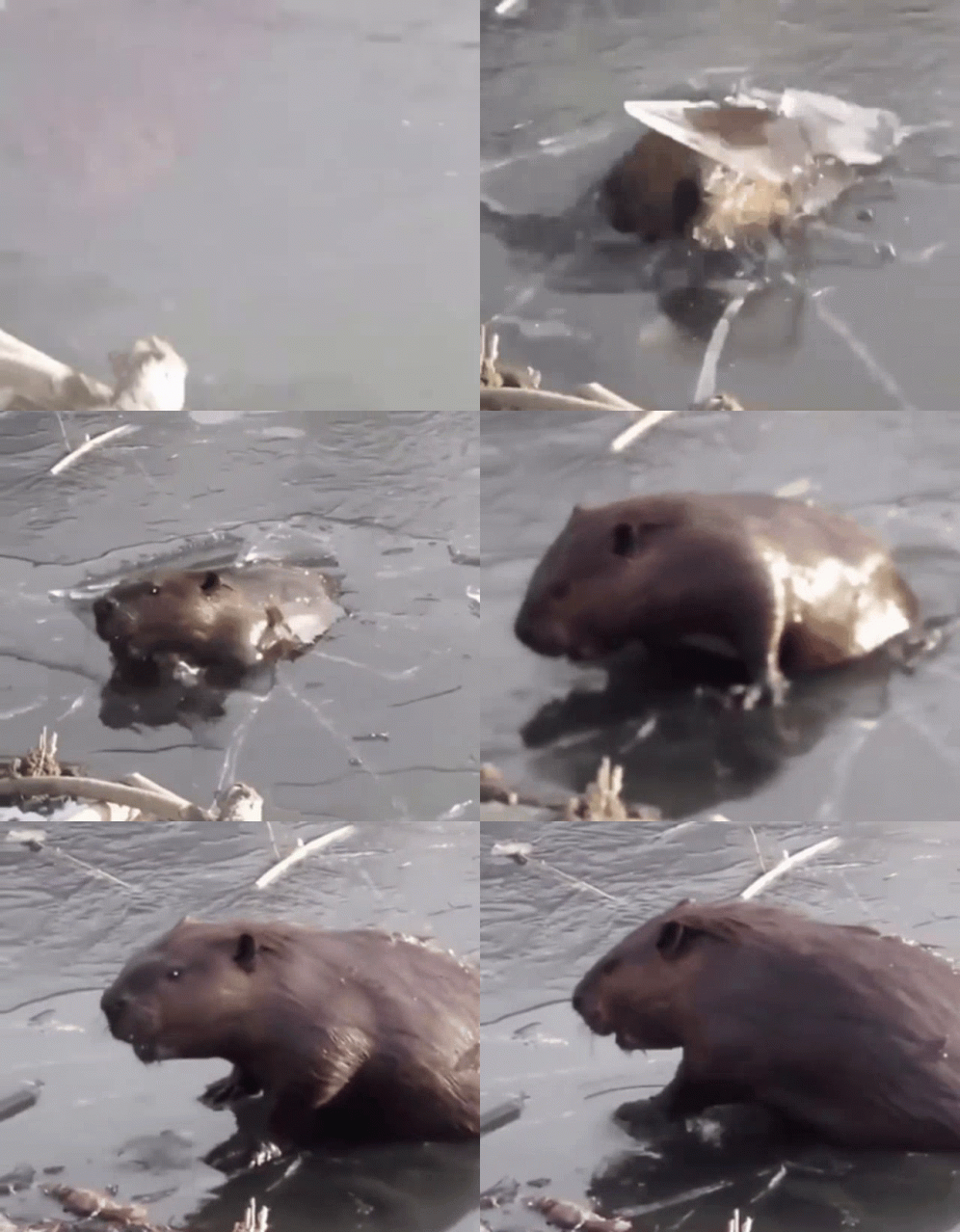
I’d love to!
05.03.2026 23:14
👍 1
🔁 0
💬 1
📌 0

@emilyfairfax
Assistant Professor of Geography at the University of Minnesota and the St. Anthony Falls Lab. Ecohydrologist, beaver dam enthusiast, and advocate for inclusive curriculum. Ask me about beavers! she/her
I’d love to!

Me on the "hopping platform" in front of the Hoppers Logo and a giant beaver lodge image at the Hoppers premiere in Los Angeles. Image from Getty Images.
If you want to learn more about the science behind the movie, you can read about it here: www.laughingplace.com/.../pixar-ho...
Hoppers is a stellar example of telling a hilarious story while also clearly communicating real environmental science and beaver ecology to the general public.

A Pixar water bottle laying in front of a beaver-cut tree and beaver pond

The Pixar art team in the field in waders with me smiling for a picture.

Me and some of the art team overlooking a cascade of beaver ponds.

Me and some of the art team sitting on a big rock overlooking a beaver pond.
...the coolest of which was taking Pixar's art team into the field for a week and showing them how incredible, beautiful, and chaotic beaver ponds are in real life. I'd visited these sites many times before for research, but never with a team of exceptionally talented artists in tow.
What started with a zoom talk for a handful of Pixar people ended up with a character named after me (shoutout to Dr. Samantha E. Fairfax) and walking the red carpet at the world premiere!
My role as a science consultant and "beaver expert" involved a variety of things...

A composite image of me from the red carpet at the Hoppers premiere with the Hoppers logo and several hoppers characters.
After about 5 years (!) of keeping secrets, I am so excited that Disney Pixar's Hoppers is finally coming out on March 6th!
Back in 2021, Pixar emailed me asking if I could give a talk about my research to their employees. Then another talk. And another.
📸 Disney/Jesse Grant/Getty Images

A large beaver dam that includes some huge logs. The edge of the forest is quite distant because reasons.
"A beaver's salary...is sticks."
@emilyfairfax.bsky.social incredible mic drop moment toward the end of your presentation at River Restoration Northwest. Great message and great delivery, thank you! #hydrology 🦫🦊
Geographers, in case you missed this detail, Alex Pretti graduated from the Minnesota Geography department in 2011.

“Multiple sources with knowledge of the situation say federal agents shot a man multiple times in south Minneapolis this morning…” www.startribune.com/ice-raids-mi... (there is a video at their live blog and rolling updates…)
I’d recommend switching to a black flexible pipe (rather than rigid white pipes) and submerging the ends in the downstream creek! The black color helps with heat retention and keeping the ends in flowing water limits ice build up.

Beavers? Robotics? A Messy Chalkboard? A Bunch of Animals? Chaos?
All my favorite things! In one movie!
Check out the new trailer for Pixar's Hoppers, coming out this spring!
youtu.be/PypDSyIRRSs?...
Beavers can boost water storage, wildlife habitat, and carbon capture. A new mapping tool helps identify sites where beaver reintroduction programs could deliver ecological benefits.
Learn more: stanford.io/4prrRsf
#biodiversity #naturalclimatesolutions
!!Absolutely fabulous!!
A slightly surreal moment hearing Dame Joanna Lumley narrate my PhD research. Thankyou to Nina Constable and @emccandlessphoto.bsky.social for letting me play a small part in this film. A brilliant film on beavers and migratory fish!🦫🐟
Link: m.youtube.com/watch?v=uZE5...
A great example of compromising with beavers!
Beavs are stubborn little engineers and don’t particularly care to pull permits or share their design plans with us. Luckily, humans are clever engineers too and can share (not take!) control of the water with a bit of fencing and some pipes!
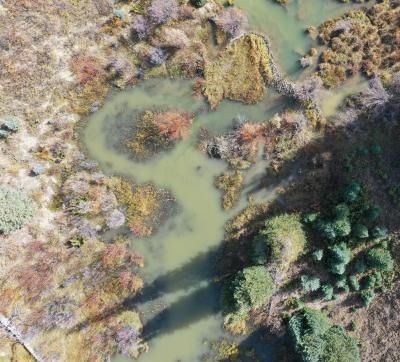
We are working with partners on data management and visualization for effectiveness monitoring of #processbasedrestoration . Check out the #storymap linked in our bio on the Colorado Headwaters PBR #science project.
storymaps.arcgis.com/stories/4c8b...
Do you like learning about beavers but don't have brain space for reading another technical study right now?
Do you enjoy storytelling?
Are you or is someone you know a kid?
If you answered yes to any of the above, then check out this episode of Terrestrials!
www.wnycstudios.org/podcasts/rad...

In Minnesota, beavers have long been considered a nuisance, thanks to their ability to gnaw trees and construct dams that sometimes clog culverts, raise lake levels or flood roads. But among scientists, there’s a growing recognition that these engineers bring a host of environmental benefits.
@woods.stanford.edu
@stanthonyfallslab.bsky.social
@umncla.bsky.social

Beavers are admittedly chaotic and work their ecosystem magic in sometimes mysterious ways.
But we’re trying our best to understand them & work together to fight wildfires!
Check out this article covering Luwen’s recent paper and some of my previous fire + beavs work!
www.cbc.ca/news/canada/...

A woman stands in waders holding a measuring tape. Text reads "Stanford Woods Institute for the Environment, New Research, 'Our findings can help land managers figure out where beaver activity will have the biggest impact. It gives them a practical tool for using nature to solve water and climate problems.' Luwen Wan, Postdoctoral Fellow, Earth System Science, Institute for Human-Centered Artificial Intelligence"
🦫 Bringing back #beavers – and the nature-based solutions they offer for #freshwater, #biodiversity, and #ClimateResilience
New study uses #RemoteSensing to map beaver dams + ponds with an eye toward prioritizing areas for restoration and reintroducing beavers.
🔗 bit.ly/bringing-back-beavers

Many people want to bring back #beavers for water storage. Big ponds = big benefits for flood, drought, wildfire & more! But what drives big ponds? Is it *just* dam length? What drives dam length?
Get your answers in this new paper by Luwen Wan, Kate Maher, & myself!
www.nature.com/articles/s43...
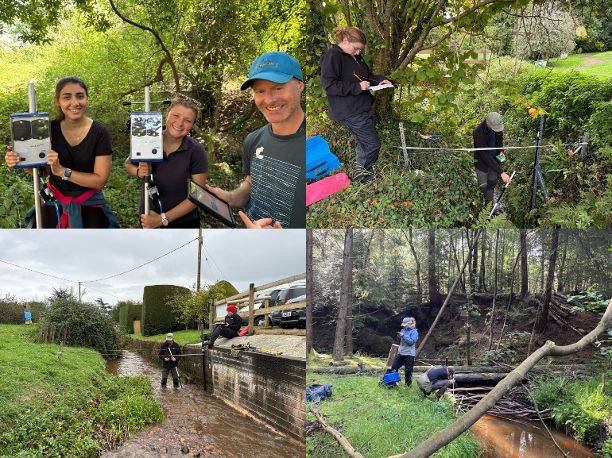
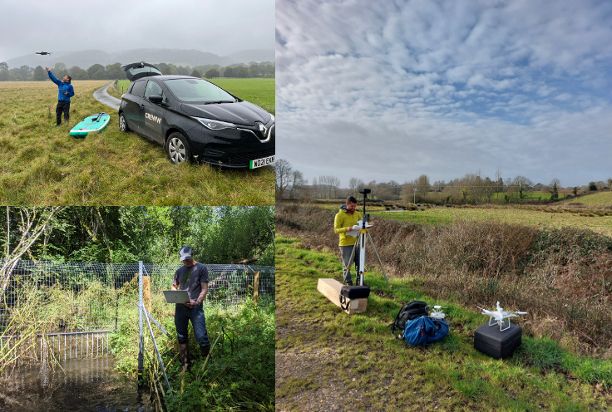
New job alert! Interested in applied research increasing our understanding of water resilience, nature based solutions and rewilding? @exeter.ac.uk we are looking for a Technical Specialist, working with me and others in Geography and @uoe-creww.bsky.social
jobs.exeter.ac.uk/hrpr_webrecr...
💯

A four panel figure from the paper showing a dam made with trash, a dam made with invasive blackberry, a cut burnt pine tree, and a dam made of mud and grass.
The solution? Use field work and community observations to make note of what your local beavers are *actually* building with, and then update the models to reflect that.

A beaver dam on a bright sunny day.
In a new peer-reviewed perspective article led by my postdoc Jessie Moravek and with contributions from many members of the Fairfax lab, we summarized existing popular beaver occupancy models and highlight how beavers like to "break the rules," and then in turn, the models.
Can you predict where a beaver will build a dam? Or how many dams they will build?
There are many models for beaver habitat availability & dam building potential. One thing they all have in common? They need to be calibrated with local knowledge of place-based beaver behavioral adaptations!
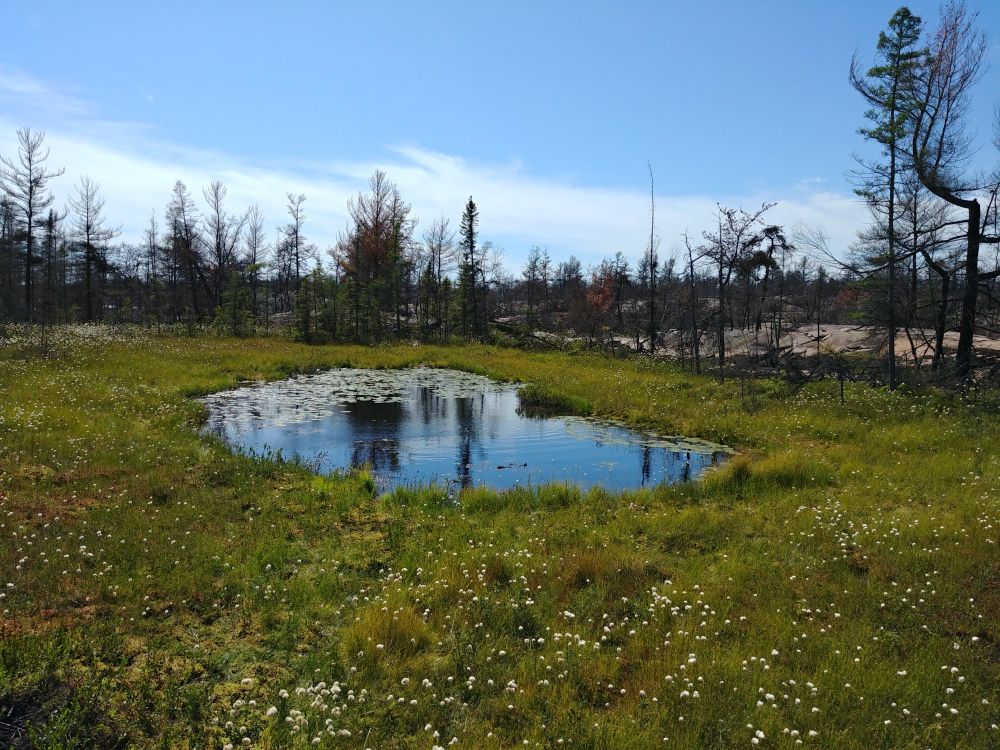
Check out our new paper "Ecohydrological drivers of Boreal Shield peatland fire refugia" in Ecohydrology.
Authors: Alex Tekatch, Chantel Markle, Sophie Wilkinson, Paul Moore, @mercury-ecohydro.bsky.social, @peatofmind.bsky.social
onlinelibrary.wiley.com/doi/10.1002/...

Beaver champion @emilyfairfax.bsky.social telling PBS News about how important beavers are in flood management. She does an amazing job of quickly and memorably explaining what beavers do and why. Also: Did you know beavers make "snuggle piles"?
www.youtube.com/watch?v=wpLu...