
Graphical abstract that visually shows the workflow with photos of each step. The steps show the plant growth and bacterial growth steps:
1. Preparation of rhizobia and seedlings for spot inoculation.
2. Root zone marking and precise bacterial droplet application.
3. Incubation in EdU medium to label DNA replication.
4. Sample fixation and replicated DNA labelling
5. Tissue clearing and cell wall staining
Powerful new protocol from @kathschiessl.bsky.social's lab to trigger & visualise earliest stages of symbiotic root nodule formation in Medicago truncatula — no genetic reporters needed means broad species application!
Protocol: doi.org/10.1016/j.xp...
Summary: www.slcu.cam.ac.uk/news/new-pro...
26.02.2026 11:53
👍 10
🔁 5
💬 2
📌 0

Image of medieval castle in Gemt
We’re in Gent for #icar2025! Looking forward to a fantastic program, catching up with colleagues , and meeting new friends! #arabidopsis #community
16.06.2025 10:58
👍 42
🔁 5
💬 0
📌 0

It‘s about to start - such an amazing venue for #ICAR2025
16.06.2025 14:02
👍 46
🔁 10
💬 0
📌 0
Excited for #ICAR2025 icar2025.com. Come join us at the workshop on Heterogeneity in plants. See you soon in Ghent! #PlantScience
09.06.2025 22:16
👍 6
🔁 1
💬 0
📌 0


Our exhibit at the RHS Chelsea Flower Show is open!
Come and see what Sainsbury Laboratory scientists get up to and have a go at:
🐝 seeing like a bee using a mini-UV camera
🌺 photographing a flower under a scanning electron microscope
💪 discovering how plants move without muscles
19.05.2025 14:23
👍 28
🔁 7
💬 1
📌 1
We are thrilled to have been awarded a silver-gilt medal at our first Chelsea Flower Show! 🪻
An enormous thank you to everyone who contributed to this success - @eng.cam.ac.uk, Darwin Nurseries and Oakington Garden Centre!
#RHSChelsea @cambridgeuni.bsky.social
20.05.2025 07:52
👍 30
🔁 10
💬 2
📌 1

Love it when you are growing an Arabidopsis collection and they all have different shapes, sizes an colors! #Arabidopsis #plantscience
11.04.2025 09:46
👍 19
🔁 2
💬 0
📌 0

Promotional poster with microscopy and computational images of arabidopsis floral meristem. 9th Annual Computational Biology Workshop
8-12 September, 2025
Sainsbury Laboratory, Cambridge
Join us in Cambridge this September for the 9th annual Plant #ComputationalBiology Workshop.
Seminars and discussions will focus on 5 key themes:
1. #Mechanics
2. Pattern processes
3. #AI
4. Computer graphics
5. Concepts
🧳3 travel grants available
REGISTER TODAY www.slcu.cam.ac.uk/computationa...
10.04.2025 09:21
👍 14
🔁 12
💬 0
📌 2
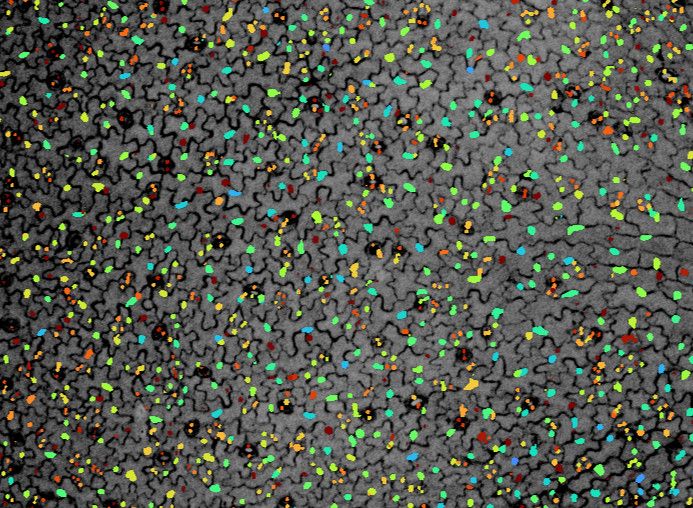
A grey coloured Arabidopsis leaf epidermis, with black cell walls. Each cells has a colourful blobs - a nuclear localised fluorescent ABA sensor, with warm colours indicating high concentrations, and cooler colours indicating lower concentrations.
The Rowe lab is recruiting a #PlantScience PhD student for 2025! You'll use our new ABACUS FRET biosensors to map the leaf #AbscisicAcid accumulations at low humidity in Arabidopsis, wheat and rice to understand how ABA regulates stomatal dynamics. #PhDposition
www.findaphd.com/phds/project...
14.03.2025 14:08
👍 30
🔁 37
💬 1
📌 2
Our recent review on Thiourea-Catalyzed Glycosylation
15.03.2025 17:40
👍 4
🔁 1
💬 0
📌 0

Using genome-scale and developmental genetic approaches, Katharina Schiessl (pictured) will characterise the regulatory pathways and cellular processes that underpin the initiation and differentiation of root-related organs associated with the accommodation of beneficial nitrogen-fixing bacteria and parasitic root knot nematodes. Image of Dr Schiessl with SLCU lab in background and overlay of images taken by Katharina showing various stages of root nodule development.
We are delighted to announce that Katharina Schiessl
will head a new research group at @slcuplants focused on understanding how organ diversity of plants can be reshaped by their colonisers - plant #galls and root #nodules! Read about her exciting research plans www.slcu.cam.ac.uk/news/dr-kath...
12.12.2023 10:41
👍 33
🔁 10
💬 1
📌 1


