
📢🚨👉 AAG Unruly Natures 2026!!
Thursday 3/19, 7:30-10pm @ Standard Deviant Brewing
29.01.2026 05:27
👍 6
🔁 6
💬 1
📌 0

@jessicadicarlo
Geographer | University of Utah Co-Founder @scwobservatory.bsky.social Editor @globalchinamap.bsky.social PIP Fellow @ncuscr.bsky.social *political ecology, Global China, development, geopolitics* www.jessicadicarlo.phd Opinions here are my own.
📢🚨👉 AAG Unruly Natures 2026!!
Thursday 3/19, 7:30-10pm @ Standard Deviant Brewing

@sethschindler.bsky.social and @jessicadicarlo.bsky.social sat down with weilagong.bsky.social to discuss her book: "Implementing a Low-Carbon Future: Climate Leadership in Chinese Cities," which asks: who actually makes low-carbon policy work on the ground?
newbooksnetwork.com/implementing...
New article out in JCCA on China as an environmental leader, which emerged from the Navigating Global China event thanks to @sppga.ubc.ca, @globalaffairs.canada.ca & @asiapacificfdn.bsky.social. A treat to think with this brilliant group!
New paper out in the Journal of Current Chinese Affairs
@jcca-gigahamburg.bsky.social
China Aspires to be an Environmental Leader: How Should the Rest of the World Engage?
It emerged from the Navigating Global China event @sppga.ubc.ca, Global Affairs Canada, & @asiapacificfdn.bsky.social

📢 CAPE Award Deadlines capeaag.wordpress.com
12/20: Outstanding Book
1/15: Nominations for Outstanding Article & Distinguished Career Award
2/1: Student Paper Award & FitzSimmons Early Career Award
2/15: Scholar-Activist Award & Field Study Award
@geographers.bsky.social

Check out Ellen Li's great profile of the Saysetta SEZ near Vientiane, Laos! It built on my visit (@profjulietlu.bsky.social) w Tyler Harlan & Nicholas Bosoni. Thanks to @jessicadicarlo.bsky.social and @globalchinamap.bsky.social for support! @ellenlhl.bsky.social
thepeoplesmap.net/project/vien...

🚲 New paper published in Progress in Human Geography 🚲
'The world from a bicycle: Cycling as kinesthetic methodology' by Mia Bennett, Jessica DiCarlo, and Sarah Elwood
journals.sagepub.com/doi/10.1177/... @jessicadicarlo.bsky.social

Neither fully accepted nor entirely apart, the descendants of foreigners in China embody the tensions of identity in a globalised yet nationalistic age. Chengzhi Zhang traces their struggles for belonging and what this reveals about the boundaries of Chineseness.
Check out our latest podcast episode with @jacktaggart.bsky.social on "The end of aid? US, China, and the future of development" 🌍
newbooksnetwork.com/the-end-of-a...

Tune into this *important* discussion on the first survey of Chinese public opinion on foreign policy and what these findings mean for US-China relations and China's role in the world.
September 3rd online and in person.
globalaffairs.org/events/china...

Trivium is hiring a Beijing-based junior analyst to focus on industrial policy, supply chains, and decarbonization. I could not recommend this brilliant team of people more highly. Apply!
www.linkedin.com/posts/cory-c...

Over the past 2 decades, China has become Laos’s top investor, main creditor, and 2nd-largest trade partner. In a new report, @profjulietlu.bsky.social and I unpack Chinese investment across four land-intensive sectors: agriculture & plantations, mining, infrastructure & SEZs. tinyurl.com/kw5vteem
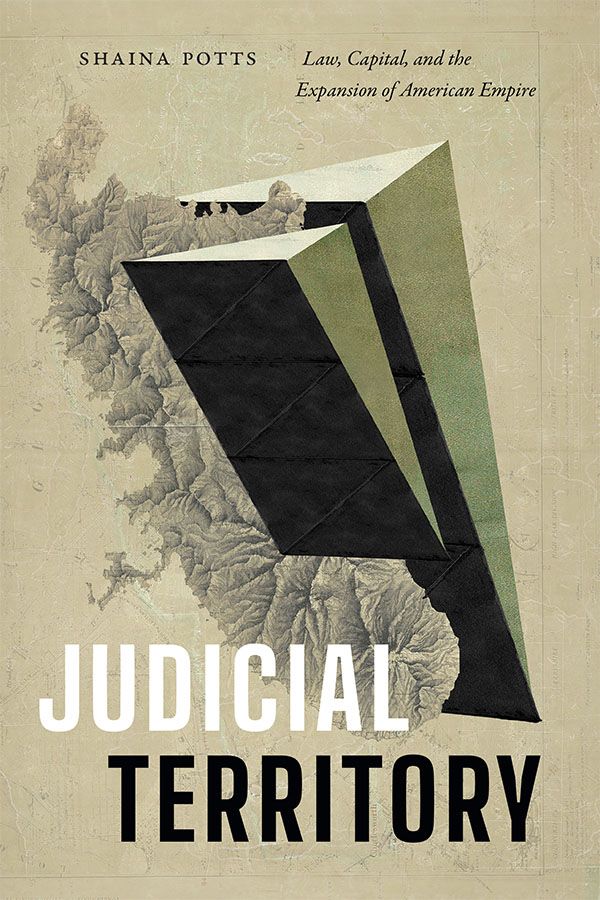
Shaina Potts, Judicial Territory: Law, Capital, and the Expansion of American Empire - @dukepress.bsky.social, September 2024
www.dukeupress.edu/judicial-ter...
@newbooksnetwork.bsky.social discussion with Second Cold War Observatory. newbooksnetwork.com/judicial-ter...
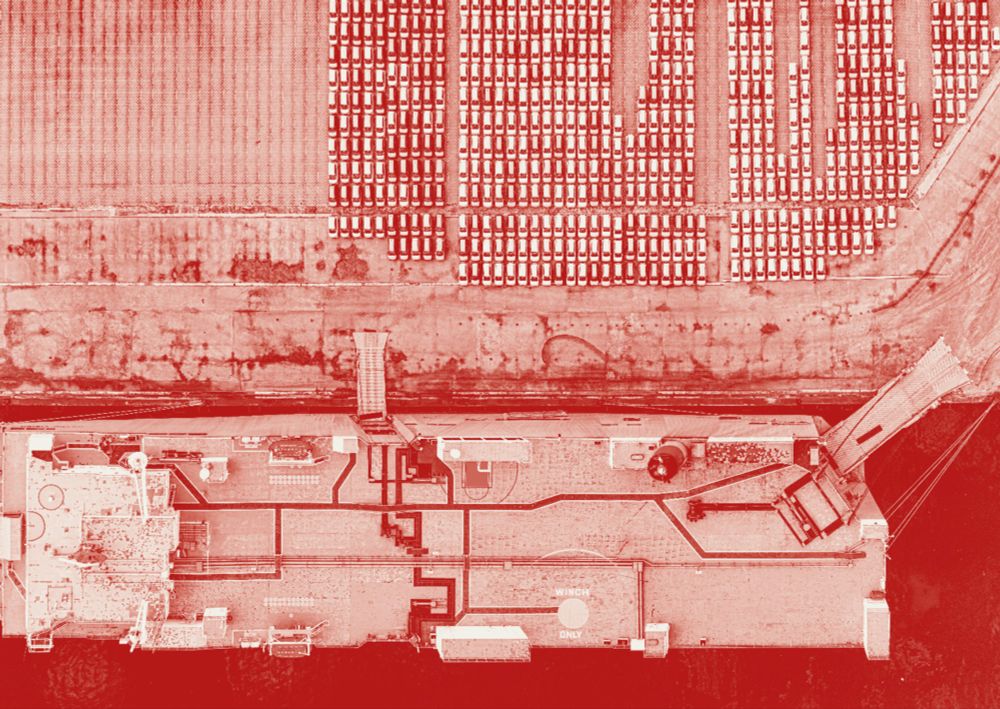
Wrote a new piece for @the-breakdown.bsky.social on how the Second Cold War is shaping the future climate and energy transition, including in developing countries
www.break-down.org/post/a-green...
@campolis.bsky.social @scwobservatory.bsky.social
a few quotes in the thread below: 1/6

The next Global China Pulse CfP is out!
A Gendered Lens on Global China
@globalchinamap.bsky.social
globalchinapulse.net/calls-for-pa...
Pleased to see Infrastructural Times on the bookshelf, especially w/chapters by @jessicadicarlo.bsky.social @xazaaradjame.bsky.social, and Schindler & Kanai exploring temporalities connected to the BRI and Chinese-led global infrastructure development.
bristoluniversitypress.co.uk/infrastructu...

11/ Instead of asking what Global China is, we should ask:
👀Who is using the term?
🌏In what context?
⚖️For what purpose?
“Global China” isn’t self-evident, it’s a story told. And those stories have real-world stakes.
Read in @dialogueshg.bsky.social: journals.sagepub.com/doi/full/10....
10/ So, why does Global China and its tensions and contradictions matter?
Because “Global China” isn’t just descriptive—it’s political. It’s used to justify:
🪖Militarization
🤝Diplomacy
🎭Cultural exchange
And it shapes how we interpret China’s role in global change.
9/ Path VI: Alternative
A common position of Global China is as a model for the Global South, think:
🛤️Belt and Road
🌍South–South Cooperation and Solidarity
🏛️BRICS, Global Development Initiative
But it’s not one-sided: some see China as a partner, others as a new hegemon.
8/ Path V: Threat
This path centers “Global China” as threatening, for instance:
⚠️To democracy
📦To supply chains
🌐To the world order
This narrative fuels military spending, decoupling, espionage fears. China, in turn, invokes external threats to justify domestic control.
7/ Path IV: Status
Is China a superpower? A “great power”? Still a developing nation?
This path highlights the debate over China’s position in the global hierarchy—and how both Chinese and Western institutions narrate this positionality.
6/ Path III: Bridge
Focuses on people-to-people ties like:
🌏Diaspora connections
🎓International students
🎨Cultural exchanges
This path of Global China is plural, grassroots, and collaborative, often centering civil society rather than the state.
5/ Path II: Integration
China is seen as entering or reshaping global systems—like capitalism, trade, and finance.
🔁The West frames China as joining the rules-based order
🔄China frames itself as redefining global norms
So, is China a follower or a rule-maker?
4/ Path I: Other
China is portrayed as deviant, dangerous, or fundamentally different.
👤 “Debt trap diplomacy”
👤 “Yellow Peril”
👤 Authoritarian threat
China’s state media also leans on this frame—claiming Chinese exceptionalism in contrast to the West.
3/ We found that “Global China” works like a mirror—it reflects the priorities and politics of whoever uses it. We traced how different actors use the term and identified six dominant paths that shape its meaning.
2/ “Global China” is everywhere, from headlines about TikTok to debates on Chinese investment. It appears in millions of sources:
🔹Media coverage
🔹Think tank reports
🔹Academic studies
🔹Cultural references
to describe everything from infrastructure to education exchanges.
🧵1/What is Global China? @meredeboom.bsky.social & I argue it’s not one thing, but a plural, evolving imaginary. We trace 6 paths—Other, Integration, Bridge, Status, Threat, Alternative—showing how China’s global role is imagined, claimed & contested as meanings collide & open possibilities.
www.nytimes.com/2025/06/11/u...
New Online 1st Article “Six paths of Global China: A genealogy of a contested geographical imaginary” by Jessica DiCarlo and Meredith DeBoom
doi.org/10.1177/2043...
'Global China' is suddenly everywhere, from think tank reports to political speeches to academic texts. But what political work does the term 'Global China' itself do? @jessicadicarlo.bsky.social and I identify six 'paths' of Global China: Other, Integration, Status, Bridge, Threat, & Alternative.