
Great to see this out in Nature. Tumors shape their environment to influence survival.
05.03.2026 14:50
👍 3
🔁 0
💬 1
📌 0
Great to see this out in Nature. Tumors shape their environment to influence survival.
We predict the emergence of phase-locked domains that slowly coarsen over time. Due to heterogeneity in the genome this coarsening is arrested ultimately.
Like the segmentation clock, this might be an example of how biology uses oscillations in time to control spatial patterns.

There is a strange phenomenon in epigenetics where cells use energy to cycle chemical DNA modifications.Nobody knows what such oscillations are good for. We show that chromatin-mediated interactions lead to complex genomic patterns in DNA methylation oscillations.@prxlife.bsky.social
bit.ly/4tBS1LJ
New preprint out now, where we track clonal cancer evolution with barcodes and predict treatment outcome.

Check out our workshop on mechanisms by which 1D and 3D processes are integrated in the genome: pks.mpg.de/neg26. I am organizing this with Buddhapriya Chakrabarti, Srinjan Basu and Angelo Rosa. #epigenetics #genomics #physics #chromatin #genomeorganization
Interested in learning about #intelligent #active #matter? We have three open spots for presenting a poster at an international conference close to Munich. Please send an email to frey@lmu.de before Friday noon (25.7) iam.physik.lmu.de

New preprint! Non-reciprocal interactions don’t arise from a potential. Yet, we found a way to encode them in a Hamiltonian, which captures the phase transitions of non-reciprocal systems! With Yubo Shi, Roderich Moessner, and @marinbukov.bsky.social @mpipks.bsky.social.
arxiv.org/pdf/2505.05246
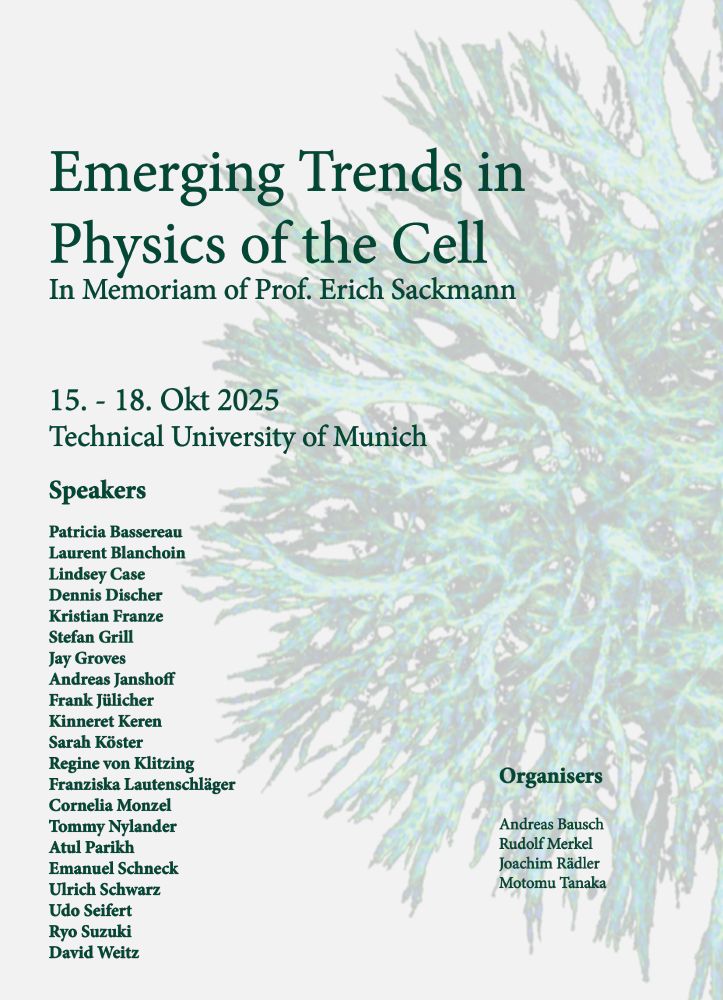
Registration has started for the conference "Emerging Trends in the Physics of the Cell" in memoriam of Erich Sackmann at TU Munich from October 15-18 2025 www.cpa.tum.de/cpa/conferen...

In collaboration with @fakhrilab.bsky.social we show how cell shape can be controlled with light 👉 www.nature.com/articles/s41...

New preprint: How do cells measure time? In human development, pluripotent epiblast cells pause for about two weeks before differentiating into more specialised cell types. We show that this timing is controlled by a transcriptional clock that works like an hourglass. www.biorxiv.org/content/10.1...
The same model also explains the much faster transition in mouse. Apart from genetic oscillators the transcriptional hourglass is a second paradigm of how cells determine time.
🚀 The Frey Group is now on Bluesky! 🌐
We explore statistical physics, biophysics, and nonequilibrium systems. From active matter to self-organization in biology, we uncover fundamental principles of complex systems.
#Physics #Biophysics #ActiveMatter #ComplexSystems #TheoreticalPhysics
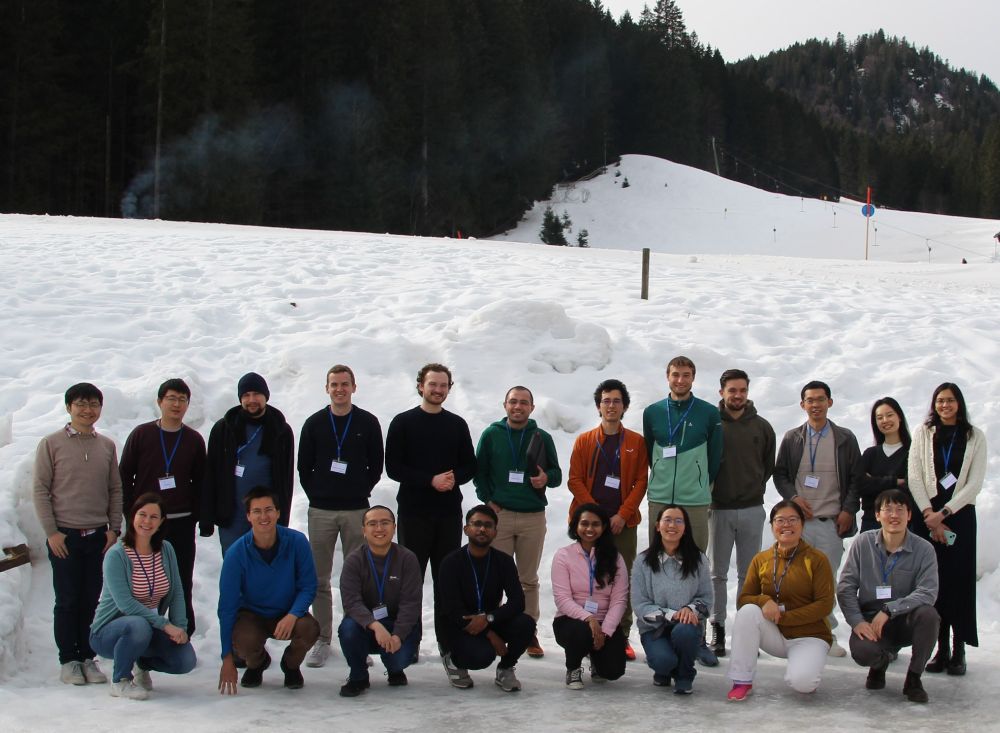
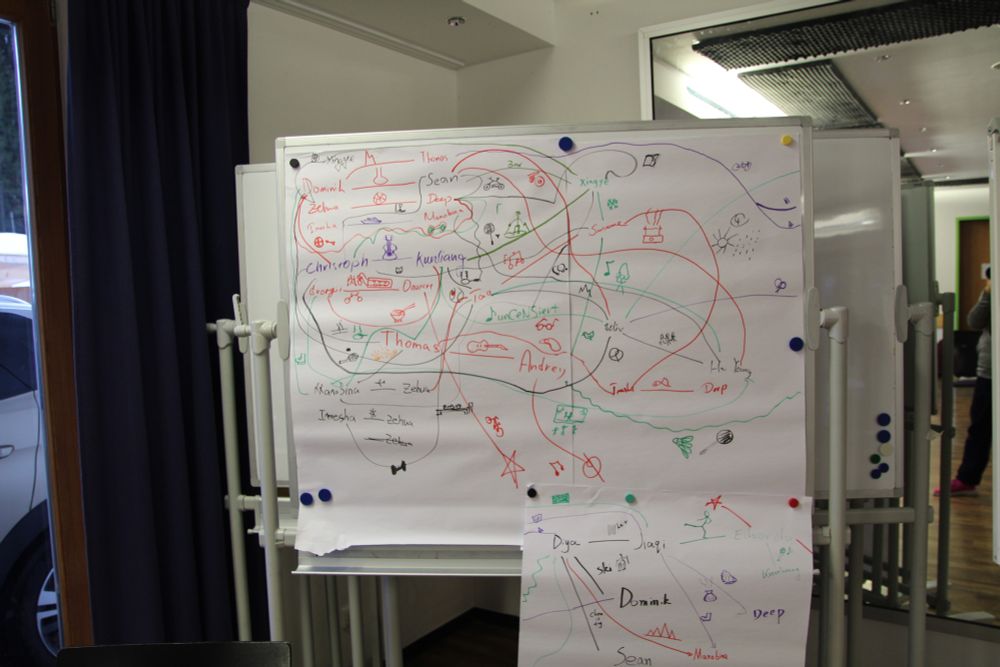

Had a fantastic time at the CeNS retreat at Lake Spitzingsee! 🚀 Great scientific talks and posters, valuable feedback from Barbara Beege/Sprachraum, insights from@lfmilles.bsky.social, and an unforgettable night sleigh ride! ❄️✨ #CeNSRetreat #Science #Networking

🚨 Job Alert 🚨🔬🧪👩💻🖥️ Are you interested in #BioimageAnalysis #ComputerVision #AI #ML methods for the #LifeSciences? Do you want to work on #DigitalPathology of tissues, cells, organelles? Check out this #PostDoc opportunity in a collaboration with Jens Rittscher from @oxengsci.bsky.social @ox.ac.uk

We are pleased to announce that the upcoming conference, “Emergence and Self-organization in Biological Systems” (ESBS 2025), will be held at the Arnold Sommerfeld Center in the Physics Department of LMU Munich from August 18 to 22, 2025.
Our work demonstrates emergence in the training of deep neural networks, which impacts the achievable performance of deep neural networks. By Pascal de Jong and Felix Meigel.
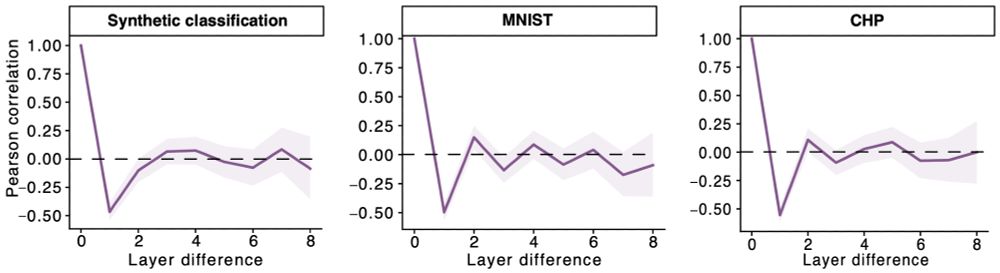
We derive a theory from first principles that predicts that the homogeneous state of deep neural networks is unstable in a way that leads to the emergence of periodic channel structures.
New preprint: are deep neural networks just complicated curve fitters or can they show emergent behavior that is independent of the data? We show that training deep neural networks gives rise to emergent weight morphologies independent of the training data.
arxiv.org/abs/2501.05550

Interspecies scaling laws (allometries) are a fascinating phenomenon. Here we investigate allometric scaling relationships of quantitative cardiomyocyte properties across different mammalian species.
doi.org/10.1242/jeb....
(w/ Tanja Kloock and Christian Mühlfeld)
We show that this behaviour relates to a PRC2 driven phenomenon that resembles wetting of fluids. Check out the preprint to find out more. By Aida Hashtroud with Wolf Reik, @vonmeyennlab.bsky.social , @steglelab.bsky.social Mark Jan Bonder
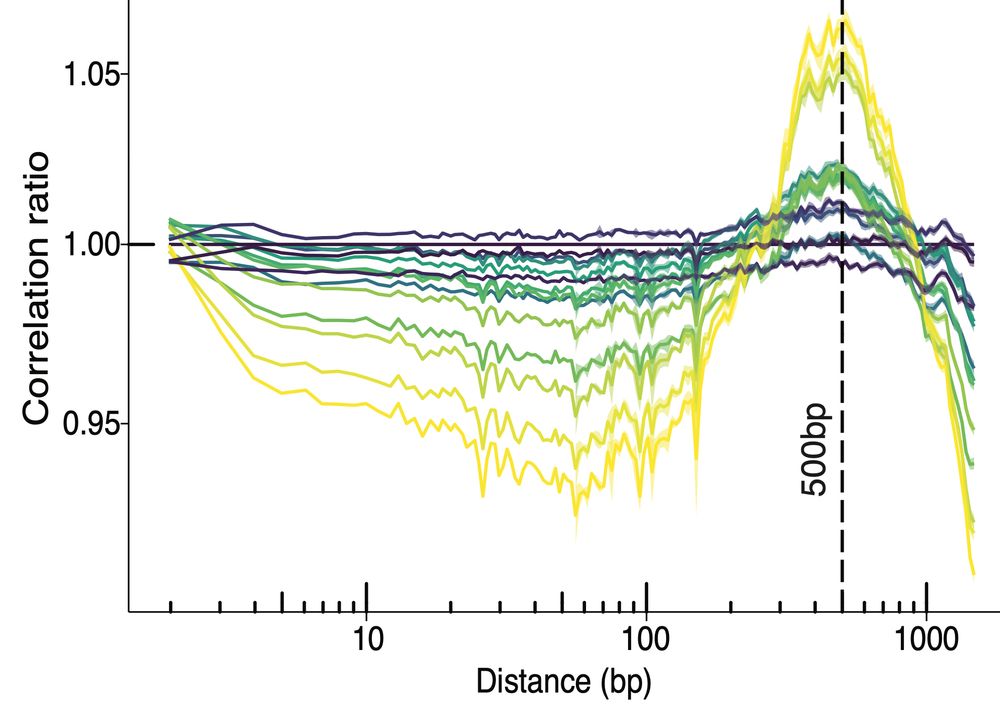
New preprint: Ageing is tightly reflected in longitudinal evolution of DNA methylation marks. We show that ageing also leaves a stereotypic footprint in how DNA methylation is correlated in the genome: positions that are roughly 500bp apart become more correlated. www.biorxiv.org/content/10.1...
Unfortunately, today in the lecture Boltz-man was brutally beaten up by S-man.
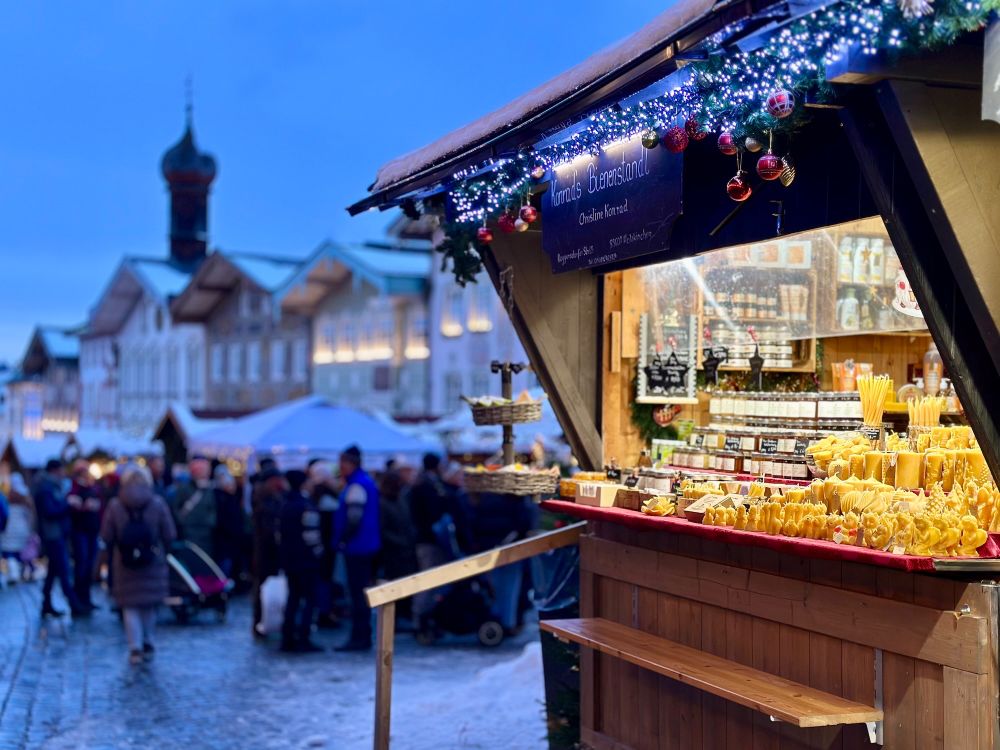
Now that we have recovered from Oktoberfest the Christmas market season begins. #Bavaria
Thanks, could you add me, please?
Starting a theoretical biophysics starter pack, feel free to (self-) nominate, I’ll keep updating this in the next days/weeks!
go.bsky.app/RMF7jUK
He's been throwing things from left to right 10^23 times...
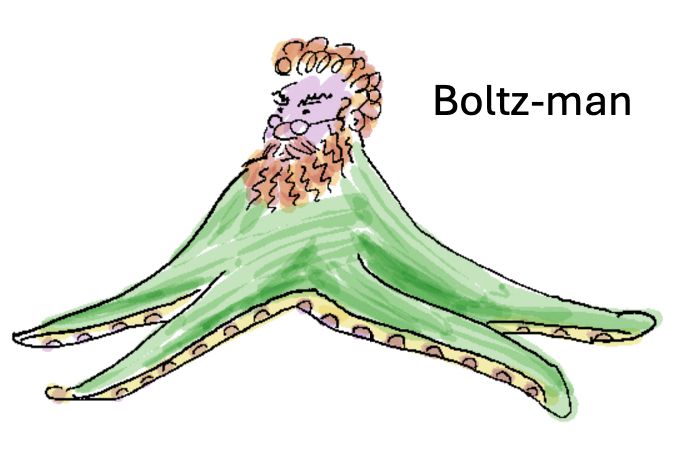
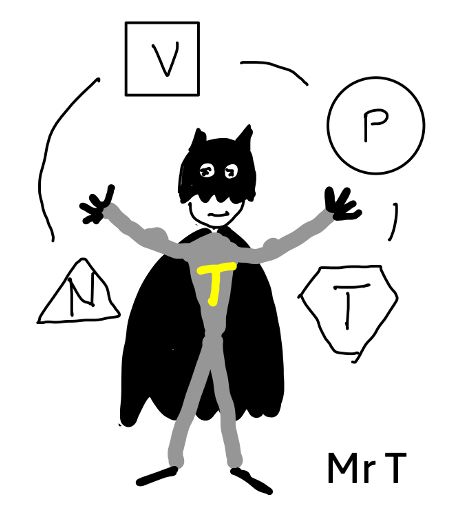
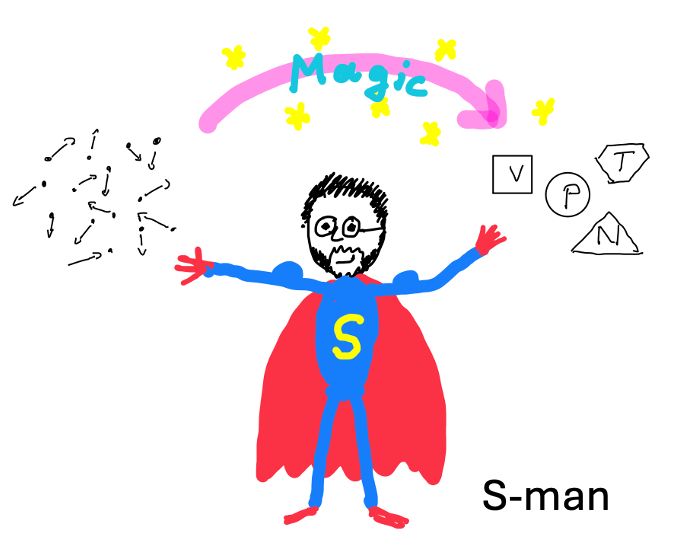
Teaching statistical physics this term. If things get difficult, we get help from super heroes like Mr T (who can relate macroscopic variables) or S-man (who can derive them micrscopically). There is also a villain called Boltz-man who has the habit of creating super-large numbers.

3D-reconstructed seminiferous tubules from serial testis sections
In this collaboration with Ben Simons' and Shosei Yoshida's lab, we propose a minimal mechanism for the intricate spatiotemporal dynamics of the spermatogenic wave.
Congratulations to Toshiyuki Sato (experiment) and Yuting I. Li (theory) for their outstanding work!
www.biorxiv.org/content/10.1...

