
ATI F/T sensor with cable connector I don't recognize

Anybody know how to connect & drive this type of ATI F/T sensor cable? We are trying to buy secondhand and I am unable to find info about it, no clue how to connect to our Net F/T box.
26.02.2026 21:42
👍 0
🔁 0
💬 0
📌 0
our gripper: github.com/correlllab/h...
but the friction, solimp, solref is unchanged from the 2f85. i noticed greater oscillations prior to implementing that, and breaking up the collision mesh into multiple boxes
01.02.2026 00:29
👍 1
🔁 0
💬 0
📌 0
It might be helpful to visualize the contact points, forces. Maybe try to debug up your gripper similar to robotiq_2f85/scene.xml in mujoco menagerie, it is a simple box hanging from above. fwiw I set up our lab's gripper just last week in mjc with the same settings as the 2f85 and it works great.
01.02.2026 00:27
👍 0
🔁 0
💬 2
📌 0
Modeling - MuJoCo Documentation
If you haven't seen it already, this section of the docs has most of the first recommendations: mujoco.readthedocs.io/en/stable/mo.... Since you are working on a gripper you might want to check out the robotiq 2f85 xml in menagerie, specifically the multiple contact geoms at the finger.
26.01.2026 18:42
👍 0
🔁 0
💬 4
📌 0

The G-spot refers to the genot-brogliato point in the painleve paradox at which point a slipping planar rigid body lifts-off. from an article in the journal of applied mathematics
🤓🧐🤔🤨
20.01.2026 19:05
👍 0
🔁 0
💬 0
📌 0
not even thinking about the ethical issues of such labor, which are of course the concerns with primacy.
16.11.2025 22:34
👍 1
🔁 0
💬 0
📌 0
and sensing!
16.11.2025 22:21
👍 0
🔁 0
💬 0
📌 0
People are better off splurging for something more proven, if that's within their budget. Spinning up a open/custom hand is more feasible and would actually still be more productive. A lot of people and problems are probably better served by thinking jointly about required morphology and dexterity.
16.11.2025 22:20
👍 1
🔁 0
💬 1
📌 0
We have had an absolutely horrid time with the Inspire hands and a somehow worse time with the actual H1-2. I don't know what's been improved in the past year but I am extremely skeptical of any hand offering from Unitree, esp for 30k USD.
16.11.2025 22:14
👍 0
🔁 0
💬 1
📌 0
cam showing up wouldve been nice but not sure that wouldve moved the needle
24.10.2025 04:58
👍 1
🔁 0
💬 1
📌 0

unexpected brickage from jokic ruining the third, true, and only MPJ we ever needed
24.10.2025 04:57
👍 1
🔁 0
💬 1
📌 0
yesterday i advised self-censorship to a undergrad student im helping apply for grfp re: their research & personal motivations. i think they've got as good a shot as any other. i think im making the right call, but it feels deeply wrong and capitulatory. any thoughts (esp from reviewers)?
15.10.2025 20:32
👍 0
🔁 1
💬 0
📌 0

On the Dual-Use Dilemma in Physical Reasoning and Force
Humans learn how and when to apply forces in the world via a complex physiological and psychological learning process. Attempting to replicate this in vision-language models (VLMs) presents two challe...
and then to self-plug a bit, i wrote up a little case study/position paper on dual-use in VLM reasoning and robot manipulation last month: arxiv.org/abs/2505.18792. the gist is that safeguarding reduces both helpful/harmful robot control and i opine about what that means for future model eval/dev
04.06.2025 05:24
👍 0
🔁 0
💬 0
📌 0
seemingly a hot topic rn on my feed but i'm not sure how much more humanity can lower the floor on mass autonomous death, whereas taking care of a human is still wildly inefficient. that is to say on the level of the individual researcher in AI theres a lot more unrealized help we can do than harm
04.06.2025 05:20
👍 0
🔁 0
💬 1
📌 0
i have two somewhat distinct and existential concerns: 1) that we are guileless researchers operating in aggregate as an arm of the MIC and 2) that our research is directly extensible (within a few degrees) to dual-use. tbh i think many overstate 2) and others are helpless wrt 1) due to "incentives"
04.06.2025 05:13
👍 0
🔁 0
💬 1
📌 0
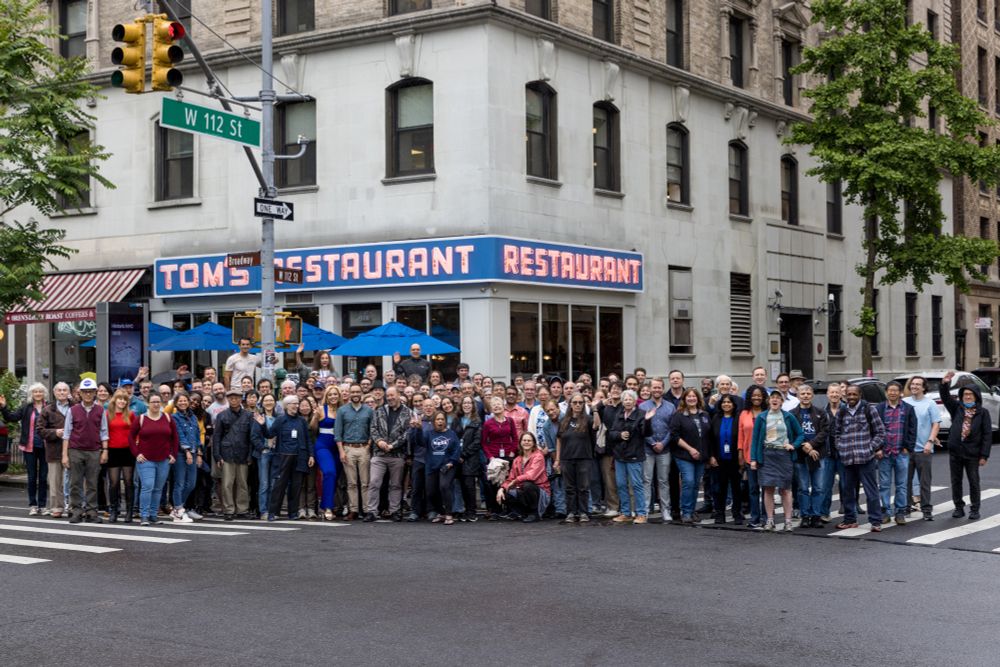
Photo of the a large group of GISS employees/colleagues in front of Toms Restaurant with a prominent street sign saying "112th St" taken from the middle of Broadway. Credit: Tricia Baron.
Last day at the GISS building (Wed. May 28th). 🥲
31.05.2025 13:51
👍 725
🔁 150
💬 50
📌 44
NSF GRFPs terminated for those in graduate school and already attending Harvard, too.
22.05.2025 20:31
👍 91
🔁 59
💬 5
📌 9
but I think that's a good feeling to lean into
12.05.2025 22:24
👍 1
🔁 0
💬 0
📌 0
yeah, I think you're right on both points. I got in the weeds on haptic teleop interfaces for LFD recently and overall am not super convinced it'll enable the data scale we need. Way more interested in self-improvement from physical interaction (w/ touch) though I feel quite out-of-depth there
12.05.2025 22:23
👍 2
🔁 0
💬 1
📌 0
and w/o touch
12.05.2025 17:52
👍 3
🔁 0
💬 1
📌 0
I'm generally a believer that we'll eventually do everything with vision, but I also believe that we'll need touch to get policies running closer to real-time/humans. My advisor loves to bring up these videos from a study of trying to strike a matchbox w/ and w/o feeling in their fingers:
12.05.2025 17:50
👍 4
🔁 0
💬 1
📌 0
Me and @wxie.bsky.social
05.05.2025 02:28
👍 2
🔁 1
💬 0
📌 0
Liebherr
22.04.2025 16:15
👍 1
🔁 0
💬 0
📌 0


going forward, i'm thinking about how we can scale good data collection with force control and improved physical models & reasoning. as of now you cannot convince me that we do not still need huge amounts of real robot data for robust contact-rich manipulation. and we are quite a ways off...
19.04.2025 23:42
👍 1
🔁 0
💬 0
📌 0

so interesting where the field has coalesced and where it has diverged. some of it is a necessary byproduct of manipulation, some of it seems like open areas for research. anyway, here's a fun and unreadable plot: these 25 papers evaluate 64 (59 models) significantly different contact-rich tasks
19.04.2025 23:36
👍 0
🔁 0
💬 1
📌 0

as most data pipelines begin with position-space teleoperated demonstrations, 64% of the reviewed works correspondingly train policies to output end-effector position-space actions
for my area exam last month i reviewed 25 touch-based IL works from 2024/5, taxonomized across tasks, sensor type, model architecture, and more (up now at arxiv.org/abs/2504.11827). here's a perhaps intuitive plot of policy action space--the in-figure citations are clickable in the pdf/html!
19.04.2025 23:32
👍 4
🔁 0
💬 1
📌 0
I'm giving a lecture on language model debiasing to my undergrad NLP course on Friday but I'm not super up to date on the research. Does anyone have any suggestions for papers/topics to cover?
16.04.2025 16:06
👍 1
🔁 2
💬 0
📌 0
true, but humans learn implicit control laws, however relative they may be, from rich sensory information over many, many episodes. for robots, high-precision servos are just one tool to obtain such high-fidelity data. i also think such tooling is important for achieving supra-human abilities.
28.03.2025 19:01
👍 2
🔁 0
💬 1
📌 0
I think the RL policy / teleop comparison here is not quite fair--the RL policy leverages wrench data, which is the primary supervisory signal for these kinds of insertion tasks (learning visuo-force servoing) whereas the teleop here is using a 3D CAD mouse--huge embodiment gap in data collection
23.03.2025 00:30
👍 0
🔁 0
💬 0
📌 0


