Raphael Gollnisch's Avatar

Raphael Gollnisch

@rgollnisch

Evolutionary genetics of calcifying protists Postdoc at University of Oxford

1,021
Followers
735
Following
8
Posts
16.10.2023
Joined
Posts Following

Latest posts by Raphael Gollnisch @rgollnisch

Scientific American has updated the figure, now grouped into swimmers, fliers, walkers/runners, and vehicles. A person on a bicycle remains the most efficient way to travel, compared to all forms of biological locomotion and mechanical transport.

www.scientificamerican.com/article/a-hu...

04.03.2026 11:52 πŸ‘ 568 πŸ” 210 πŸ’¬ 17 πŸ“Œ 31
Preview
Estimating Organism Abundance Using Within‐Sample Haplotype Frequencies of eDNA Data Environmental DNA (eDNA) provides powerful insights into species presence and community composition but remains limited in its capacity to infer species abundance or population structure. Here, we sh...

🧬 My haplotype paper is out!

We show that deviations between within-sample and population-level haplotype frequencies can be used to estimate how many individuals contributed to an eDNA sample.

No tissue references needed, just metabarcoding data and some population genetics.

#eDNA #PopGen

13.02.2026 16:54 πŸ‘ 42 πŸ” 15 πŸ’¬ 2 πŸ“Œ 1

Final version of paper with @smishra677.bsky.social now published in a wonderful issue of GENETICS!

academic.oup.com/genetics/art...

08.01.2026 13:57 πŸ‘ 26 πŸ” 16 πŸ’¬ 0 πŸ“Œ 0
Preview
Not Just Ne Ne-More: New Applications for SMC from Ecology to Phylogenies Abstract. Genomes contain the mutational footprint of an organism’s evolutionary history, shaped by diverse forces including ecological factors, selective

In a new GBE Review, @david-peede.bsky.social et al. overview the SMC model and extensions, discuss examples of discoveries made with the help of SMC-based inference, and comment on the assumptions, benefits, and drawbacks of various methods.

πŸ”— doi.org/10.1093/gbe/...

#genome #evolution #compbio

08.01.2026 08:05 πŸ‘ 36 πŸ” 20 πŸ’¬ 1 πŸ“Œ 2
Post image

Finally, we’ve solved a long-standing mystery: what tintinnid shells are actually made of:
A new class of biomaterial formed by remarkable structural proteins unique to tintinnids.
A major milestone after 3 years of work! Read about it in our preprint: doi.org/10.64898/202...
#ProtistsOnSky

27.12.2025 10:30 πŸ‘ 95 πŸ” 35 πŸ’¬ 4 πŸ“Œ 3
Preview
Genomic insights into the origin of ecotypes A century after Turesson introduced ecotypes as locally adapted subunits of species, their origins and nature remain debated. Recent advances in molecular ecology have breathed new life into the ecotype concept and significantly expanded our understanding of how ecotypes form. Here, we clarify how ecotypes can be distinguished from other forms of local adaptation, outline criteria for their recognition, and synthesise evidence on the ecological and evolutionary processes that give rise to them. We then evaluate what genomics has uncovered about the origin of ecotypes, revealing pronounced roles of pre-existing variation, large-effect loci, structural variants, gene regulation, and complex demographic histories. Our framework refines Turesson’s concept and highlights outstanding questions about the predictability, persistence, and evolutionary significance of ecotypes.

Online now: Genomic insights into the origin of ecotypes

15.12.2025 12:56 πŸ‘ 6 πŸ” 1 πŸ’¬ 0 πŸ“Œ 0
GHIST logo

GHIST logo

Congratulations to the winners of the 2025 Genomic History Inference Strategies Tournament challenges!

Among the 9 challenges, we had five winners: @alwaysrong.bsky.social, @adaigle.bsky.social, @andrewhvaughn.bsky.social, @thymelicus.bsky.social, @rgollnisch.bsky.social

15.12.2025 18:48 πŸ‘ 20 πŸ” 10 πŸ’¬ 2 πŸ“Œ 0
Preview
Genomic architecture of egg mimicry and its consequences for speciation in parasitic cuckoos Host-parasite arms races facilitate rapid evolution and can fuel speciation. Cuculus cuckoos are deceptive egg mimics that exhibit a broad diversity of counterfeit egg phenotypes, representing host-ad...

Our new @science.org paper is out! Cuckoos and hosts are locked in a coevolutionary arms race over egg mimicry.

But how are these egg types inherited, and could this drive speciation? We sequenced hundreds of genomes to find out!

doi.org/10.1126/scie...

🧡1/6

30.10.2025 19:15 πŸ‘ 109 πŸ” 47 πŸ’¬ 2 πŸ“Œ 1
Preview
Ancient origin of an urban underground mosquito Understanding how life is adapting to urban environments represents an important challenge in evolutionary biology. In this work, we investigate a widely cited example of urban adaptation, Culex pipie...

How does life evolve to adapt to modern cities?

Out now in Science, my PhD work with @lindymcbr.bsky.social uncovers the ancient origin of the β€œLondon Underground mosquito” – one of the most iconic examples of urban adaptation.

🧡(1/n)
@science.org
www.science.org/doi/10.1126/science.ady4515

25.10.2025 04:45 πŸ‘ 253 πŸ” 103 πŸ’¬ 8 πŸ“Œ 9
Preview
A global coral phylogeny reveals resilience and vulnerability through deep time - Nature The most recent common ancestor of the stony coral Scleractinia dates to about 460 million years ago and was probably a solitary, heterotrophic and free-living organism.

This is an INCREDIBLE advance in our understanding of coral diversification. πŸͺΈπŸŽ‰ Fantastic new work led by @claudiavaga.bsky.social

www.nature.com/articles/s41...

23.10.2025 13:52 πŸ‘ 80 πŸ” 38 πŸ’¬ 0 πŸ“Œ 2
Preview
Massively parallel interrogation of the fitness of natural variants in ancient signaling pathways reveals pervasive local adaptation The nature of standing genetic variation remains a central debate in population genetics, with differing perspectives on whether common variants are almost always neutral as suggested by neutral and n...

One of the most exciting works of my career, years in the making. We used high-throughput precision genome editing to test the fitness effects of thousands of natural variants. Our findings challenge the long-held assumption that common variants are inconsequential.

www.biorxiv.org/content/10.1...

22.10.2025 17:45 πŸ‘ 165 πŸ” 85 πŸ’¬ 5 πŸ“Œ 6
Post image Post image

Obsessed with this Journal of Immaterial Science article πŸ”₯

08.10.2025 08:56 πŸ‘ 65 πŸ” 11 πŸ’¬ 2 πŸ“Œ 4

Low-coverage sequencing (LCS) + genotype imputation is a cost-effective approach to genotype hundreds of samples at a full-genome level. But how do different imputation tools perform across populations with varying relatedness and inbreeding?

04.10.2025 08:11 πŸ‘ 10 πŸ” 6 πŸ’¬ 1 πŸ“Œ 0

Check out our new paper on adopting a trait-based framework for protist diversity! We make the case for a unified protist trait database, how to build it, and how it could transform research on protist ecology and evolution.
#protistsonsky

03.09.2025 08:47 πŸ‘ 58 πŸ” 27 πŸ’¬ 2 πŸ“Œ 1
Preview
GhostParser: A highly scalable phylogenomic approach for the identification of ghost introgression A growing body of empirical research shows that interspecific gene flow is a widespread biological force that shapes evolutionary histories across the Tree of Life. Computational approaches designed t...

My very first post on here.
I am stoked to share lab's latest paper led by @ethantolman.bsky.social. Ethan developed a highly scalable pipeline to differentiate between various gene flow models, including ghost introgression in phylogenomic datasets. Check it out! www.biorxiv.org/content/10.1...

23.08.2025 23:52 πŸ‘ 59 πŸ” 27 πŸ’¬ 1 πŸ“Œ 0
Preview
The molecular evolutionary basis of species formation revisited How do new species arise? This is among the most fundamental questions in evolutionary biology. The first genetic model for how reproductive barriers lead to the origin of new species was proposed nea...

The molecular evolutionary basis of species formation revisited
www.cell.com/trends/genet...

09.08.2025 05:01 πŸ‘ 75 πŸ” 28 πŸ’¬ 1 πŸ“Œ 0
Post image

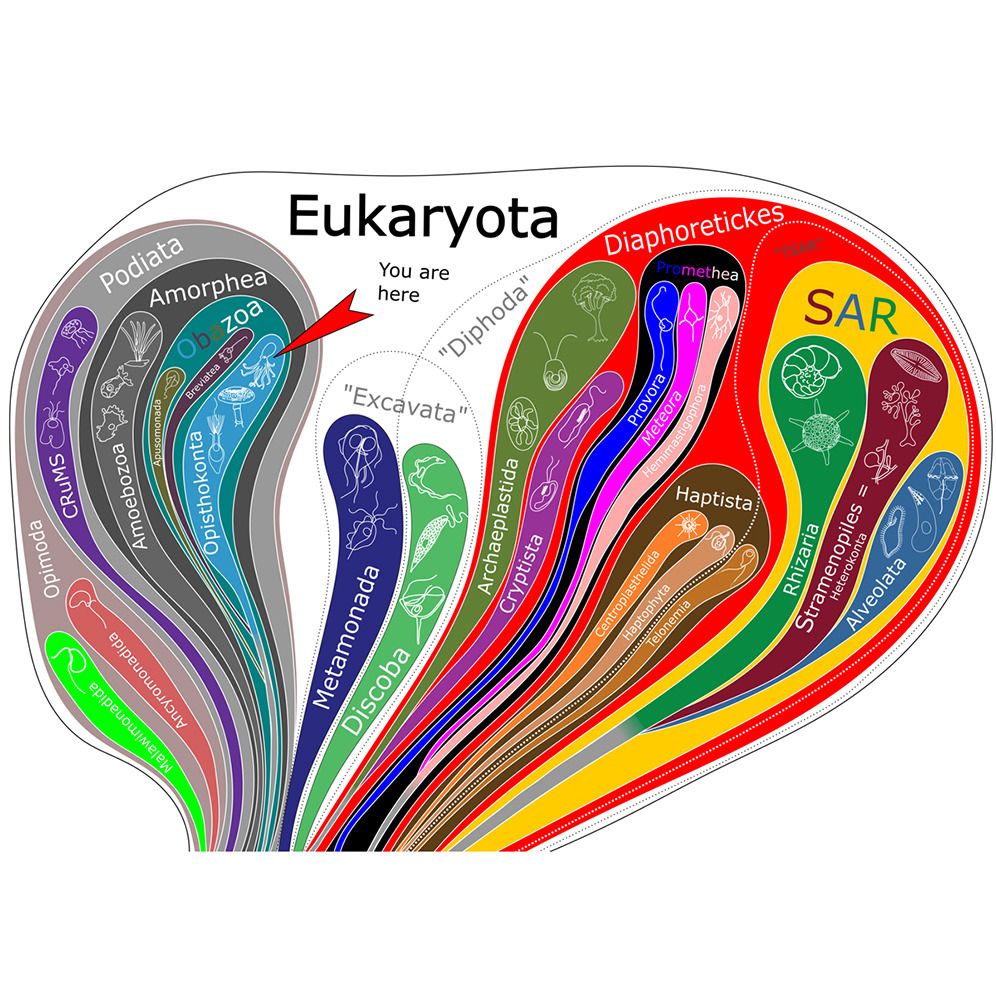
Promethea = PROvora + MEteora + HEmimastigophora. The new supergroup, unifying previously β€œorphan” lineages with gene-rich mitogenomes. Position of #telonemids is still uncertain. #protistsonsky tinyurl.com/yk9xkt49

24.07.2025 14:50 πŸ‘ 44 πŸ” 22 πŸ’¬ 0 πŸ“Œ 1
Post image Post image

eartharxiv.org/repository/v...
In our new preprint we describe in detail the software & workflows behind www.SewageMap.co.uk! One for the open environmental data nerds out there :) πŸ’© πŸ§‘β€πŸ’» 🏞️

31.07.2025 06:41 πŸ‘ 16 πŸ” 7 πŸ’¬ 1 πŸ“Œ 0
Preview
Accounting for population structure and data quality in demographic inference with linkage disequilibrium methods - Nature Communications Accurate estimation of effective population size is critical for understanding population history but is often confounded by structure and data quality. Here, the authors show that GONE2 and currentNe...

I haven’t read the paper yet, but this looks interesting! www.nature.com/articles/s41... #PopGen

05.07.2025 13:47 πŸ‘ 34 πŸ” 12 πŸ’¬ 2 πŸ“Œ 0
Preview
Coalescence and Translation: A Language Model for Population Genetics Probabilistic models such as the sequentially Markovian coalescent (SMC) have long provided a powerful framework for population genetic inference, enabling reconstruction of demographic history and an...

Cool new paper on pop gen and machine learning:

www.biorxiv.org/content/10.1...

28.06.2025 15:38 πŸ‘ 45 πŸ” 20 πŸ’¬ 0 πŸ“Œ 0
Preview
Sex-biased Migration and Demographic History of the Big European Firefly Lampyris noctiluca Abstract. Differential dispersion between the sexes can impact the colonization process and demographic history of a species. Here, we explored the demogra

This work shows the first overview on the population genetics and demographic history of the big European firefly, **Lampyris noctiluca**. Feeling very happy this work is out :) academic.oup.com/mbe/article/...

24.06.2025 15:50 πŸ‘ 17 πŸ” 10 πŸ’¬ 0 πŸ“Œ 0
Post image

Happy to have contributed to this great article: #Protist genomics: key to understanding eukaryotic evolution. Congrats Alexandra Schoenle et al. #ProtistsOnSky
authors.elsevier.com/sd/article/S...

13.06.2025 06:43 πŸ‘ 87 πŸ” 42 πŸ’¬ 3 πŸ“Œ 5
Preview
Estimates of the Mutation Rate per Year Can Explain Why the Molecular Clock Depends on Generation Time Abstract. Rates of molecular evolution are known to vary across species, often deviating from the classical expectation of a strict molecular clock. In man

Estimates of the Mutation Rate per Year Can Explain Why the Molecular Clock Depends on Generation Time academic.oup.com/mbe/article/... πŸ§ͺ

03.05.2025 20:15 πŸ‘ 30 πŸ” 12 πŸ’¬ 2 πŸ“Œ 0
Schematic representation of Eukfinder workflows. Eukfinder is a taxonomic classification-based bioinformatics approach to retrieve microbial eukaryotic nuclear and mitochondrial genomes from WGS metagenomic sequencing data. Eukfinder has two different workflows based on the input files. (a) Eukfinder_short utilizes Illumina short reads, and the first round of classification assigns reads into 1 of 5 distinct taxonomic categories (Archaeal, Bacterial, Viral, Eukaryotic, and Unknown). Next, Eukaryotic and Unknown reads are assembled into contigs which undergo a second round of classification to generate potential eukaryotic sequences. (b) Eukfinder_long uses assembled contigs or long-read sequencing data and only performs one round of classification to select Eukaryotic and Unknown contigs. The potential eukaryotic contigs can then be further separated into MAGs by a separate binning workflow to generate draft eukaryotic nuclear and mitochondrial genomes.

Schematic representation of Eukfinder workflows. Eukfinder is a taxonomic classification-based bioinformatics approach to retrieve microbial eukaryotic nuclear and mitochondrial genomes from WGS metagenomic sequencing data. Eukfinder has two different workflows based on the input files. (a) Eukfinder_short utilizes Illumina short reads, and the first round of classification assigns reads into 1 of 5 distinct taxonomic categories (Archaeal, Bacterial, Viral, Eukaryotic, and Unknown). Next, Eukaryotic and Unknown reads are assembled into contigs which undergo a second round of classification to generate potential eukaryotic sequences. (b) Eukfinder_long uses assembled contigs or long-read sequencing data and only performs one round of classification to select Eukaryotic and Unknown contigs. The potential eukaryotic contigs can then be further separated into MAGs by a separate binning workflow to generate draft eukaryotic nuclear and mitochondrial genomes.

Introducing Eukfinder! A bioinformatics pipeline that identifies eukaryotic sequences from metagenomic data. The tool is valuable for reference-independent and cultivation-free studies of eukaryotic microbial genomes from environmental samples. #mBio: asm.social/2nl

23.04.2025 17:55 πŸ‘ 16 πŸ” 9 πŸ’¬ 0 πŸ“Œ 1
Preview
A Comprehensive Evaluation of Taxonomic Classifiers in Marine Vertebrate eDNA Studies Environmental DNA (eDNA) metabarcoding is a widely used tool for surveying marine vertebrate biodiversity. To this end, many computational tools have been released and a plethora of bioinformatic app...

My nightmare in #eDNA is to detect a rare or threatened species that turns out to be a false positive, so we set out to evaluate some of the commonly used taxonomic classifiers.

The results are finally out: onlinelibrary.wiley.com/doi/full/10....

1/3

23.04.2025 01:27 πŸ‘ 28 πŸ” 12 πŸ’¬ 2 πŸ“Œ 0
Post image

β€‹πŸŒŠ New research reveals that coccolithophore blooms significantly enhance carbon export by increasing particle fluxes.
This finding underscores their vital role in oceanic carbon sequestration and has important implications for climate models. www.researchsquare.com/article/rs-6...

18.04.2025 22:36 πŸ‘ 10 πŸ” 1 πŸ’¬ 0 πŸ“Œ 0
Preview
Patterns and drivers of diatom diversity and abundance in the global ocean - Nature Communications Using the Tara Oceans dataset, this study describes global patterns of diatom diversity, abundance and adaptation. The authors identify 25 distinct communities, with the Arctic as a hotspot, and highl...

Hot off the press, the most comprehensive survey ever performed of diatom distributions, abundances, and diversity in the global ocean. All enabled by the famous schooner@fondationtaraocean.bsky.social and lots of hard work from the Tara Oceans team! www.nature.com/articles/s41...

12.04.2025 11:00 πŸ‘ 27 πŸ” 6 πŸ’¬ 1 πŸ“Œ 1

Eukfinder: a pipeline to retrieve microbial eukaryote genome sequences from metagenomic data journals.asm.org/doi/full/10.... #jcampubs

11.04.2025 21:23 πŸ‘ 21 πŸ” 11 πŸ’¬ 0 πŸ“Œ 0
Preview
Genomic divergence across the tree of life | PNAS Nucleotide sequence data are being harnessed to identify species, even in cases in which organisms themselves are neither in hand nor witnessed. Bu...

How #genome-wide sequence divergence maps to species status www.pnas.org/doi/10.1073/... #biodiversity #genomics

06.04.2025 14:05 πŸ‘ 60 πŸ” 33 πŸ’¬ 0 πŸ“Œ 3
Preview
Hans Christian Andersen : The Drop of Water Hans Christian Andersen: life and works - research, texts and information

We are glad to announce that #MidweekMicrobe is back!πŸ₯³ Today we are celebrating the International Children's Book Day coinciding with Hans Christian Andersen's birthday. A creative mind, Hans published the tale The Drop of Water in 1847, available at andersen.sdu.dk/vaerk/hersho....

02.04.2025 17:20 πŸ‘ 7 πŸ” 4 πŸ’¬ 1 πŸ“Œ 0