"In memoriam" – Josefina Castellví (1935–2026)
Pioneer of Antarctic research, brilliant microbiologist, and passionate science communicator.
Thank you for your contribution to science and for inspiring us to explore, and protect our planet. 🌍❄️
05.02.2026 23:01
👍 7
🔁 4
💬 0
📌 0
We are now in Linkedin too! 🌱
www.linkedin.com/in/iberian-s...
Please share and follow!📣
06.02.2026 10:05
👍 2
🔁 2
💬 0
📌 0

What do SIBECOLogist do? New research led by researchers at IEO-CSIC shows that southern bluefin tuna 🐟 larvae are growing faster than 30 years ago 📈 but warming 🌡️ oceans may push them close to their thermal limits.
Read more: 🔗 sibecol.org/en/review_bo...
09.02.2026 15:11
👍 3
🔁 3
💬 0
📌 0
Higher emissions of carbon dioxide, nitrous oxide, and methane during the daytime in two reservoirs
🌞 Day vs Night matters for #GHG #emissions☀️
Our study shows daytime (diff) GHG emissions from #reservoirs far exceed nighttime levels
🔬Solar cycle (PhotoChem) + wind explain #N₂O & #CO₂ diel cycles; water management also matters for diff & ebull #CH₄ 🌊
📄 rdcu.be/eUd0W
@isabel-reche.bsky.social
11.12.2025 16:54
👍 2
🔁 2
💬 1
📌 0

Dissolved organic matter released by phytoplankton (i.e., acidic polysaccharides) or of terrestrial origin (humic and fulvic acids) can coagulate to form particles by the intervention of cations such as calcium and iron. These particles can be stored for a long time in the sediments affecting the global carbon cycle or be directly consumed by protozoa and zooplankton, forming the particulate loop.
Happy to share our new paper:"Calcium and iron promote reversible self-assembly of dissolved organic matter into particles" Open access: lnkd.in/dpQZHcRS
We dedicated this paper to the memory of our mentor, colleague, and friend, Jonathan Cole, who always had time to listen and inspire us.
25.11.2025 19:08
👍 3
🔁 0
💬 0
📌 0
Love these numbers. This issue worries me since many years
04.08.2025 16:24
👍 1
🔁 0
💬 0
📌 0

At the SIBECOL conference, besides meeting old and new colleagues and learning a lot, my friend @ylndmc.bsky.social and I won a best poster award for our study on trait distributions - thanks to the organisers for such a nice conference!!
#SIBECOLAEET2025
@sibecol-aeet-25.bsky.social
06.06.2025 07:01
👍 35
🔁 5
💬 3
📌 0
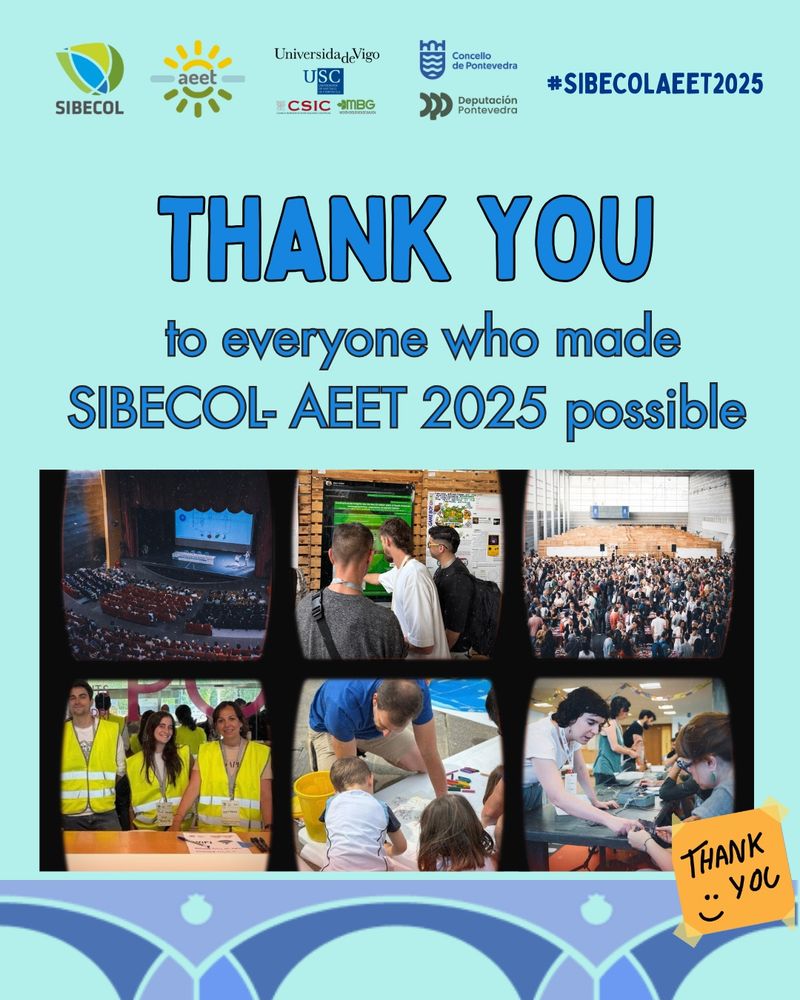
💚✨ Thank you.
After an intense, inspiring and unforgettable week, the III SIBECOL & XVII AEET Meeting comes to an end — and yes, we’re already feeling nostalgic.
07.06.2025 08:15
👍 34
🔁 14
💬 1
📌 1
Exciting! And likely occurring in soils as well to help explain the rapid reduction of 15N-nitrate to N2O we observe in sunny California deserts. www.science.org/doi/10.1126/...
30.03.2025 18:55
👍 4
🔁 1
💬 0
📌 0

Some bacteria and archaea make nitrous oxide during ammonia oxidation to nitrite in well-oxygenated waters, whereas denitrifying bacteria produce it during reduction of nitrate in oxygen-poor waters. None of these, however, could fully explain the observed increase. ‘It was just this weird conundrum that in many cases the mechanism that was being used to explain most of these emissions didn’t seem to be there,’ says Jennifer Glass at the Georgia Institute of Technology in Atlanta, US.
![Scott Wankel of Woods Hole Oceanographic Institute in Massachusetts believes that the ‘exciting’ findings could solve a key mystery: ‘For a long time we’ve known that whatever nitrous oxide was getting out into the atmosphere was made in the upper [ocean] layer, and we thought that was nitrification by ammonia-oxidising bacteria and archaea – but they don’t like light,’ he says. ‘Here all you need is for the upper metre of seawater to have some organic matter in it, and the nitrous oxide will be quickly released to the atmosphere … it really could be driving the entire bus of the oceanic flux of nitrous oxide to the atmosphere, or at least a very large part of it.’](https://cdn.bsky.app/img/feed_thumbnail/plain/did:plc:j3jocydwe4cpivirfuw47mhg/bafkreic2dwimpjer575f5snd4mv5bhdrqs2j7vp7hz6ovjhoevt3kd7lqe)
Scott Wankel of Woods Hole Oceanographic Institute in Massachusetts believes that the ‘exciting’ findings could solve a key mystery: ‘For a long time we’ve known that whatever nitrous oxide was getting out into the atmosphere was made in the upper [ocean] layer, and we thought that was nitrification by ammonia-oxidising bacteria and archaea – but they don’t like light,’ he says. ‘Here all you need is for the upper metre of seawater to have some organic matter in it, and the nitrous oxide will be quickly released to the atmosphere … it really could be driving the entire bus of the oceanic flux of nitrous oxide to the atmosphere, or at least a very large part of it.’
I am truly amazed by the reception our discovery has received in the scientific community 🥰🥰🥰
#Photochemodenitrification
#Photochemical #NitrousOxide
@isabel-reche.bsky.social
Fragments taken from this article in #ChemistryWorld
www.chemistryworld.com/news/inorgan...
19.03.2025 23:44
👍 7
🔁 3
💬 1
📌 0
Exciting discovery and an amazing new word: photochemodenitrification !
Light induced conversion of nitrite to nitrous oxide. Nothing to laugh about.
#EverywhereAndInvisible
#BeatNitrogenPollution
18.03.2025 22:56
👍 5
🔁 4
💬 0
📌 0
Photochemodenitrification_Animation: Short animation as video abstract for the article.
Citation: Ilustrations created in BioRender. Leon Palmero, E. (2025) biorender.com/i13e835, CC-BY 4.0. Voice by elevenlabs.io
18.03.2025 19:35
👍 0
🔁 0
💬 0
📌 0
Photochemodenitrification_Animation: Short animation as video abstract for the article.
Citation: Ilustrations created in BioRender. Leon Palmero, E. (2025) biorender.com/i13e835, CC-BY 4.0. Voice by elevenlabs.io
18.03.2025 19:35
👍 1
🔁 0
💬 0
📌 0
Here, a graphical video explaining our discover of the process "photochemodenitrification"
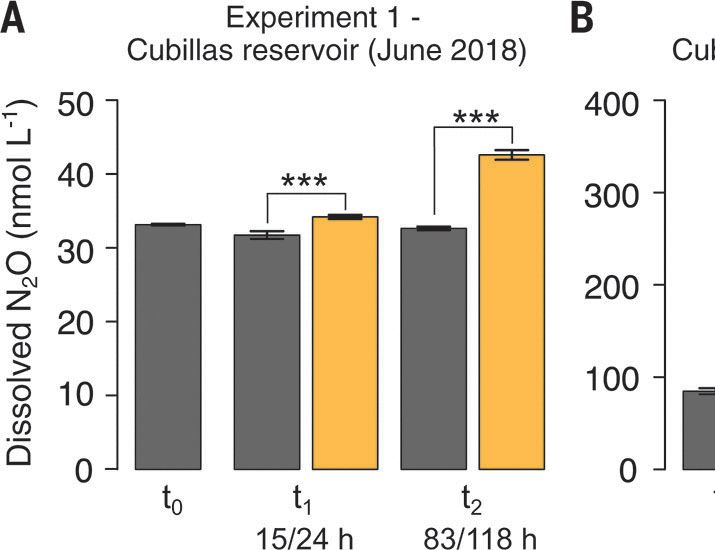
"Sunlight drives the abiotic formation of nitrous oxide in fresh and marine waters" by E Leon-Palmero, R Morales-Baquero, B Thamdrup, C Löscher, I Reche
Science 387 (6739), 1198-1203
@eleonpalmero.bsky.social
18.03.2025 17:24
👍 4
🔁 1
💬 2
📌 2

**Curious about how sunlight can produce nitrous oxide (N2O)?**
#New in @science.org
🌞Dive into the fascinating world of photochemodenitrification!
**Discover the full article on my website now!** 📖✨
eleonpalmero.com
@isabel-reche.bsky.social
Ilustration created in BioRender.com
18.03.2025 02:09
👍 3
🔁 1
💬 1
📌 1
Mil Gracias!! 🥰
Y qué importante que haya asociaciones (como AEET y SIBECOL) que apuesten por motivar el liderazgo y proyección de las jóvenes investigadoras 🌞🌞
Este fue mi primer proyecto como PI 🥰
@eco-aeet.bsky.social @sibecol.bsky.social
@isabel-reche.bsky.social
18.03.2025 12:16
👍 7
🔁 3
💬 0
📌 1

Thrilled to share that our work "*Sunlight ☀️ drives the abiotic formation of nitrous oxide in fresh and marine waters💧*" | #Science
🟡 Please, check out our work at www.science.org/doi/10.1126/...
New in @science.org
#ScienceResearch #NitrousOxide #ClimateChange
©️Image created with BioRender
14.03.2025 04:49
👍 8
🔁 3
💬 1
📌 0
phys.org writes "...The researchers discovered, for the first time in the world, bacteria that parasitize the methanogenic archaea"
no, not the first time. see 'Bookmark #2' here > schaechter.asmblog.org/schaechter/2...
#MicroSky #Archaea #ArchaeaSky
11.02.2025 19:33
👍 31
🔁 7
💬 1
📌 1

A picturesque landscape showcasing a vibrant field adorned with trees and birds in flight. Reminder to save the date for the CESAB Call 2025 Idea & Data Share call.
🚀 In 2025, #CESAB will launch a call to fund IdeaShare & DataShare projects, advancing BIODIVERSITY research & interdisciplinary collaboration
💡 IdeaShare: Develop new concepts, models & methods
📊 DataShare: Assemble, curate & share biodiversity datasets
📆 Opening in April
Stay tuned ! 🌈
🌐🧪🌍🦤🍁
06.02.2025 11:54
👍 47
🔁 17
💬 0
📌 1
SIL News – SIL-International Society of Limnology
Neotropical streams harbor huge amounts of biodiversity.
Thanks to the invitation by @jdgonzalezt.bsky.social, we were able to share some thoughts about global bias in stream ecology for the Neotropical region in the last SIL news @sil-limnology.bsky.social
limnology.org/news/silnews/
30.01.2025 21:10
👍 3
🔁 2
💬 0
📌 0
Limnetica 44 | Asociación Ibérica de Limnología (AIL)
We are happy to announce that the NEW ISSUE OF #LIMNETICA is already available. To view the full open access articles covering various #limnological disciplines and #freshwater #ecosystem types go to www.limnetica.net/es/limnetica...
15.01.2025 11:08
👍 4
🔁 1
💬 0
📌 0
Alquibla bulletin | Asociación Ibérica de Limnología (AIL)
The first #ALQUIBLA newsletter of 2025 is already available. Remember, you will find published works, job opportunities, conferences, courses, awards, divulgation of activities etc. www.limnetica.net/en/alquibla-...
30.01.2025 11:22
👍 2
🔁 2
💬 0
📌 0