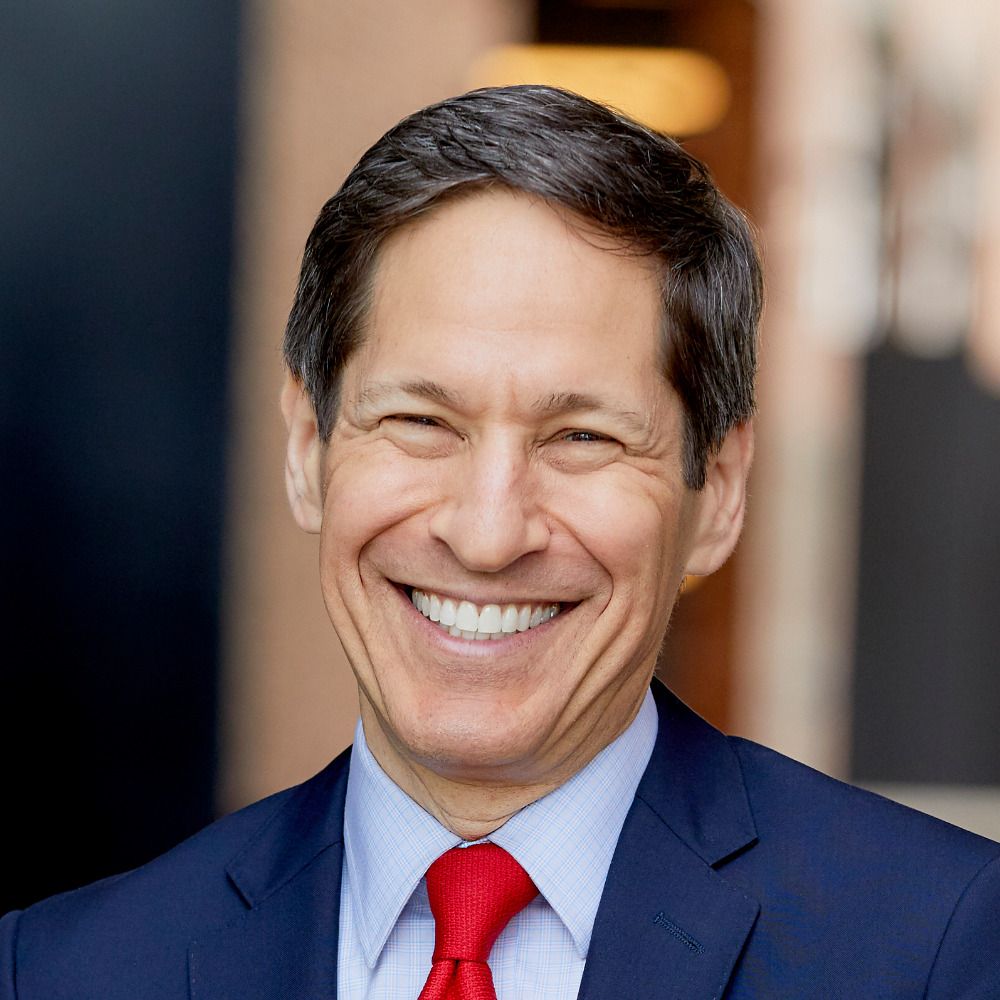

Implementing health taxes on unhealthy products will save lives—I share how to overcome industry opposition. open.substack.com/pub/tomfried...
06.03.2026 14:37
👍 0
🔁 0
💬 1
📌 0
Implementing health taxes on unhealthy products will save lives—I share how to overcome industry opposition. open.substack.com/pub/tomfried...
Public health taking on big tobacco, soda, and alcohol companies is like David versus Goliath. Even though they’re much better funded, we can win with the right strategy.

The 7-1-7 target is being used around the world to find and stop disease outbreaks quickly. Read about the impact the city of Rio de Janeiro, Brazil saw when they adopted 7-1-7 and implemented real time dashboards to track spread. resolvetosavelives.org/strategies-i...

Facts alone don't change minds—trusted messengers and empathetic conversations do. Shaming vaccine-hesitant parents drives them away. Meeting people with empathy is where real change begins. The goal isn't to win an argument, it's to protect children. www.nytimes.com/2026/02/27/o...
Before we had an effective measles vaccine, up to 4 million kids were infected in bad years, with thousands hospitalized and at risk of long-term disability, and hundreds dead. The weaker our vaccination programs, the higher the risk of large outbreaks.

Health taxes save lives, reduce costs, and generate revenue that can be used to benefit society. They protect the most vulnerable. The right thing to do can be more powerful than all the lobbyists in the world.
Microbes don't lobby politicians. Viruses don’t make campaign contributions. But tobacco, alcohol, and soda companies do—aggressively and relentlessly. That’s what makes controlling non-communicable diseases even harder than controlling infectious ones.
Nobody knows exactly how AI should be used in public health. We’re all learning. That's not a reason for paralysis but for structured experimentation. We can try things, measure what works, and scale up what succeeds.

Millions of people alive today would be dead if Bill Foege hadn’t done the work he did. Virtually none of them know that fact. And that would be fine with Bill. I’m continuing to reflect on the lessons and example of Bill Foege and to remember his words and moral character.

The question isn't whether we know how to stop measles. We do. The question is whether we will do what works. I share more in my new piece:
The United States is on the verge of losing its measles elimination status. What does this mean and what can we do about it?

Measles is Winning. It Doesn’t Have to Be This Way. We eliminated measles from the Americas years ago and can do it again, by @drtomfrieden.bsky.social tomfrieden.substack.com/p/measles-is...

Did you miss the launch of the 2026 CMA Health & Media Tracking Survey? I’ve got you! Watch it here.
We had an amazing line-up moderated by CTV’s Vassy Kapelos: @drjengunter.bsky.social @dskok.bsky.social @vassb.bsky.social @drtomfrieden.bsky.social
youtu.be/3gpgZ5mnVug

The percentage of people dying before age 70 is an honest accounting of whether our health systems are working. For the United States, that number tells us we’re failing nearly one in four people.
More than a week after his death, I’m still reflecting on the life and legacy of Bill Foege—the Babe Ruth of public health—whose work with others saved the lives of literally hundreds of millions of people. His accomplishments are in a league of their own.
Thank you to Congressional leaders for recognizing that a healthy United States requires a well-resourced CDC — and to the dedicated scientists, epidemiologists, and public health professionals who work every day to keep Americans and people around the world safe from health threats.
From detecting and responding to emerging threats such as drug-resistant bacteria, to combating the cancers, heart attacks, and strokes that claim hundreds of thousands of American lives each year, to protecting health around the world, CDC is the cornerstone of our nation's health security.
This legislation funds CDC at near the 2024/2025 budget level — restoring programs that have been paused and requiring staffing to operate those programs. Robust, sustained investment in CDC and its workforce isn't a partisan issue. It's a health protection imperative.
I’m encouraged that Congress just passed funding bills for 2026 that include strong bipartisan support for the Centers for Disease Control and Prevention (CDC).

How can you live a longer, healthier life? I joined a therapists, authors and fellow doctors in sharing short wellness tips in @nytimes.com.
At Resolve to Save Lives, we work alongside partners to tackle the world’s deadliest health threats, closing the gap between life-saving solutions and the communities that need them the most.
Join us: resolvetosavelives.org/annual-repor...
Dr. Bill Foege was a public health legend. His extraordinary accomplishments, including his work on smallpox eradication, leading the CDC, serving as director of the Carter Center, and helping establish Gavi, The Vaccine Alliance, saved millions of lives and changed public health forever.

Read the latest piece in the Science Politics #USAID series, by @drtomfrieden.bsky.social— founder of Resolve To Save Lives and former director of the CDC. He discusses the fraying of #geopolitical trust and how we must prioritize “productive interdependence.”
sciencepolitics.org/2026/01/23/t...

Check out @drtomfrieden.bsky.social's essay on the future of aid in @sciencepolitics.bsky.social. "In public health, fiscal choices are life-and-death decisions — funding cuts are the direct cause of preventable deaths."
sciencepolitics.org/2026/01/23/t...
The golden age of global health assistance, defined by a huge influx of resources and a centering of health progress, is over. Great risks lie ahead—but also powerful opportunities to build new, more sustainable systems, as I write in @sciencepolitics.bsky.social. sciencepolitics.org/2026/01/23/t...

California became the first state to require folic acid fortification of corn masa flour—the essential ingredient in tortillas, tacos and tamales. This quiet change represents a powerful example of how public health works best: create environments where the healthy choice is the default choice.
Walking away from WHO doesn't create accountability or reform. It gives the U.S. less say and less warning. History shows what cooperation can achieve. Through WHO, the world eradicated smallpox and reduced millions of preventable deaths. Those successes protected Americans too.
Global health security depends on cooperation. WHO isn't perfect, but it is irreplaceable in detecting outbreaks early and coordinating emergency responses before they become global crises.
As of today, the United States has officially left the World Health Organization. We’ll look back on this as a grave error. Health threats do not respect borders, and weakening global cooperation makes Americans less safe.


