Thanks Judith!
07.02.2026 21:11
👍 0
🔁 0
💬 0
📌 0
Great to have this article with @paulkiem.bsky.social out in @jas-jozstudies.bsky.social today, all about Roman artefacts and Australian soldiers at Brightlingsea, Essex, during the First World War, with an intriguing ghost story at its heart
06.02.2026 05:19
👍 4
🔁 0
💬 1
📌 0

From bluey to bogans: Researchers who help define how the nation speaks to lose their jobs
For almost 40 years, the words the nation uses in speech, newspapers and books has been mapped by a small team at the Australian National Dictionary Centre.
I can't believe ANU is proposing to disestablish ANDC @ozworders.bsky.social. Over the last 20 years of writing I've often consulted staff over the origins of obscure words and phrases. We need the dictionary to record and explain our changing language. www.smh.com.au/national/fro...
12.07.2025 01:55
👍 41
🔁 19
💬 1
📌 5
The final chapter, 20, offers a distribution guide to the known publicly accessible collections in the region - 66 in total. Each institution is given a short entry that situates the ancient Med. artefacts within its broader collections, with the aim of increasing visibility of these materials 🏺📜🏛.
20.06.2025 02:34
👍 4
🔁 1
💬 0
📌 0
Chapter 6 focuses on the Antiquities Collection of the Uni of Queensland in the mid 20th century and the journey of the Classics department to form the RD Milns museum. It provides a historic framework from which to understand the place of ancient world studies in contemporary Australian education.
28.05.2025 08:54
👍 4
🔁 2
💬 0
📌 0
I am hugely enjoying this book - it has so much to offer all researchers of museum collections of antiquities.
16.06.2025 20:47
👍 8
🔁 2
💬 1
📌 0
Chapter 16 by Brit Asmussen and @cairojim.bsky.social explores the sticky-ness of objects. They consider the relevance of antiquities held in museums and the varied contributions they make to the contemporary world via people’s engagement with them today.
16.06.2025 08:28
👍 3
🔁 1
💬 0
📌 1
Oh hey, it's my thing! Looted text finds from recent war zones! You know, the thing I've been thinking about for, uh, *checks notes* about seven years now!
I haven't found an easy answer that lets me sleep soundly, but apparently, some people have. Good for them. Allow me to add some thoughts.🧵
08.05.2025 09:41
👍 71
🔁 36
💬 4
📌 5
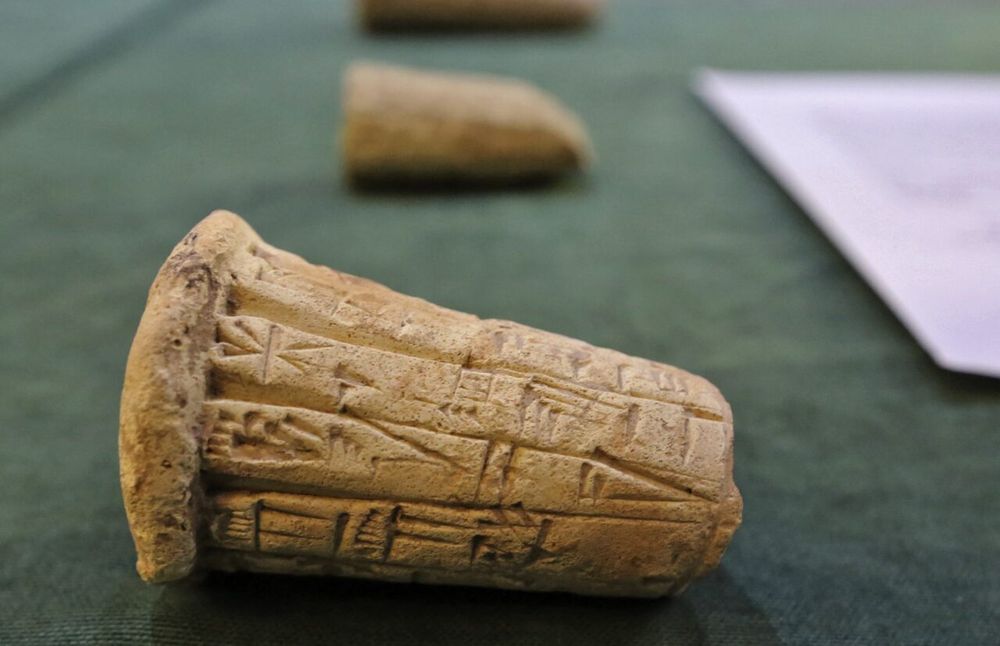
When Wartime Plunder Comes to Campus
An archaeologist considers whether she should teach with antiquities looted during the U.S invasion of Iraq.
Should educators ever teach with materials obtained illegally or unethically?
“As an archaeologist who teaches at Emory, I have decided yes: Learning with and from these objects can help amend their problematic acquisition—so long as that history pervades the lesson”
www.sapiens.org/archaeology/...
07.05.2025 20:38
👍 12
🔁 6
💬 1
📌 7


