
Where does the 17% figure come from? Are you just referring to 17% of greenhouse crops?
04.03.2026 17:30
👍 0
🔁 0
💬 0
📌 0
Where does the 17% figure come from? Are you just referring to 17% of greenhouse crops?
It will encourage more countries to add solar, wind, and grid batteries. It will stimulate the development of more dispersed, robust power grids because if much of a country’s electricity comes from rooftop solar it’s not practical to have to bomb every rooftop in a country to disrupt electricity.
Whether the Cuban oil embargo is ultimately successful or not, I believe the end result will completely negate the Trump Administration’s push to export more oil and LNG. It will highlight to energy importing regions everywhere how vulnerable they are.
The US oil embargo of Cuba highlights the prescience of China’s decision 20 years ago to reduce it’s security exposure to oil disruptions by say a naval blockade in the Strait of Malacca, and push hard for EVs and Green Energy. Nepal responded the same way when India blocked of oil exports too.
Two things stood out for me at the OFVC farm show in Niagara Falls. 1 - the increase in the number of manufacturers selling field and packing robots. 2. programmable two-way radios that doubled as multi-lingual translation devices. Ie: just select English <-> to whatever language you want on menu.
I think that the rapidly falling price of grid batteries and the advent of new technology that eliminates the fire risk of older battery models will have a profound impact on our electricity networks. They allow consumers to shift when they’ll mainly draw electricity from peak to off-peak hours.
Soy, Almond and oat beverages aren't allowed to call themselves milk in Canada either, haven't been for years. But despite the label saying Soy/Almond/Oat beverage, it hasn't affected the sales. Consumers can see the shape of the container and the word soy, almond or oat and make the connection.
However, since automation and farm expansion are primarily driven by economic pressures and reducing workload, how should our society and economy be structured to reduce them? As of now, you can’t buy a new car or a bicycle any cheaper just because you’re a farmer or a farm worker.
Assuming we’re going to see the trend to more automation and have it expand into sectors like fruit and vegetables does raise broader societal issues. Ie: fewer farm workers means the loss of people in rural areas and further hollowing out of these areas.
This would be the continuation of a 200 year old trend that’s accelerated since the end of WWI. A modern combine (grain harvester) easily replaces hundreds of workers using scythes, flails and winnowing grain. Has this been a good thing? I’d argue it has been.


We got a good dump in last weekend’s storm but I’m not sure if we ever get as much as you do. Long time residents tell me this winter is more like the ones from the 70’s. Snow however should be gone soon, we dug our snowshoes out of storage. That’s always been the kiss of death for snow cover here.


Coffee on the deck isn’t going to be in the cards this morning.
2026 update - Failing to pencil before you plow can get you in trouble.
There are warehouses full of weird things that visiting dignitaries have given to American Presidents over the years. A 2nd hand Nobel medal isn’t even the oddest. Maybe he can store the medal next to the 50 pairs of boxer briefs that David Beckham gave to Obama.
But on the other side we’ve lost 30,000 square miles of virgin forest in Canada to wildfires exacerbated by global warming in each of the last three years. We could build almost 4 James Bay projects and just barely lose the same amount of forests that are burning here yearly.
Definitely. But it’s easier to sell a concept if you can show how it provides more than one benefit too.
I would say one of the most obvious places for solar panels are above beef feedlot pens in North America, especially on the southern and central plains. It’s starting to be necessary to install shade structures to reduce the ground temperature in pens anyway so might as well install solar panels.
80% of Canada’s electricity comes from non- hydrocarbon sources. (60% from hydro) the balance from nuclear, wind, & solar. Solar and wind are developing rapidly. I expect that cheaper batteries will accelerate this.
I’m missing something here. Forget end-to-end encryption, why would anyone want a toilet cam in the first place?
I’m not sure about that. I would assume it can’t do anything but help with climate change since it means no new growth in fossil fuel demand from the only countries that are rapidly increasing their population
Now that battery technology is getting cheaper, and advancing in leaps and bounds, it’s a no brainer decision for countries that have to import their energy requirements.
I didn’t think anyone still harvested celery by hand anymore. I thought they had all switched to mechanical harvesters a decade or so ago. That said all the harvesting jobs that require working bent over lopping off veggies is brutal work.
If I had edited that ad I would have included about 10 seconds of Reagan speaking those words in the first 10 - 15 seconds and the switched to voiceover before ending
again with Reagan. After all he’s been dead for decades, can’t expect people to remember his voice..
Haven’t tried that one but in Canada alcohol consumption is way down, especially with GenZ. Lots of carbonated flavoured waters are really popular.
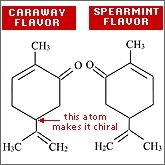
The molecule that gives caraway seeds their flavor is the mirror image of the molecule that gives spearmint its flavor.
Don't disagree but expect there will be lots of political pressure when it happens
The ethanol and biofuel mandates' prime purpose is to subsidize farmers by creating an unlimited demand for corn, soybean etc. If they happen to help the environment too, that'd be a great accidental, if irrelevant, benefit.
I have wondered that myself. Seems like events are spiralling downwards. Will someone go too far and trigger a civil war. I hope not.
What a great story
Not surprising she'd get good tips. 15% of an average bill there would add up quickly.