Thank you!
20.02.2026 15:38
👍 0
🔁 0
💬 0
📌 0

@agrogankaylor
Professor at the University of Michigan. I study parenting and child development, most recently using international data, and often using multilevel models. I work in both Stata and R, and am trying to get better at Julia.
Thank you!

graph of relationship of empathy, maltreatment and self-harm thoughts.
agrogan1.github.io/closeread/em... When Empathy Helps and Hurts
New paper on empathy and mental health outcomes. Empathy appears to be a "risky strength". Too much or too little empathy appear to be risk factors, while a moderate amount of empathy appears protective.

a diagram illustrating hypothetical statistical relationships
globalfamilies.quarto.pub/be-less-wrong/ Be Less Wrong
A tutorial on reasons for using quantitative methods. I’ve made some updates: minor updates to the diagrams; and notes clarifying the relationship of ideas in the tutorial to ideas about RCT’s, mediation, confounders, and statistical colliders.
Some updated #Stata resources for the new academic year.
* agrogan1.github.io/Stata/two-pa...
* agrogan1.github.io/Stata/data-v...
"The University of Michigan School of Social Work is launching a new and innovative 30-credit Master of Arts degree in #SocialImpact Leadership."
ssw.umich.edu/about/news-e...
Now available both in print and online: books.google.com/books/about/...
Why care about these technicalities?
Interactions are one of our major statistical tools for examining similarity or difference in statistical relationships across groups, identities, or contexts.
Interactions in logistic regression can be particularly challenging to work with: agrogan1.github.io/newstuff/cat...

Both main effects and interactions need to be interpreted together:
agrogan1.github.io/posts/intera...
agrogan1.github.io/posts/intera...

Interactions are often thought of as encompassing a main effect (x), and a moderator (m), but because of the commutative property of multiplication, interactions are essentially symmetric: agrogan1.github.io/posts/intera...

For many models, adding a main effect and interaction for group can be seen as giving each group its own regression line with its own intercept and its own slope:
agrogan1.github.io/posts/intera...
agrogan1.github.io/posts/intera...

slope of a mountain
A thread on #interactions and #moderation.
I argue that multilevel modeling is a principled way to explore human variation and commonality.
I try to provide a tutorial for applied researchers, and to bring "down to earth" some of the more advanced ideas about multilevel modeling that I see in the methodological literature, but rarely see in applied work.
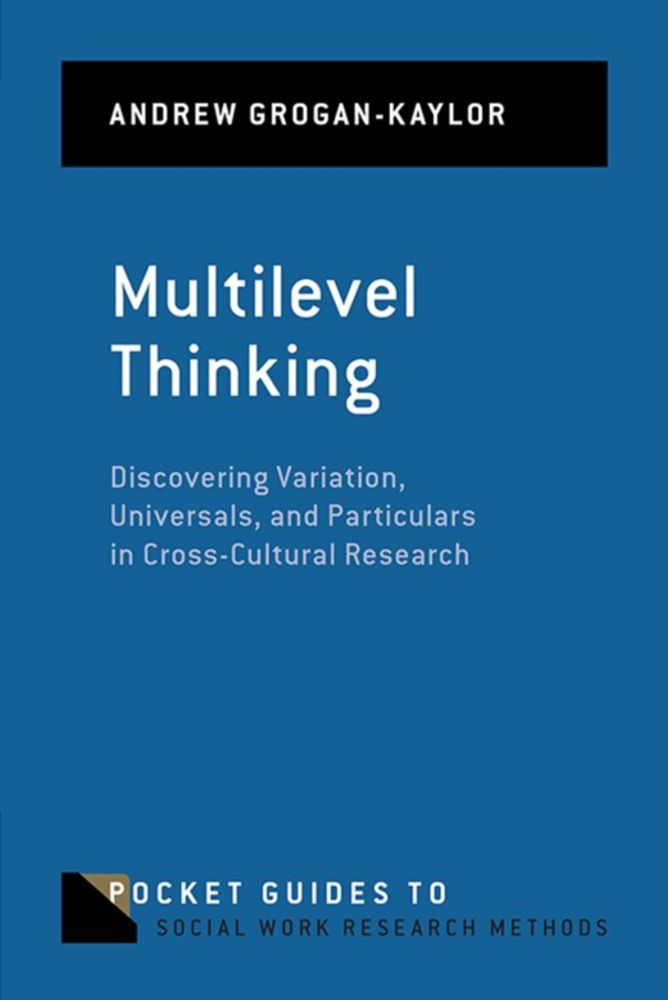
My new book, Multilevel Thinking, is now published in Electronic version by Oxford University Press: academic.oup.com/book/60530. #stata #rstats #julialang

UM News release about our research: news.umich.edu/violence-bet.... See also: globalfamilies.quarto.pub/spillover-of...
Just similarity and difference across groups or countries, which I think, multilevel models let us start to see. Simply the size of the random slopes. Now that I’ve written the book, I need to figure out even better ways to quantify this.
I’d like to share that my book, Multilevel Thinking: Discovering Variation, Universals, and Particulars in Cross-Cultural Research is available for pre-order at Oxford University Press: global.oup.com/academic/pro...
* Includes appendices for estimating MLMs in #Stata, #Rstats, and #Julialang.
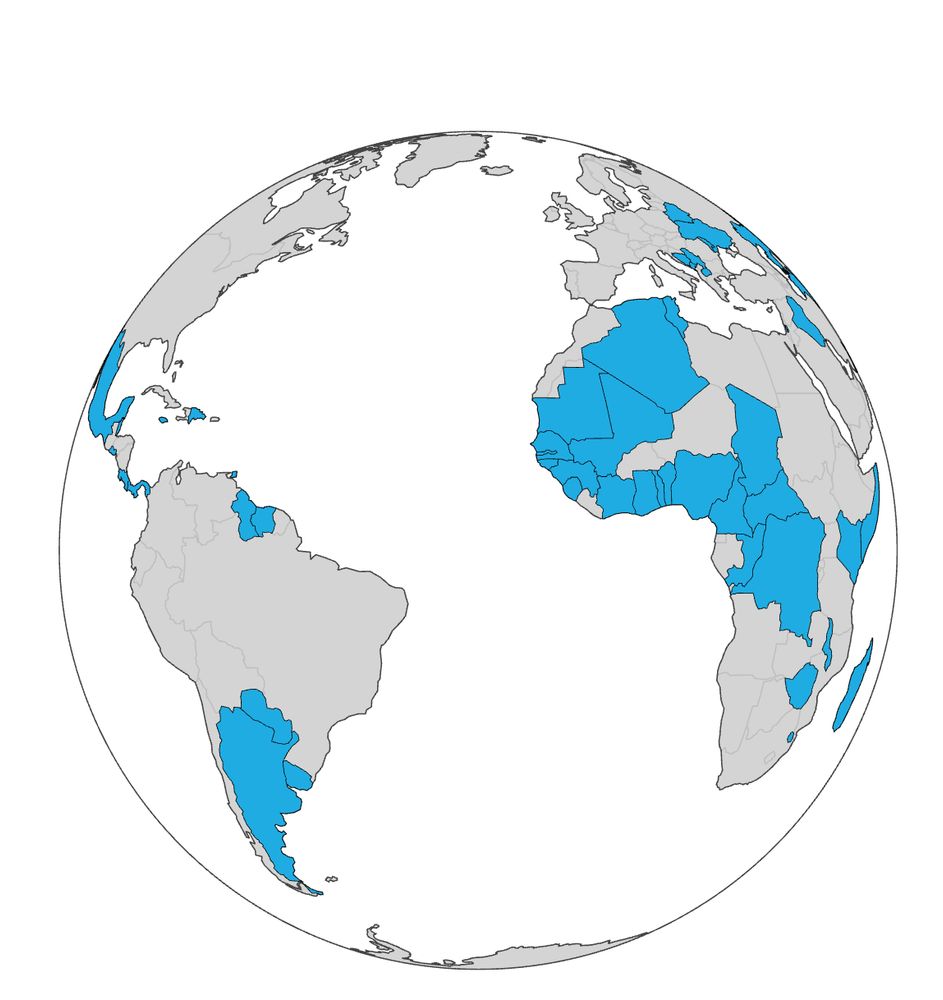
Countries in UNICEF MICS Data
We've published a new paper: Spillover of Macro-Level Violence to Parental Physical Abuse of Children in Low- and Middle-Income Countries. The paper should be online shortly, but in the meantime, we've prepared a scrollable summary here: globalfamilies.quarto.pub/spillover-of...
Thank you for the kind words!
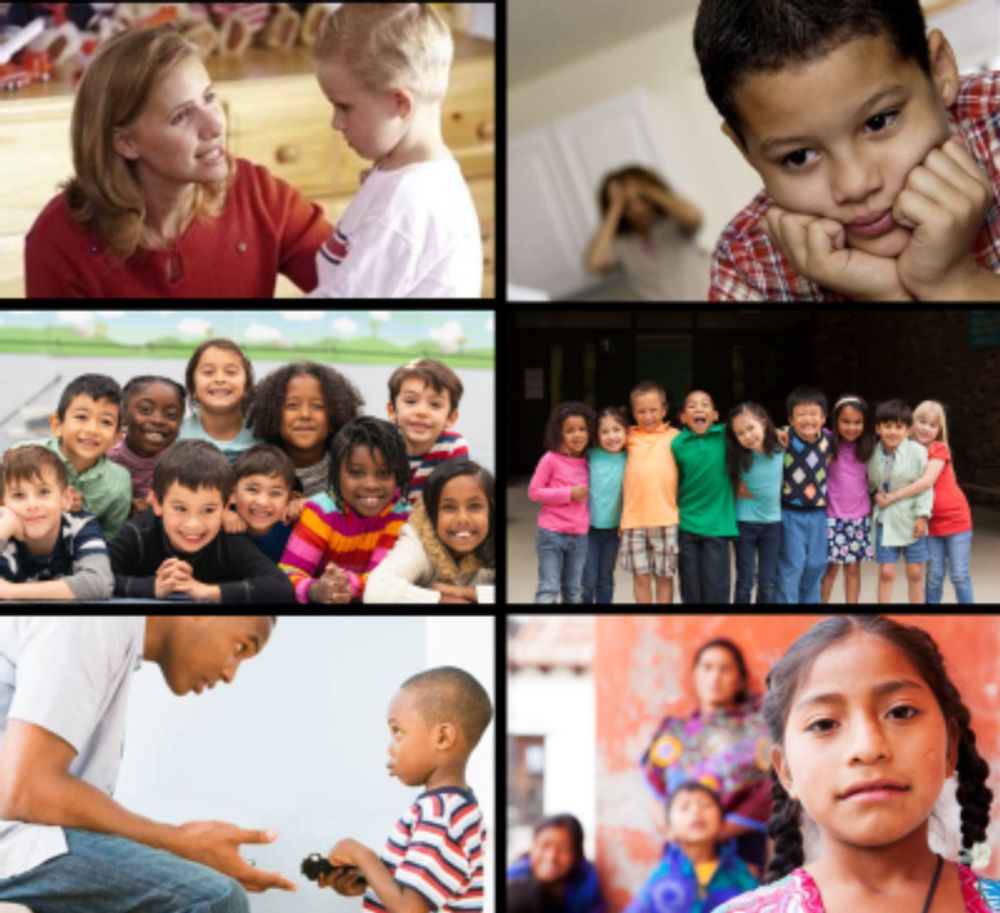
ArcGIS StoryMap visualization of our new article on parenting of orphans: arcg.is/1HjKyW2
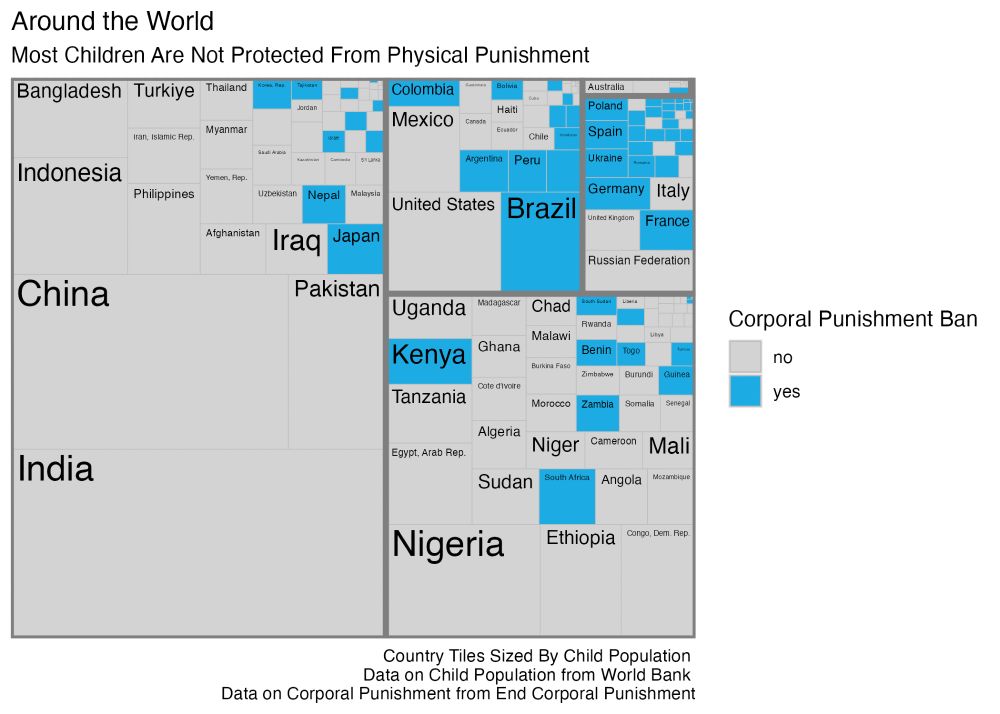
treemap showing that most of the world's children are not protected from physical punishment
Same information as a treemap.
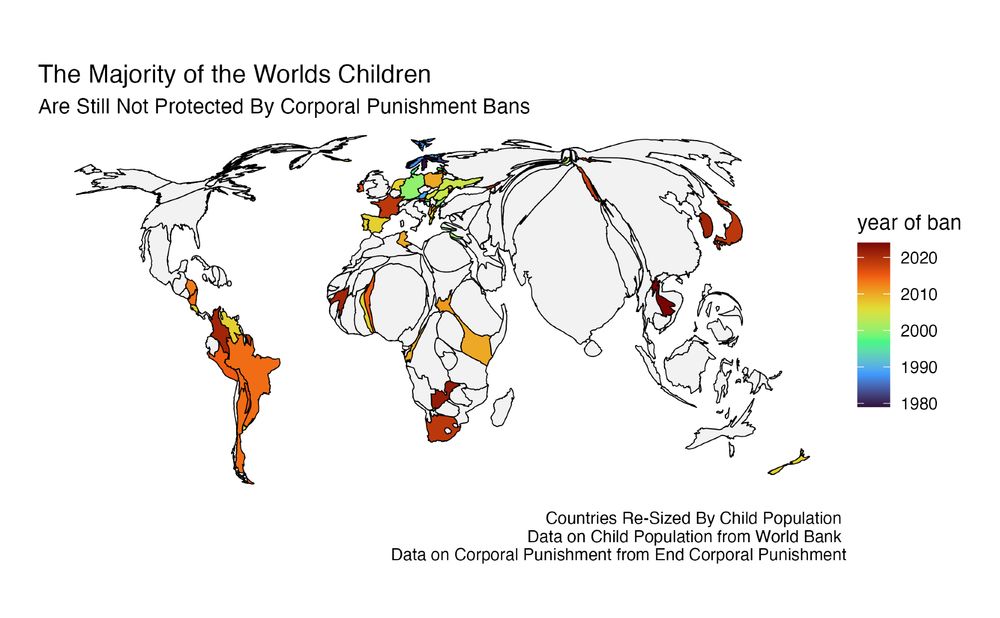
Most of the world's children are not protected from corporal punishment.
Cartogram showing that most of the world's children are not protected from #corporal_punishment #rstats #gis
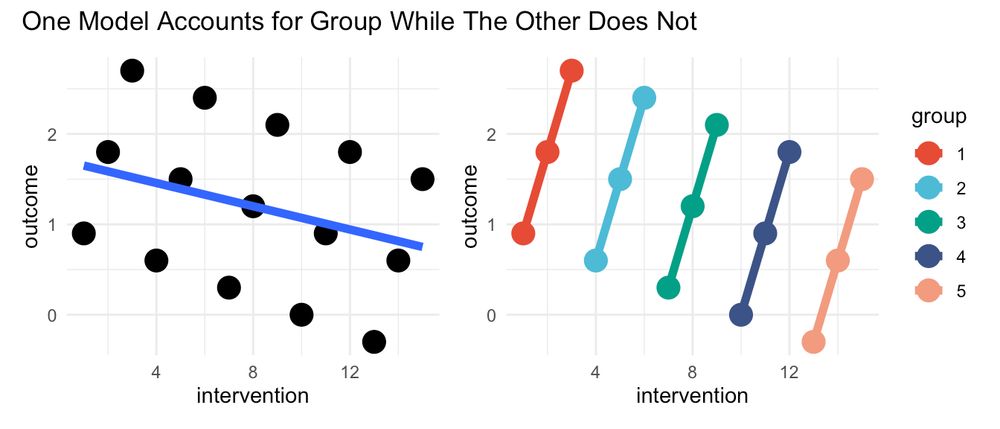
One model accounts for group, while the other does not.
“Be Less Wrong”, the importance of multivariate, quantitative thinking, especially when thinking about treatments, programs, and interventions for social issues: globalfamilies.quarto.pub/be-less-wrong/
#closeread #quarto
I experimented with using the new #closeread (closeread.dev/gallery/) extension for #Quarto to share the results of an article we published last year on parenting and child development in 60 countries: globalfamilies.quarto.pub/parenting/