Never underestimate the value of small discoveries and "happy accidents" in lab! For the Agar success in microbiology we should thank Fanny Angelina Hesse, the little-known hero with brilliant idea which changed the microbiology field forever ✨️
08.03.2026 11:48
👍 0
🔁 0
💬 0
📌 0

New from us in @pnas.org :
We considered the limits of condensate diversity, and engineered DNA droplets to form 9 distinct, homotypic, coexisting phases. Very hard to do this except with nucleic acids. Probably you can make more than 9. (1/3)
18.02.2026 18:53
👍 28
🔁 11
💬 2
📌 1
Scientists have seen Asgard archaea crawling for the first time. When it comes to the origin of eukaryotes, this is like seeing a feathered dinosaur in the wild. (Video courtesy of Philipp Ralder)
18.02.2026 20:09
👍 470
🔁 136
💬 10
📌 19
Roses are red
Violets are blue
If you fall in love with your hypothesis
You’ll be biased to prove it true
🧪
14.02.2024 12:45
👍 61
🔁 15
💬 3
📌 0


I’m always happy to share my experience and discuss exciting scientific topics, especially #synbio and the construction of #syntheticcells 🧪🔬 Last week, I had lots of fun giving a lecture at the @tum.de Winter School for international students. Many thanks to the organisers for the kind invitation!
12.02.2026 14:23
👍 0
🔁 0
💬 0
📌 0
Feeling proud and inspired by all the amazing women I get to work with and learn from. Cheers to more discoveries, more voices, and more brilliance in every lab! 🔬✨
#WomenInSTEM #synbio #LifeSciences #Niederholtmeyerlab
12.02.2026 06:45
👍 1
🔁 0
💬 0
📌 0

What a pleasure it was to return to my Alma Mater, Vilnius University! I was invited to deliver a guest lecture for master’s students in the Systems Biology program at the Faculty of Medicine. We discussed SynBio topics, bottom-up Synthetic Cell research, and my own work on biomolecular condensates!
27.11.2025 15:10
👍 2
🔁 0
💬 0
📌 0
In this review, we highlight the benefits of combining microfluidics with CFE for studying and engineering molecular functions, even from non-living components.
We hope that the text and citations are helpful for anyone interested in these powerful tools.
Happy reading to everyone!
24.11.2025 09:51
👍 0
🔁 0
💬 0
📌 0

Using CFE in microfluidic setups enables the closer simulation of cell-like environments by providing precise control over reaction settings, spatial organisation and maintenance of non-equilibrium conditions - a feature of life.
24.11.2025 09:51
👍 1
🔁 0
💬 1
📌 0

Droplet microfluidics allows the production of nanoliter to picoliter microreactors for massively parallel, miniaturised assays. Combined with CFE, such droplets commonly serve as cell-like microcompartments for boundary-enclosed cell-free reactions.
24.11.2025 09:51
👍 0
🔁 0
💬 1
📌 0
While cell-free transcription–translation systems (CFE) simplify and open up cellular biochemistry for manipulation, microfluidics enables miniaturisation and precise control over geometries and reaction conditions.
24.11.2025 09:51
👍 0
🔁 0
💬 1
📌 0
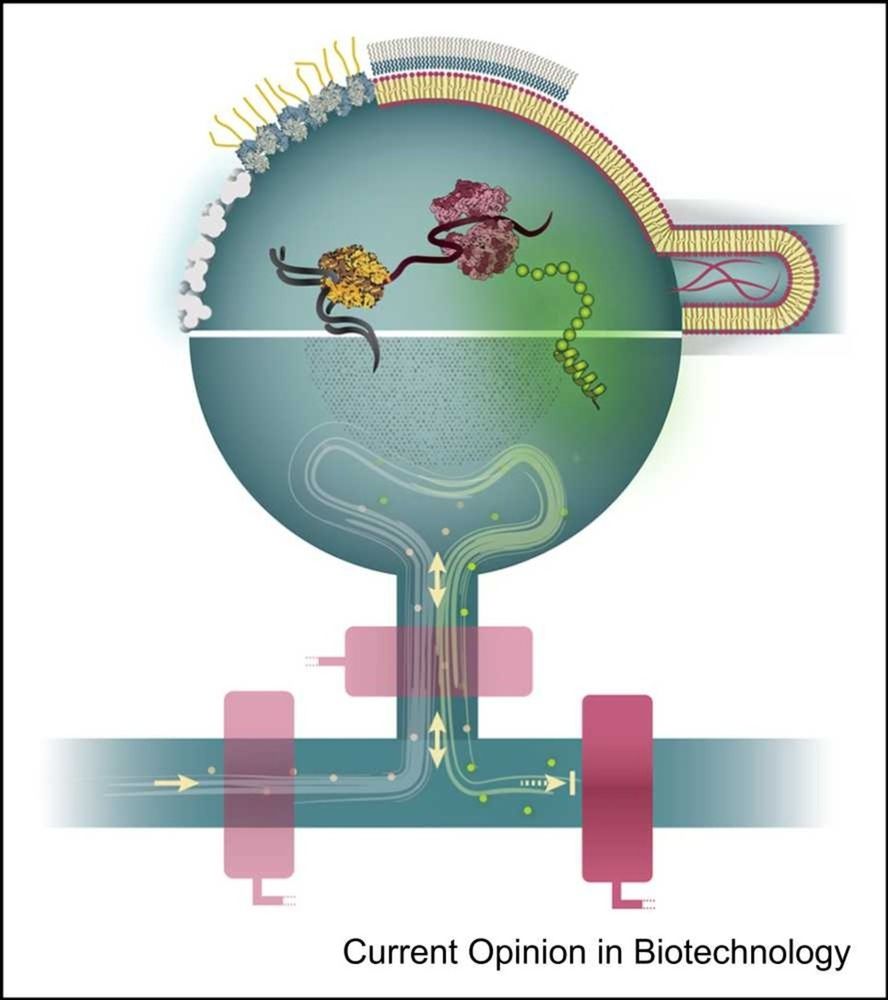
I am happy to share that our review on the Controlled Protein Synthesis in Microfluidic Environments has been published 🎉 www.sciencedirect.com/science/arti...
Thanks to @emmacrean.bsky.social, Imre Banlaki, @jankalkowski.bsky.social, and @hniederho.bsky.social for great teamwork!
24.11.2025 09:51
👍 15
🔁 6
💬 1
📌 0
Congratulations!! 🎊
06.11.2025 16:28
👍 1
🔁 0
💬 0
📌 0
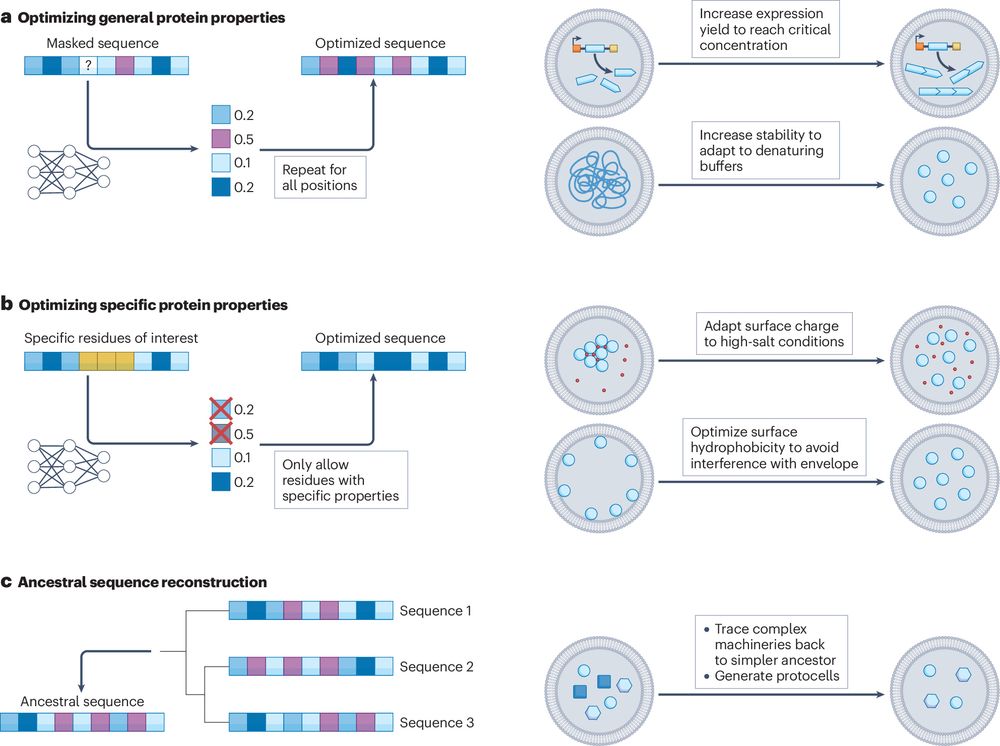
Can we build synthetic cells from de novo designed proteins?
Find out more in the latest review @natrevbioeng.nature.com from Bela Frohn, Shunshi Kohyama and Petra Schwille.
❕Publication: doi.org/10.1038/s442...
#ProteinDesign #SyntheticBiology @belafrohn.bsky.social
21.05.2025 08:35
👍 9
🔁 7
💬 0
📌 2
They are sooo adorable! 😍
20.05.2025 10:08
👍 1
🔁 0
💬 0
📌 0
Very exciting program for the next 3 days!
Will talk about microfluidic platform for biomolecular condensates on the second day. See you there!
13.05.2025 06:15
👍 2
🔁 0
💬 0
📌 0

We are looking forward to the workshop "Biomolecular Condensates and Polymer Phase Transitions" which we are organizing together with the IPF Dresden (dpd.ipfdd.de).
It will be held from May 25th - 28th, 2025 in Meißen, near Dresden.
The registration deadline is May 5th, 2025.
30.01.2025 09:50
👍 19
🔁 6
💬 0
📌 3

Lego DNA 2.0: Double Helix History
Step into the extraordinary world of Lego DNA 2.0: Double Helix History, a celebration of the 70th anniversary of the landmark DNA structure ...
Calling all structural enthusiasts! An accurate depiction of the structure of DNA in #Lego is under 2000 supporters away from being considered to become a real set!
It even has Franklin, Watson, and Crick minifigures and a Lego photgraph 51 and Bragg's law!
ideas.lego.com/projects/c92...
17.01.2025 14:08
👍 29
🔁 16
💬 1
📌 1

Latest #CDlab paper by Nicola De Franceschi ea now in eLife @elife.bsky.social:
'Interaction hierarchy among Cdv proteins drives recruitment to membrane necks', an in vitro study of the fascinating and unique proteins machinery that drives cell division in archaea elifesciences.org/reviewed-pre...
17.01.2025 11:28
👍 17
🔁 4
💬 1
📌 0
Yes, we have iDOT in our lab, and it works quite well! It doesn't need so much maintainance as Echo needs (only specific vials to handle liquids), and can work in similar ranges like Echo does :)
20.11.2024 14:38
👍 2
🔁 0
💬 1
📌 0