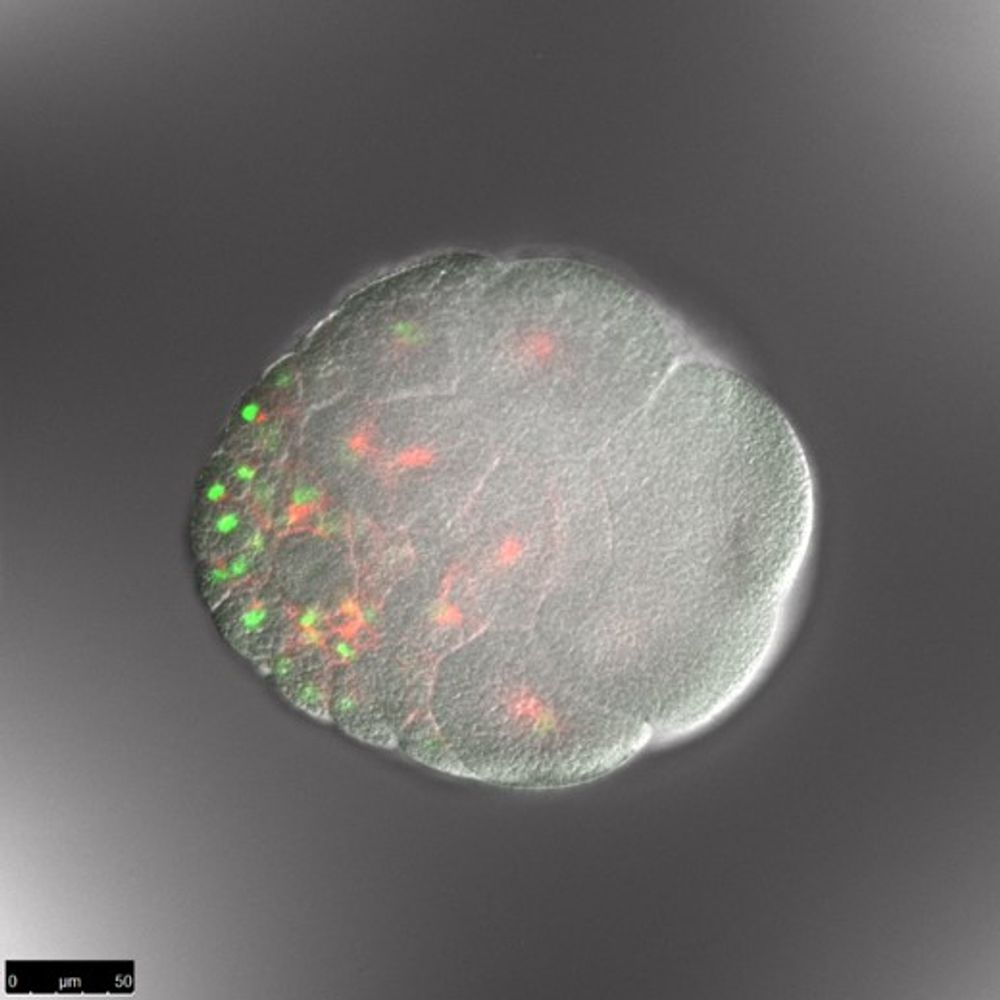
Freshly out at @natcomms.nature.com ! Our @univie.ac.at @awi.de @viennabiocenter.bsky.social @ercgrantees.bsky.social research into neurogenic plasticity of adult worm brains, and similarities in stem cells supporting growth of camera-type eyes. www.nature.com/articles/s41... [1/7]
01.12.2025 10:51
👍 39
🔁 15
💬 1
📌 3


We studied remodeling, development, and patterning of the nervous system in asexually reproducing annelids. The involvement of Pax6 in these processes is evolutionary conserved, despite the variability and evolution of the developmental trajectories. doi.org/10.3390/biol...
02.12.2025 12:43
👍 1
🔁 0
💬 0
📌 0
Really excited to present the results of a fantastic collaboration with Jesse Veenvliet @jesseveenvliet.bsky.social @mpi-cbg.de @poldresden.bsky.social 🤩
We find a unique mechanism for body axis elongation in mammals, different from other vertebrate species
➡️ www.biorxiv.org/content/10.1...
28.10.2025 08:24
👍 142
🔁 47
💬 6
📌 3

What happens if your asexual reproduction goes wrong? For instance, you can grow a head instead of a tail. But if you're a flatworm, it's not that bad - as we showed in our newest paper published in the Proceedings of the Royal Society B: tinyurl.com/4dnp2ffz
29.10.2025 14:53
👍 8
🔁 4
💬 0
📌 0

A toolkit for testing membrane-localising tags across species
Transgenic markers and tools have revolutionised how we study cells and developing organisms. Some of the elements needed to construct those tools are universally applicable (e.g. fluorescent proteins...
How can we see the cells that make up a living organism? Membrane-localising tags can drive fluorescent proteins to the cell's outer membrane, making their outlines visible. But the tags don't work well in all organisms. How do you find one for your species of interest? 🧵
Check our latest preprint
23.10.2025 08:16
👍 87
🔁 41
💬 5
📌 5

📢 The First Circular for the 15th International Polychaete Conference (IPC15) is out! Join us in Frankfurt, Germany • 27–31 July 2026
#IPC15 #Polychaetes #Annelida
polychaete-association.com/ipc15-frankf...
23.10.2025 19:32
👍 10
🔁 8
💬 1
📌 0
So happy to see the cephalic furrow combo out back-to-back! This was a wonderful collaborative endeavor 🥹
04.09.2025 13:17
👍 34
🔁 5
💬 8
📌 0

Final version of our paper on ciliary metachronal waves out now in Science Advances! doi.org/10.1126/scia...
This is the main thesis work of my PhD student Rebecca Poon, who caught many #platnereis larvae and tirelessly ablated them with a laser. THREAD
15.10.2025 20:53
👍 39
🔁 10
💬 2
📌 2
Cell Proliferation and Morphogenetic Compartmentalization in the Phoronid Phoronopsis harmeri: Conserved and Derived Patterns https://www.biorxiv.org/content/10.1101/2025.09.19.677378v1
19.09.2025 21:31
👍 1
🔁 2
💬 0
📌 0
New paper on the expression of the estrogen receptor in the marine polychaete, Capitella teleta!
Congrats to @andreamurillo.bsky.social on another paper from her PhD!
www.sciencedirect.com/science/arti...
Great collaboration with the Seaver lab!
22.09.2025 20:09
👍 5
🔁 2
💬 0
📌 1

A genetically tractable non-vertebrate system to study complete camera-type eye regeneration
Nature Communications - Accorsi et al. show that the apple snail Pomacea canaliculata has eyes similar to humans and can fully regenerate them. They then developed genetic tools to establish these...
Evolution’s eye game is wild, but mollusks take it to another level
CRISPR in apple snails gives us a new model to dissect how nature rebuilds complex organs like the camera-type eyes we humans possess
It turns out Evolution doesn’t just innovate, it rewinds, remixes, & regenerates
rdcu.be/ezw0t
06.08.2025 11:21
👍 116
🔁 43
💬 1
📌 2
Latest paper elifesciences.org/articles/107... closes an important cycle in our efforts to study regeneration: week-long recordings allow us to observe the behaviour of cells during the entire course of regeneration in a crustacean leg – bright objects in movie are fluorescent nuclei of cells. 1/6
08.08.2025 17:39
👍 142
🔁 50
💬 2
📌 3

Proud to present the peer-reviewed version of our Cell Type Allometry paper, out today in Science Advances!
www.science.org/doi/10.1126/...
Are animals of different sizes made of the same cell types?
Here’s an update of the main points and revision items
(with memes!)
Thread 👇🧵
07.05.2025 19:01
👍 95
🔁 35
💬 6
📌 3
Job Alert! We are recruiting one postdoc to work on spiralian embryos and their crazy polar lobes. More info about this HFSP-funded position on our website baronelab.org: scroll to the end, click on "this could be you"...start your adventure!
28.05.2025 02:48
👍 79
🔁 47
💬 3
📌 3
Unexpected role of β-catenin signaling in germ layer specification
In this 'Show and tell' post, @genikhovich.bsky.social and @tclebedeva.bsky.social tell us about their video of a GFP-β-catenin knock-in Nematostella embryo from their latest paper:
🎥 thenode.biologists.com/unexpected-r...
31.03.2025 15:49
👍 79
🔁 23
💬 2
📌 3
The revised version of our #Platynereis #connectome paper is now out:
https://elifesciences.org/reviewed-preprints/97964
Cell-type-level annotation of the whole organisms, including synaptic and desmosomal connectomes. Can be explored with CATMAID here […]
[Original post on biologists.social]
04.03.2025 08:40
👍 54
🔁 22
💬 1
📌 1

Micrognathozoa, or ‘little jaw animals’, are one of the ~32 evolutionarily independent lineages on the animal tree of life. This phylum contains some of the smallest animals reaching a maximum size of 150µm. Populations are found in Greenland, the Pyrenees Mountains, and a Subantarctic island. Despite this disjoint distribution, there is currently only one described species, Limnognathia maerski. After almost a decade of collecting effort, the Katrine Worsaae group here at BIO, UCPH, joining teams from USA, UK, France, and Spain, was able to collect samples from all three populations. With this new material, using advanced microscopy, single-cell transcriptomic techniques, and machine learning, we interrogate the relationships among populations, test species limits, and infer their biogeographic history for the first time. Although we find no morphological differences, genetic data distinguish the Subantarctic population as a separate species, here named Limnognathia desmeti. The distribution of this old freshwater phylum, Micrognathozoa, can only be explained by overseas dispersal which raises questions about potential dormant life stages and undiscovered populations.
Our paper describing the second species of Micrognathozoa, Limnognathia desmeti, is out: doi.org/10.1098/rspb... - big thanks to all coauthors, to Willem H. De Smet for finding this species, and to the Villum Foundation a.o. for supporting this project!
19.02.2025 15:06
👍 30
🔁 6
💬 1
📌 2

The results of our study suggest involvement of ParaHox genes in whole-body patterning and/or in tissue remodeling during growth and asexual reproduction in annelids, and may be evidence of the functional diversification of duplicated genes. doi.org/10.3390/gene...
19.02.2025 08:56
👍 2
🔁 0
💬 0
📌 0

If you like snowflakes, check our new preprint about axial patterning in brittle stars ⭐
We looked at the expression of anteroposterior patterning genes in Amphipholis squamata juveniles, and compared it with existing data from other classes
www.biorxiv.org/content/10.1...
@lowelab.bsky.social
17.02.2025 17:32
👍 78
🔁 28
💬 1
📌 4

Society for Developmental Biology logo
Society for Developmental Biology 2025 Award Winners
Edwin G. Conklin Medal
Headshot of Blanche Capel
Blanche Capel, Duke University
Developmental Biology-Society for Developmental Biology Lifetime Achievement Award
Headshot of Billie Swalla
Billie Swalla, University of Washington
Viktor Hamburger Outstanding Educator Prize
Headshot of Erica Crespi
Erica Crespi, Washington State University
Elizabeth D. Hay New Investigator Award
Headshot of Mubarek Syed
Mubarak Syed, The University of New Mexico
Society for Developmental Biology Trainee Science Communication Award
Headshot of Joaquin Navajas Acedo
Joaquin Navajas Acedo, Biozentrum at University of Basel
Congrats to the 2025 SDB Award Winners!
Conklin Medal: Blanche Capel
DB-SDB Lifetime Achievement Award: Billie Swalla
Hamburger Outstanding Educator Prize: Erica Crespi
Hay New Investigator Award: Mubarak Syed
SDB Trainee Science Communication Award: Joaquin Navajas Acedo
bit.ly/4bcrFap
11.02.2025 17:08
👍 109
🔁 24
💬 0
📌 27

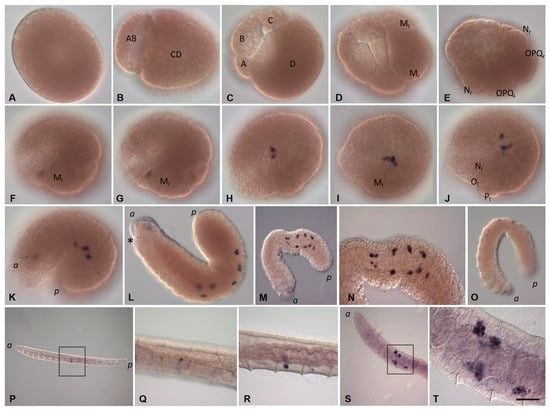
Origin of the primordial germ cells in annelids: a combination of inherited cytoplasmic determinants, followed by inductive processes? Germ Line/Multipotency Genes Show Differential Expression during Embryonic Development of the Annelid Enchytraeus coronatus www.mdpi.com/2079-7737/12...
03.02.2025 16:06
👍 1
🔁 0
💬 0
📌 0

We looked into details of the stem cell system of catenulids. Surprisingly, it was very different from the canonical neoblast-based systems of other flatworms. What does it tell about the evolution of stem cells and regeneration? Check in our latest paper in @naturecomms.bsky.social:
bit.ly/3WK2ZzR
02.02.2025 16:07
👍 27
🔁 13
💬 1
📌 1

Our article on Platynereis’ #StemCells and #regeneration is out! Kudos to @chrisruta, and @biyolokum and our amazing collaborators @alexwstockinger, @Adelmann_L in @FRKT_labs. The transgenics work was carried out at @IJMonod, and transcriptomics at @MaxPerutzLabs. doi.org/10.1038/s414...
18.11.2024 11:11
👍 42
🔁 14
💬 4
📌 2


Our phoronida paper is out: Digestive System Development and Posterior Hox/Parahox Gene Expression During Larval Life and Metamorphosis of the Phoronid Phoronopsis harmeri onlinelibrary.wiley.com/doi/full/10....
31.01.2025 10:02
👍 8
🔁 3
💬 0
📌 0