Some of us know how sweet procrastination can be! If you feel the same, good news:
The abstract deadline for the EMBO Workshop has been extended to March 19!
Don’t miss the opportunity to present your work June 2–5 2026 in Oeiras, Portugal!
04.03.2026 16:56
👍 2
🔁 4
💬 0
📌 0
Final version @nature.com of our paper describing unconventional multicellular development in a choanoflagellate inhabiting an extreme environment. A ton of new data since the first @biorxivpreprint.bsky.social preprint (which we've kept updating).
A brief 🧵 (carried over from the old place)
28.02.2026 08:12
👍 338
🔁 137
💬 16
📌 16

GIMM Fest returns September 17–19 with three days dedicated to the future of science and health, this year focusing on microbes. 🦠
Join researchers and innovators for a programme designed to promote scientific exchange and collaboration.
06.02.2026 17:42
👍 9
🔁 5
💬 2
📌 2

🧵 Thread: What happens when transcription isn’t properly shut off during mitosis? Our new preprint explores just that 👇
www.biorxiv.org/content/10.6...
17.02.2026 11:05
👍 63
🔁 24
💬 1
📌 4

Now with the final graphic ✨
Beautiful artwork by Sonia Monti (scientific-visualization-solutions.com). Design by @embo.org
🧬 The Rules of the Game
📍 @gimmfoundation.bsky.social, Oeiras (PT) | June 2–5, 2026
🗓️ Register by March 1st
👉 meetings.embo.org/event/26-cel...
02.02.2026 17:20
👍 4
🔁 4
💬 0
📌 0

Join the dialogue on the #evolution of cellular processes at the EMBO Workshop "The rules of the game: Biophysical & molecular principles in cellular evolution" in #Oeiras, PT, 2–5 June 2026.
Deadline: 1 March
https://meetings.embo.org/event/26-cellular-evolution
#EMBORulesOfTheGame #EMBOevents 🧪
19.12.2025 10:05
👍 7
🔁 5
💬 0
📌 0
🔬Exploring principles of cellular evolution at the interface of physics, molecular & evolutionary cell biology
🌐Hybrid format
🧑🏫Many talk slots available — early abstract submission encouraged
✈️Many travel grants available for early-career&global researchers 🙏 to @embo.org & @aps-dbio.bsky.social
18.12.2025 15:50
👍 2
🔁 1
💬 0
📌 0

Too big not to fail: Different paths lead to senescence of enlarged cells
In this issue of Molecular Cell, Crozier et al.,1 Foy et al.,2 Manohar et al.,3 and Wilson et al.4 show how excessive cell growth caused by a temporar…
Looks like you were onto something. You might be interested in a cohort of papers published in 2023 that demonstrate this association using multiple methods. Here’s a commentary, where you will find the links to the original manuscripts:
www.sciencedirect.com/science/arti...
15.12.2025 15:56
👍 1
🔁 0
💬 1
📌 0
Good points! Nuclei are significantly smaller too! We are looking right now into genome dynamics in unperturbed and damaging conditions. Hopefully we get some cool answers for the next chapter of the saga.
10.12.2025 18:22
👍 5
🔁 0
💬 0
📌 0
Many questions remain about these lineages. Feedback from the cell biology and evolution communities is very welcome. Thanks for taking a look! 🙏
09.12.2025 17:13
👍 4
🔁 0
💬 2
📌 0

We propose a mechanism in which mutations synergistically speed transitions through G1 and G2 without reducing biomass accumulation. This produces very small yet fit cells and may help explain how eukaryotic cell size evolves.
09.12.2025 17:13
👍 3
🔁 0
💬 1
📌 0

Whole-genome sequencing of evolving populations showed that concerted changes in the G1 cyclin Cln3 and the Greatwall kinase Rim15 signaling cascades explain the size shift. Genetic perturbations in these cascades can reproduce evolved volumes, while loss-of-function leads to enlarged cells
09.12.2025 17:11
👍 3
🔁 0
💬 1
📌 0

This project stemmed from our curiosity about how evolution generates diversity in cell sizes without harming fitness. We evolved S. cerevisiae under size-based selection for 1500 generations and observed a remarkable ~6-fold volume reduction with limited impact on fitness or size homeostasis
09.12.2025 17:09
👍 3
🔁 1
💬 1
📌 0

🗞️ New preprint from the lab, led by our postdoc Ana Garoña (not on here) in collab with @andreagiometto.bsky.social: “Experimental evolution of cellular miniaturization reveals a mechanism for cell size evolution”, aka: “honey, we shrank the yeasts!” 🎥
www.biorxiv.org/content/10.6...
09.12.2025 17:07
👍 71
🔁 24
💬 2
📌 3
So proud to watch Jana turn a side quest into an entire research programme. Couldn’t imagine a more well-deserved outcome. 😍
The mighty yeast reveals what we believe are general principles of centromere evolution!
Behind the curtain: communities.springernature.com/posts/counti...
#MEvoSky 🧪🌎
27.11.2025 09:21
👍 61
🔁 17
💬 0
📌 2

How do new centromeres evolve while staying compatible with the division machinery?
Discover it in our new Nature paper! We show centromeres transition gradually via a mix of drift, selection, and sex, reaching new states that still work with the kinetochore.
👉 doi.org/10.1038/s41586-025-09779-1
26.11.2025 16:21
👍 184
🔁 84
💬 8
📌 8
Now published on @plos.org Computational Biology!
Same findings as the preprint, with improved analyses suggested by reviewers!
Check it out and let us know how RepliFlow works for you!
journals.plos.org/ploscompbiol...
27.10.2025 18:09
👍 6
🔁 2
💬 0
📌 0
I'm curious if other mid career PIs have considered completely abandoning the trad publication model. We've been making gradual moves towards that end goal. But it's been difficult to completely jump ship for one main reason for me at least. 1/
16.09.2025 05:43
👍 34
🔁 12
💬 8
📌 1
Great findings indeed, I have so many questions 🤩! I’m intrigued that TLS loss precedes the loss of Polδ. While the latter could be host control, the former shouldn’t. Like @morielab.bsky.social, I wonder how far can Polδ go alone, and what does the plant supply for efficient genome duplication!
11.09.2025 18:25
👍 2
🔁 0
💬 1
📌 0
how (yeast) cells re-climb the fitness landscape when they are reprogrammed to a different telomere DNA sequences (human-like)? read the latest from @melaniadangiolo.bsky.social etal , with great help and insights from Eric Gilson, Jonas Warringer and @juliamuenzner.bsky.social (& Ralser lab)
03.07.2025 10:46
👍 15
🔁 8
💬 0
📌 0

@mariananatalin6.bsky.social @marcofumasoni.bsky.social show evolutionary repair in response to DNA replication stress in yeast is predictable and consistent across different environments #CompensatoryEvolution #NutrientAvailability #ReplicationStress #GxE ➡️ www.embopress.org/doi/full/10....
03.07.2025 12:39
👍 4
🔁 3
💬 1
📌 0

📢 New paper out in Mol Syst Biol!
During the development of WT yeast colonies, small cell subpopulations experience transient, high-intensity mutational bursts. Such hypermutation episodes are modulated by the DNA damage tolerance pathway 🧬
🔗 www.embopress.org/doi/full/10....
09.06.2025 13:02
👍 34
🔁 14
💬 1
📌 0
Looking forward to reading this!!
03.07.2025 10:38
👍 1
🔁 0
💬 0
📌 0
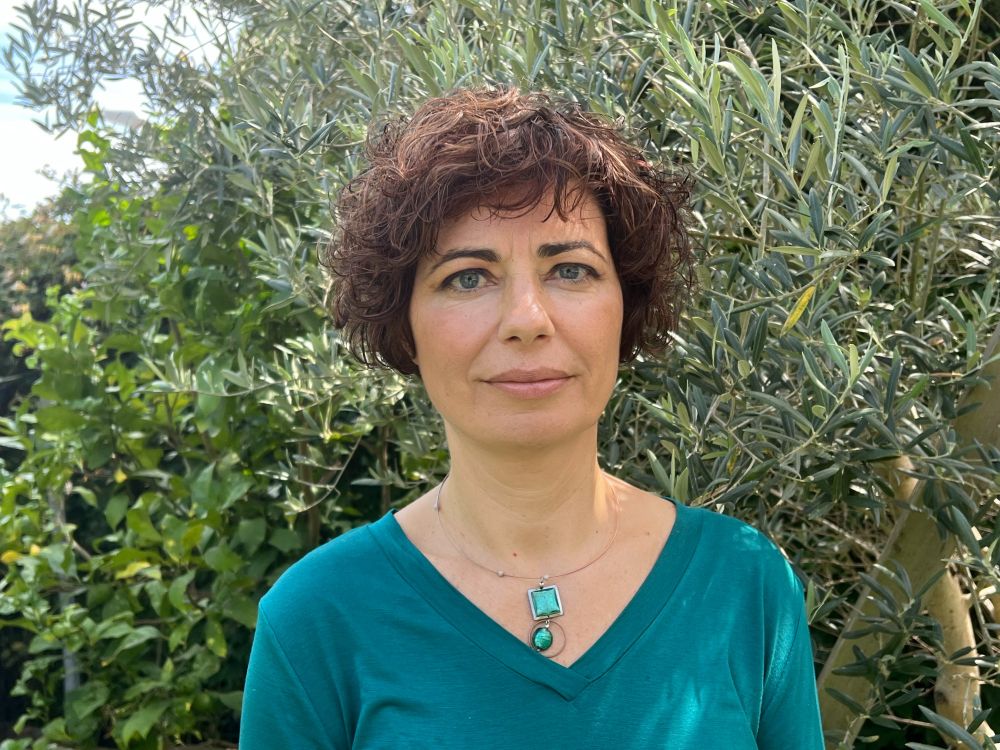
Exciting news: our Board of Trustees has appointed @monicabettencourt.bsky.social as the CRG's new Director. Prof Bettencourt-Dias is expected to take up the post in 2026, replacing Dr. Luis Serrano, who will continue to maintain a research group at the institute.
www.crg.eu/en/news/moni...
01.07.2025 08:59
👍 95
🔁 17
💬 5
📌 7

Happy to be the next (and 1st female) @crg.eu director. The CRG always stood out to me, for its excellence in understanding life's principles, with implications for health and biodiversity, & its collaborative, open and innovative way of doing science. Thrilled to join its amazing community in 2026!
01.07.2025 17:30
👍 413
🔁 50
💬 40
📌 11
They are so lucky to have you!!
02.07.2025 17:40
👍 1
🔁 0
💬 1
📌 0