

Huntington’s disease is the best investment in neuroscience today www.sciencedirect.com/science/arti...
#Huntingtons #Neuroscience #Investment
16.02.2026 09:29
👍 4
🔁 4
💬 1
📌 0
Huntington’s disease is the best investment in neuroscience today www.sciencedirect.com/science/arti...
#Huntingtons #Neuroscience #Investment
#MSCA success rates now below 10%, yet the work that goes into writing this application is immense. Beyond the obvious increase in funding we need to find ways to lighten the time investment as well. Thousands of researchers spend weeks if not months working on this.

Together with @ronghuizhu.bsky.social, we are thrilled to present our new perturb-seq study of 22M primary CD4+ T cells, across donors and timepoints – the result of a decade-long collaboration between the Marson @marsonlab.bsky.social and Pritchard @jkpritch.bsky.social labs 🧵 tinyurl.com/gwt2025
New preprint from our lab: ‘Retroviral insertions contributed to the divergence of human and chimpanzee brains’. Very proud of this piece which took almost a decade to finish.
www.biorxiv.org/content/10.6...

For obvious reasons, I've become fascinated with retrotransposons. So we ( @alexwhiteley.bsky.social and I) wrote an article now out in Neuron @cellpress.bsky.social on how we think retrotransposons influence brain function and health! kwnsfk27.r.eu-west-1.awstrack.me/L0/https:%2F...
New preprint from my lab! We describe how transposable elements are activated in Parkinson’s disease, which is linked to an interferon response. We believe this study significantly advances our understanding of transposons and their role in human brains.
www.biorxiv.org/content/10.1...
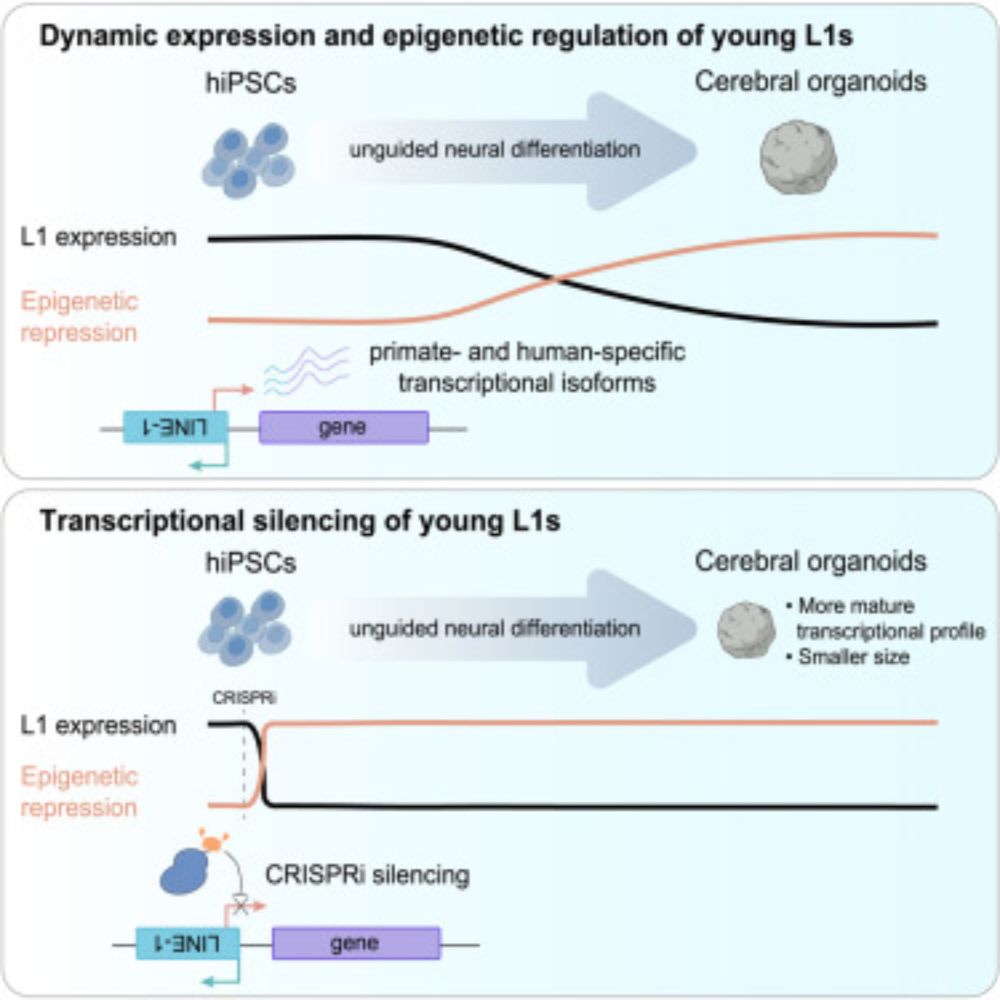
New paper from our lab! We found that LINE-1 transposons contribute to early human brain development.
Funded by @asapresearch.parkinsonsroadmap.org
www.cell.com/cell-genomic...

Excited to share this huge team effort collaboration supervised by Stephanie Page in Translational Neuroscience @lieberinstitute.bsky.social and @stephaniehicks.bsky.social @jhubiostat.bsky.social to generate a spatio-molecular resource of the hippocampus in human 🧠
www.nature.com/articles/s41...
Why do some people with Alzheimer’s do not show symptoms of Alzheimer's?
During her PhD, @giorgitos.bsky.social explored this question. Part of the answer led her to an unexpected group of brain cells: underdeveloped neurons.
Read the full article on our website: nin.nl/news/the-eld...
Important perspective on a fascinating study from the Frisén group, which used machine learning to identify neural progenitors in the adult human brain, a fresh lens on a long-standing debate 💥
Always exciting to see this field evolve, and grateful to be part of it @labsalta.bsky.social


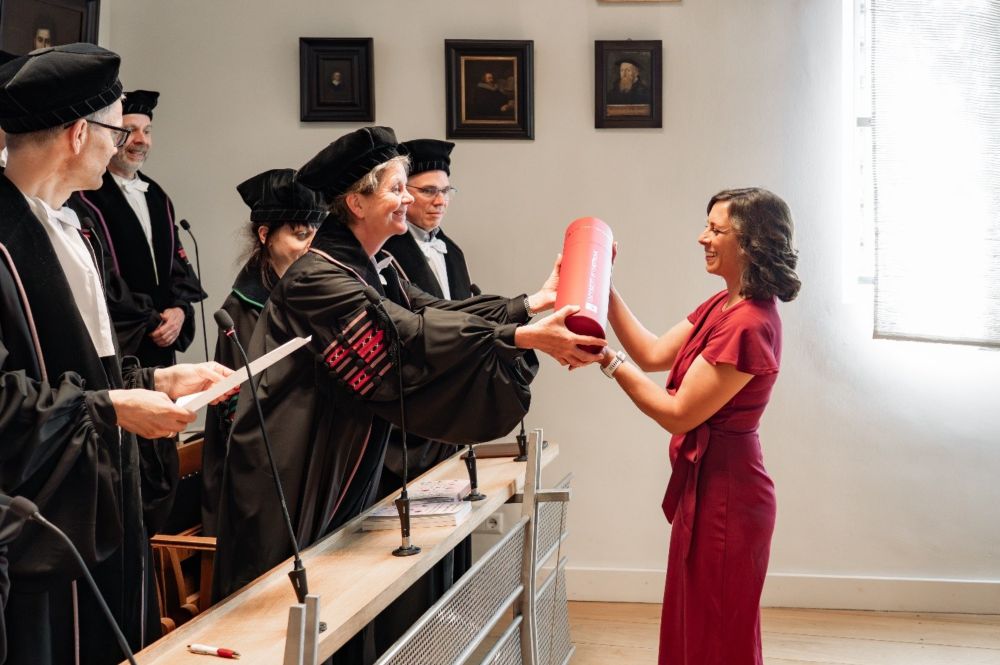
Hora est 🎓
Last Thursday, I defended my PhD at the University of Amsterdam, @nin-knaw.bsky.social—graduated cum laude ✨ Huge thanks to my amazing supervisor @labsalta.bsky.social, co-promoters Paul Lucassen, Inge Huitinga & @fitzsimonslab.bsky.social. Thanks to all who made the day unforgettable!
I'm proud of contributing to @nkrauth.bsky.social @clemmensenc.bsky.social @olekiehn.bsky.social discovery of the role of an hypothalamic-brainstem circuit for prioritization of safety. Really impressive amount of work led by @nkrauth.bsky.social

@labsalta.bsky.social identified persistent populations of immature neurons that were associated with ‘juvenile’ cellular functions, suggesting that these immature populations may actively contribute to maintaining homeostasis within the aged human hippocampus.
www.biorxiv.org/content/10.1...
Our paper has sparked a lot of people asking me – so Keri, what’s the tldr – is there, or isn’t there, new neurons in the human hippocampus?
It's a little more complicated than a yes or no IMO.

Excited to share our preprint led by Ain Chung
& @jasonalipio.bsky.social showing how immature adult-born DGCs preferentially recruit inhibition of CA2 and CA3 to disproportionately affect hippocampal network properties and social memory. We began by asking 1/n
www.biorxiv.org/content/10.1...

Graphical abstract from the paper depicting the overall study design
Updated from the preprint, our paper, "Spatiotemporal analysis of gene expression in the human dentate gyrus reveals age-associated changes in cellular maturation and neuroinflammation" is now published.
www.cell.com/cell-reports...
very interesting!!

Check out our latest preprint, where we cross-compared the molecular landscapes of immature neurons in the hippocampus in different mammalian species👨🐵🐷🐭, revealing specialized features in humans. www.biorxiv.org/content/10.1...
I've been developing a semantic search tool that covers not just bioRxiv and medRxiv, but the entire PubMed database. This means you can search across a massive collection of biomedical research using keywords, questions, hypotheses, or even full abstracts. Try it out: mssearch.xyz
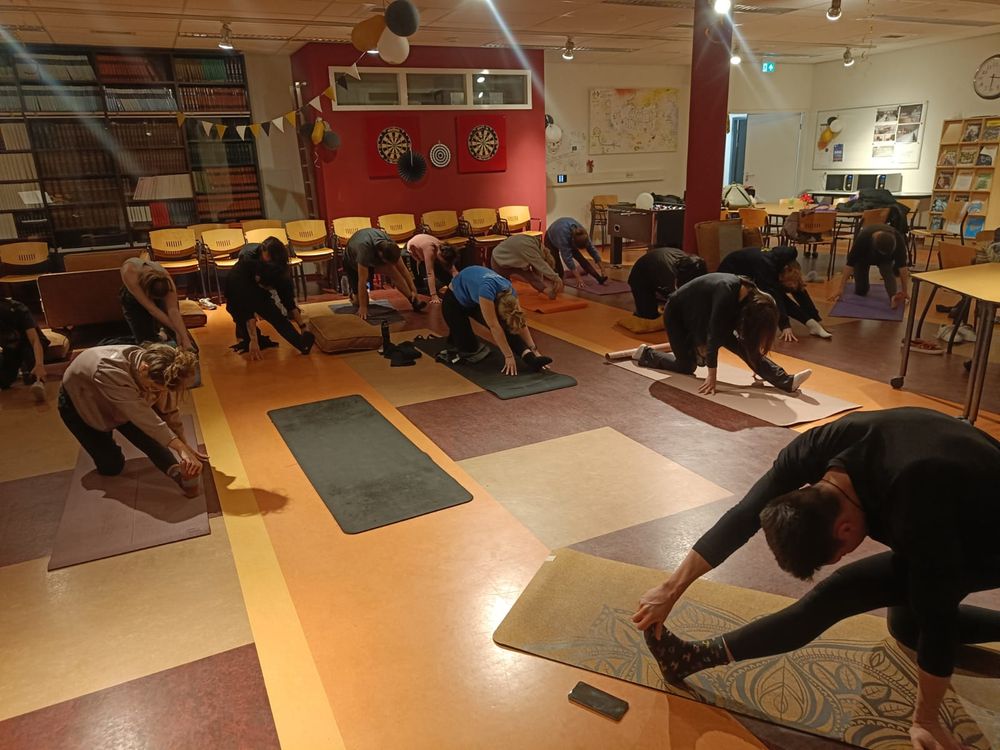
The NINclusion team launched the NIN Gym to support mental and physical health within the institute. Over the next 10 weeks, employees can join alternating Yoga and Bootcamp sessions led by personal trainer Ties
(@tiesverbeekpt.bsky.social) on Thursdays. The first session took place last week! 💪
All NIH study sections canceled indefinitely. This will halt science and devastate research budgets in universities.
@labsalta.bsky.social @nin-knaw.bsky.social @codingdilara.bsky.social
12/ Huge thanks to all the co-authors, brain donors, and their families—this work wouldn’t have been possible without you! 🙏 We would be super grateful to hear your thoughts on our findings (don’t hold back, we’re all ears)! #Neurogenesis #Alzheimers #resilience
11/ Our work suggests immature neurons actively support hippocampal plasticity and resilience. Could targeting these cells help unlock new strategies for combating AD? 🏥💡We hope to provide a resource to help explore the molecular basis of aging, AD, and resilience. 🛠️

10/ ImN also showed decreased (in silico) intercellular communication in AD brains. In resilient individuals, they maintained crosstalk with other cells critical for anti-inflammatory and neuroprotective signaling. 🤝

9/ 🛡️ Resilient individuals—cognitively intact despite AD pathology—harbored ImN enriched for anti-inflammatory, anti-amyloidogenic, and neuroprotective transcriptional programs. These cells may actively buffer against AD progression. 💡

8/ We took extra steps to validate our findings using RNAScope in adult and fetal human brain & human iPSC-derived 3D cultures. Key marker combinations could detect ImN, and increased with hippocampal neuronal differentiation, indicating a role in human hippocampal neurogenesis. 🔬

7/ Yet, are these cells born in adulthood, passively waiting to mature when they ‘grow up’ or lingering remnants of embryonic neurogenesis? Maybe neither: ImN showed “youthful” transcriptional traits vs mature neurons, suggesting they may actively support hippocampal homeostasis.

6/ So, what did we find? Our quality control pipeline revealed the presence of immature neurons in adult GC! 🥳Enriched for immature markers, these populations were validated by trajectory inference and integration with the fetal neurogenic dataset.

5/ Back to the adult cohort: To screen for ImN signatures in adult GC and avoid false positives & negatives, we had to apply a rigorous pipeline: Ambient RNA removal, astrocyte and GC subsetting, empty droplet artifact filtering, unspliced RNA re-clustering. 🧹