

Check out this stick insect hiding in our garden! Safely relocated away from the pruning 🌿
11.05.2025 23:40
👍 0
🔁 1
💬 0
📌 0
Check out this stick insect hiding in our garden! Safely relocated away from the pruning 🌿
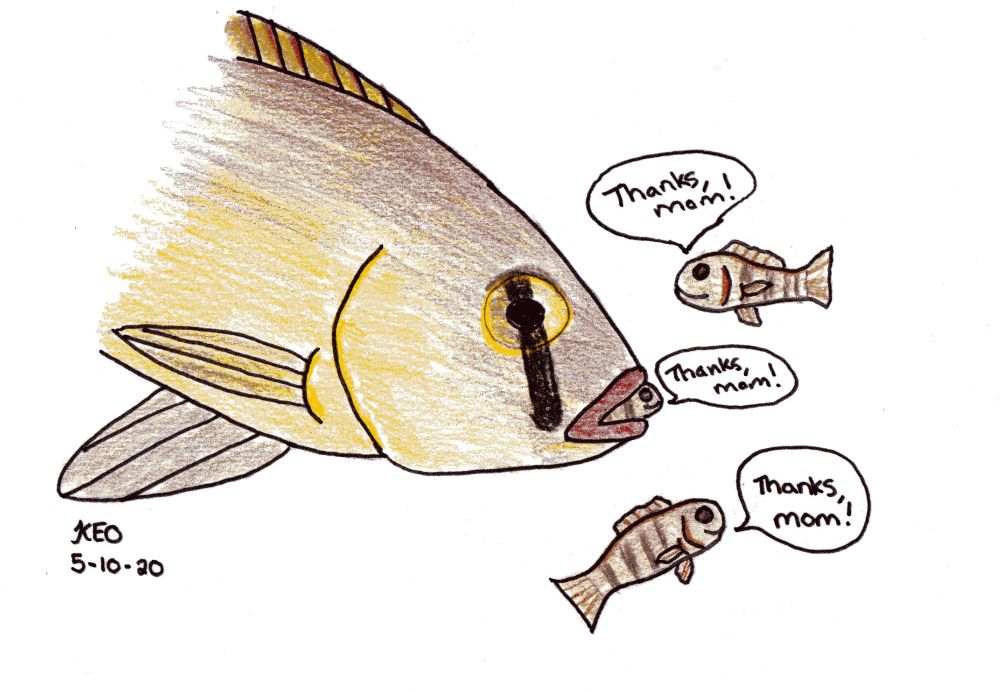
A sketch of a mouth-brooding cichlid with her three baby fish
For some species of cichlids, home is where the mom is - literally! Female mouth-brooding cichlids incubate their eggs in their mouths. Some species continue to provide protection for juveniles after they hatch, sending out cues when danger is around for them to return to her mouth #SundayFishSketch

WEEK 2 of the #SundayFishSketch team-up with #25DaysofFishmas (@drkatfish.bsky.social) for a difficult #Fishytheme. Sketch the #GreatLakes fish described by the clues below - if you know the answer, don't spoil it, draw and post on Sunday! #sciart 🐡🦑


Check out these great #freshwater #PhD opportunities based at the University of Melbourne down here in Australia on #Platypus, #AquaticPlants, & #Carbon 🌿🏞️🦆🧪

AFSS 2024- Elaine Yuen looked at the semi-natural Tung Chung river in Hong Kong's "concrete jungle" 🌁🏞️
With a new city being built on its banks encompassing 60% of the valley, developers must convert the current concrete channel to a sustainable urban drainage system to help migratory fish 🌿🏞️

AFSS 2024- Richard Marchant gave an insight into how Macquarie Isl. has faired after rabbit populations were eradicated 🐇 🏝️
Despite 10 years since eradication, minimal plant recovery was recorded, with spp richness still 30% reduced from pre-rabbit. But, improvements in flatworms & crustaceans 🦀

AFSS 2024- Rodney Ubrihien explored better methods at assessing urban leaf litter productivity 🍂🌁
Using tank water, concrete channels, & barriers to better simulate urban gutters, Rodney found introduced species released ⏫ organic matter after multiple rain events, & continued release in natives 🍂
AFSS 2024- Isobel Walcott studied urban greening to reduce heat islands 🌡️🏝️
Wicking garden beds in carparks drained & stored water, increasing soil moisture retention & improving tree condition compared to traditional garden beds 💧🌳

AFSS 2024- Brendan Cox investigated how our intense bushfires impact freshwater invertebrates 🔥🦟
Lab experiments show 55'C significantly reduced diversity, with only 3/21 species found compared to controls.
Sediment acted as refugia, only reaching 37'C & invertebrates actively buried themselves 🔥

AFSS 2024- Andre Siebers talked about cyanobacterial blooms 🌊🦠
Andre told us there has been an increase in the intensity, frequency, & duration of these blooms which has caused widespread "brownification" of waterways as they carry higher organic matter loads 🏞️🦠
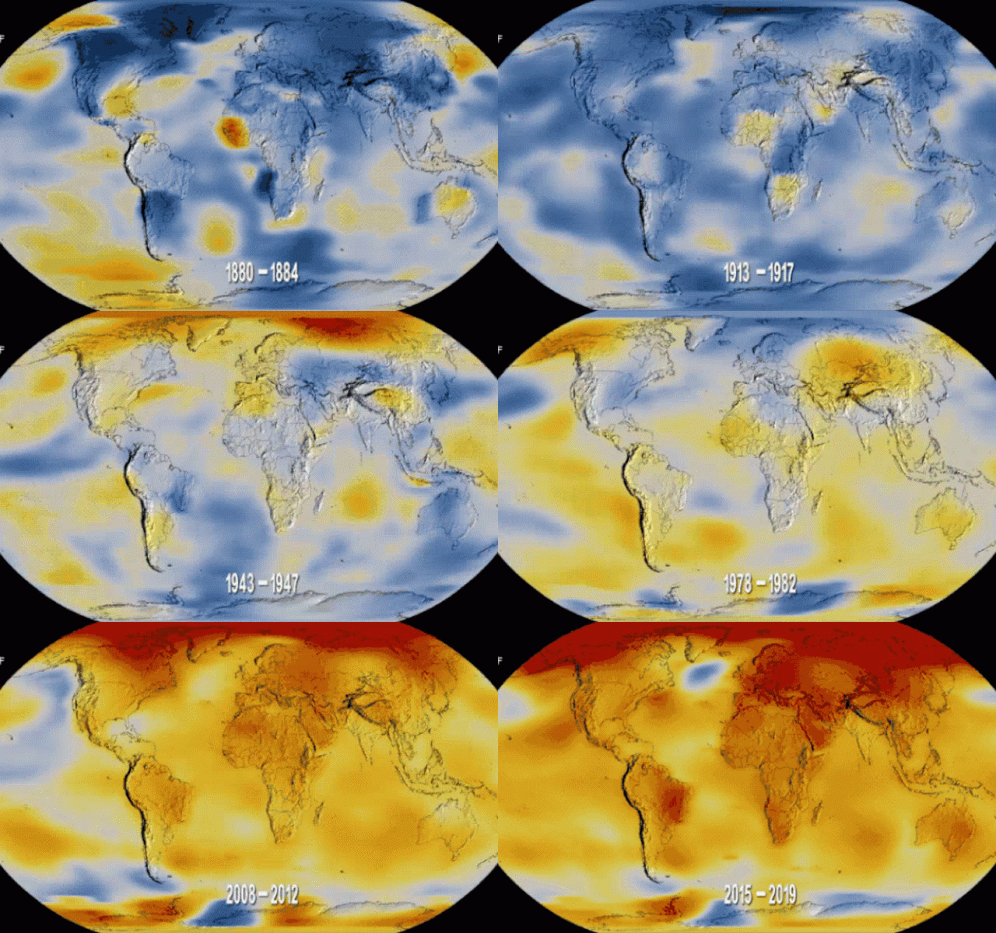
AFSS 2024- David Deane looked ahead to how climate change might shift wetland plant functional groups 🔮🌿
Looking at hydrological risk, David was able to keenly identify wetland plant community shifts & what functional groups would be replaced as rainfall decreases 🌧️🚫🌿

AFSS 2024- Catherine Leigh looked at differences in pest plant invasions between wetland protection levels ⛲🌿
Catherine found conserved wetlands with good riparian zone buffers had <15% of their plant community as pest plants, but this was up to 100% in unprotected wetlands 🚫🌿

AFSS 2024- Another great waterbird talk by Heather McGinness, this time on satellite tracking to understand lifecycles & important habitats 🦆🛰️📡
With a key waterbird "flyway" found between nesting, foraging, & stopover sites, scientists now know where targeted water releases are vital 🛣️🦆

AFSS 2024- Samantha Tonisoo gave an update on the governmental changes to the guiding document for waterway barrier works 🚧🐟
The aim is to improve fish passage by altering existing or future barriers such as culverts to help fish migrate and disperse 🌊🐟🏞️
AFSS 2024- Ryan Burrows looked at how billabong metabolism changes after high flow creates connectivity with the main river channel 🌊🏞️
Ryan found primary production and respiration was higher in billabongs where it had been a long time since last connection ⏫📈
AFSS 2024- Jean Dind investigated how River Red Gum leaf litter in soils can suppress plant growth through leachate chemicals 🚫🌿
Jean found soils under & around these trees significantly reduced the ability for rooted plants to grow as these leachate chemicals are stored in the soil 🍂 🧪

AFSS 2024- Mike Grace looked at how flooding impacted the "breathing" of Goulburn River 🏞️💨
Mike found no boom or bust in productivity, as all the organic materials were used up out on the floodplain before the waters receded to the river bed 🚫🏞️
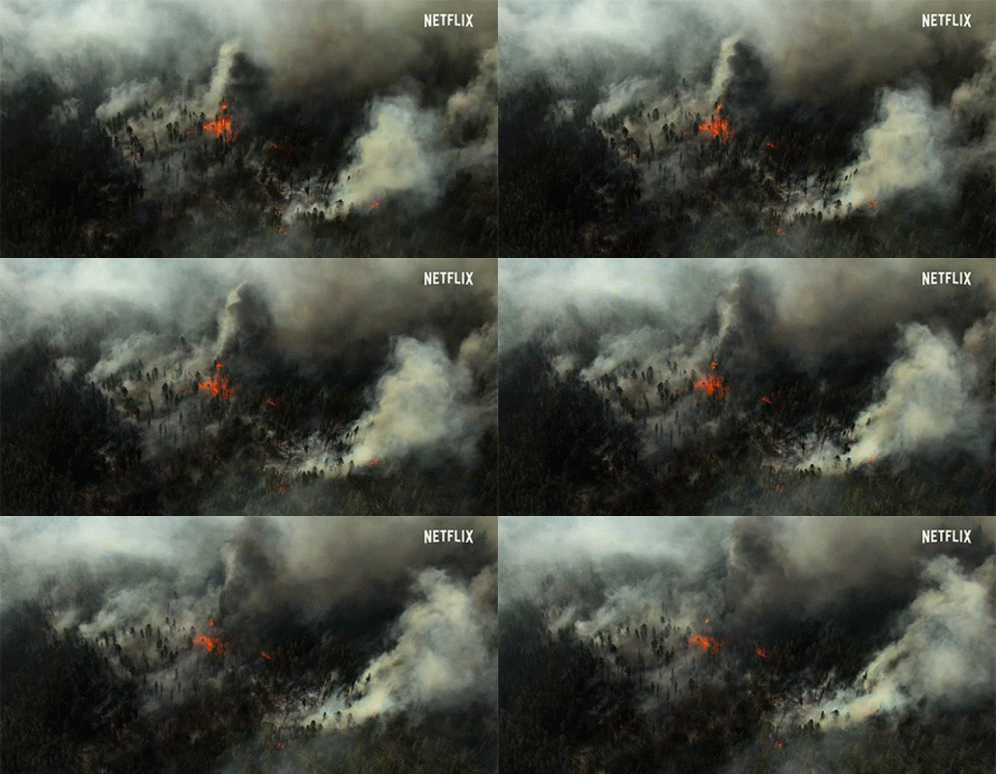
AFSS 2024- Kris Kleeman discussed water quality issues in Lake Hume after the 2019-2020 Black Summer bushfires were followed by 4 years of heavy summer rainfall 🔥🌧️🏞️
Kris reported:
1. lake water gave a sulphurous smell 💨
2. acidity levels damaged vegetation 🌿
3. crayfish "rusted", changing colour 🦀

🎤 Concurrent session 1 🎤
AFSS 2024- Will Higgisson talked about an amazing discovery of a 2nd olive perchlet population in the lower Murray-Darling Basin 🏞️🐟
Surprisingly, Will found the new population was genetically distinct & had survived the millennium drought in deep human-developed ponds 🌊🐟

Plenary speaker Erin O'Donnell made us think about the rights of rivers 🌊⚖️
We see water as a resource that we manage/control, but is this the relationship we want?
Instead of the usual extraction narrative in Australia, what do we want FOR the river and how do we get there WITH the river?

Day 2 of the 2024 Australian Freshwater Sciences Society conference is looking to be another great lineup of talks and discussions on all things freshwater 🌊🐟🌿🐸🦆🦠
AFSS 2024- Emmalie Sanders reviewed the global decline of freshwater mammals 🌊🐹
Emmalie found 38% of freshwater mammals are imperilled primarily due to resource use and agriculture, with bigger animals that need to disperse/migrate most at-risk 🏞️

AFSS 2024- Belinda Robson looked at farm dams as drought refugia in Western Australia 🏜️⛲
Unfortunately, Belinda found community differences between dams and rivers, meaning dams won't be a refuge for flow dependant species 🏞️🚫
AFSS 2024- Sally Maxwell used the power of ChatGPT for her literature review in sorting & analysing huge piles of results 📚👩🏻💻
Sally found floodplain management globally predominantly focuses on vegetation restoration, but in Australia we mainly do flow restoration 🏞️🌿

AFSS 2024- Heather McGiness looked ahead at the potential spread of human zoonoses from waterbirds in Australia 🦠🦆🐔
Heather told us that avian flu is likely to come in soon from overseas via migrating waterbirds, and spread rapidly as waterbirds link wetlands, urban areas, and agricultural land 🏞️🐖🏙️

AFSS 2024- Elizabeth Hamshaw investigated methods of monitoring Southern toadlet populations 🐸
Elizabeth found that eDNA is not an effective tool. Instead, researchers should focus on the traditional audio "croak" monitoring 🔊
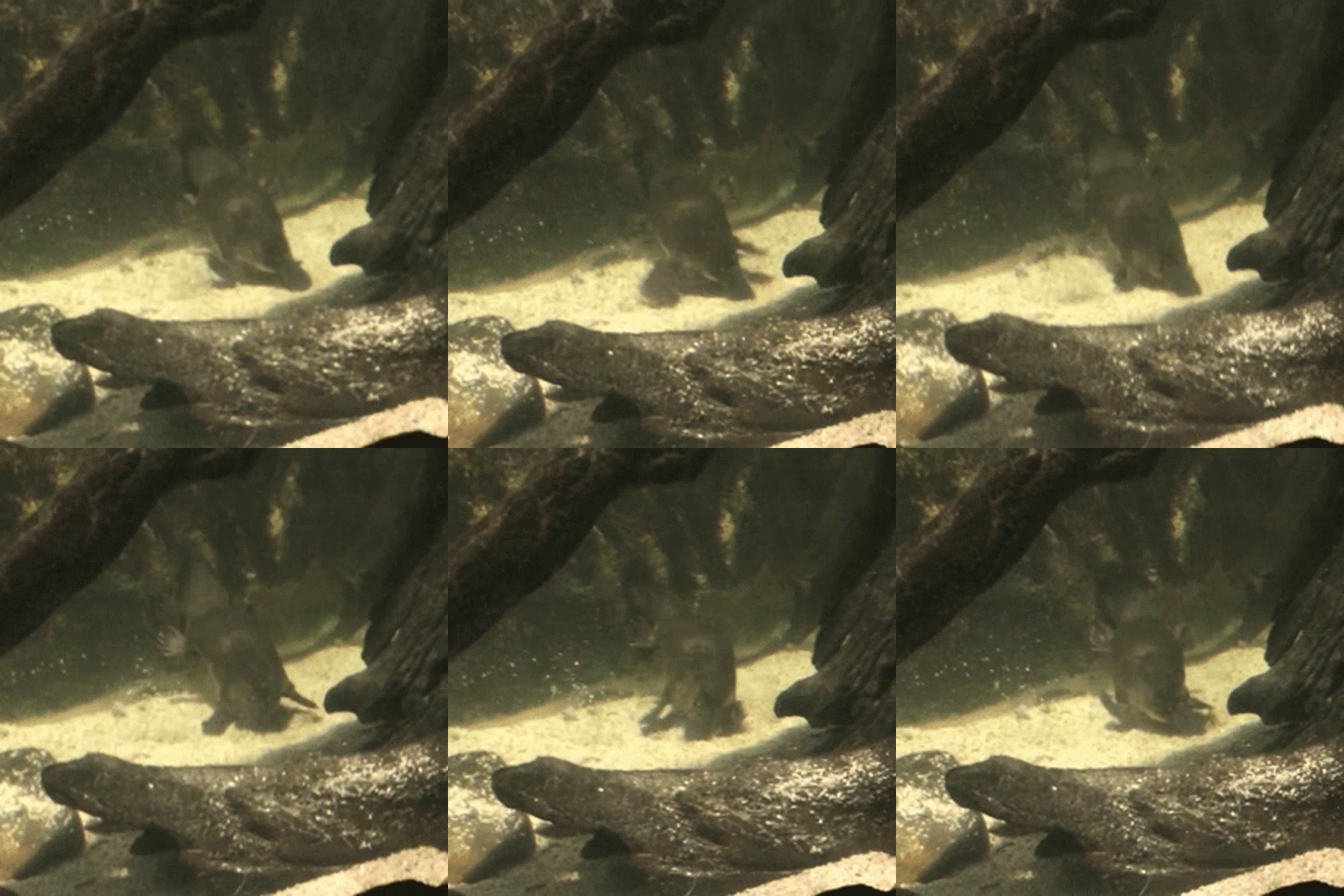
🎤 Concurrent session 2 🎤
AFSS 2024- Sally Hladyz looked at future threats to platypus recovery & resilience by developing threat maps for a wide range of biotic, abiotic, and human impacts thought to threaten platypus populations 🦆🌏

AFSS 2024 Plenary speaker Sonia Cooper spoke on indigenous experiences & knowledge on the borderline 🌏
Sonia asked us to consider what we mean when we say "water" & how different cultures might value water differently 🌊

Bronwyn Ayre presented on the use of community science for a snapshot of the Murray-Darling Basin 👨👩🏾🧑🏼👩🏻
eDNA collected by community scientists identified a huge diversity of frogs, birds, mammals, reptiles, & fish including invasive weatherloach & roach in new waterways 🌊🐟🦎🐦

AFSS 2024- Yiwen Xu studied the importance of habitat networks for aquatic species dispersal 🏞️
Yiwen found that higher network complexity facilitated higher carrying capacities due to shorter distances between habitats, but this was related to dispersal capabilities & rate 🕸️