

Gut microbes play a role in stress-eating, which means you may be able to get your life back.
www.psychologytoday.com/intl/blog/mo...
18.02.2025 21:03
👍 2
🔁 1
💬 0
📌 0
Gut microbes play a role in stress-eating, which means you may be able to get your life back.
www.psychologytoday.com/intl/blog/mo...

Trump and Musk shut down the NIH and the NSF because they might be studying something woke.
scottcanderson.substack.com/p/i-dont-wan...

Amazingly, there’s a microbial fingerprint that can identify resilient people.
scottcanderson.substack.com/p/do-you-hav...

How appendectomies can mess with your mind.
www.psychologytoday.com/us/blog/mood...

A liver disease that can erase your personality is reversed with a surprising tactic.
www.psychologytoday.com/intl/blog/mo...

Half of all chronic mental health issues develop before our 18th birthday. That means to treat adult depression, we ought to pay better attention to teen depression.
scottcanderson.substack.com/p/a-simple-w...

A Surprisingly Simple Hack for a Healthy Gut
scottcanderson.substack.com/p/a-surprisi...

@scottcanderson.bsky.social
People with fewer and less-diverse gut microbes are more likely to have cognitive impairment, including dementia and Alzheimer’s. That’s good news…
www.psychologytoday.com/us/blog/mood...

Diet contributes to the current high rates of Alzheimer’s. Over the last 75 years, the consumption of ultra-processed foods has gone from essentially zero to 60 percent of our diet today. Today’s foods are more manufactured than grown.
scottcanderson.substack.com/p/does-alzhe...
A recent study from a group of researchers at University College Cork (UCC), in Ireland, has found that symptoms of Alzheimer’s can be transferred by gut microbes.
scottcanderson.substack.com/p/does-alzhe...

Many highly processed foods are potentially dangerous, partly because they disregard the fate of gut microbes. It is pure folly to ignore those microbes, especially since they are so crucial to our physical and mental health.
scottcanderson.substack.com/p/this-is-yo...

Gut and oral microbes have been found to be associated with many conditions over the past decade, including chronic fatigue syndrome, binge drinking, long covid, dementia, Parkinson’s, ALS, sleep disturbance, and antibiotic recovery.
scottcanderson.substack.com/p/a-brief-hi...
In 2013, John Cryan and Ted Dinan coined the term psychobiotic to refer to microbes that could improve mood. Later, my wife and I met with them to pop a bottle of Champagne to celebrate our agreement to write a book called The Psychobiotic Revolution.
scottcanderson.substack.com/p/a-brief-hi...
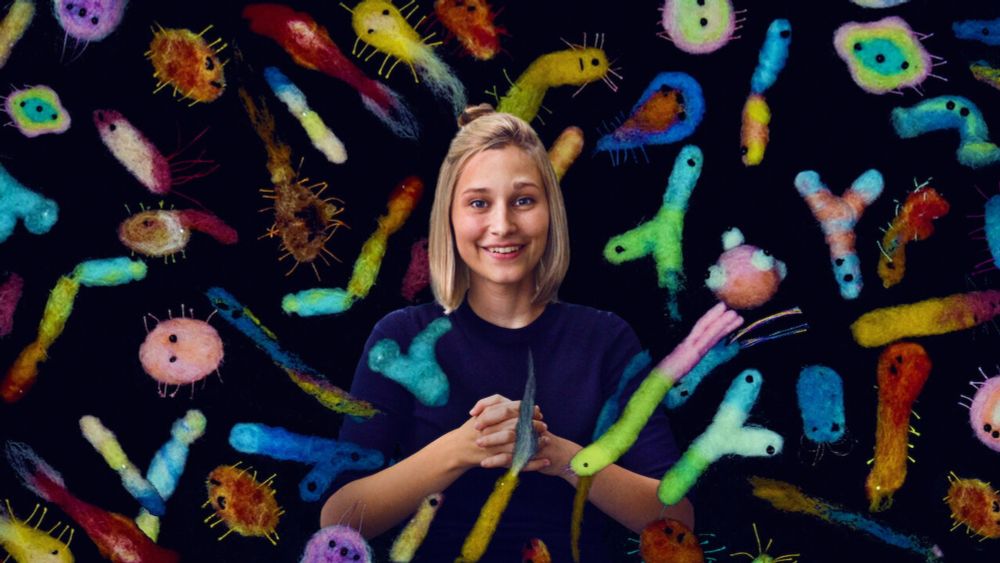
Check out this playful, joyful documentary on the emerging science behind how our gut microbes influence how we respond to food, directed by the brilliant Anjali Nayar, out today on Netflix
www.netflix.com/title/81436688

Scientists recommend that we eat 30 different vegetables a week, which is concerning to those of us who only know of five vegetables to begin with—and the only ones we eat are potatoes and onions. The other three vegetables that we know about, we avoid.
www.psychologytoday.com/us/blog/mood...

Probiotics are not normal gut residents, but they may gain a foothold after antibiotic treatments and delay the return of indigenous gut microbes. In other words, probiotics can make recovery worse.
scottcanderson.substack.com/p/how-to-rec...

In 2004, Nobuyuki Sudo found that germ-free mice behaved differently than their normal germy cousins. It was a weird connection between gut microbes and behavior that offered an early peek into the gut-brain axis.
scottcanderson.substack.com/p/six-secret...
At the dawn of the 21st century, it was hard to find a psychiatrist who didn’t work solely from the neck up. But, in the early 2000s, there started to be some rumbles about the involvement of the rest of the body, especially the immune system.
scottcanderson.substack.com/p/six-secret...

What we swallow can change the entire ecosystem of our personal collection of microbes, called our microbiome. This suggests that we might be able to improve our resilience to the bombast of modern life with simple changes in what we eat.
www.psychologytoday.com/intl/blog/mo...

A recent study from Tel Aviv University suggests that our microbiome may drive addiction. The existence of the gut-brain axis makes the connection entirely plausible.
scottcanderson.substack.com/p/is-addicti...

Biology is complex because the world is full of novelty, and much of it would like to eat you. There are no guarantees in life, but a diet designed to keep your gut microbes happy is a healthy start.
scottcanderson.substack.com/p/the-microb...

@scandersonlabs.bsky.social
Everybody’s got their poison, and mine is sugar.
scottcanderson.substack.com/p/sweeteners...
A human being has a natural desire to have more of a good thing than he needs.
scottcanderson.substack.com/p/sweeteners...

@scottcanderson.bsky.social
Up to half of Americans consume artificial sweeteners (the most widely used food additives in the world), specifically to regulate weight and lower their blood sugar levels.
scottcanderson.substack.com/p/sweeteners...
Fiber is meant for your gut microbes, not you. Eliminating fiber may be the worst thing that has happened to the American diet over the last 70 years. As a result, the microbial composition of our guts is changing, and some species are even becoming extinct.
www.psychologytoday.com/us/articles/...

Half of all chronic mental health issues develop before our 18th birthday. That means to treat adult depression, we ought to pay better attention to teen depression.
www.psychologytoday.com/us/blog/mood...