
To top things off, Arizona was beautiful and was a nice way to escape this frigid Florida winter!
03.03.2026 02:54
👍 0
🔁 0
💬 0
📌 0
To top things off, Arizona was beautiful and was a nice way to escape this frigid Florida winter!
It was my first foray into an environment where human audiological and psychoacoustic research are at the forefront, and I’m elated to have been exposed to cutting-edge work that has immediate clinical potential.
Grateful for the opportunity to present the human auditory neuroscience work I’ve been doing alongside my thesis, where we dug into electrophysiology methods to better characterize subclinical hearing loss and a potential pharmacological therapeutic for young adults with tinnitus.


The 2026 American Auditory Society conference was a highlight of this semester.
In a country where the future of science as we know it is uncertain, I firmly believe that hearing research is in good hands, and that we will ultimately adapt and overcome.
It’s intriguing gaining familiarity with what other pioneers in the field are working on and witnessing the long-term progression of their research. Additionally, this ARO was uniquely situated right down the road in Orlando, FL, which was quite surreal.
As I continue to immerse myself in my field, this conference was intellectually refreshing - and I’m looking forward with a profound sense of inspiration for future directions in auditory neuroscience.

The 2025 Association for Research in Otolaryngology Midwinter Meeting is in the books, and my Parvalbumin arbors have been potentiated.
Just finished a draft of my Models of Memory (grad) course that I'm teaching this spring! Please share/borrow/re-use/follow along as desired, and if you have feedback or suggestions I'd really love to hear (especially while I can still change it)!
All materials are here: github.com/ContextLab/m...

Excited to share our newest article , now in Scientific Reports @natureportfolio.bsky.social . Here we look at interactions between neural coding of temporal cues and pupil-indexed listening effort, and their combined effects on speech in noise intelligibility. - www.nature.com/articles/s41...
Congrats! So relatable 😅
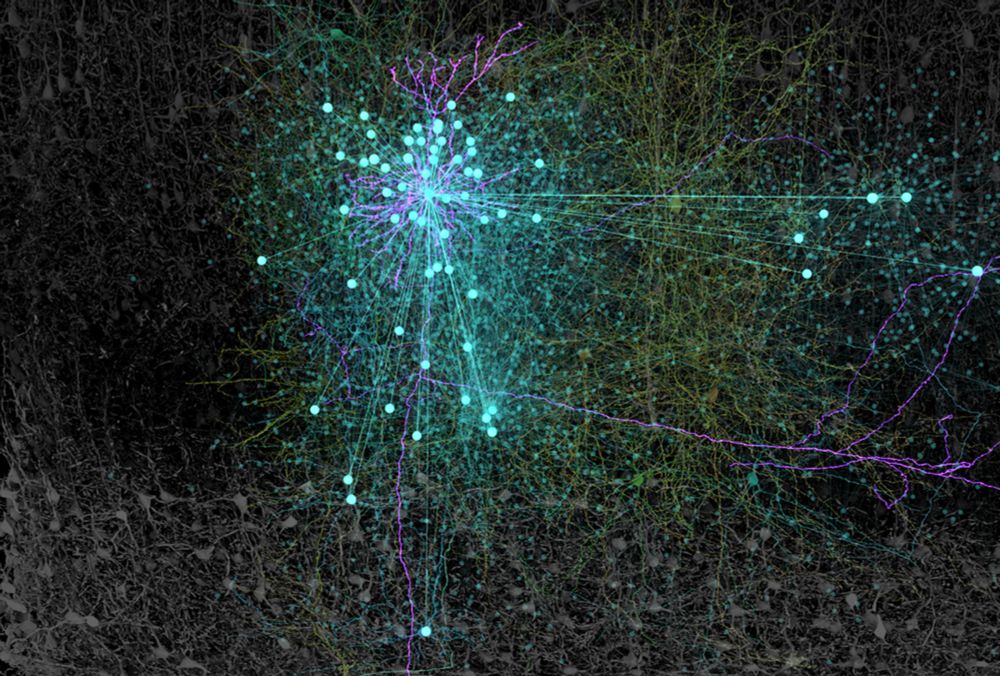
@markhisted.org lays down some knowledge.
What are recurrent networks doing in the brain?
www.thetransmitter.org/neural-netwo...
#neuroscience

Stay tuned for neurophysiology work looking at signal-in-noise detection in the aging inferior colliculus and auditory cortex!
This work serves to offer a finer-grained resolution of when senescence-related tone-in-noise detection deficits occur and how they manifest across frequencies and SNRs.
Over 300 CBA/CaJ mice aged 1-27 months were tested.
In addition, an Rd’ detection metric was used, which accounts for the spread of startle amplitude distributions and puts inhibitory and facilitatory responses on an equal playing field.
We utilized tone-in-noise prepulse inhibition of the acoustic startle reflex along with our machine learning classifier which classifies true startles with 98% accuracy.
Ecstatic to announce that my first (first author) original research paper has been published in Hearing Research! This one looks at behavioral signal-in-noise detection across the lifespan in a mouse model of presbycusis. doi.org/10.1016/j.he...
Add me as well please!
From not being able to find people within auditory research to not being able to follow up on notifications. This is fantastic! So nice to see this community growing! Do not hesitate to contact me if you want want to be added to this list, particularly young/early career peeps.
go.bsky.app/2V3D2mu
Count me in please!

Latest from our lab-we developed and validated a new EEG-based measure to assess neural representation of temporal envelope cues from the auditory pathway - the dynamic amplitude modulated envelope following response (dAM EFRs) - rdcu.be/d0mTl
@PittCSD @PittSHRS