Join @berasymbionts.bsky.social , @tatsuyanobori.bsky.social and us for a postdoc on the remarkable developmental biology of symbiosis!
Applications are due March 25th 🪲🦠
@johninnescentre.bsky.social @thesainsburylab.bsky.social
04.03.2026 11:08
👍 30
🔁 42
💬 0
📌 2

A flyer reading "MCC Education Working Group Committee Members Needed" It asks if you are an early career scientist wanting to explore careers paths and if you enjoy networking. Learn more at microbiomecenter.org
The Microbiome Centers Consortium (MCC) Early Career Working Group is looking for committee members! It's a great opportunity to explore career paths and connect with scientists across academia, industry and policy by assembling speaker panels for fellow early-career scientists!
lnkd.in/em4hyq7E
02.03.2026 20:51
👍 2
🔁 2
💬 1
📌 0

Take it or leaf it: bees learn leaf shape as a cue when flower colour is easily learned
Over a century of research has demonstrated that pollinators, such as bees, associatively learn diverse flower cues, including tactile, visual and olf…
Curious whether bees can learn non-floral cues to find floral rewards? New paper in Animal Behavior @animbehsociety.bsky.social by @mtcastagna.bsky.social, @jentomology.bsky.social, Ciara Stewart, and myself!
We find evidence that bees can learn leaf shape!
www.sciencedirect.com/science/arti...
25.02.2026 21:20
👍 15
🔁 7
💬 0
📌 0
We are just one week away! Please reach out if you are interested in joining, we’d love to have you along.
18.02.2026 06:58
👍 3
🔁 1
💬 0
📌 0

How specific are heritable symbioses?
And what can we learn from swapping obligate symbionts across host species?
We address this in our latest, led by @inespons.bsky.social & in our collaboration w/ @microbiome.bsky.social 🦠🪲 Out today in @natcomms.nature.com!
1/n
www.nature.com/articles/s41...
16.02.2026 07:24
👍 114
🔁 70
💬 3
📌 3

Diagram illustrating early genome erosion during the transition from a free-living Sodalis bacterium to two host-associated endosymbionts inside the long-tailed mealybug. Circular genomes show intact genes in blue and pseudogenes in red, highlighting increased pseudogene accumulation in symbiotic forms. Caption asks: “What are the downstream molecular consequences of early genome erosion?”
Happy to share a preprint—the last chapter of my dissertation with @mcsymbiont.bsky.social and Co—on what happens when bacterial endosymbionts accumulate huge numbers of pseudogenes during early genome reduction.
www.biorxiv.org/content/10.6...
08.02.2026 02:08
👍 32
🔁 19
💬 3
📌 1

NEW: Registration is now FREE for graduate students and postdocs for the 14th Annual Yosemite Symbiosis workshop. THANKS to the Gordon and Betty Moore Foundation! Space is limited. Learn more and REGISTER here: snri.ucmerced.edu/form/symbios...
08.02.2026 17:29
👍 16
🔁 13
💬 0
📌 0
Thank you to ECODIM for their involvement as well!
05.02.2026 09:55
👍 0
🔁 0
💬 0
📌 0

Please join the @symbiosisalumni.bsky.social during our next Alumni Network seminar to learn about the origin and complexities of mealybug endosymbioses from @filiphusnik.bsky.social:
🗓️ February 25th
🕥 8am WET
📍on zoom (PM for link)
symbnet.bsky.social
moorefound.bsky.social
mblscience.bsky.social
05.02.2026 09:49
👍 9
🔁 4
💬 1
📌 1
*correct link
Very excited to share a preprint from stellar lab postdoc, Dr. Younghwan Kwak.
“Intrahost mutational dynamics parallel long-term genome evolution in endosymbionts”
Cool, skillful work and a nifty story!
#symbiosis #insects #evolution
www.biorxiv.org/content/10.6...
02.02.2026 05:11
👍 5
🔁 3
💬 0
📌 0
Very cool work, congrats! The link above wasn’t working: www.biorxiv.org/content/10.6...
02.02.2026 05:09
👍 0
🔁 0
💬 1
📌 0
Thanks for the opportunity to share a little bit about the start of my PhD journey! The Alumni Network has been a great way to meet others excited about symbioses. Looking forward to learning more about ongoing research in the community. Shout out to the #BBSRC for funding this upcoming work.
05.12.2025 16:02
👍 3
🔁 0
💬 0
📌 0

Phage diversity mirrors bacterial strain diversity in the honey bee gut microbiota - Nature Communications
Authors analyse paired viral and bacterial shotgun metagenomics data from individual honeybee guts, revealing modular, nested phage–bacteria networks, with viral diversity mirroring bacterial strain c...
🐝🦠 New paper: rdcu.be/eOf7A
Phages may drive microbial diversity, yet we often don’t even know how phages & bacteria correlate in nature. Our new study tackles this in the honeybee gut, thanks to the great work of PhD student @malickndiaye.bsky.social at @dmf-unil.bsky.social @fbm-unil.bsky.social
04.11.2025 20:36
👍 56
🔁 23
💬 1
📌 3

Save the date! Our next Alumni Network seminar:
📅 Wednesday, October 29th
🕙 12pm EST (Massachusetts) / 12pm CLT (Chile) / 4pm WEST (Oeiras)
📍 over Zoom (PM for link)
@symbnet.bsky.social
@moorefound.bsky.social
@mblscience.bsky.social
@ECODIM
13.10.2025 16:40
👍 1
🔁 1
💬 0
📌 0

Evolutionary Diversification and Functions of the Candidate Male Killing Gene wmk
Abstract. Symbiont-mediated male killing (MK) is a mechanism that selectively eliminates male offspring, often by disrupting sex-specific developmental pro
New accepted manuscript (preprint) on the evolution, phylogenetic types, expression, and fxns of a male-killing gene from a phage in a common endosymbiont of animals. Credit to many lab coauthors and led by Dr. Emilie Lefoulon. Lots of fun and insights in this one. academic.oup.com/gbe/advance-...
21.09.2025 23:59
👍 14
🔁 6
💬 2
📌 2

Figure 1. Diversity of male-killing (MK) endosymbionts across arthropods.
"Striking diversity of male-killing symbionts and their mechanisms"
by Hiroshi Arai (@haraipapilio.bsky.social), Daisuke Kageyama (@daisukekageyama.bsky.social) & co
"Why [and how] do maternally inherited endosymbionts kill male hosts?"
Find out here:
www.sciencedirect.com/science/arti...
11.09.2025 14:20
👍 9
🔁 8
💬 0
📌 0
Congrats, Cheryl!! 🎉
22.08.2025 21:24
👍 1
🔁 0
💬 0
📌 0

Looking forward to seeing you in our next Alumni Network seminar next week:
📅 Wednesday, August 27th
🕙 11am EST (Massachusetts) / 11am CLT (Chile) / 4pm WEST (Oeiras)
📍 over Zoom (PM for link)
@symbnet.bsky.social @moorefound.bsky.social @mblscience.bsky.social @ECODIM
21.08.2025 11:30
👍 1
🔁 2
💬 0
📌 0
I am quite excited! Looking forward to meeting everyone late September!!
12.08.2025 18:24
👍 0
🔁 0
💬 0
📌 0
I’m pleased to announce that I’ve accepted a PhD studentship Dr. @greghurst.bsky.social’s lab at the @liverpooluni.bsky.social supported by @ukri.org’s #BBSRC training program. With Drs. Alistair Darby and Michael Brockhurst, we seek to understand insect host’s response to symbiont evolution.
11.08.2025 17:24
👍 4
🔁 0
💬 1
📌 0
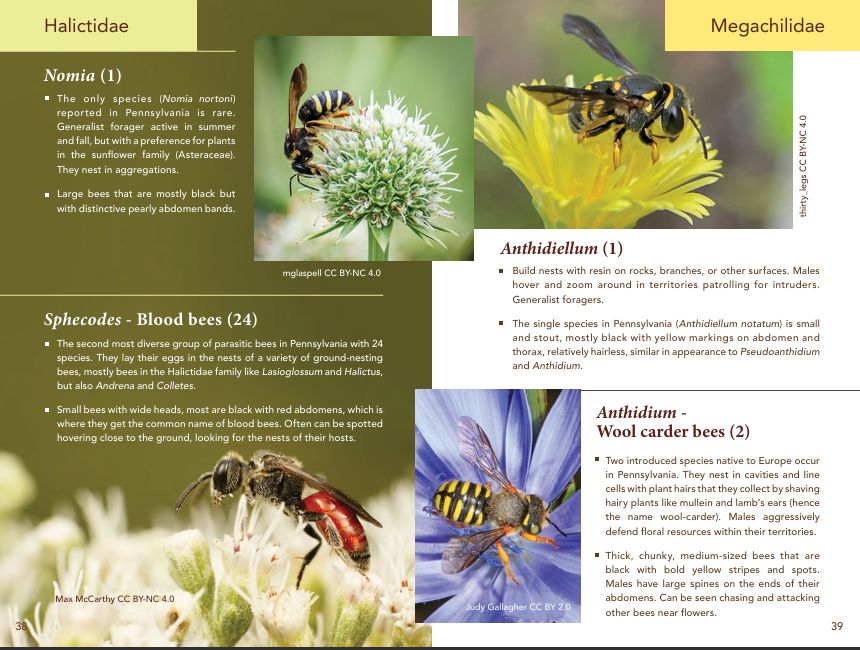
two pages from our been book, lots of of images and a bit of text for each bee genera
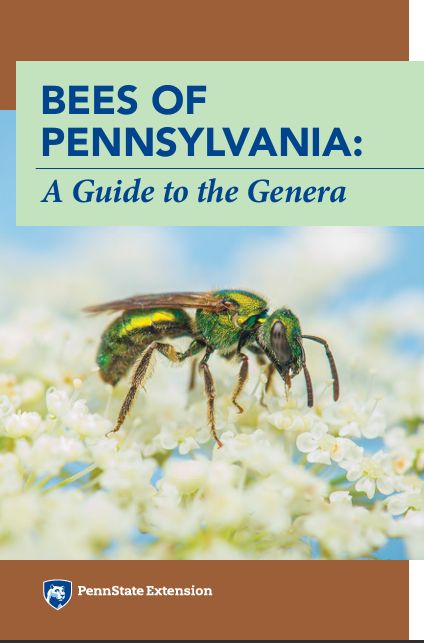
cover of our Bees of Pennsylvania book with photo of green sweat bee
Our guide to bees of Pennsylvania is available for free now, you can order print copy (just have to pay shipping) and/or download PDF from Penn State Extension page: extension.psu.edu/bees-of-penn...
For every one of the 47 bee genera we have beautiful photo(s) and natural history facts
23.07.2025 20:12
👍 98
🔁 36
💬 2
📌 1
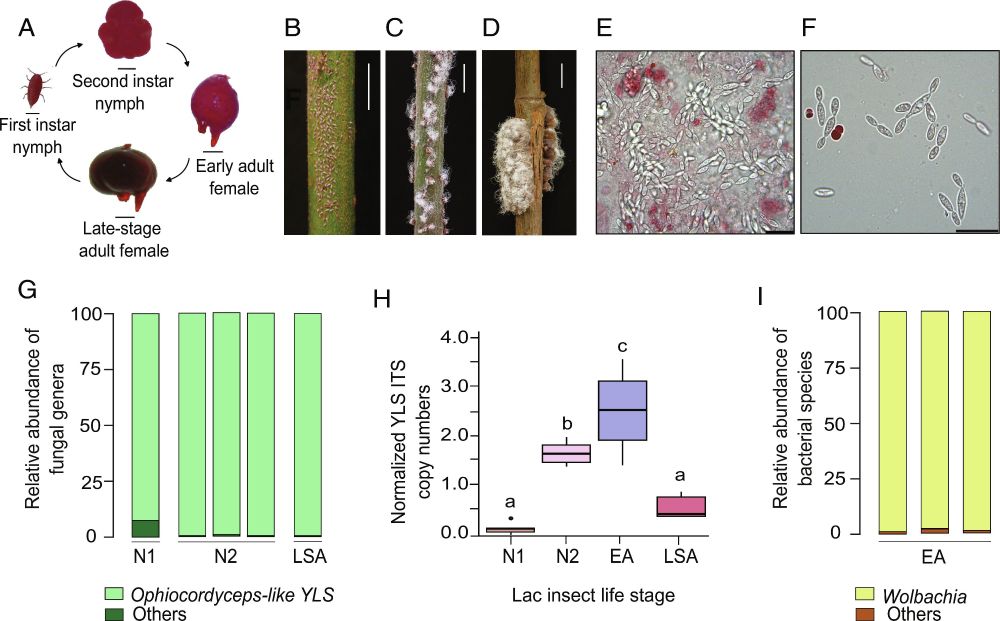
An endosymbiotic origin of the crimson pigment from the lac insect | PNAS
Symbioses with microorganisms expand the genetic and metabolic repertoire of many
insects. The lac insect Kerria lacca (Hemiptera: Sternorrhyncha) ...
I once visited Mayan ruins in Mexico and was told that is not known how they were able to make such bright blue colors. Also heard the same about bright red ones. It turns out, at least for the red color, a fungus is responsible! Read more here: www.pnas.org/doi/10.1073/...
17.07.2025 16:25
👍 32
🔁 11
💬 0
📌 1
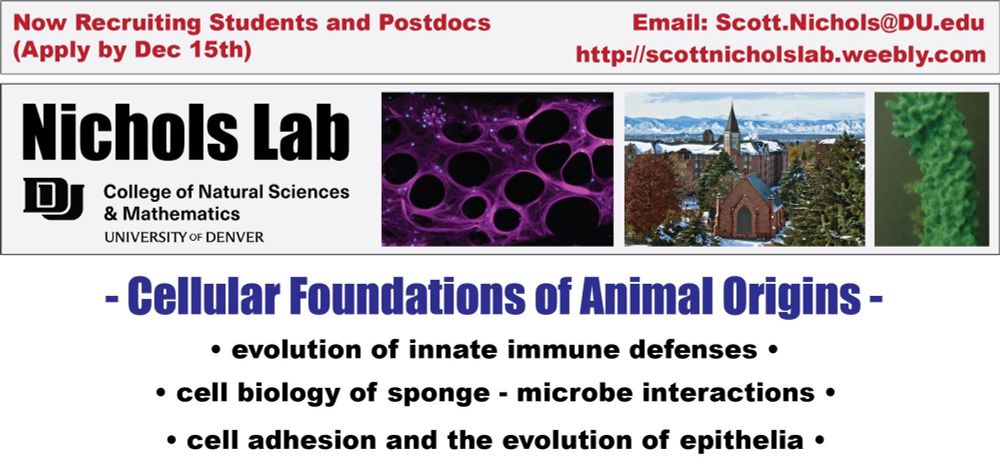
Please help get the word out - We are hiring at all levels (graduate students, technicians, and postdocs)! If you are interested in sponges, cell biology, evolution, immunity, and symbiosis, please don’t hesitate to contact me to learn more.
16.07.2025 19:36
👍 12
🔁 16
💬 0
📌 0

The @symbiosisalumni.bsky.social is excited to welcome our next seminar speakers, Dr. Leslie Daille and PhD candidate Lindsey Markowitz, on June 25th at 4pm WEST via zoom.
Please reach out if you are interested in attending.
11.06.2025 00:18
👍 2
🔁 1
💬 0
📌 0
The Wolbachia Project V3
YouTube video by Penn State Eberly College of Science
Free biotech labs, equipment, and training are all bundled into student-driven discoveries and teacher growth. Student publications? Yep. Industry partner? Naturally. This is a must watch highlight reel of Sarah Bordenstein digging into @wolbachiaproj.bsky.social.
www.youtube.com/watch?v=yAun...
10.06.2025 17:16
👍 7
🔁 4
💬 1
📌 0