Phil-Econ Model-Lab | Phil-Econ-Model-Lab
An in-depth workshop for economists and philosophers of economics
Incredibly stoked to welcome 12 talented young economists and philosophers this week for our phil-econ-model-lab.org. We're trying a different workshop format: online talks before meetup, then collaborative sessions in person. Will follow up with results, first day was extremely promising.
25.02.2026 19:04
👍 7
🔁 1
💬 0
📌 1

Our team member, PhD candidate Murat Bakeev, spoke today at an online session of the Phil-Econ-Model-Lab (PEM-L). This workshop, funded by INEM, aims to promote collaboration among early-career scholars, with a particular focus on analyzing the role of value judgments in economic modeling.
18.02.2026 18:43
👍 9
🔁 2
💬 1
📌 0
Hi Elmo, STS is what got this whole discussion started! Happy to talk
25.02.2026 18:55
👍 1
🔁 0
💬 1
📌 0
New paper "Endogenous Preferences, Environmental Economics, and Welfare" accepted at Politics, Philosophy & Economics.
In it, I argue for how we should address endogenous preferences in the welfare assessment of large-scale policy interventions (e.g., a carbon tax).
Penultimate version here👇
17.12.2025 16:53
👍 5
🔁 2
💬 0
📌 0
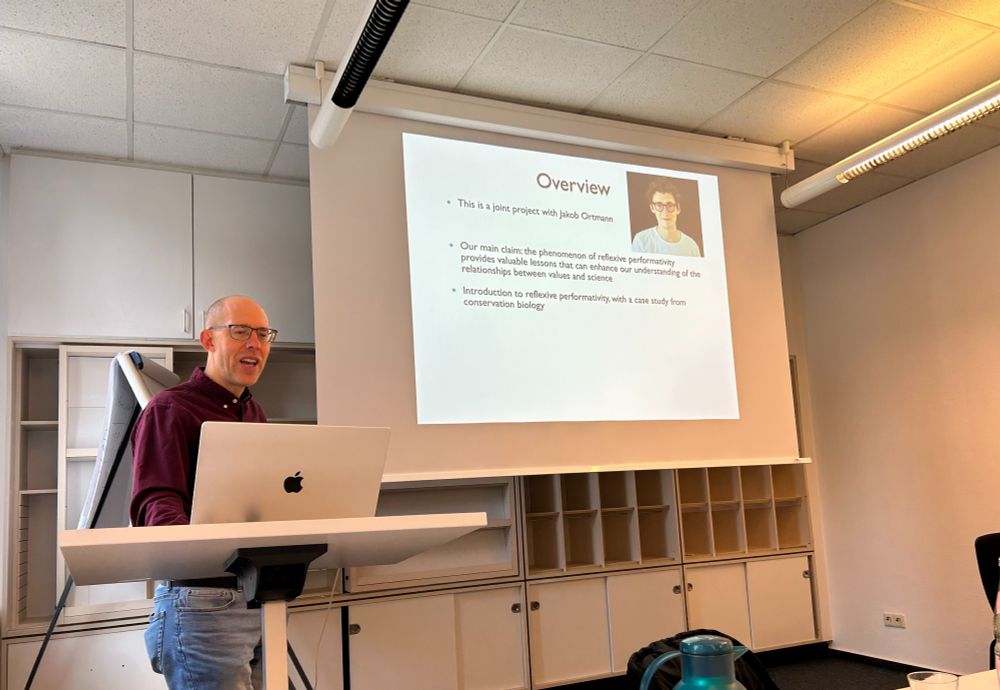
Last Monday, Kevin Elliot gave a talk on "Revisiting Values and Science Through the Lens of Reflexive Performativity," which is a paper in collaboration with MAPS team member @jakobortmann.bsky.social.
29.10.2025 13:19
👍 6
🔁 1
💬 0
📌 0
Note: NATO spending targets refer to *public* spending, where as CC mitigation refers to *total* spending. So if we only compared public spending, this chart would look even more extreme.
25.06.2025 10:27
👍 0
🔁 0
💬 0
📌 0
Putting spending targets into perspective serves as one of the most important reminders of this decade: climate action is possible, cheaper than usually framed as, and definitely cheaper than inaction.
25.06.2025 10:27
👍 0
🔁 0
💬 1
📌 0
Determined climate action turns out really cheap in comparison. Among other things, this makes the opportunity costs of conflict stupendously gigantic - not even talking about matters of justice here.
25.06.2025 10:27
👍 0
🔁 0
💬 1
📌 0

Here is a quick thought: The new NATO 5% spending goal may not sound like too much, but its actually much more than we would have needed to fix climate change (estimates from 2018) - see chart below.
25.06.2025 10:26
👍 2
🔁 1
💬 1
📌 0
#philsky #econsky
27.05.2025 13:08
👍 0
🔁 0
💬 0
📌 0

A screenshot of the website phil-econ-model-lab.org
⏳Deadline approaching! Know any early-career scholars working on philosophy of econ or values in science? Please consider forwarding them our call for proposals at phil-econ-model-lab.org. We are assembling a group of young scholars to collaborate at the cutting-edge of these topics #philsi #econ
27.05.2025 13:07
👍 4
🔁 3
💬 1
📌 0
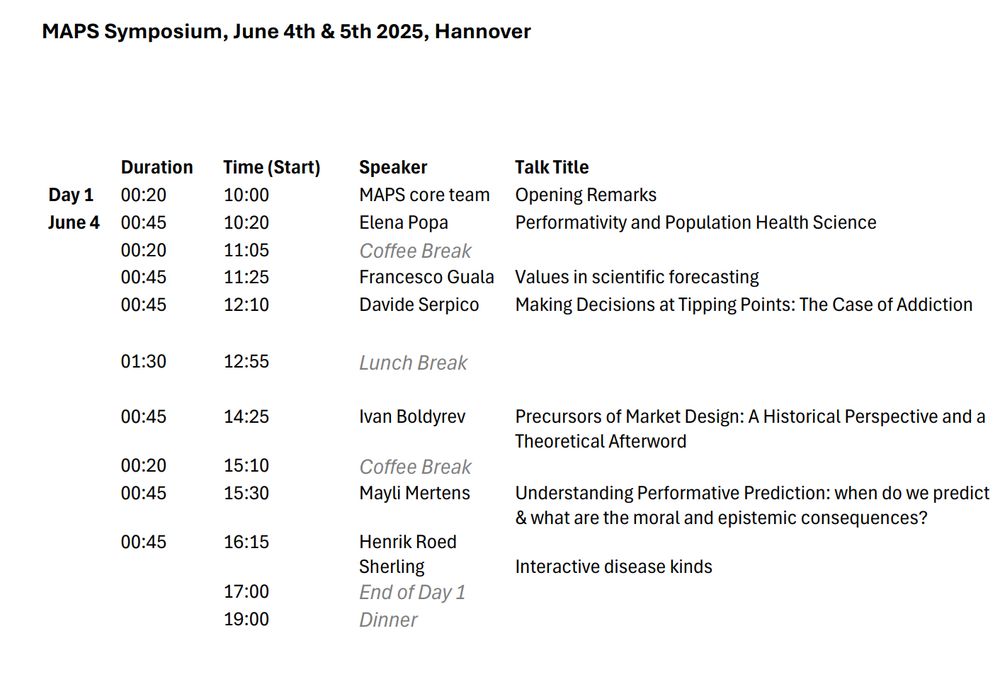
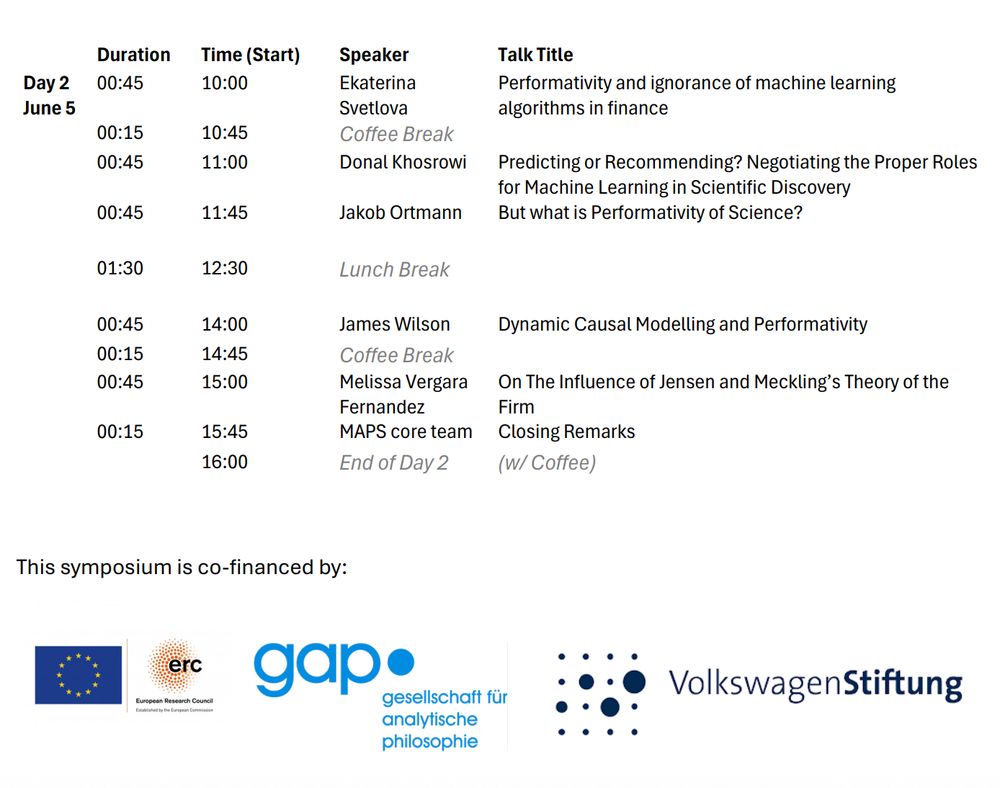
We are pleased to invite you to the MAPS Symposium, taking place on June 4 and 5, 2025, at Koniglicher Pferdestall. Attendance is free and open to all. We have a great lineup! Join us for two days of engaging discussions and critical reflections.
19.05.2025 15:48
👍 12
🔁 5
💬 0
📌 4
My Performative Paternalism paper is out now - looking forward to hear your thoughts, concerns, and whatnot. Its an attempt of cashing out some of the ethical / political issues surrounding performativity of science that seem really important, yet underdeveloped in the current literature.
17.04.2025 13:43
👍 9
🔁 1
💬 0
📌 0
Oh what an honour! Wishing them luck for the final push
15.04.2025 14:34
👍 2
🔁 0
💬 0
📌 0
Thanks Anna! You're exactly right - thats where it started. Indebted to many brilliant people at Cambridge HPS.
15.04.2025 12:44
👍 2
🔁 0
💬 1
📌 0
Delighted to share my first contribution to the @mapsproject.bsky.social project got accepted for publication in the EJPS! It revises epistemic & normative arguments reg. performativity of science (e.g. self-fulfilling prophecies), and reaches an uncomfortable conclusion: performative paternalism!
15.02.2025 19:22
👍 7
🔁 1
💬 0
📌 0
Today I learned that at some point our department wasn’t allowed to have any books bc books are a fire hazard. Funny enough to ban books at a uni, but I wish they said the same thing about all the paper forms they make us print, fill and sign (and then of course scan again).
22.01.2025 19:53
👍 1
🔁 0
💬 0
📌 0
Lots of interesting problems to solve there!
20.01.2025 16:58
👍 2
🔁 0
💬 0
📌 0
This project was kicked-off by a great paper by @inkerikoskinen.bsky.social, which I recommend reading. While social epistemology talked about opacity & trust for years, debates on AIs got major attention for (seemingly) the same issues, but without much interaction to social epistemology.
20.01.2025 16:58
👍 2
🔁 0
💬 1
📌 0
Happy to share a new paper of mine got accepted by Synthese!
philpapers.org/archive/ORTO...
20.01.2025 16:52
👍 10
🔁 4
💬 1
📌 0
European Philosophy of Science Association (EPSA) - Philosophical Perspectives on Climate Economics
CfP: What is the appropriate role of climate economics in decision-making and climate policy? What role do value judgments play in its models and methods? How does it relate to other disciplines?
If you have answers, submit them to our topical collection for the EJPS: philsci.eu/Phil-Climate...
25.11.2024 17:39
👍 27
🔁 13
💬 1
📌 0
Busy here discussing a great paper by @inkerikoskinen.bsky.social on the intersection of social epistemology and AI in science! Recommend: doi.org/10.1080/0269...
25.11.2024 14:21
👍 1
🔁 0
💬 0
📌 0
True! But this still makes it consistent with a subset view in the sense that quant. evidence is special qual. evidence that by virtue of its special features has diff properties. Qualit. data already contains these relations, they are just not as cashed out. Quantification as a form of compression.
18.11.2024 19:15
👍 1
🔁 0
💬 0
📌 0
(e.g. word count (number), mentioned X (boolean), said Y is important (boolean), etc.)
Sorry, this got longer than expected!
18.11.2024 18:57
👍 1
🔁 0
💬 1
📌 0
For practical reasons, this context is often stripped away and you end up with data that looks and feels quantitative. But the other way works, too! An interview comes with a lot of context, but requires further processing if you wanted to squeeze some of its information in numeric data types
18.11.2024 18:57
👍 1
🔁 0
💬 1
📌 0
(„I went to the machine and read of this value from the display, interpreting it such and such, not sure if something was off though and I went and asked my friend“; „Procedure X spat out this Excel sheet“).
18.11.2024 18:55
👍 1
🔁 0
💬 1
📌 0
All of them are qualitative for two reasons: 1. your reason: even a simple quantitative boolean requires interpretation, just like a long-form text does. 2. if you add the context back to „raw“ quantitative data, you can turn every quantitative datum into data that also looks and feels qualitative.
18.11.2024 18:55
👍 1
🔁 0
💬 1
📌 0
lending it to certain types of analysis. For example, you can easily aggregate number types (sums, medians) but cant do that with qualitative interviews.
18.11.2024 18:53
👍 1
🔁 0
💬 1
📌 0
Numeric data types (or booleans, or timestamps, or geospatial types, etc.) are typically (and meaningfully) referred to as quantitative because they are different from (longer) text, audio or image data, in the sense that they require different ways of processing,
18.11.2024 18:51
👍 1
🔁 0
💬 1
📌 0
Thanks for asking! I will need to think about this harder, but my hunch is that quantitative data is qualitative data stripped away of certain information (e.g. contextual information) for some purpose (e.g. to fit into a (database) schema; or to make it useful for a certain type of analysis, etc.).
18.11.2024 18:50
👍 2
🔁 0
💬 1
📌 0
