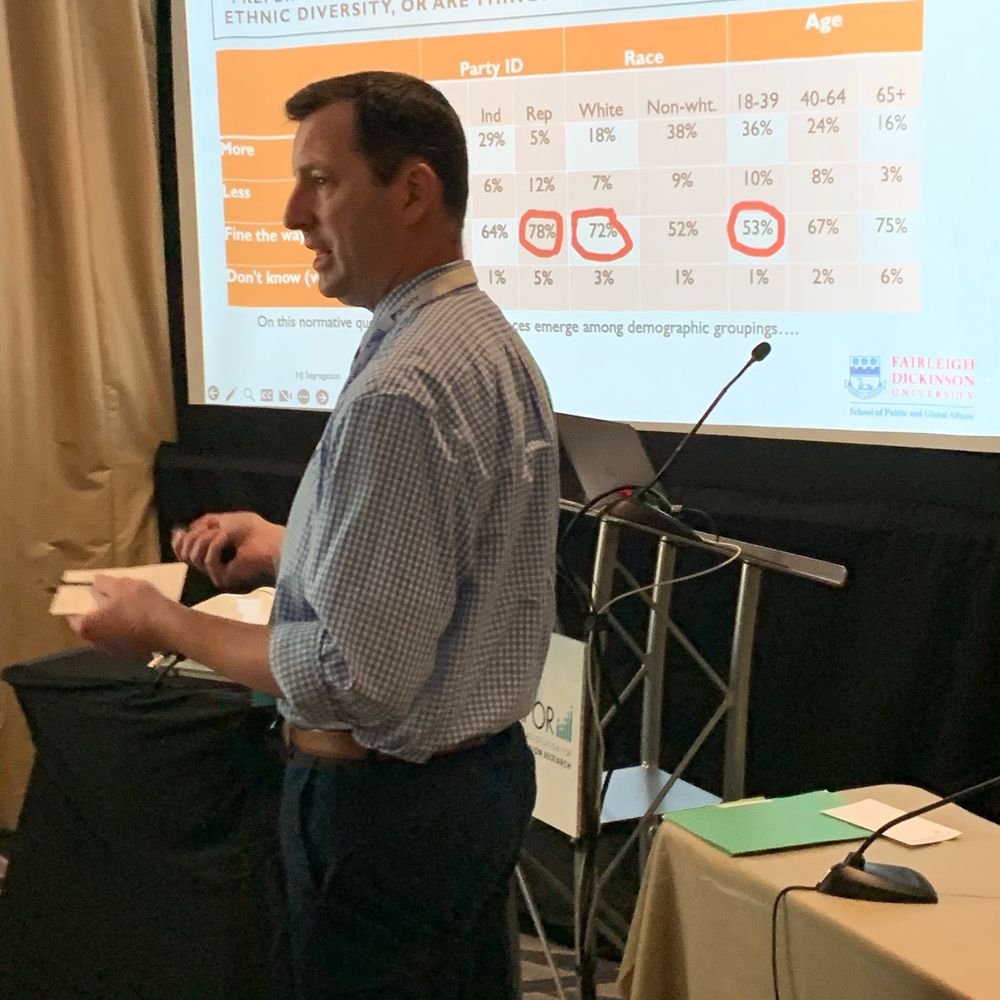
I knew the situation in Lakewood was bad, but didn’t realize it was that bad.
The drivers of the crisis- special ed, private schools and lots of buses- are very similar to Montclair, though.
06.03.2026 23:50
👍 2
🔁 0
💬 0
📌 0
I know it's a much duller topic, but I was really focused on the methodological question of item response stability.
06.03.2026 20:09
👍 0
🔁 0
💬 0
📌 0
I am loving these longitudinal measures of gender. Getting sooo much good stuff out of them.
06.03.2026 20:07
👍 1
🔁 0
💬 0
📌 0


AI slop ads on news sites (in this case, Politico) are scams, bad, misleading, etc.
But they are also hi-larious.
Do you prefer the steampunk glasses, you know, the ones that come with a loose gear, or the compass lens glasses too small for your face?
06.03.2026 19:47
👍 1
🔁 0
💬 0
📌 0
At the same time, other men, seeing the same, have decided that if that's what masculinity means, they must not be extremely masculine, and have moved more towards the middle of the scales.
There are, not surprisingly, no similar effects among women.
06.03.2026 19:29
👍 6
🔁 1
💬 0
📌 0
Essentially, extreme masculinity has become linked with Trump support, so Trump supporting men have become more likely to say that they're on the edge of masculinity scales.
06.03.2026 19:29
👍 6
🔁 1
💬 1
📌 0
But there's an exception. Using a sensitive measure of masculinity and femininity, we can see a difference in how men who supported Trump view their own masculinity. They see themselves as more masculine over a 7 year stretch than other US men.
06.03.2026 19:27
👍 4
🔁 1
💬 1
📌 0
Self-perceptions of masculinity and femininity are generally very stable (that was actually the research question underlying this study): they just don't change very much, even over the course of years.
06.03.2026 19:26
👍 3
🔁 1
💬 1
📌 0
It's not a surprise that Trump has changed how Americans percieve what is, and what is not, masculine behavior. But I'm getting at something deeper here: the ways in which Trump has changed how men assess their own gender identities.
06.03.2026 19:26
👍 3
🔁 1
💬 1
📌 0

Donald Trump is changing how men understand masculinity | LSE United States Politics and Policy
Between 2018 and 2025, Trump supporting men were more likely to feel even more masculine.
I wrote up some of the conclusions from my recent Politics and Gender article for the LSE blog: Donald Trump is redefining how US men see their masculinity.
06.03.2026 16:28
👍 10
🔁 2
💬 2
📌 1
He brought the record low temperatures and snow, right?
06.03.2026 02:33
👍 2
🔁 0
💬 0
📌 0

Feel like I'm taking crazy pills.
05.03.2026 18:48
👍 1
🔁 0
💬 0
📌 0
Alternatively, it’s an argument for having BlueSky moderated by @sarahdbunting.bsky.social , and while I wouldn’t wish that on her, it would make everyone else’s experience much better.
05.03.2026 15:48
👍 3
🔁 0
💬 1
📌 0

I think the Word grammar checker got kicked in the head by a mule at some point recently.
05.03.2026 15:40
👍 12
🔁 2
💬 1
📌 0
Pia Schober has a piece on SocArxiv that uses ESS for these measurements.
05.03.2026 15:20
👍 1
🔁 0
💬 1
📌 0
Oh, thank you.
05.03.2026 15:13
👍 1
🔁 0
💬 0
📌 0
I would think that the relationship should be mediated by levels of gender traditionalism within a country (or region within that country). Less gender traditionalism should mean that these markers are less valuable.
05.03.2026 15:12
👍 0
🔁 0
💬 1
📌 0
It would be really interesting to see the extent to which this relationship is conditional on local gender norms.
05.03.2026 14:57
👍 0
🔁 0
💬 2
📌 0
That's great! I look forward to citing the heck out of it.
05.03.2026 14:56
👍 1
🔁 0
💬 1
📌 0

Word thinks the word "a" is spelled incorrectly, but somehow doesn't have a suggestion for how to fix it.
Yep, that's a tricky one to spell. Thanks for catching it.
05.03.2026 14:55
👍 8
🔁 0
💬 1
📌 0


Microsoft Word just killing it.
05.03.2026 14:51
👍 12
🔁 2
💬 1
📌 0
I use those for grading.
05.03.2026 02:14
👍 1
🔁 0
💬 1
📌 0
5 or bust.
05.03.2026 01:40
👍 7
🔁 0
💬 2
📌 0
A man asked me last night what publishing needs to do for literary fiction to begin appealing to men again. I said, as nicely as I could, that, with over 2,000 books published every Tuesday, of which many would appeal to men, it’s not a publishing problem, it’s a men problem.
04.03.2026 16:58
👍 3513
🔁 588
💬 110
📌 107
I’m thrilled to read that you’re back on the horse. Upping my Patreon so I can get those zines.
04.03.2026 21:12
👍 1
🔁 0
💬 0
📌 0
Why does this matter? Men wind up trading more, which leads to lower long term earnings, since they’re paying way more in fees.
It also makes men prone to buying into bad, risky, complicated investments in crypto and forex and options that they really should be avoiding.
04.03.2026 20:51
👍 2
🔁 0
💬 0
📌 0
The kicker? In the most important financial task most people do: setting a budget, men aren’t more interested or likely to do it. Because it’s not showy, not a performance, and therefore not valuable.
04.03.2026 20:49
👍 3
🔁 0
💬 1
📌 0
Men are more risk seeking than women. Except…
Once again, it’s only among men who are overcompensating.
04.03.2026 20:48
👍 3
🔁 0
💬 1
📌 0
Men know more about finance than women. Except…
Some of that is men just being less willing to say “I don’t know.”
It’s only men who say that they’re falling short of the demands of masculinity, that is, overcompensating.
04.03.2026 20:47
👍 3
🔁 0
💬 1
📌 0
This is going to look very strange in a week or two, when the administration tells Congress how many billions it needs to get more munitions, and how US security is at risk if they don’t immediately get them.
04.03.2026 19:36
👍 4
🔁 1
💬 0
📌 1