
Congrats - great contribution!
28.02.2026 17:55
👍 2
🔁 0
💬 0
📌 0
Congrats - great contribution!
Electron microscopy is @nature.com's Method of the Year! 🧠🔬🏆
@natmethods.nature.com shares why MICrONS and FlyWire are proof that #ElectronMicroscopy is helping us see the brain and its incredible complexity at a new level: https://www.nature.com/articles/s41592-025-02988-6
🧠📈 #studyBRAIN
Not clear yet. The authors demonstrate this for glutamatergic synapses in dissociated hippocampal neuron cultures.

Kiss, Shrink, Run ⛹🏻♀️ New Perspective in @science.org about one of my favourite topics: how synapses and their tiny vesicles communicate in the brain. Chang-Lu Tao and colleagues reveal a previously unknown pathway for vesicle release. Read more here: doi.org/10.1126/scie... @istaresearch.bsky.social
Congratulations!
Congratulations!
Thanks for the great opportunity to participate @istaustria-iof.bsky.social 🍩🧠💡


We are delighted and very satisfied with a extremely smooth installation of the @abberior.rocks Mirava Polyscope, by 2 fantastic engineers. Our new ‘imaging soldier’ is equipped with 2- and 3D STED, MINDLUX, adaptive optics, lifetime imaging, matrix detectors and options for spectral imaging.

Doing a post doc
Congrats 🚀

The @erc.europa.eu awards Advanced Grants to “active researchers who have a track-record of significant research achievements.” ISTA could now secure a quadruple success in the most recent call for these prestigious European grants. #ERCAdG

We just pushed “Memory by a 1000 rules” onto bioRxiv, where we use clever #ML to find #plasticity quadruplets (EE, EI, IE, II) that learn basic stability in spiking nets. Why is it cool? We find 1000s!! of solutions, and they don’t just stabilise. They #memorise! www.biorxiv.org/content/10.1...

Curious about the latest news on how RGP lineages generate cortical neuronal diversity? Don't miss our new review from @HippenmeyerLab written by @fabripipicelli.bsky.social and myself www.sciencedirect.com/science/arti...
Congrats 🤩

www.sciencedirect.com/science/arti...
Our new review in Current Opinion in Neurobiology is out! "How radial glia progenitor lineages generate cell-type diversity in the developing cerebral cortex"
@chaichinta.bsky.social impressive results!!! 🤩
Enjoy and best from Vienna :)
Hi Sam, very interesting thoughts. If you would look further downstream, e.g. towards the presynaptic active zones and the direct release of vesicles in synaptic terminals, we know that these active zone protein composition might be specific for some synapses, even within one organism.
Hi Tanja, thanks for sharing your insights! Sorry that you had such an experience. Katharina
Sehr informativ! Well done!
Hi Antje, cool work! On my reading list :) congrats!
Great!
Congrats, super cool work!
🔬 Ever wondered how therapeutic antibodies work?
3D LLS-TDI-DNA-PAINT and live-cell LLS microscopy allow decoding of the molecular interplay of endogenous CD20 on B cells with therapeutic antibodies.
📄 Read more: www.science.org/doi/10.1126/...
I really appreciate @neuroandbeyond.bsky.social - great topics, always a pleasure to listen!

New brain aging study is out today in Nature
The largest single-cell RNA seq dataset of mouse brain aging reveals incredible insights and could pave the way for future therapies to slow or manage the impacts of the aging process. 🧵 #studyBRAIN
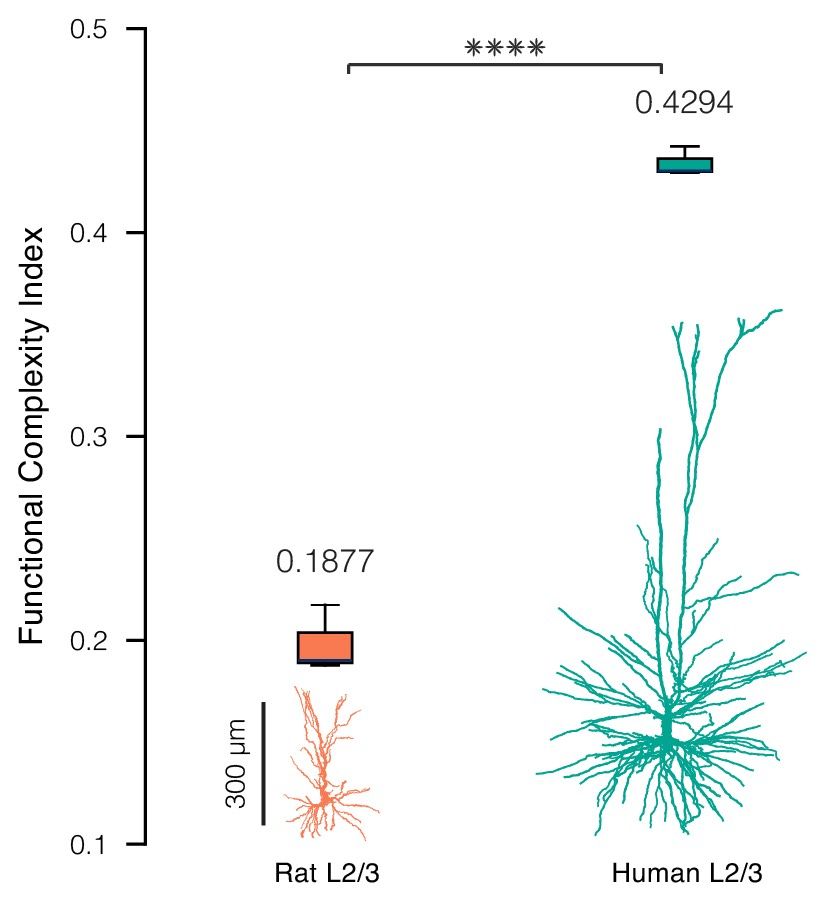
Human cortical pyramidal neurons are larger, with more elaborate branching, and distinct nonlinear biophysical properties compared to rat cortical pyramidal neurons.
Are they more functionally complex? Could that boost the human brain’s computational power? and is that what makes us human? (1/11)

A group of longhorn crazy ants (top) and a group of people (bottom) tackling scaled versions of the same geometrical maneuvering puzzle. CREDIT: Ofer Feinerman
Researchers challenged longhorn crazy ants and humans with the same task: maneuvering a T-shaped object through two consecutive open doorways. Single humans always outperformed single ants, but ant groups could beat human groups. In PNAS: www.pnas.org/doi/10.1073/...


