And though I ran out of steam, if this whets any appetite. Here is a bit year's worth of EJ papers in haiku form (One of the strange things that the Covid period did for me). sites.google.com/site/heskiba...
18.02.2026 19:42
👍 0
🔁 0
💬 0
📌 0
(and of course getting a chance to chat economics with some fantastic co-editors and associate editors). Very best to all.
18.02.2026 19:42
👍 1
🔁 0
💬 1
📌 0
It's been a priviledge to serve in this position (if sometimes exhausting after 935 new submissions ...). The greatest part of the job is seeing how many people in the profession take the role of refereeing so diligently, and constructively, and work hard to build this community.
18.02.2026 19:42
👍 9
🔁 0
💬 1
📌 0
Wishing Jin the very best and glad to leave the journal with an upgrade to the editorial board.
18.02.2026 19:37
👍 0
🔁 0
💬 0
📌 0
Congratulations on the many impressive accomplishments at the CMA, and very best with the new role.
25.11.2025 11:44
👍 1
🔁 0
💬 1
📌 0
Very proud of this honour and to be in some great company.
24.07.2025 10:21
👍 5
🔁 0
💬 0
📌 0
Updating Merger Control as an Economic Policy Tool for Europe?
YouTube video by CEPR & VideoVox Economics
I was thrilled to join Emanuele Tarantino, Susan Athey, Cristina Caffarra & others for CEPR’s webinar on “Updating Merger Control as an Economic Policy Tool for Europe?”
How can merger policy adapt to support innovation, growth & strategic autonomy?
📺: youtu.be/CO_IJhFczCk
15.07.2025 17:22
👍 15
🔁 2
💬 0
📌 0

To honour the memory of Ghazala Azmat, the Department of Economics of SciencesPo is creating an award in her name.
Ghazala made important contributions in a large number of fields, spanning the economics of discrimination, gender, education and organizational economics. The award will promote work in those fields by young scholars.
The first edition of this award will consist of a 5,000 euro prize for the best paper in this set of fields by junior researchers. The selection of the laureate will be carried out by a scientific committee composed of Pierre Cahuc, Alan Manning and Barbara Petrongolo.
Eligibility for the prize requires that all authors have obtained their PhD after 1 September 2018. Papers written jointly with more senior researchers will not be considered.
The prize will be awarded at SciencesPo during the event organised in memory of Ghazala on 10 December 2025. One of the authors of the prize winning paper will present the work at this event.
Applications must be submitted by 31 August 2025.
📢 #CallForPapers To honour the memory of Ghazala Azmat, the Economics Department of SciencesPo is creating an award in her name. Junior researchers can submit a paper in economics of discrimination, gender, education & organizational #economics. Submit by 31 August.
cepr.org/events/ghaza...
#EconSky
15.07.2025 11:28
👍 42
🔁 23
💬 0
📌 4
Many thanks for including me. Great program, interesting people, and lots of food for thought.
16.06.2025 15:08
👍 3
🔁 0
💬 0
📌 0
This put it well for those not lucky enough to have known Ghazala www.eeassoc.org/news/memoria...
She made us all better.
Truly devastating.
10.06.2025 23:19
👍 5
🔁 1
💬 0
📌 0
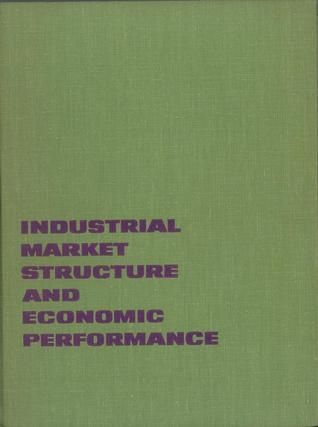
Cover of "Industrial Market Structure and Economic Performance"
Mike Scherer, a leader in industrial organization economics, in the study of innovation, and in many other topics since the 1960s, has died at 92. Strikingly eclectic, he wrote (inter alia) about weapons procurement and the commercialization of classical music. More than anything /1
02.06.2025 15:29
👍 34
🔁 12
💬 3
📌 0
I want to make it training
14.05.2025 20:04
👍 1
🔁 0
💬 1
📌 0
athletes often spend a lot of time going from point a to point a and seem to believe that there is a reason to do so ...
14.05.2025 19:55
👍 0
🔁 0
💬 1
📌 0

UKRI policy fellowships 2025
Spend 18 months as a UK Research and Innovation (UKRI) core policy fellow, Natural Hazards and Resilience policy fellow or What Works Innovation fellow to inform policy to address pressing national an...
Join the CMA Microeconomics Unit as a UKRI Policy Fellow for 18 months!
Awards buy out teaching/admin time to allow you to focus on a CMA-relevant research project, while embedded part-time in the Unit.
The call for fellowships is here: www.ukri.org/opportunity/...
1/
24.04.2025 08:06
👍 5
🔁 4
💬 1
📌 2
I love the Economic Journal referees ❤️
Revised version of a paper received on April 15. Sent out to original reviewers on the same day. All four referees have come back to me in less than 10 days.
Paper is now conditionally accepted, subject to checks by the EJ Data Editor 🚀 @resmedia.bsky.social
24.04.2025 08:27
👍 29
🔁 3
💬 0
📌 0
the last one is true?
maybe time for a new schtick?
time to write papers ...
15.04.2025 23:36
👍 1
🔁 0
💬 0
📌 0
I started suggesting that this is probably good advice (for an author) but depressing (socially costly in establish norms of what a paper is supposed to look like). Just one more example to add to prisonners' dilemma examples in class. A third party (e.g. editor) in principle can help internalize
10.04.2025 17:09
👍 1
🔁 0
💬 1
📌 0
I guess it depends on whether you think that the costs of producing (and reviewing) this length are neglible or not in relation to any (positive?) social value that they may generate.
10.04.2025 16:13
👍 0
🔁 0
💬 1
📌 0
Probably the right advice for authors (and may be right as first point), but point 1 is depressing as heck to me and why we get these massive unreadable tomes. I'd like to think that editors (try to) fight back on trying to get to essential points and readable papers; but fighting norms is hard.
09.04.2025 00:26
👍 12
🔁 0
💬 1
📌 0
There's a link in that article to a radio interview with Meg on CBC which is as frank and clear as you would expect.
29.03.2025 18:27
👍 3
🔁 0
💬 2
📌 0

Time to first decisions at The Economic Journal academic.oup.com/ej?login=true. Thanks to all the hard work and efforts of the referees, AEs and other editors. Please submit your excellent papers and expect an efficient and thoughtful response.
26.03.2025 14:41
👍 6
🔁 2
💬 0
📌 0
My old roommate at Oxford switched from law to Sanskrit for undergrad and made a fortune from countless scholarships for which he was the only qualified applicant; obviously in PE now 😂
14.03.2025 17:01
👍 3
🔁 0
💬 0
📌 0
Folks have put together starter packs of folks to follow. Here is an example bsky.app/starter-pack... but I would search for other topics for people you might be interested in.
12.03.2025 23:50
👍 1
🔁 0
💬 1
📌 0
On the second there’s work on boundedly rational managers (I have in mind an old paper of Mo Xiao and Avi Goldfarb) that may be relevant but I haven’t really kept track of either literature.
06.03.2025 23:59
👍 2
🔁 0
💬 1
📌 0
On the first part there’s an old IO literature on conduct parameters that is about the objective function (are we maximizing individual profits or colluding). I think Chris Sullivan at Wisconsin is a more recent contributor and could find more.
06.03.2025 23:59
👍 5
🔁 0
💬 1
📌 0
and I guess that last example suggests that conformity is not inconsistent with competition... good ideas diffuse (and sometimes people too: RES has now lost data editors to both the AEA and ES).
25.02.2025 20:54
👍 0
🔁 0
💬 0
📌 0
Also forgot data editors and replication checks which is a big and relatively new innovation that was introduced and rapidly became a norm
25.02.2025 20:51
👍 0
🔁 0
💬 1
📌 0
Publication lags (a year or more used to be normal) advice to referees (has become pretty standard but is a fairly recent innovation). To me a lot of unease and dysfunctionality is the status obsession and tyranny of top 5 and I don’t see much that moves the needle
25.02.2025 20:36
👍 1
🔁 0
💬 1
📌 0