- #RAG for NeuroML: learn from and query curated information sources
- iterative LLM assisted code/model generation: modelling, validation, and simulation
#Neuroscience #ComputationalNeuroscience #AcademicChatter #LangChain
02.02.2026 12:14
👍 3
🔁 1
💬 0
📌 0
Building detailed neuronal models is hard---#NeuroML helps, but there’s still a steep learning curve. We're investigating how #LLMs can be used to create natural language interfaces to improve accessibility:
More details in the post:
ankursinha.in/2026/01/30/b...
02.02.2026 12:14
👍 2
🔁 1
💬 1
📌 0
CC: @patneuron.bsky.social @sanjay-ankur.bsky.social
05.03.2025 10:59
👍 1
🔁 0
💬 0
📌 0
Outreach and training — NeuroML Documentation
Please spread the word, especially to students interested in modelling. We will help them learn the NeuroML ecosystem so they can use its standardised pipeline in their work.
docs.neuroml.org/NeuroMLOrg/O...
CC #AcademicChatter 2/2
05.03.2025 10:58
👍 1
🔁 1
💬 1
📌 0
Outreach and training — NeuroML Documentation
#NeuroML is participating in #GSoC2025 again this year under @incforg.bsky.social . We're looking for people with some experience of #ComputationalNeuroscience to work on developing #standardised biophysically detailed computational models using #NeuroML #PyNN and #OpenSourceBrain. 1/2
05.03.2025 10:58
👍 2
🔁 3
💬 1
📌 0
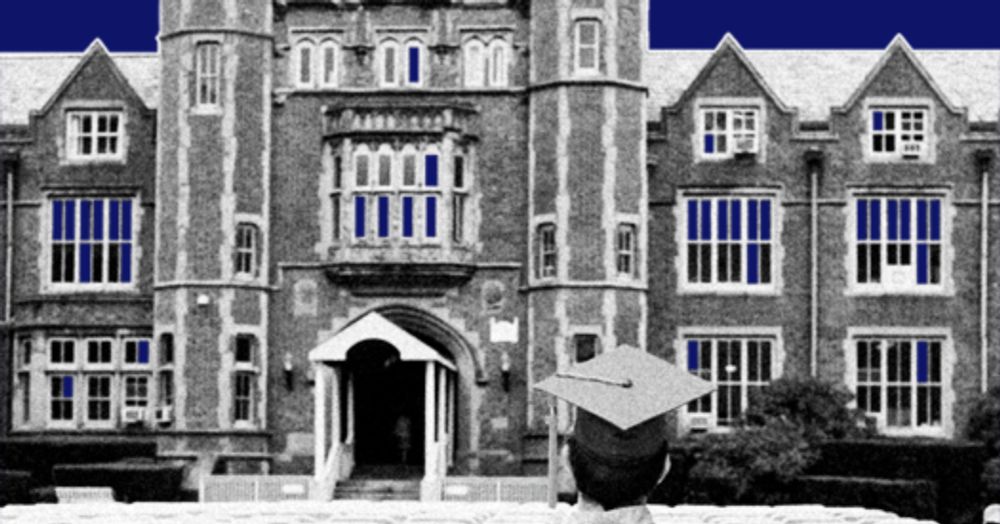
Neuro Ph.D. programs adjust admissions over funding unease
Some neuroscience departments plan to shrink class size by 25 to 40 percent; others may inadvertently take more students than they can afford.
Facing an uncertain financial future, many U.S. neuroscience Ph.D. programs are admitting fewer students. The Transmitter spoke with 20 programs about how the recent changes are affecting their admissions processes.
By @claudia-lopez.bsky.social @callimcflurry.bsky.social
bit.ly/41ptnk1
03.03.2025 21:56
👍 25
🔁 26
💬 0
📌 2
In this way, NeuroML supports #FAIR principles, thus promoting open, transparent and reproducible science. Whether you’d like to use NeuroML in your work, or support NeuroML in your tools/modelling pipelines, please come speak to us. Full documentation on NeuroML is here at docs.neuroml.org 13/13
28.01.2025 14:39
👍 0
🔁 0
💬 0
📌 0
NeuroML is a global community initiative. It is developed by an elected Editorial Board and overseen by a Scientific Committee. All the software/documentation/models produced in NeuroML are completely Free/Open #FOSS. 12/x
28.01.2025 14:39
👍 0
🔁 0
💬 1
📌 0
NeuroMorpho.Org - a centrally curated inventory of digitally reconstructed neurons and glia
New dissertation using reconstructions from https://t.co/Z9UcYMaOZr: https://t.co/hnQHVGdjnG
... visualising (#pyNeuroML, #OSB, #NeuroML-DB), simulating (#NEURON, #NetPyNE, #Brian, #PyNN, #NEST, #MOOSE, #EDEN), model fitting/optimisation (#NeuroTune, #BluePyOpt, #NetPyNE), sharing and reusing of models (#OSB, NeuroML-DB, #NeuroMorpho.org). 11/x
28.01.2025 14:39
👍 0
🔁 0
💬 1
📌 0
#NeuroML supports all stages of the modelling life-cycle with a vast ecosystem of software tools: creating (#pyNeuroML, #neuroConstruct, #NEURON, #NetPyNE, #PyNN, #N2A), validating (#pyNeuroML, #OMV, #SciUnit), .. 10/x
28.01.2025 14:39
👍 0
🔁 0
💬 1
📌 0
Schema/Specification — NeuroML Documentation
You can also create new model elements if existing ones aren’t enough AND because NeuroML is designed to be modular and hierarchical, ALL model elements are independent and can be reused in any NeuroML models. See the full specification here: docs.neuroml.org/Userdocs/Spe... 9/x
28.01.2025 14:39
👍 0
🔁 0
💬 1
📌 0

Figure showing different model elements provided by NeuroML in 3 panels. Top panel shows schematics of conductances, cells, and networks. Panel below shows these in the form of Lego like building blocks showing how they can be combined. The last panel is a mind map type schematic showing different model elements included in NeuroML in different categories: Cells, Networks, Synapses, Ion Channels, Inputs.
#NeuroML provides a curated set of model elements for researchers to use. This includes simpler single compartment cells, but also bits required to build detailed multi-compartmental cells , synapse models, networks/projections, and network inputs such as spike trains and pulse generators 8/x
28.01.2025 14:39
👍 0
🔁 0
💬 1
📌 0

Figure showing simplified schematic of steps of model building and simulation in NeuroML using Python.
#NeuroML provides a simulator independent standard and software tools. The idea is that researchers can use NeuroML to build their models, and these models will “just run” in any of the supported simulators. 7/x
28.01.2025 14:39
👍 0
🔁 0
💬 1
📌 0
This is great but it also means that researchers need to learn each of these individually to use them. It also means that tools and models developed for one don’t necessarily work for others and need to be manually converted. This is often a non-trivial task and limits model reuse. 6/x
28.01.2025 14:39
👍 0
🔁 0
💬 1
📌 0

Figure showing the NeuroML logo surrounded by various software tools categorised in the different model development lifecycle.
A number of software tools are available for construction and simulation of models: #NEURON, #NetPyNE, #Brian, #PyNN, #NEST, #MOOSE, #EDEN etc.. These have their own features, styles, programming interfaces (APIs). 5/x
28.01.2025 14:39
👍 0
🔁 0
💬 1
📌 0

Figure showing three panels with visualizations of neuronal circuit models in each of them.
If we are to understand the _mechanisms_ underlying various brain processes, we must build data-driven biophysically detailed models of the brain. Models allow us to generate new predictions that can be tested in laboratories—closing the “#neuroscience research loop”. 4/x
28.01.2025 14:39
👍 1
🔁 0
💬 1
📌 0
While our main source of information on the brain—how/what/where/why/when it does things—are “wet” experiments, models and theory are necessary to combine the many specific, isolated findings that experiments generate into coherent theories of brain function. 3/x
28.01.2025 14:39
👍 1
🔁 0
💬 1
📌 0
#NeuroML is a standard and software ecosystem for data-driven biophysically detailed #ComputationalModelling endorsed by the @incforg.bsky.social and #CoMBINE, and includes a large community of users and software developers. 2/x
28.01.2025 14:39
👍 1
🔁 1
💬 1
📌 0

Image showing the NeuroML logo in the center surrounded by the different stages of the model development pipeline: create, validate, visualize, simulate, fit, share, and reuse.
We are very happy to provide a consolidated update on the #NeuroML ecosystem in our eLife paper, “The NeuroML ecosystem for standardized multi-scale modeling in neuroscience” : doi.org/10.7554/eLif... . 1/x
28.01.2025 14:39
👍 9
🔁 3
💬 1
📌 0
