Check out the third and final installment of our Fact-Checking 101 series, as told by Siri Chilukuri, freelance journalist, fact-checker & team lead at City Bureau! Learn the key features of mis/disinformation and how they’re spread.
25.02.2026 18:47
👍 2
🔁 1
💬 2
📌 0

Intro to Movement Journalism: A Virtual Training. Request a free slot by February 23 at bit.ly/introtomj, or pay the full cost ($99) at bit.ly/introtomj2.
What: Intro to Movement Journalism, a virtual training facilitated by Tina Vásquez, Prism features editor & Freedomways Reporting Fellowship coordinator at Press On
When: Friday, February 27, 10:00-11:30am PT/ 12:00-1:30pm CT / 1:00-2:30pm ET
Participants will:
- Learn the history, ethics, and commitments of movement journalism
- Learn what distinguishes movement journalism from traditional reporting
- Learn how journalists are building a career in movement journalism
- Participate in a Q&A session with a seasoned journalist about movement journalism
Accessibility: Training will be delivered in English. Live captioning will be provided.
Even more reason to register: All attendees will receive a free three-month subscription to Study Hall, giving you access to a community of 4,500 members, with weekly newsletters and original reports, Slack chats, and editor databases.
Learn how to make media to amplify grassroots liberation movements at our Feb. 27 virtual Intro to #MovementJournalism training w/ @studyhall.bsky.social! Facilitated by @tinavasquez.bsky.social. Request a free slot by Feb. 23 @ bit.ly/introtomj, or pay the full cost ($99) @ bit.ly/introtomj2.
20.02.2026 19:42
👍 20
🔁 12
💬 0
📌 0

Press On Fact-Checking 101 for Movement Journalists Part II as told by Siri Chilukuri, journalist & fact-checker

Which parts of a story need to be fact-checked?
- Names
- Dates
- Ages
- Numbers
- Pronouns
- Titles
- Proper spelling
What are the basic steps involved when fact-checking a story?
1. Read through all the material without fact-checking.
2. Mark and identify everything that needs to be fact-checked (reminder: a fact will likely appear in nearly every sentence).

What are the basic steps involved when fact-checking a story? (continued)
3. Highlight/bracket every fact and then identify them by category.
4. Find a primary source to correspond with every fact. If you can’t find a primary source, locate a secondary source. If there are no secondary sources, flag it for the reporter or editor.
5. Double-check that after the reporter or editor has reviewed your notes, they actually enacted your suggested changes (e.g., “cut this because it’s inaccurate,” “make sure you remember to change the year”).
It’s time for part II of our Fact-Checking 101 series, as told by Siri Chilukuri, freelance journalist, fact-checker & team lead at City Bureau! Find out which parts of a story need to be fact-checked and the five basic steps involved when fact-checking a story.
18.02.2026 17:50
👍 5
🔁 2
💬 0
📌 0

Image description from Prism: “A protest on Jan. 3, 2026, in New York City’s Times Square against the Trump administration’s kidnapping of Venezuelan President Nicolás Maduro.”
For @prismreports.org, @meghnadbose.bsky.social & Jerry Elengical report on widespread U.S. protests against President Donald Trump’s kidnapping of Venezuelan president Nicolás Maduro & his wife, Cilia Flores, on Jan. 3. Read the story at bit.ly/antivenezuelawar. 📸: Meghnad Bose
13.02.2026 19:05
👍 6
🔁 5
💬 0
📌 0

Image description from NewsGuild CWA: “Members of the Post Guild and Tech Guild picket outside The Washington Post building in Washington, D.C., on April 9, 2025.”
Journalists don’t give up without a fight! The 300 workers laid off by the The Washington Post on February 4 need our support to #SaveThePost!
Send a letter to the paper’s leadership and/or donate to the @postguild.bsky.social's layoff fund at bit.ly/savewapost. 📸: Dylan Manshack
16.02.2026 15:57
👍 3
🔁 1
💬 0
📌 0

Fact-Checking 101 for Movement Journalists Part I. As told by Siri Chilukuri, journalist & fact-checker.

What is a fact? A fact is something that can be proven or disproven.
How do you prove a fact is correct or not? You can prove whether a fact is correct or not by sourcing, which is the process of finding evidence to back up your claim.
What types of sources do journalists use to verify facts? Journalists use primary and secondary sources to verify facts in their stories.
Bowdoin College Library defines a primary source as “an account of an event by a participant or eyewitness at the time” and a secondary source as one that “interprets, discusses or analyzes” and is usually a text.

Examples of primary sources include:
Diaries, letters, memoirs
Interviews, speeches, oral histories
Scientific data and reports
Scholarly journal articles
Statistical and survey data
Works of art, photographs, music, or literature
Legal cases, hearings, laws
Official government documents and reports
Minutes of organization meetings
Newspaper and magazine articles
List source: Bowdoin College Library

Examples of secondary sources include:
Books
Scholarly journal articles (depends on discipline)
Magazine articles
Encyclopedia entries
Reviews and magazine articles
List source: Bowdoin College Library
For the next three weeks, we’ll be sharing fact-checking basics from Siri Chilukuri @siric.bsky.social, freelance journalist, fact-checker & team lead at City Bureau! Learn what a fact is and what kind of sources journalists use to verify a fact in part I one of our Fact-Checking 101 series.
11.02.2026 17:24
👍 3
🔁 1
💬 0
📌 0

Movement journalists: Check out these tips from movement lawyer Sam Hamilton of @atlpresscollective.com and @aaaj-aajc.bsky.social to keep in mind if you get arrested on the job (this doesn’t constitute legal advice; contact an attorney for advice specific to your circumstances).
09.02.2026 18:30
👍 6
🔁 2
💬 1
📌 0

Graphic with a red, black & green background and cutout photos of Black journalists (left to right) Ida B. Wells, Monica Roberts & Claudia Jones. It says, “Movement journalism wouldn’t exist without Black people. Who are your favorite Black movement journalists?”
Movement journalism wouldn’t exist without Black people, something to remember this Black History Month & all year round. Black journalists like Ida B. Wells, Monica Roberts & Claudia Jones laid the foundation for us.
Who are your favorite Black movement journalists? Let us know in the replies!
06.02.2026 16:50
👍 1
🔁 1
💬 0
📌 0

Black women and femmes at a protest.
Black feminism has always been a beacon for grassroots justice movements. For @prismreports.org, Gracelynne West spoke to organizers across the country about why Black feminism is a key intervention in this political moment. Read West’s story @ bit.ly/blackfeministorganizing. 📸: iStock
26.01.2026 21:14
👍 5
🔁 2
💬 0
📌 0

Drawing with anti-ICE imagery. It says, “Block it! Don’t build it. Don’t fill it. Don’t fuel it. How are you disrupting the ICE kidnapping, detention & deportation?
Learn how to join local campaigns to protect your neighbors from ICE & Border Patrol—check out the new mini-toolkit “Block it! Don’t Build It. Don’t Fill It. Don’t Fuel It.” at bit.ly/blockittoolkit by @interruptcrim.bsky.social, @detentionwatchnetwork.org & others. 🎨: Monica Trinidad
28.01.2026 22:46
👍 1
🔁 1
💬 0
📌 0

Graphic that says, "ICE out! Nationwide shutdown! No work. No school. No shopping. Jan 30, 2026. Sign on to join us: nationalshutdown.org."

Art by Grae Rosa depicting a canister of salt with a logo of a girl holding an umbrella over her head as she pours out salt. The canister says, "Melting ICE. Justice for immigrants and refugees. Abolish Immigration & Customs Enforcement."
Sending love to all of our folks shutting it down. Special shout-out to the movement media makers documenting this historic day so future generations will know the people didn't sit by idly as ICE terrorized our communities. 🎨: Grae Rosa
30.01.2026 17:54
👍 1
🔁 1
💬 0
📌 0

A diverse group of three Borealis grantees smile and pose for a photo at the Diamond Dreams Ball.

Two Borealis grantees smile and pose for a photo at the ball.

Photo of the outside of the ball’s venue, Coca-Cola Roxy. The marquee on the building says, “Diamond Dreams Ball. A crystal clear vision for the next ten years.”

Actor Nicco Annan stands at a podium onstage and announces the judges of the ball competition (their photos & names are projected on a screen): TAYLOR ALXNDR, Dr. David Johns, Leiomy Maldonado, Jillian Mercado & Chastity “Temptress” Moore.
What a joy to dance alongside fellow @borealisphil.bsky.social grantees at their Diamond Dreams Ball last month in Atlanta, Ga., a celebration of their 10-year anniversary!
Thanks to Borealis for continuing to invest in our work & helping us end 2025 with a lot of sparkle! #BoriDiamondDreams
23.12.2025 16:20
👍 5
🔁 1
💬 0
📌 0

Collage of images with slogans related to movement journalism: #MeToo, Trans Rights Are Human Rights, Defund the Police #BlackLivesMatter.
It’s a new year, but our mission remains the same: advancing the practice of movement journalism. @lewispants.bsky.social penned a series for @objectivejournos.bsky.social on eight ways movement journalism creates liberatory change @ bit.ly/transformingnarratives. 📸: Wikimedia Commons/James Salanga
07.01.2026 20:52
👍 2
🔁 2
💬 0
📌 0

“Rev. Martin Luther King Jr. at a 1964 press conference at Gracie Mansion in New York.”
Take a moment to read Uyiosa Elegon’s commentary @ bit.ly/mlkjournalism on how mainstream journalism has kowtowed to the evils of militarism, racism & poverty MLK fought against: “Why seek to redeem an industry that favors maintaining the status quo over truth and justice?” 📸: Library of Congress
19.01.2026 20:53
👍 2
🔁 1
💬 0
📌 0

Graphic with screenshot showing that Press On reached our $3,000 end-of-year fundraising goal (includes photo of three Press On staff members). It says, “Thank you! We reached our 2025 end-of-year fundraising goal because of YOU.”
And now for some good news: We met our 2025 end-of-year fundraising goal! Thanks to you, we’ll be able to train, fund, resource & connect Southern movement journalists, storytellers & organizers for another year. You can contribute to us year-round at presson.media/donate. We appreciate y’all! ✨
21.01.2026 20:01
👍 1
🔁 1
💬 0
📌 0

Colorful collage with four photos of diverse groups of people smiling and posing at different Press On events throughout 2025.
Saying “thank you” to our many partners this year is the least we can do. But we do sincerely thank you for making our year such a success. We can’t wait to see what we build together in 2026!
30.12.2025 20:34
👍 2
🔁 1
💬 0
📌 0

Photo of Rae, a white person with short hair, glasses, wearing a flannel, and a dark Carhartt jacket, posing for the camera. Behind them are mountains and the sky. The image says, "Country Queers project shares stories of rural LGBTQ+ life through book and podcast by Jules Crawley."

A quote from Rae Garringer: “It’s a really generous gift, I think, when people trust you enough to share these kinds of really personal stories.”

Book cover for “Country Queers, a Love Letter.” It features a lavender background and a clear boot-shaped mug holding a bouquet of wildflowers.
Repost from @queerkentucky.bsky.social’s IG: “✍️ .@julesinurpocket Since 2013, West Virginia’s Rae Garringer has been documenting the untold stories of rural queer and trans folks through Country Queers, a multimedia oral history project and podcast turned book..." www.instagram.com/p/DQUBh0tABb_/
19.12.2025 22:56
👍 3
🔁 1
💬 0
📌 0

Photo of participants from a previous Black Trans Short Film Festival with the words, “Comfrey Films BTSFF 2026. Submissions open. comfreyfilms.org/submissions.”

Graphic with festival submissions timeline. January 7 is the late submission deadline.

Graphic with submissions criteria:
1) Film must be less than 20 minutes in length.
2) Final Submission Deadline is January 7th, 2026.
3) Film must be directed, produced or written by a Trans/Gender Non-Conforming/Intersex (TGNCI) person of African descent and/or who otherwise identifies as Black, and must also feature TGNCI persons of African descent, or tell a story of Black TGNCI experiences.
Black trans, gender nonconforming & intersex filmmakers: Comfrey Films’ Black Trans Short Film Festival wants your work! Submit your work at comfreyfilms.org/submissions, and help us spread the word!
💫 Final deadline: January 7
🎞 Short films only (<20 mins)
17.12.2025 19:50
👍 2
🔁 1
💬 0
📌 0

Press On’s three staff collective members (a cute, multiracial queer group) pose and smile in front of a background with a map of the southeastern U.S. It says, “The horrors persist but so does the resistance! Support movement journalism today!” and includes a QR code that takes you to Press On’s donation link at bit.ly/resist2026.

Graphic with a drawing of a brain adorned with flowers and leaves that says, “What did you learn from Press On this year?”
In 2025, did you learn anything new from Press On? Did you benefit from our programs? If so, consider making a tax-deductible donation to our collective by 12/31 @ bit.ly/resist2026.
So far, we’ve raised 31% of our end of the year fundraising goal. We can’t make it to the finish line without you!
15.12.2025 21:22
👍 2
🔁 1
💬 0
📌 0

Three Black people smile at the camera. The two people on the left are wearing glasses, the person on the right has on a hat.

Two people smile at the camera, one wearing glasses, the other wearing a hijab.

A photo of a large banner for the 59th annual meeting of the oral history association 'Exploring Our American Stories".

A photo of three people sitting while teaching at a workshop.
Last month, we attended the Oral History Association’s annual meeting in Atlanta, Ga. We’re grateful for oral historians who engage with movement-building & movement journalism. They help us shape our collective memory & never forget the wins of our movement ancestors.
12.11.2025 19:04
👍 1
🔁 1
💬 0
📌 0
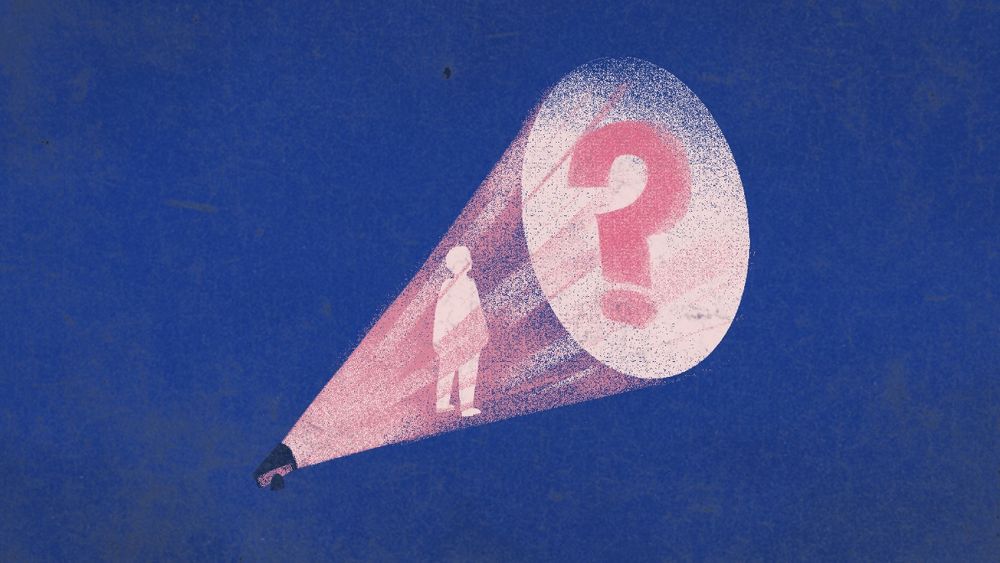
Never eat the candy on your pillow: The ache of uncertainty
My first months of reentry are forcing me to confront the reality that freedom brings its own set of burdens and responsibilities
In a @prismreports.org op-ed, formerly incarcerated writer Derek Trumbo guides us through the social barriers that have replaced the physical bars of prison upon his release. Read his piece @ bit.ly/acheofuncertainty; his words are essential, humanizing the post-incarceration plight. 🎨: Rikki Li
14.11.2025 19:12
👍 5
🔁 3
💬 0
📌 0

Two people stand beside one another closely while smiling at the camera. Neesha, on the right, is wearing a green patterned suit and red glasses. The person on the left is wearing a grey dress and gold earrings.

A person smiles while speaking at a podium. Someone sitting in front of the podium is smiling and looking at the audience.

Books including Emergent Strategies and Octavia Butler's Parable of the Sower litter a small table.

A picture of an alter with lit white candles, a fan, Miss Major's book, and an assortment of crocheted items.
Last month, our co-director, Neesha, joined dozens of women & gender-expansive labor leaders for WILL Empower’s retreat & celebration. We love WE & worker justice orgs that support movement journalists like the National Writers Union’s Freelance Solidarity Project @fspnwu.bsky.social.
17.11.2025 19:10
👍 4
🔁 1
💬 0
📌 1

TDOR: Southern Black Trans Power is the Solution - Transgender Law Center
Transgender Day of Remembrance (TDOR) is a time to memorialize the trans folk who have been murdered each year.
This Transgender Day of Remembrance, we move from mourning to action. The phrase "Protect the Dolls" is a mandate: show up, donate, intervene, and center trans leadership every day.
Honor the lost by protecting the living.
Learn more: bit.ly/protecttranspeople
20.11.2025 16:19
👍 2
🔁 4
💬 0
📌 0

North Carolina immigration raids expected to escalate
As the impacts of the raids quickly ripple outward from Charlotte, North Carolinians are mobilizing to stem enforcement operations in their communities
ICE & CBP are terrorizing North Carolina immigrants. Read @tinavasquez.bsky.social’s story for @prismreports.org at bit.ly/melticenc detailing the current immigrant raids in the state & the powerful community resistance growing in response.
22.11.2025 01:02
👍 9
🔁 9
💬 2
📌 0

An image of a candle with a black background that says "National day of mourning November 27. We reject the Thanksgiving myth and stand with Indigenous peoples fighting ongoing genocide and land theft. Press On logo is in the top left corner.
We reject the Thanksgiving myth and stand with Indigenous peoples fighting ongoing genocide and land theft. For us, tomorrow isn’t about honoring a “peaceful feast.” Join us as we observe November 27 as the National Day of Mourning.
26.11.2025 21:25
👍 4
🔁 1
💬 0
📌 0

Blue and white graphic title card about where to find free food assistance in the south.

Teal and white graphic highlights a food assistance program.

Teal and white graphic highlights a food assistance program.
Teal and white graphic highlights a food assistance program.
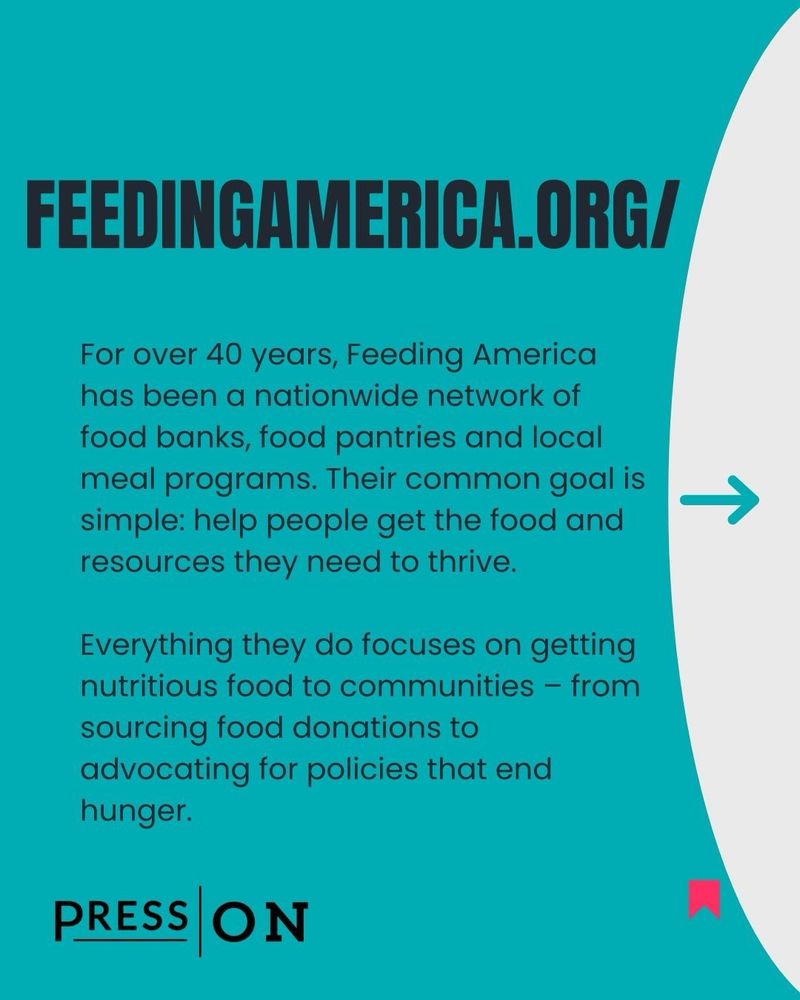
The recent pause of & cuts to SNAP benefits created a real hunger crisis. But Southerners have a legacy of feeding our own—like Georgia Gilmore, who funded the Montgomery Bus Boycott by cooking & selling food. In her honor, we've compiled resources for free food assistance.
01.12.2025 18:13
👍 1
🔁 1
💬 0
📌 0

A page from Press On’s zine that explains what movement journalism is.

A page from Press On’s zine that explains the history of movement journalism, a drawing of Ida B. wells is on the bottom right corner.
#MovementJournalism is in service to liberation. It centers oppressed people & exposes root causes of injustice.
Southern BIPOC & LGBTQIA+ journalists coined the term in 2017—but the practice is centuries old. Learn more from our Movement Journalism 101 zine @ bit.ly/movementjournozine!
03.12.2025 20:52
👍 3
🔁 1
💬 0
📌 0

A map of America that has the southern states greyed out and is split in half with a graphic of newspaper clippings in the middle.

A picture of a Stop Cop City banner being hung around other tents on green grass.
For The Objective, @ajajeanarnold.bsky.social shares oral histories on how national media's neglect of Southern movements has resulted in geographical biases, oversimplified stories & extractive journalism. Read them @ bit.ly/southernstories. 📸: James Salanga & Emory Stop Cop City
05.12.2025 19:15
👍 2
🔁 1
💬 0
📌 0