
Warm congratulations to The Brain Prize winners 2026, Professor David Ginty and Professor Patrik Ernfors, for their pioneering work on how the nervous system detects and processes touch and pain.
Karolinska Institutet
HHMI
#Neuroscience #BrainPrize2026
05.03.2026 15:01
👍 76
🔁 36
💬 1
📌 9
Big effort, exciting results - our paper on the constraints of thermal limits in tropical insects is now out in @nature.com! 🦋🐝🪰🪲🦗
@ecoresearchzoo3.bsky.social
@biologie-uniwue.bsky.social
@uni-wuerzburg.de
04.03.2026 19:43
👍 79
🔁 32
💬 4
📌 3
Light-induced analgesia provides a drug-free optical method for pain relief via activation of TRAAK k+ channels!
28.01.2026 13:00
👍 1
🔁 0
💬 0
📌 0
New findings demonstrate that the same genetic program that enables young mice to survive sepsis drives the risk of death following similar infection later in life.
www.nature.com/articles/s41...
14.01.2026 20:15
👍 2
🔁 0
💬 0
📌 0
Satellite glial cells transfer healthy mitochondria to adjacent sensory neurons in the DRG through nanotube-like structures, with a protective role against peripheral neuropathy.
www.nature.com/articles/s41...
12.01.2026 06:26
👍 5
🔁 0
💬 0
📌 0

Ontogeny of the spinal cord dorsal horn
The dorsal horn of the mammalian spinal cord is organized into laminae where each layer is populated by different neuron types, has distinctive circuit connections, and plays specialized roles in beha...
Excited to share @rbrianroome.bsky.social ‘s beautiful paper on development of the dorsal horn of the mouse spinal cord @science.org
This is how the anatomical organization and cell types that process pain, touch, body position and more are laid down.
www.science.org/doi/10.1126/...
08.01.2026 19:59
👍 132
🔁 41
💬 10
📌 2
Wrapping up 2025 with one more article #PainResearch
link.springer.com/article/10.1...
31.12.2025 14:00
👍 6
🔁 2
💬 0
📌 0
Our last preprint for 2025 ⬇️
28.12.2025 08:26
👍 12
🔁 2
💬 1
📌 0
This is why I said "polishing", not writing for you, or worst, learning. I am not used to comment, but if my comments are wrongly interpreted, that becomes useless, and unfortunate.
16.12.2025 19:49
👍 0
🔁 0
💬 1
📌 0
I think that I got it, but wanted to add another layer which seems more global.
16.12.2025 19:46
👍 0
🔁 0
💬 0
📌 0
Anyway, using ChatGPT to help with polishing a text in English should not be seen as a problem: most people are not native English speakers, and many critics would find it quite hard to argue their point perfectly in a "second" or "third" language; yet, this is expected for non-English speakers.
16.12.2025 16:29
👍 1
🔁 1
💬 2
📌 0
Our story on mechanosensation in baroreceptor cells of the kidney is finally out! Well worth the wait on this project we began in 2020 that turned into a massive collaborative effort within the kidney field. 🫘 www.sciencedirect.com:5037/science/arti...
04.12.2025 16:42
👍 45
🔁 17
💬 1
📌 0
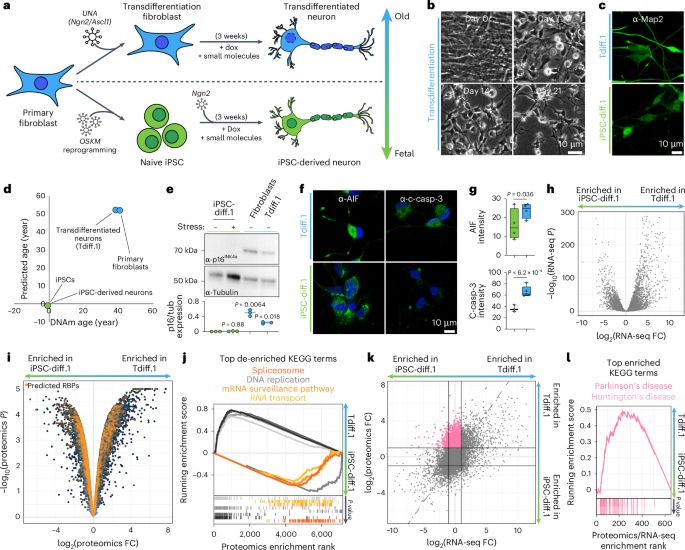
Neuronal aging causes mislocalization of splicing proteins and unchecked cellular stress | Nature Neuroscience
Aging is one of the most prominent risk factors for neurodegeneration, yet the molecular mechanisms underlying the deterioration of old neurons are mostly unknown. To efficiently study neurodegeneration in the context of aging, we transdifferentiated primary human fibroblasts from aged healthy donors directly into neurons, which retained their aging hallmarks, and we verified key findings in aged human and mouse brain tissue. Here we show that aged neurons are broadly depleted of RNA-binding proteins, especially spliceosome components. Intriguingly, splicing proteins—like the dementia- and ALS-associated protein TDP-43—mislocalize to the cytoplasm in aged neurons, which leads to widespread alternative splicing. Cytoplasmic spliceosome components are typically recruited to stress granules, but aged neurons suffer from chronic cellular stress that prevents this sequestration. We link chronic stress to the malfunctioning ubiquitylation machinery, poor HSP90α chaperone activity and the fai
Neuronal aging leads to mislocated splicing proteins and unchecked stress. Aged neurons lose RNA-binding proteins. PMID:40456907, Nat Neurosci 2025, @NatureNeuro https://doi.org/10.1038/s41593-025-01952-z #Medsky #Pharmsky #RNA #ASHG #ESHG 🧪
15.10.2025 00:10
👍 15
🔁 3
💬 0
📌 0

Functional and molecular insights into muscle proprioceptors
The emerging taxonomy of proprioceptive neuron subtypes provides a framework for dissecting the cellular logic of sensorimotor control.
New review out, together with Saida Hadjab and Prach Techameena @ki.se
We consolidate known proprioceptive neuron subtypes and propose a unified framework linking molecular identity to their potential roles in sensorimotor circuits.
elifesciences.org/articles/106...
28.11.2025 15:15
👍 5
🔁 2
💬 0
📌 0


Enteric nervous system-derived VIP restrains differentiation of LGR5+ stem cells toward the secretory lineage controlling type 1 and 2 immune balance @natimmunol.nature.com @champalimaudf.bsky.social @neuroimmune-rok.bsky.social
www.nature.com/articles/s41...
www.nature.com/articles/s41...
25.11.2025 20:36
👍 18
🔁 8
💬 0
📌 0


