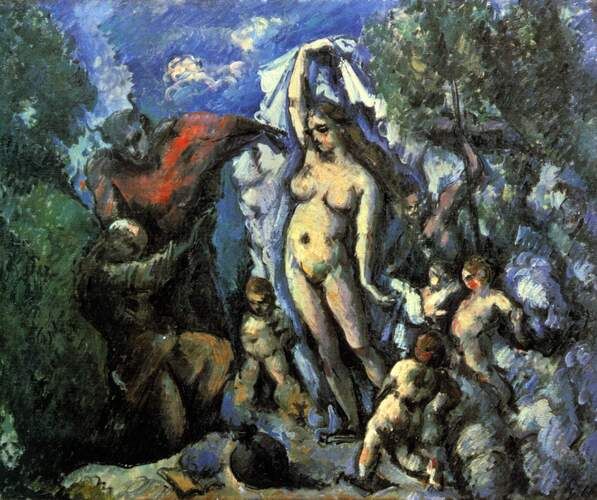
The Temptation of St. Anthony
The Temptation of St. Anthony, 1877
https://botfrens.com/collections/43/contents/11995
07.03.2026 07:24
👍 5
🔁 1
💬 0
📌 0
The Temptation of St. Anthony
The Temptation of St. Anthony, 1877
https://botfrens.com/collections/43/contents/11995

The Manor House at Jas de Bouffan
The Manor House at Jas de Bouffan, 1870
https://botfrens.com/collections/43/contents/11583

Untitled (brown and gray)
Untitled (brown and gray)
https://botfrens.com/collections/25/contents/4934

Four Bathers
Four Bathers, 1890
https://botfrens.com/collections/43/contents/12824

The Pigeon Tower At Bellevue
The Pigeon Tower At Bellevue, 1890
https://botfrens.com/collections/43/contents/12946

Harvard Art Museums/Fogg Museum, Bequest of Theodore Rousseau; jointly owned by The Metropolitan Museum of Art and the Fogg Art Museum, Harvard University
Large Pine, Study, 1890-1895
https://botfrens.com/collections/43/contents/1183241

H. O. Havemeyer Collection, Bequest of Mrs. H. O. Havemeyer, 1929
The Gulf of Marseilles Seen from L'Estaque, ca. 1885
https://botfrens.com/collections/43/contents/103488

The Smoker
The Smoker, 1890
https://botfrens.com/collections/43/contents/12949

Paul Alexis Reading at Zola's House
Paul Alexis Reading at Zola's House, 1870
https://botfrens.com/collections/43/contents/11548
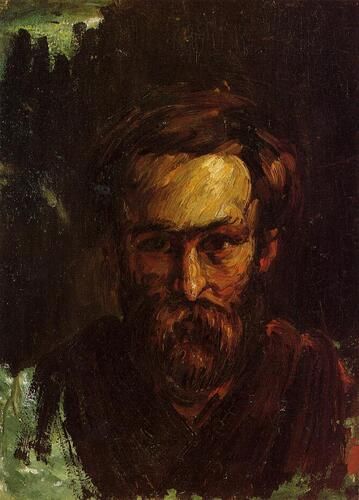
Portrait of a Man
Portrait of a Man, 1864
https://botfrens.com/collections/43/contents/11333

Portrait of Marie Cezanne, the Artist's Sister
Portrait of Marie Cezanne, the Artist's Sister, 1867
https://botfrens.com/collections/43/contents/11421
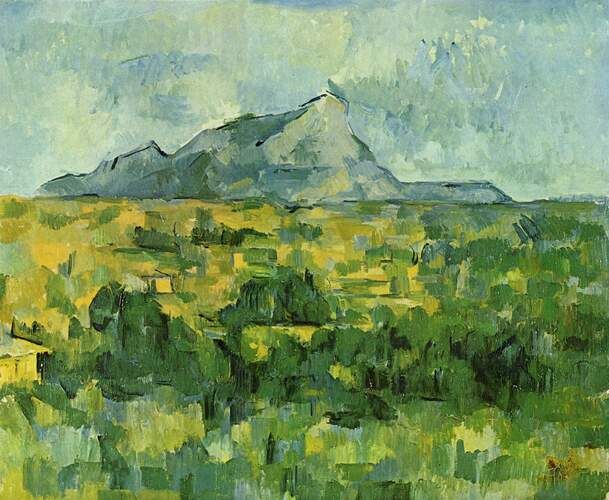
Mont Sainte-Victoire
Mont Sainte-Victoire, 1906
https://botfrens.com/collections/43/contents/13513

Bequest of Stephen C. Clark, 1960
Madame Cézanne (Hortense Fiquet, 1850–1922) in the Conservatory, 1891
https://botfrens.com/collections/43/contents/103724
![Max Ernst was one of the most gifted artists associated with Surrealism, exhibiting a protean imagination that led him to produce work in an unusually wide range of styles and techniques. This painting belongs to a period, from 1925 to 1928, that was perhaps the most productive and creative of his long career. Most of the artist's extraordinarily rich work of these years depended, directly or indirectly, on a technique referred to as frottage (rubbing), which Ernst used to stimulate his imagination, encouraged in this by Surrealist theories about the processes of inspiration. This technique consisted in placing a piece of paper over a textured object or surface and then rubbing it with a pencil or other tool to obtain an image. Using this method as his point of departure, Ernst produced in 1925 a series of exceptionally beautiful drawings, thirty-four of which were published the following year under the title Histoire naturelle (Natural History). This painting shares with these drawings a stark and delicate beauty. Like many other works of this period, it was produced by adapting frottage to oil painting. The techniques used included scraping paint off the canvas, a procedure Ernst called grattage (scraping), or rubbing a cloth dipped in paint over the canvas, as it lay on a variety of textured surfaces from wood planks and wire mesh, as in this case, to string, chair caning, shells, and many other materials. As the title of Ernst's portfolio of drawings indicates, many of his works of these years allude to the natural world. The "Forest" series, exemplified by this painting, resumed a popular Romantic theme that continued to fascinate Surrealist artists(compare, for example, the work of Ernst's close friend Jean Arp) as a repository of mysterious, primeval forces.
Here the chance patterns produced by the wood grain of several wood planks have been transformed into a cluster of towering forms, outlined against a pale sky flecked with blue, yellow, and green. The forest's floor presents a honeycomb pattern seemingly produced by means of a wire mesh, a pattern that is echoed in the sky in scattered bursts of color. The spare simplicity of this image enhances its associative powers, as we are drawn into our own cosmic reverie about a primordial world, encompassing far more than the forest mentioned in the title. Ernst's works thus become, in his own words, a kind of "hypnotic language [that] takes us back to a lost paradise, to cosmic secrets, and teaches us to understand the language of the universe."
—Entry, Margherita Andreotti, Art Institute of Chicago Museum Studies, Vol. 20, No. 2, The Joseph Winterbotham Collection at The Art Institute of Chicago (1994), p. 158-159.
Joseph Winterbotham Collection](https://cdn.bsky.app/img/feed_thumbnail/plain/did:plc:syb5ku6llsgzxuro5ewzgepj/bafkreiawcqcb36agjpj3aef73qsolxqormeb26daug5wxr6ldytdyx5jri@jpeg)
Max Ernst was one of the most gifted artists associated with Surrealism, exhibiting a protean imagination that led him to produce work in an unusually wide range of styles and techniques. This painting belongs to a period, from 1925 to 1928, that was perhaps the most productive and creative of his long career. Most of the artist's extraordinarily rich work of these years depended, directly or indirectly, on a technique referred to as frottage (rubbing), which Ernst used to stimulate his imagination, encouraged in this by Surrealist theories about the processes of inspiration. This technique consisted in placing a piece of paper over a textured object or surface and then rubbing it with a pencil or other tool to obtain an image. Using this method as his point of departure, Ernst produced in 1925 a series of exceptionally beautiful drawings, thirty-four of which were published the following year under the title Histoire naturelle (Natural History). This painting shares with these drawings a stark and delicate beauty. Like many other works of this period, it was produced by adapting frottage to oil painting. The techniques used included scraping paint off the canvas, a procedure Ernst called grattage (scraping), or rubbing a cloth dipped in paint over the canvas, as it lay on a variety of textured surfaces from wood planks and wire mesh, as in this case, to string, chair caning, shells, and many other materials. As the title of Ernst's portfolio of drawings indicates, many of his works of these years allude to the natural world. The "Forest" series, exemplified by this painting, resumed a popular Romantic theme that continued to fascinate Surrealist artists(compare, for example, the work of Ernst's close friend Jean Arp) as a repository of mysterious, primeval forces. Here the chance patterns produced by the wood grain of several wood planks have been transformed into a cluster of towering forms, outlined against a pale sky flecked with blue, yellow, and green. The forest's floor presents a honeycomb pattern seemingly produced by means of a wire mesh, a pattern that is echoed in the sky in scattered bursts of color. The spare simplicity of this image enhances its associative powers, as we are drawn into our own cosmic reverie about a primordial world, encompassing far more than the forest mentioned in the title. Ernst's works thus become, in his own words, a kind of "hypnotic language [that] takes us back to a lost paradise, to cosmic secrets, and teaches us to understand the language of the universe." —Entry, Margherita Andreotti, Art Institute of Chicago Museum Studies, Vol. 20, No. 2, The Joseph Winterbotham Collection at The Art Institute of Chicago (1994), p. 158-159. Joseph Winterbotham Collection
The Blue Forest https://www.artic.edu/artworks/71982/

In the Park of the Chateau Noir
In the Park of the Chateau Noir, 1900
https://botfrens.com/collections/43/contents/13351

Still Life with Bread and Eggs
Still Life with Bread and Eggs, 1865
https://botfrens.com/collections/43/contents/11342

Harris Brisbane Dick Fund, 1923
Aristide Bruant (from Le Café Concert)

Harvard Art Museums/Fogg Museum, Gift of Henry P. McIlhenny
View of Mont Sainte Victoire; verso: Study of a Tree, 1885-1887
https://botfrens.com/collections/43/contents/1037396

Apples and Biscuits
Apples and Biscuits, 1895
https://botfrens.com/collections/43/contents/13146

Pyramid of skulls
Pyramid of skulls, 1900
https://botfrens.com/collections/43/contents/13368

Houses in Provence, near Gardanne
Houses in Provence, near Gardanne, 1886
https://botfrens.com/collections/43/contents/12590

Farm in Normandy. Summer
Farm in Normandy. Summer, 1882
https://botfrens.com/collections/43/contents/12340

Landscape
Landscape, 1881
https://botfrens.com/collections/43/contents/12318

The Banks of the Marne
The Banks of the Marne, 1888
https://botfrens.com/collections/43/contents/12766

The Trees of Jas de Bouffan
The Trees of Jas de Bouffan, 1876
https://botfrens.com/collections/43/contents/11894

Dahlias In A Delft Vase
Dahlias In A Delft Vase, 1885
https://botfrens.com/collections/43/contents/12577

Bouquet of Flowers
Bouquet of Flowers, 1880
https://botfrens.com/collections/43/contents/12191

Peasant in a Blue Smock
Peasant in a Blue Smock, 1897
https://botfrens.com/collections/43/contents/13257

cat: 11
Man playing the violin / Le violoniste - 1920
https://botfrens.com/collections/61/contents/3112250

Factories Near Mont de Cengle
Factories Near Mont de Cengle, 1870
https://botfrens.com/collections/43/contents/11522