Overjoyed to finally have our isopeptide bond paper out! If you're interested in the types of proteins and organisms that use a cool intramolecular covalent bond, check it out:
bit.ly/4od3ux8
Plenty of future SynBio/EngBio applications planned! Thanks to all involved (character limits suck).
22.11.2025 05:33
👍 4
🔁 2
💬 1
📌 0
Phil Hinchliffe and Steve Burston, Delhi Kalwan, Jennifer de Jong, Fabio Parmeggiani and Paul Race
13.05.2025 16:51
👍 0
🔁 0
💬 0
📌 0
This project was made possible thanks to a collaboration between @bristoluni.bsky.social and @ebi.embl.org. A great thanks goes to @robbarringer.bsky.social, Ioannis Riziotis (Crick), Antonina Andreeva,
@alexbateman1.bsky.social and ...
13.05.2025 16:51
👍 0
🔁 0
💬 1
📌 0
⚠️⚠️⚠️Preprint alert⚠️⚠️⚠️
We mapped intramolecular isopeptide bonds across the AlphaFold database and found that they are widely distributed in microbial surface proteins, such as fibrillar adhesins or pilins, suggesting new targets for broad-spectrum antimicrobial strategies.
13.05.2025 16:43
👍 4
🔁 1
💬 1
📌 0
🙏 Special thanks to my amazing collaborators: Ioannis Riziotis, @robbarringer.bsky.social, Antonina Andreeva and to my supervisor @alexbateman1.bsky.social for their invaluable contributions to this work!
20.03.2025 10:54
👍 0
🔁 0
💬 0
📌 0

Google Colab
💻 Available as a Python package for easy integration into bioinformatics workflows, and accessible via Google Colab for everyone: colab.research.google.com/github/Franc...
20.03.2025 10:54
👍 1
🔁 0
💬 1
📌 0

🧬 Isopeptor enables reliable detection and geometry evaluation of these covalent links using a template-based strategy powered by pyJess.
🔍 The tool demonstrates a precision of 1.0 and recall of 0.947 in identifying incorrectly modelled isopeptide bonds in PDB structures.
20.03.2025 10:54
👍 0
🔁 0
💬 1
📌 0
Check out this article about my research at @embl.org where I focus on protein modelling and on the study of fibrillar adhesins. Recently, we developed a method to detect isopeptide bonds, a key stabilizing feature in bacterial proteins. Thanks @oanastroe.bsky.social for putting this together!👇 👇 👇
18.02.2025 18:43
👍 12
🔁 2
💬 0
📌 0
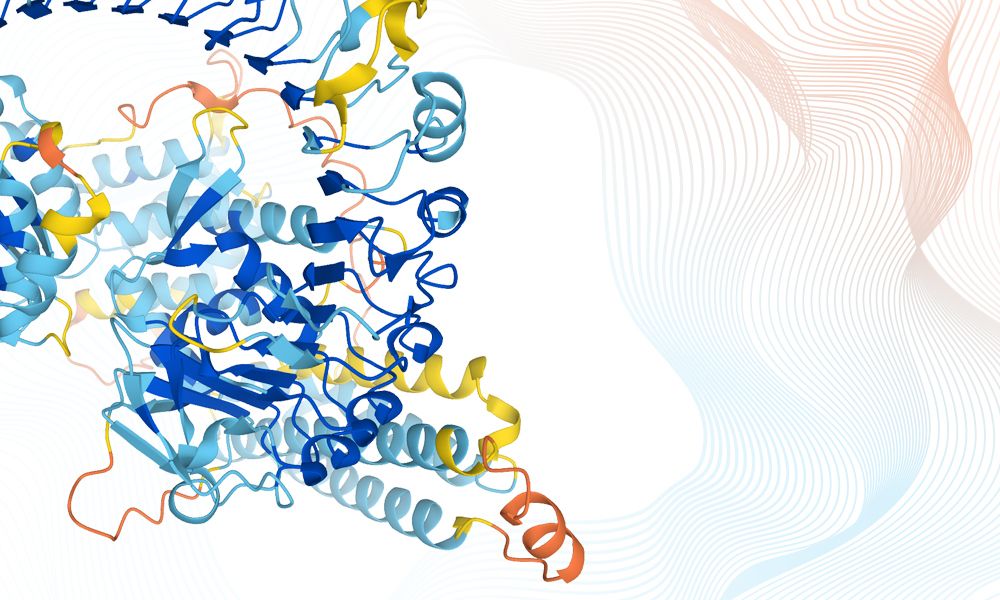
Protein structure prediction from the AlphaFold Database
Prediction confidence scores help #AlphaFold users gauge the reliability of protein structure predictions. 🖥️🧬
But things get more challenging for protein families.
A new method helps improve low confidence predictions within protein families.
academic.oup.com/bioinformati...
16.12.2024 09:28
👍 17
🔁 7
💬 0
📌 0
Thanks Gonzalo!
13.12.2024 11:44
👍 1
🔁 0
💬 0
📌 0
A special thanks goes to my supervisor @alexbateman1.bsky.social
and to @matthiasblum.bsky.social
for their support and guidance. 7/7
09.12.2024 13:57
👍 2
🔁 0
💬 0
📌 0
Our findings have important implications for improving structure predictions, especially for proteins from organisms with limited representation in sequence databases or for rapidly evolving taxa. 6/7
09.12.2024 13:57
👍 0
🔁 0
💬 1
📌 0

We show that using high plDDT models as templates can increase the speed of AlphaFold2 as implemented in ColabFold, potentially reducing computational costs and carbon footprint. 5/7
09.12.2024 13:57
👍 1
🔁 0
💬 1
📌 0

We introduced a novel "Best Pick" strategy that combines predictions made with and without multiple sequence alignment (MSA) information, selecting the model with the highest average plDDT. 4/7
09.12.2024 13:57
👍 0
🔁 0
💬 1
📌 0

This observation led us to explore whether low-confidence predictions could be improved using high-confidence templates from the same protein family. About one-third of low-confidence structures can be "rescued" to reasonable confidence levels using this method. 3/7
09.12.2024 13:57
👍 0
🔁 0
💬 1
📌 0

By observing the plDDT distribution within protein domain families, we noticed a certain degree of heterogeneity in the confidence of AlphaFold2 predictions. 2/7
09.12.2024 13:57
👍 1
🔁 0
💬 1
📌 0


