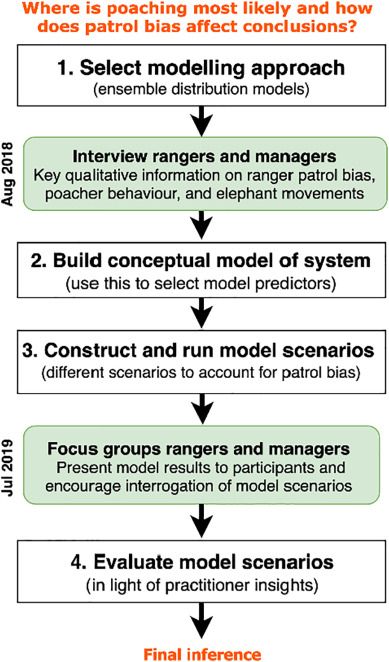
However, ranger-collected data can be unreliable due to patrol bias, leading to inaccurate models. 🤔
Collaborations between rangers and spatial modelers can help correct this bias and create more accurate maps.🗺️
www.sciencedirect.com/science/arti...
22.09.2024 04:30
👍 4
🔁 0
💬 1
📌 0
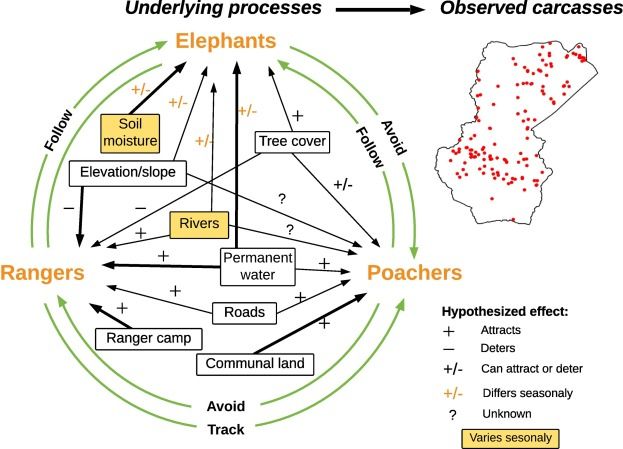
Moving to poaching - it’s still a challenge in many landscapes, particularly in Africa.
Its encouraging that spatial models built using ranger-collected and remote sensing data can help predict the drivers and distribution of elephant poaching. 🐘📊
22.09.2024 04:27
👍 1
🔁 0
💬 1
📌 0
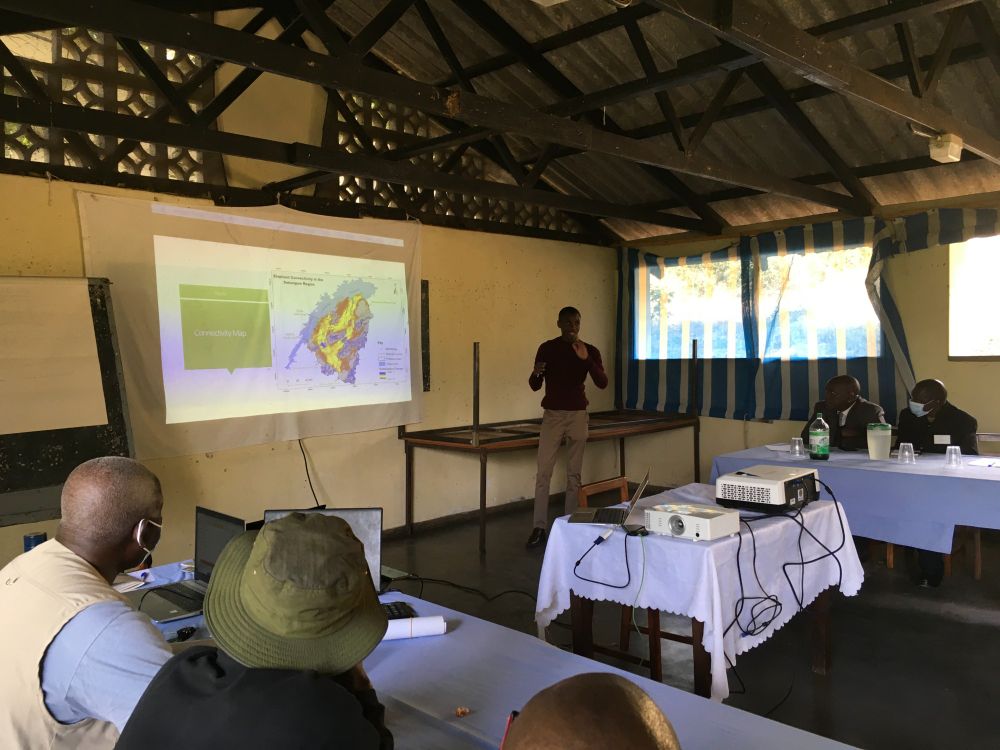
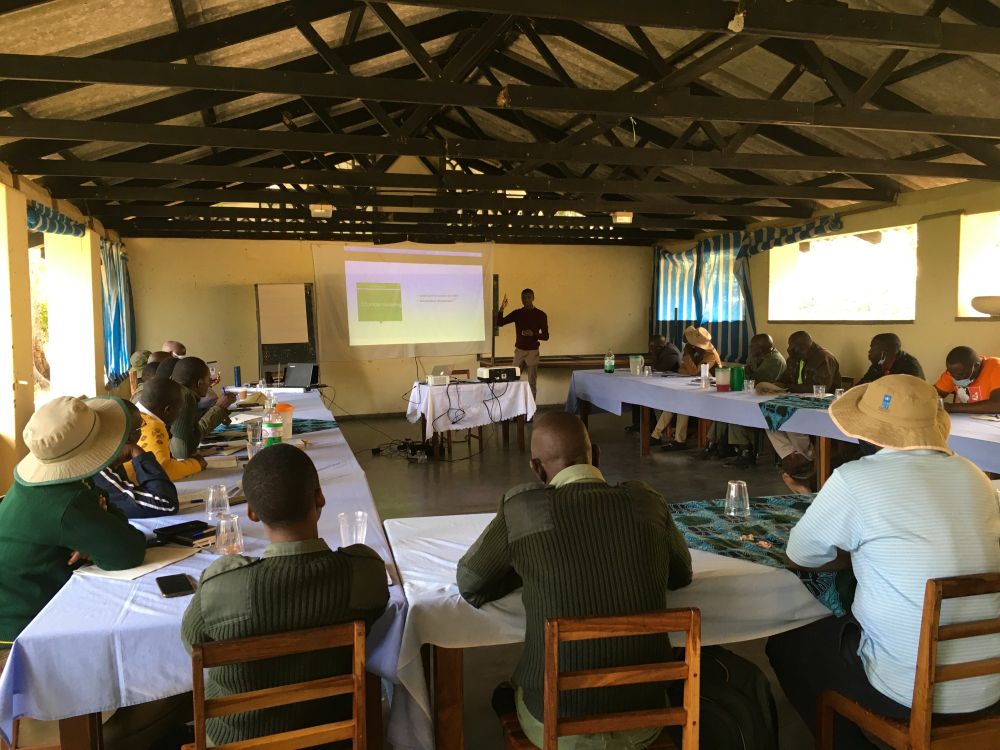
Co-creating connectivity maps with communities in elephant🐘- inhabited landscapes showed how Indigenous knowledge 🌍 complements geospatial analysis 🛰️ for validating elephant corridors in data-limited areas.
Community voices 🗣️ are key to tackling habitat fragmentation! 🌱
22.09.2024 04:25
👍 1
🔁 0
💬 1
📌 0
This makes identifying elephant corridors critical. But how do we assess and validate connectivity with limited telemetry data?🤔
22.09.2024 04:24
👍 1
🔁 0
💬 1
📌 0
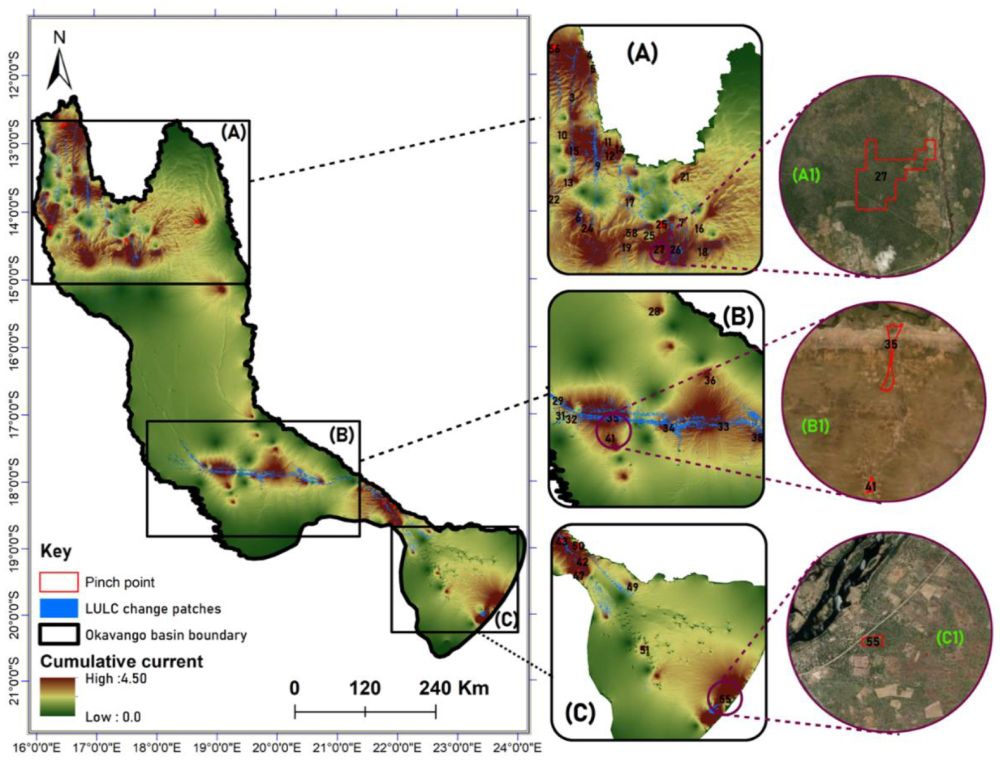
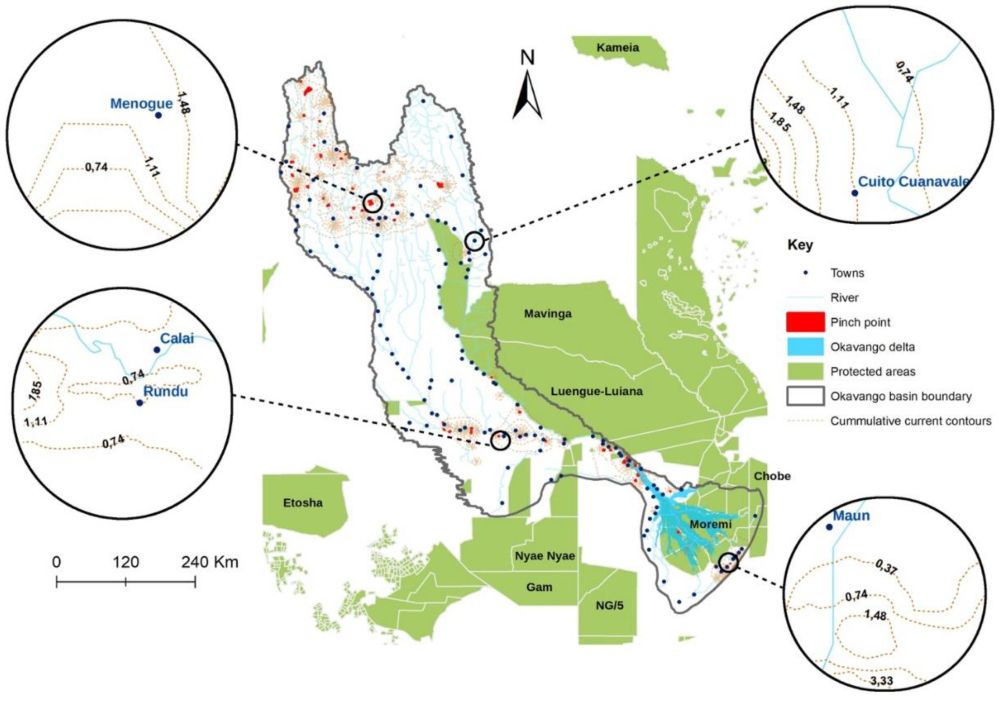
2) Most potential pathways for anthropogenic expansion cut across potential wildlife dispersal areas between protected areas. www.mdpi.com/2673-7418/2/...
22.09.2024 04:23
👍 1
🔁 0
💬 1
📌 0
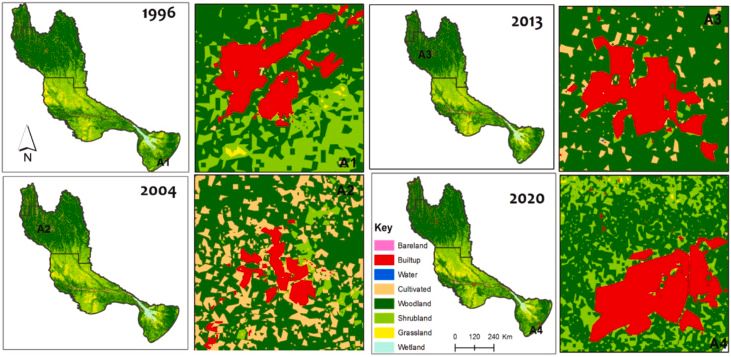
Our findings revealed that:
1) Human activities are encroaching on natural landscapes. 📉
www.sciencedirect.com/science/arti...
22.09.2024 04:22
👍 1
🔁 0
💬 1
📌 0
Since habitat fragmentation is a top priority threat to elephant conservation. Let’s dive into it first.
We used deep learning and circuit theory to assess land use changes in the Okavango Basin, part of KAZA-the largest TFCA and home to the biggest elephant population.🐘
22.09.2024 04:20
👍 1
🔁 0
💬 1
📌 0
Our findings revealed that:
1) Human activities are encroaching on natural landscapes. 📉:https://www.sciencedirect.com/science/article/pii/S240584402309970X
22.09.2024 04:17
👍 0
🔁 0
💬 0
📌 0
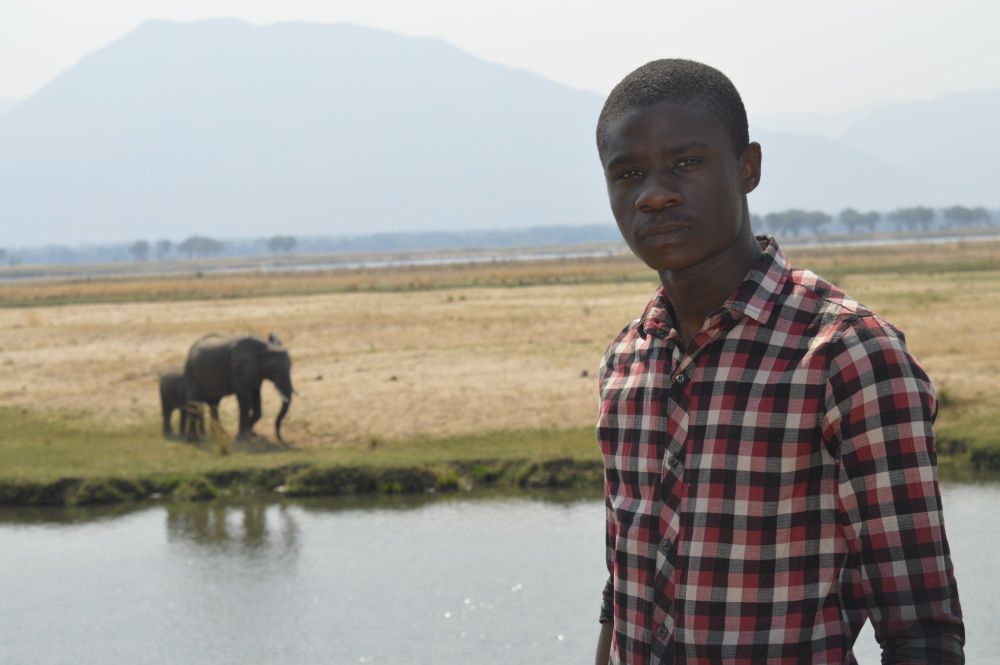
In recent years, I've worked with various mammal species in #Africa, including hippos, buffaloes, hyenas, and elephants. Today, however, I will focus on my research concerning the endangered African Savanna Elephant #Loxodontaafricana.
21.09.2024 18:35
👍 7
🔁 2
💬 1
📌 0
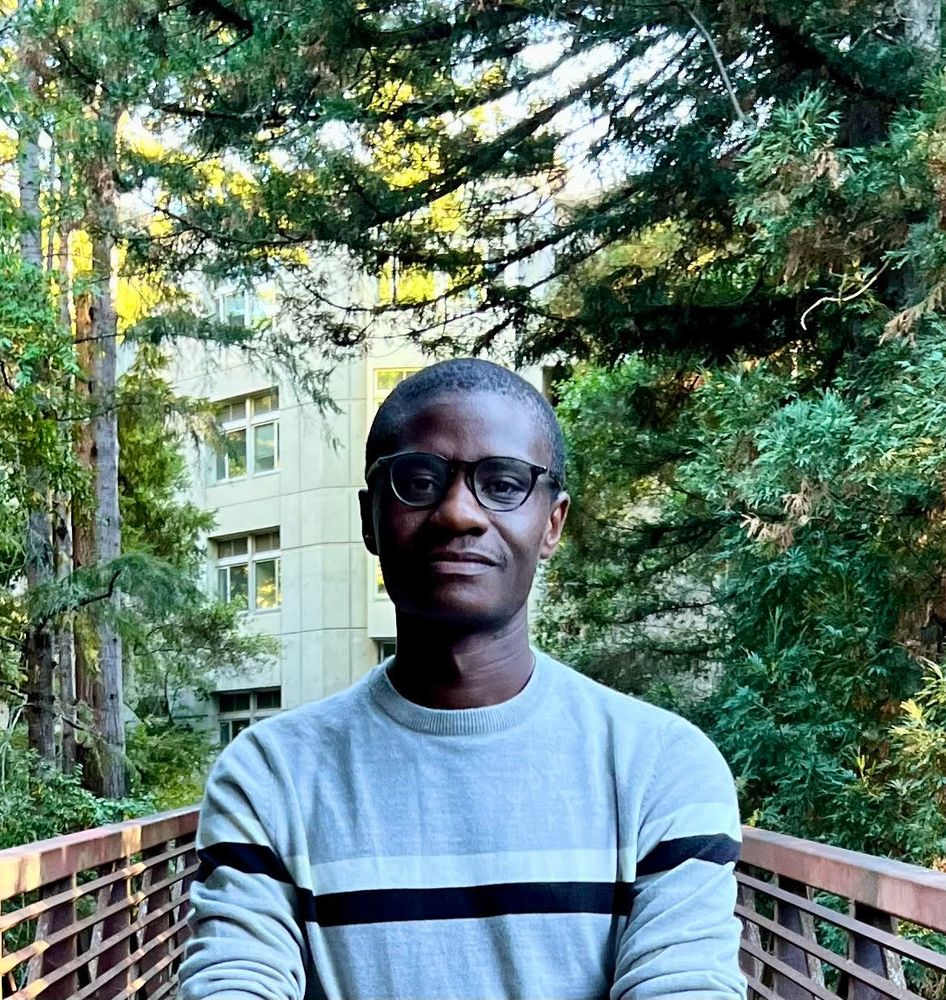
Good morning! I’m Blessing Kavhu (@BleKavhu), and I’m excited to take over today for BlackMammalogists (@blackmammalogists.bsky.social) Join me as I dive into my work on mammals, with a focus on geospatial analysis. Currently, I'm a postdoc at #UCSC , and I can't wait to share my journey with you!
21.09.2024 18:22
👍 22
🔁 9
💬 2
📌 1
Thanks for joining me today folks! Have a restful weekend and, in the wise words of @sciencewithtyus.bsky.social, stay curious!
Give me a follow on Twitter @Science_Miathod as I start my PhD. 🫡
20.09.2024 22:46
👍 0
🔁 1
💬 0
📌 0
(Basic) definitions:
One Health- human, wildlife, & environmental health are all dependent on one another
Zoonoses- diseases from animals to people
Anthroponoses- diseases from people to animals
Spillover- disease from one sp./popu. to another
20.09.2024 21:19
👍 4
🔁 1
💬 0
📌 0
So yeah, that’s what I’ve been up to for the last few years…any questions?
20.09.2024 21:07
👍 3
🔁 0
💬 2
📌 0
My ultimate goal is to understand host-microbe interactions and their effects on host outcomes. This info will allow us to look at individual- and population-level effects. Since everything’s connected (#OneHealth), there can be large effects on the health of a system.
20.09.2024 21:01
👍 2
🔁 0
💬 1
📌 0
That project is wrapping up right now (trying to finish writing the code between tweets!)
It was definitely a pivot from what I had been working on, but a really interesting opportunity to get into microbiology.
I’ll let y’all know when that paper is ready too.
20.09.2024 20:58
👍 2
🔁 0
💬 1
📌 0
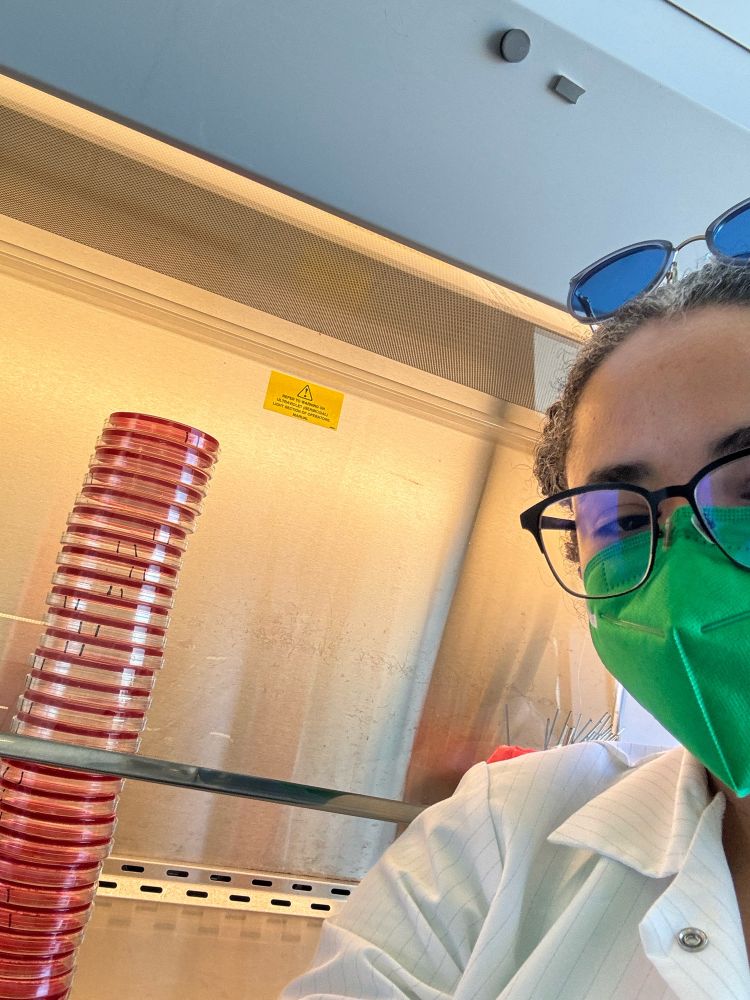
Me with my green KN95 and barrier lab coat showing you all the bright red plates I was about to streak.
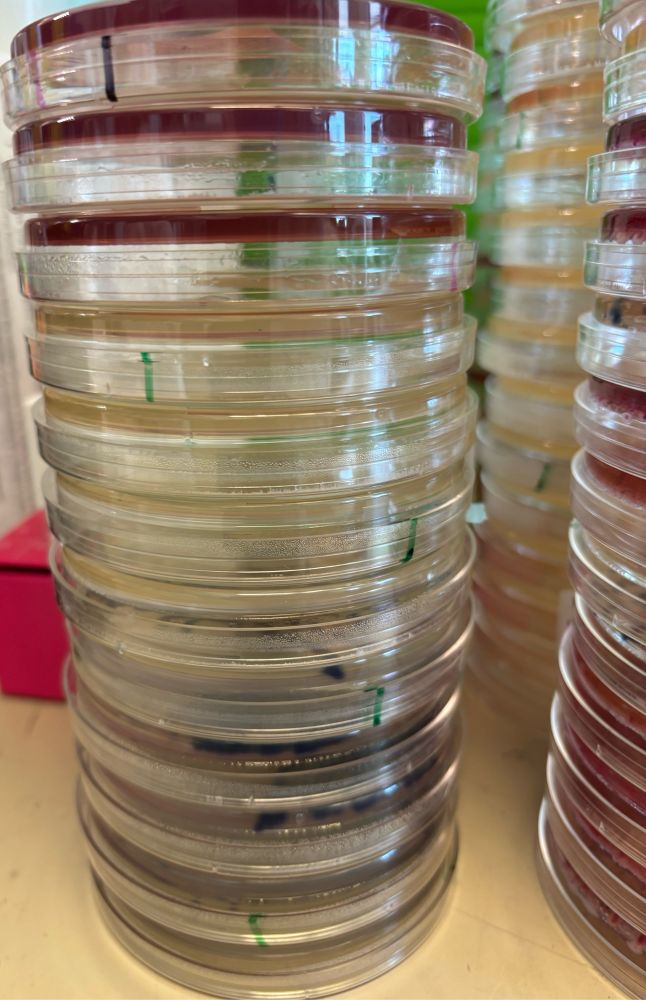
Stacks of colorful, bacteria-filled plates.
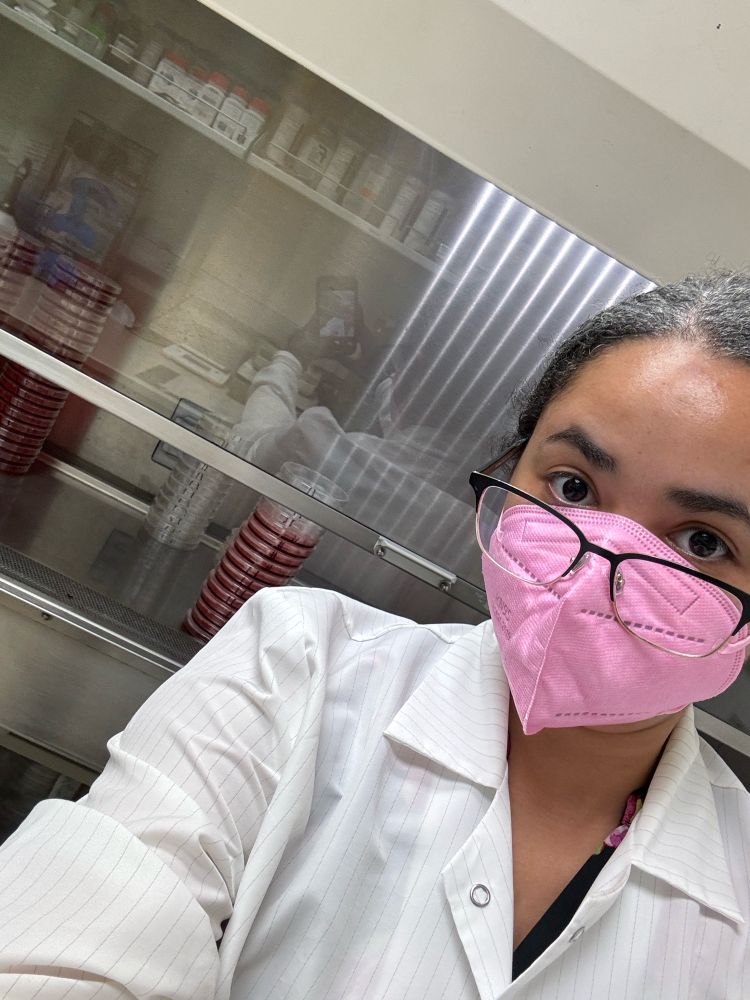
Me in my pink KN95 mask and barrier lab coat showing you all the media plates I’m making. So scientific.
I cultured A LOT of bacteria this summer.
20.09.2024 20:53
👍 3
🔁 0
💬 1
📌 0
This summer I worked on a project assessing human enteric pathogens carried by feral swine with an interest in swine found near agricultural systems.
Essentially:
🐗 ➡️💩🦠🌾➡️😷🤢
20.09.2024 20:49
👍 3
🔁 0
💬 1
📌 0
Feral swine are an introduced species that have been implicated in quite a few problems in the US (e.g. ecosystem damage, disease, being incredibly cute, etc).
www.aphis.usda.gov/sites/defaul...
20.09.2024 20:46
👍 2
🔁 0
💬 1
📌 0
I’m grateful to the lab and my PI for all the experience and support they provided to this growing, first-gen scientist. I officially left my lab of 5 years to pursue my PhD and explore new opportunities.
Welcome to the summer of 50-60+ feral swine!
20.09.2024 20:31
👍 2
🔁 0
💬 1
📌 0
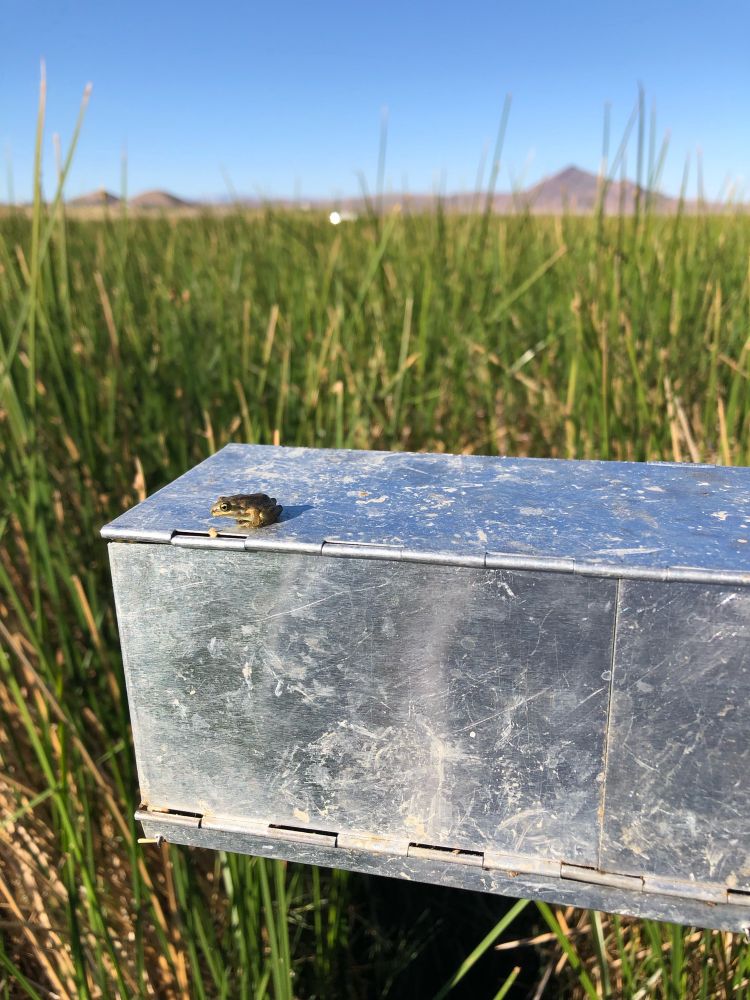
A tiny dark green frog sitting on top of a metal Sherman trap. We were in the middle of a bulrush marsh.
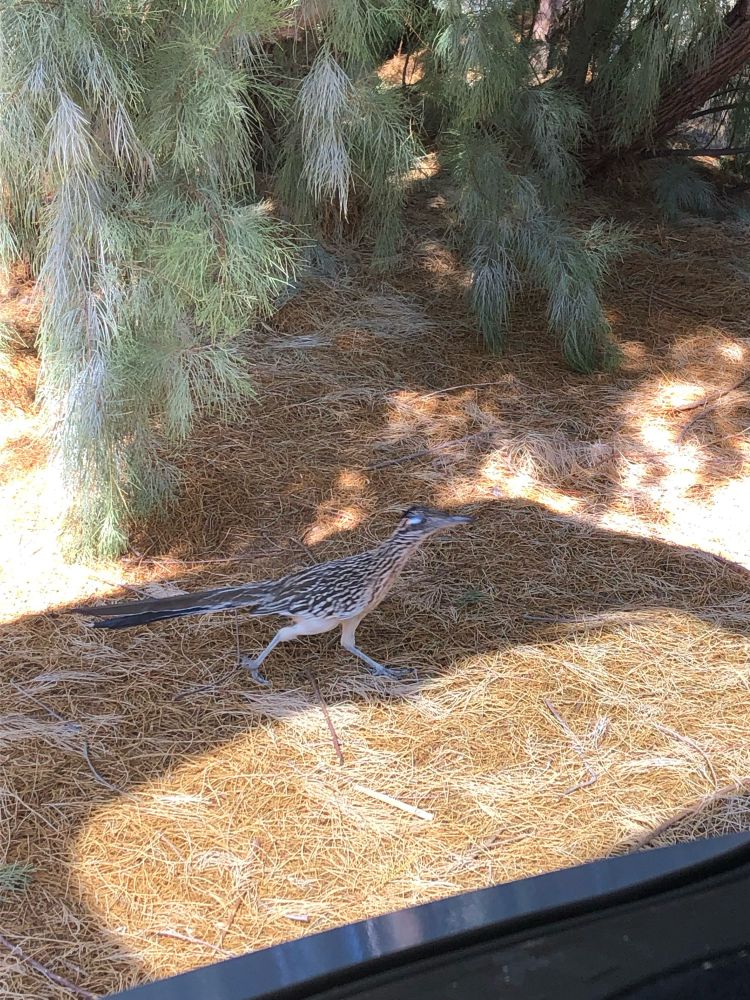
A roadrunner I was 90% was going to hop into the back of the car with me. It minded its business, running along the vegetation on the ground.
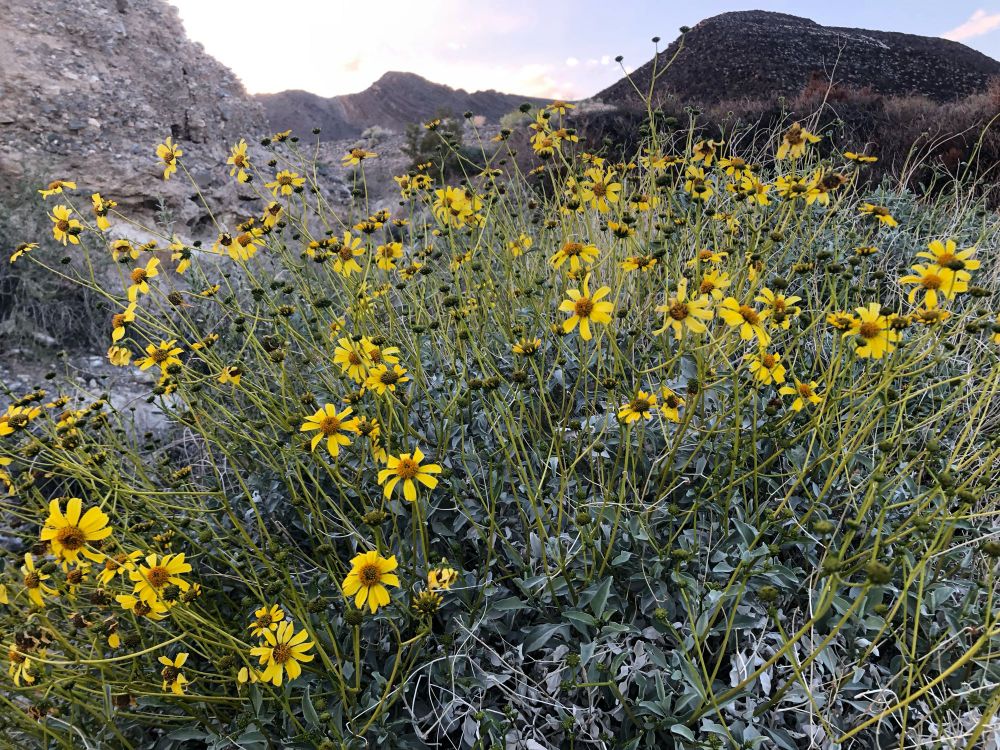
A bush of yellow desert daisies thriving in the rocky hills of the Mojave.
The desert and rodents are now permanently etched into my heart. The desert is a rich, unique ecosystem in need of your support and protection. It’s home to many beautiful and strange species.
Warning: non-mammals mentioned
20.09.2024 20:31
👍 3
🔁 1
💬 1
📌 0
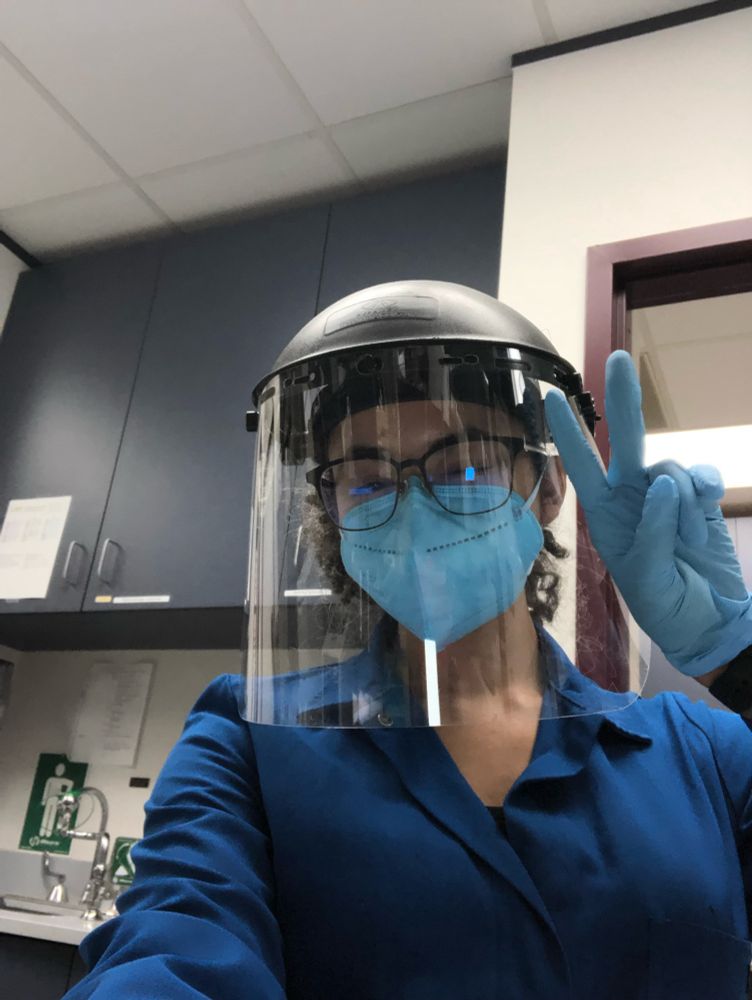
Me in full PPE (face shield, blue KN95 mask, gloves, and a lab coat). I’m giving a peace sign because idk how to pose for pictures.
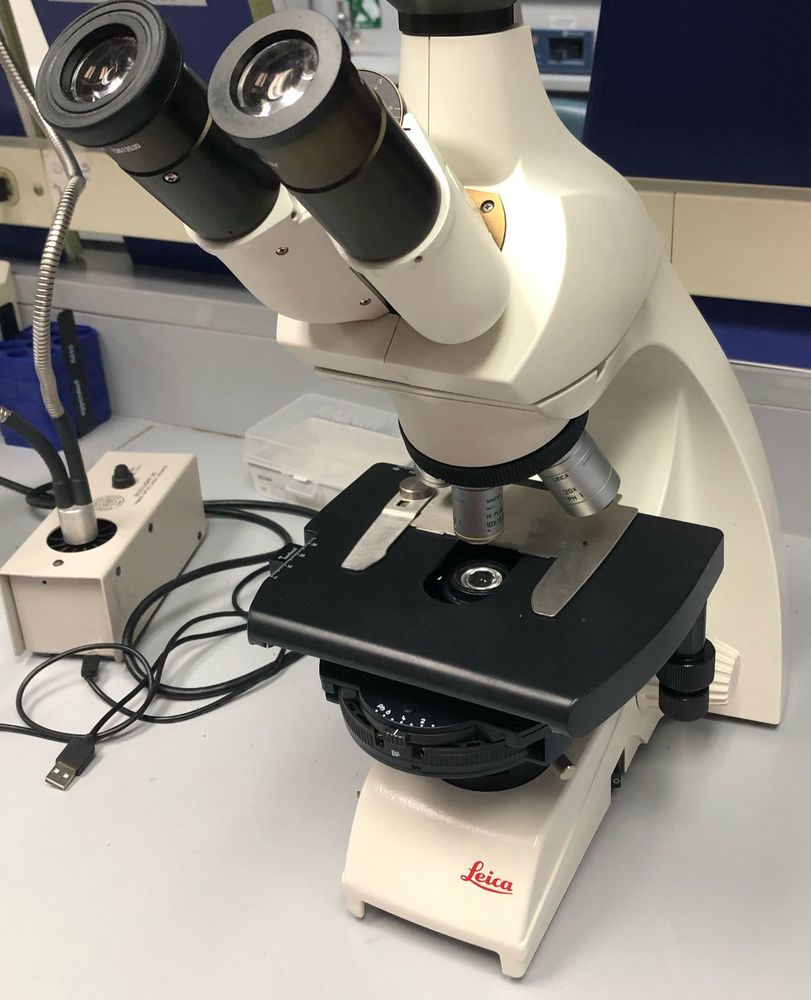
Olde faithful, the compound microscope I used to look at all of my samples.
After many dissections, hours at the microscope, and more gel electrophoresis than one could hope to do in 3 months, I wrapped up my thesis.
Once I publish, I’ll let y’all know the species I found 😉
20.09.2024 20:07
👍 6
🔁 2
💬 1
📌 0
For my MSc thesis, I looked at the gastrointestinal parasites MUMUs carry to see if they could spill over into Amargosa vole populations.
That study involved stomach nematodes crawling toward me…nightmare fuel.
20.09.2024 18:48
👍 3
🔁 0
💬 1
📌 0
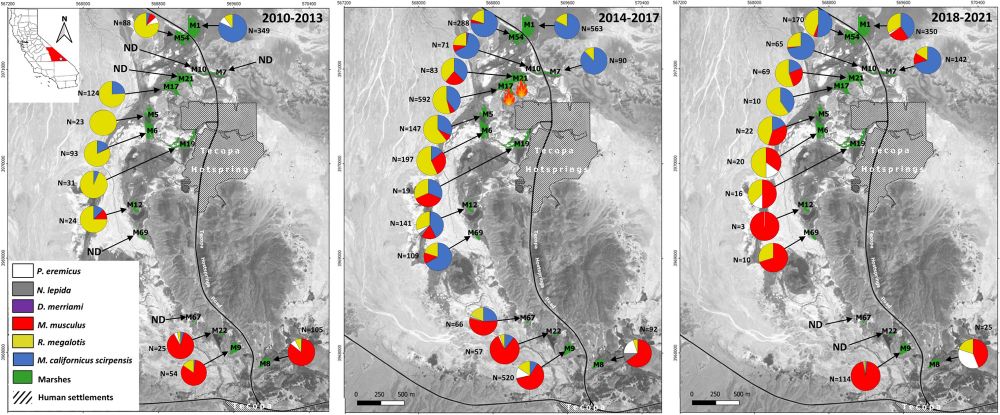
Enter our next character: the house mouse, which I will refer to as MUMUs (MUs MUsculus).
House mice are highly adaptable commensal species, meaning they reproduce rapidly, live in many habitats, and follow human settlements.
20.09.2024 18:35
👍 4
🔁 1
💬 1
📌 0
“Mia, it’s almost noon and you haven’t mentioned disease!”
-you, screaming at your phone in front of the code that isn’t going to write itself
20.09.2024 18:31
👍 5
🔁 0
💬 1
📌 0
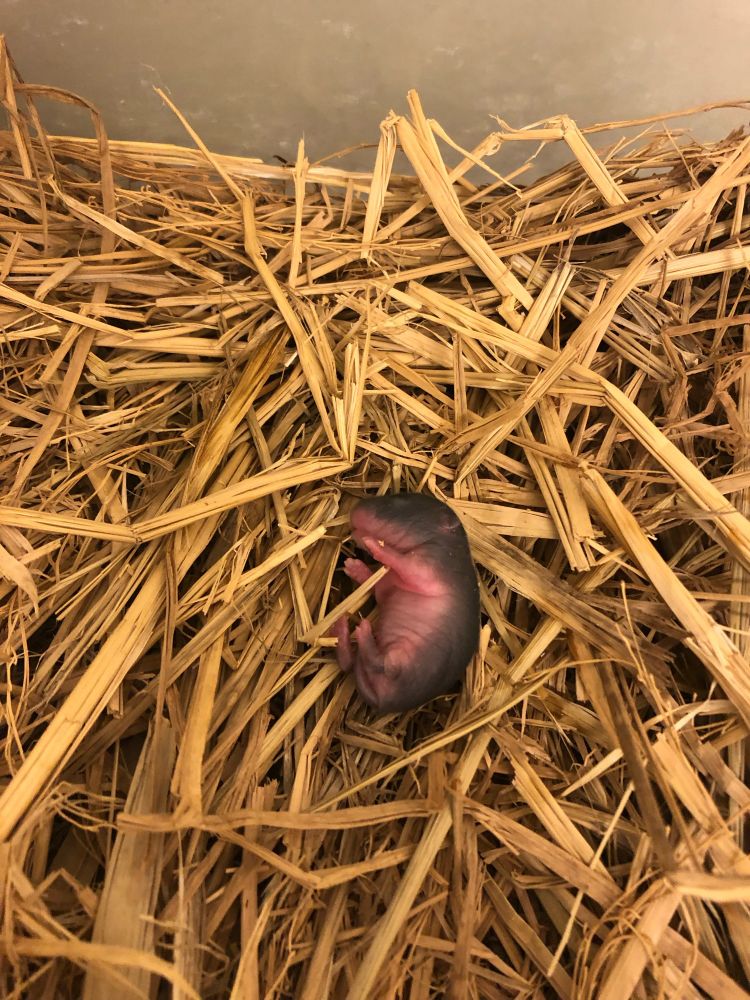
A little vole pup, still with a pink belly and dark back. Its eyes are closed while it curls up on dry vegetation.
Amargosa voles create little nests for their pups. Uniquely, both parents provide care! They shred dry bulrush to create soft nesting material. This creates insulation and helps break down the bulrush that dies annually, allowing its nutrients to return to the soil.
20.09.2024 18:16
👍 8
🔁 1
💬 1
📌 0
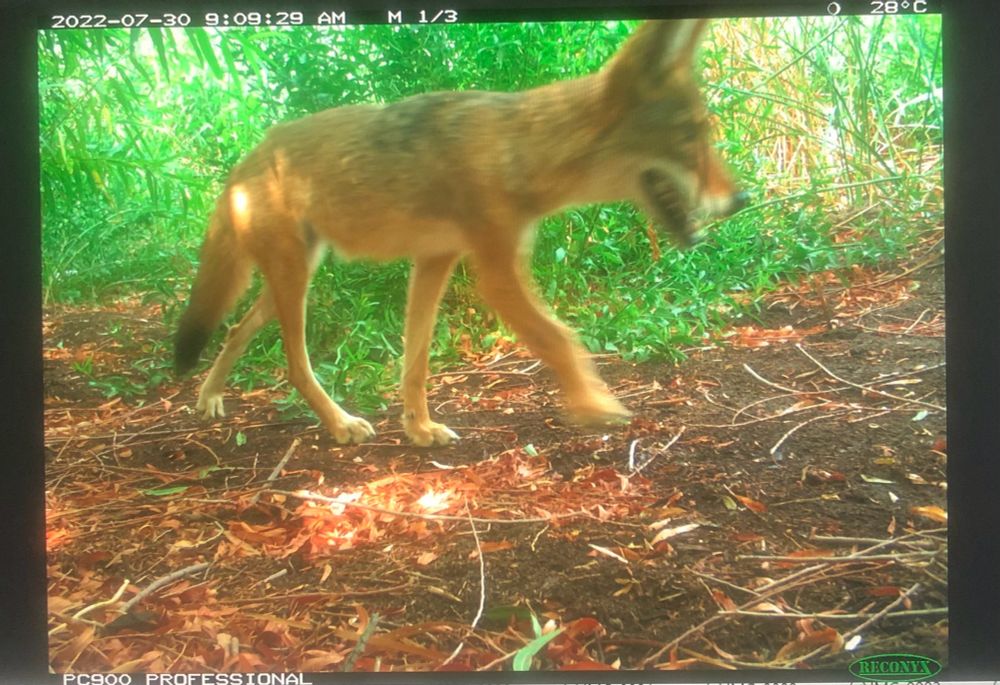
A colored camera trap photo of a coyote taking a stroll through a marsh edge.
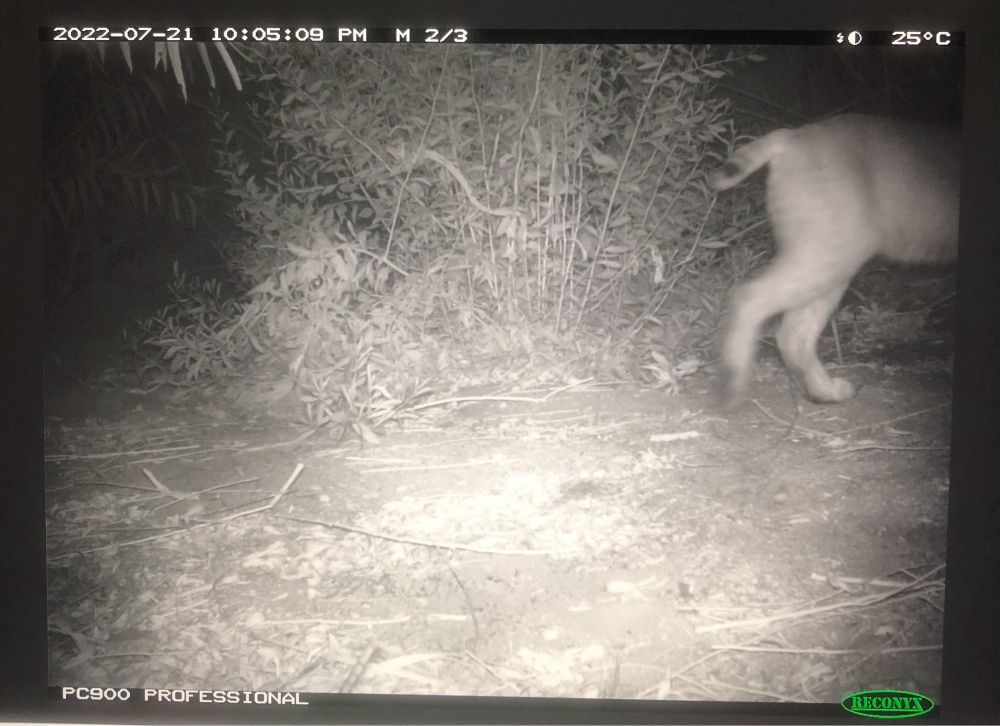
A black and white camera trap photo of a bobcat butt exiting stage left.
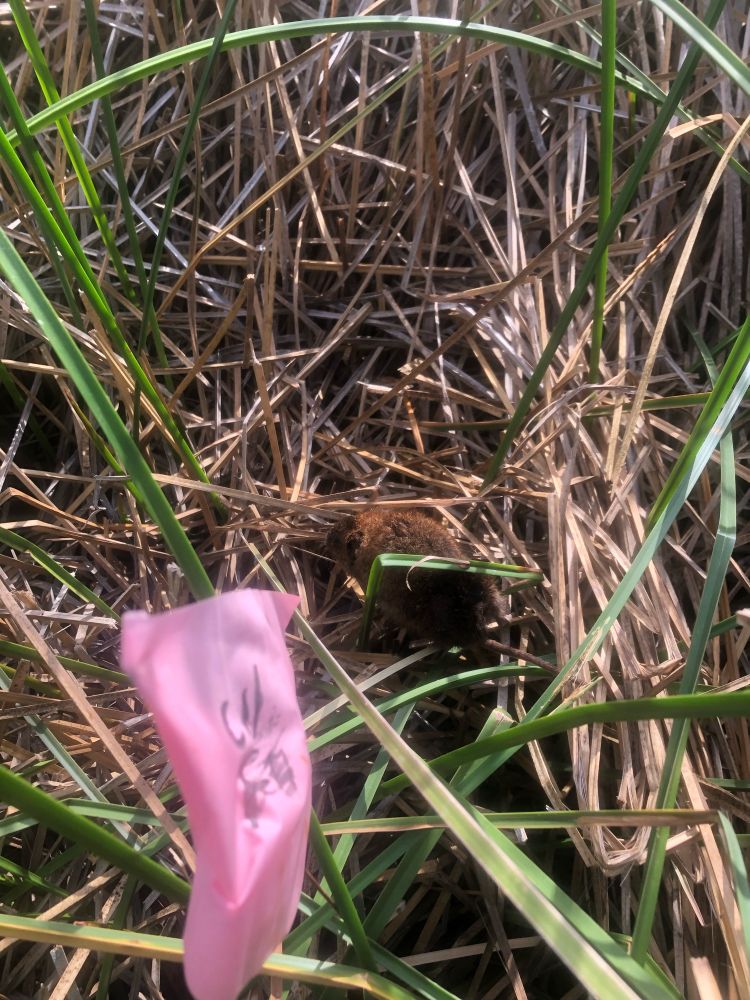
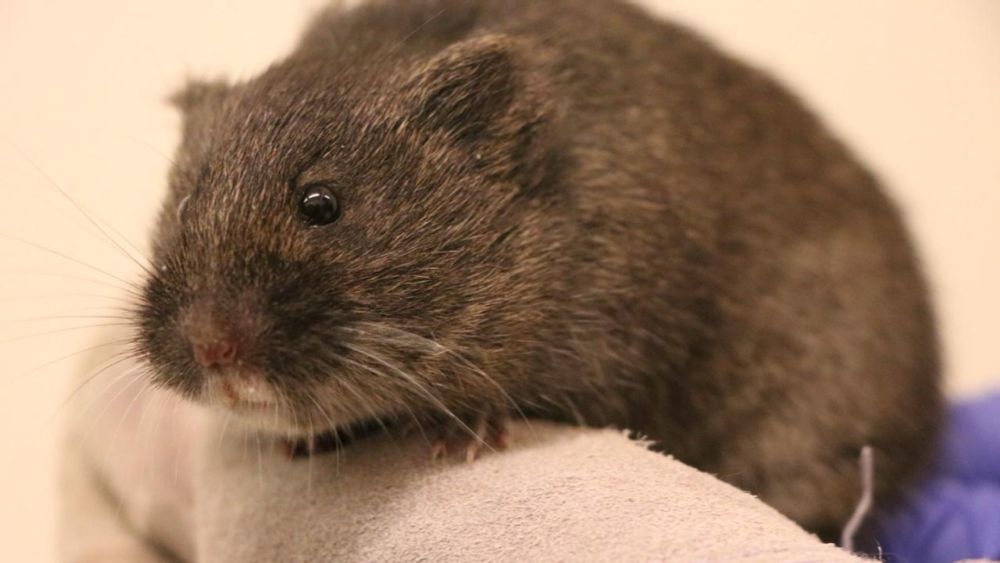
A rusty brown Amargosa vole hanging out on a mix of brown and green bulrush vegetation. There’s a pink flag in the foreground to help us find traps.
In addition to it being incredibly cute, Amargosa voles are an important prey source to many predators in the ecosystem: bobcats, coyotes, birds of prey, etc.
They also engage in a process called bioturbation.
20.09.2024 18:01
👍 6
🔁 2
💬 1
📌 0
Collaborators have been hard at work fixing up these marshes which are vital to the survival of many native and endemic species, including the Amargosa vole.
Why do we care so much about this little rodent?
20.09.2024 17:52
👍 4
🔁 1
💬 1
📌 0