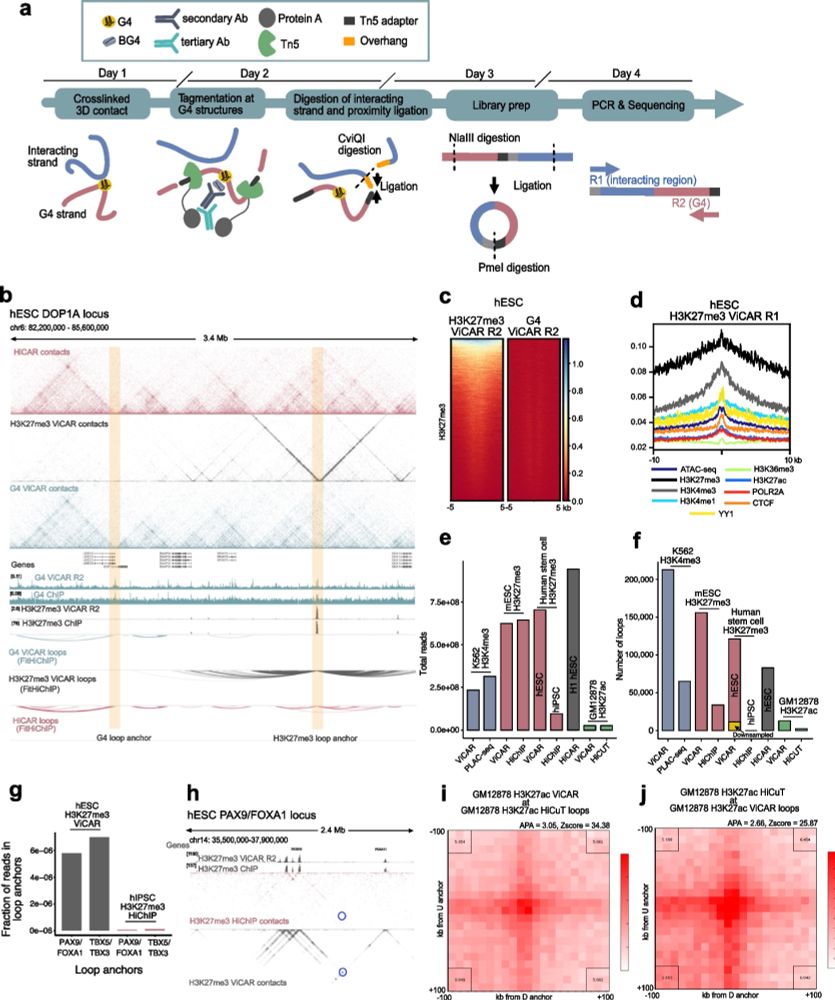
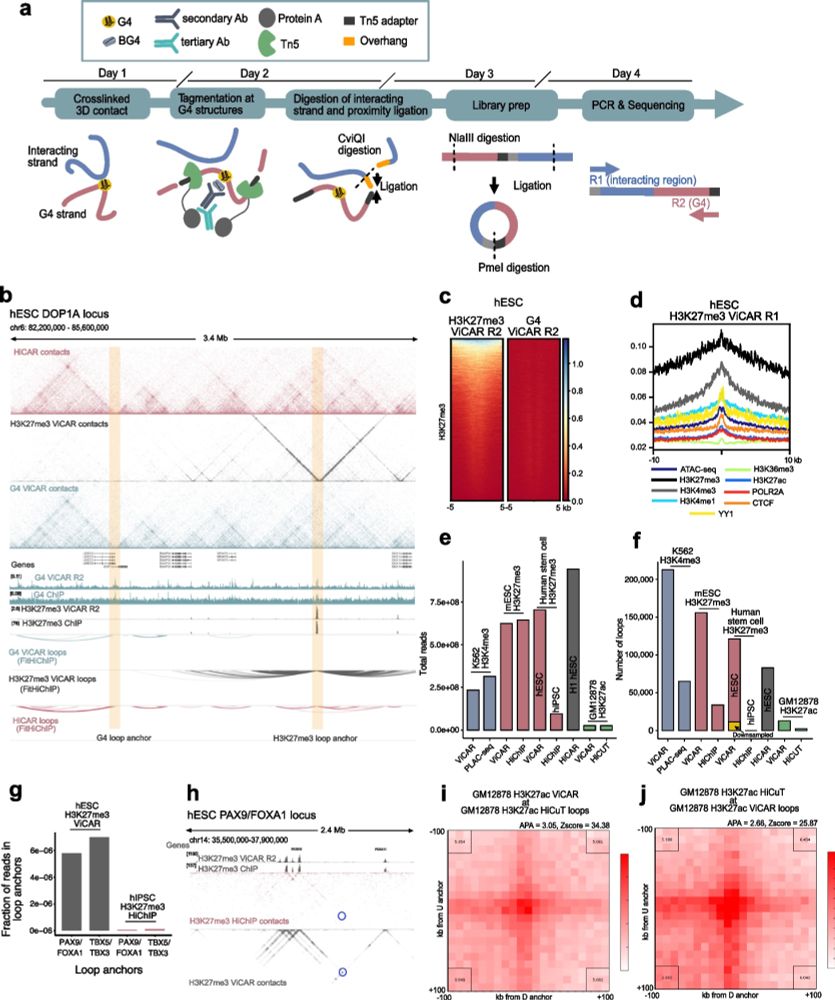
Come and talk 3D #genome, #epigenetics, #enhancers and #G4s at #FOG2026 at London ExCeL today and tomorrow! festivalofgenomics.com/london/poste... and some fresh stuff in there too!
28.01.2026 08:03
👍 1
🔁 0
💬 0
📌 0
Brilliant #PhD opportunities for anyone interested in #chromatin, #genetics or #epigenetics!
02.09.2025 14:08
👍 3
🔁 1
💬 0
📌 0
Lots of exciting chromatin biology - and great recaps!
27.08.2025 19:29
👍 1
🔁 0
💬 0
📌 0


Beyond carrying out vital research, our staff are involved in lots of science outreach activities every year.
Recently, we hosted pupils for our annual Careers Lab. This programme is designed to inspire the next generation of STEM scientists & supporters.
More: www.cruk.cam.ac.uk/students/car...
21.07.2025 12:54
👍 4
🔁 1
💬 0
📌 0
Thank you @stefanschoenfelder.bsky.social - far too modest!
07.06.2025 21:25
👍 1
🔁 0
💬 0
📌 0

Flynn Lab
FLYNNLAB
Chromatin biology
Many thanks especially to Colm Doyle (now at @embl.org), who began this work with his beta globin locus study and @seanflynn.bsky.social (now of sites.google.com/view/flynnlab/ at @exeter.ac.uk - great things to come) for an incredible journey, as well as all authors at @cruk-ci.bsky.social! 9/9
04.06.2025 21:00
👍 0
🔁 0
💬 0
📌 0
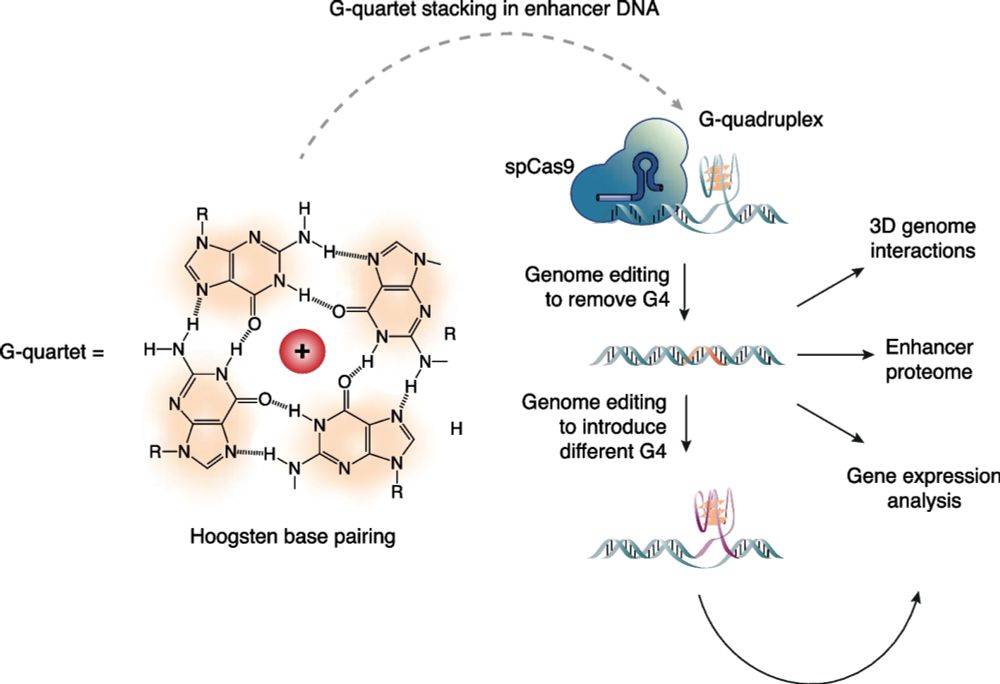
....then edited them out to show how the regulation of genes in 3D contact was affected. 8/9
04.06.2025 21:00
👍 0
🔁 0
💬 1
📌 0
How do G4s function at enhancers? In our #proteomics pulldowns, RNA polymerase II subunits were enriched, together with known G4 binding proteins - but not some common architectural factors (e.g. YY1, CTCF) - we confirmed that some RNAPII subunits specifically bind G4s (Fig. 4A, F). 6/9
04.06.2025 21:00
👍 0
🔁 0
💬 1
📌 0
For the beta HS2 enhancer, this effect is masked by hyper activation of the neighbouring enhancer, HS3 - removing HS3 unveils a similar effect (Figure 3A-D for alpha, Figure 3E-H for beta). 4/9
04.06.2025 21:00
👍 0
🔁 0
💬 1
📌 0
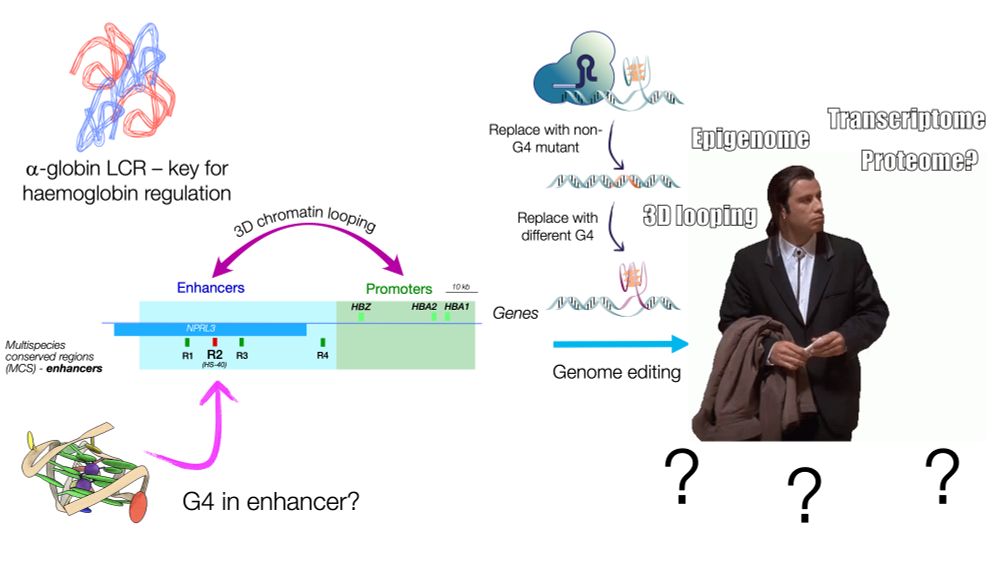
We found a G4 in HS-40, the dominant enhancer of the alpha-globin locus regulatory region, replaced it with a sequence that can no longer form a G4; cognate gene expression, chromatin accessibility, and enhancer-promoter contacts were reduced. We then introduced a different G4-forming sequence - enhancer activity was restored.
What happened? In the alpha HS-40 enhancer, such a mutation (seven G-to-T mutations) was sufficient to reduce globin gene expression to levels observed when the whole enhancer region (of around 350 bases) is deleted. Enhancer-promoter contacts and local #chromatin accessibility is also reduced. 3/9
04.06.2025 21:00
👍 0
🔁 0
💬 1
📌 0
Using the classic #globin #superenhancer systems, we discovered two G4 structures in dominant enhancers in both the alpha globin and beta globin locus control systems - and replaced them with non-G4-forming sequences using CRISPR. 2/9
04.06.2025 21:00
👍 0
🔁 0
💬 1
📌 0

We heard about "Alternative DNA structures in enhancer-promoter communication" from @seanflynn.bsky.social from @uniofexeter.bsky.social #Epigenetics2025
@uniofexeternews.bsky.social
23.04.2025 14:00
👍 7
🔁 2
💬 0
📌 0

🚨 We’re Hiring!🚨
Passionate about cancer research? Join Madzia Crossley's team to investigate how R-loop dysregulation contributes to cancer.
We have two exciting opportunities:
Research Associate: jobs.cam.ac.uk/job/50675/
Senior Scientific Associate: jobs.cam.ac.uk/job/50689/
19.03.2025 10:18
👍 7
🔁 6
💬 0
📌 1
A great opportunity to work on #epigenetics, #genetics and gene regulation in #neuroscience with an inspirational young PI - please share and apply!
03.03.2025 12:17
👍 1
🔁 0
💬 0
📌 0

Dr Isabel Esain Garcia receives Cancer Research UK Cambridge Institute 2024 PhD Thesis Prize
Congratulations to @isabelesain.bsky.social, who is awarded the 2024 CRUK Cambridge Institute PhD Thesis Prize.
In her doctoral research, Bel discovered a new molecular mechanism in cancer gene regulation opening up a new therapeutic window for cancer treatments.
www.cruk.cam.ac.uk/news/bel-esa...
03.12.2024 13:20
👍 16
🔁 3
💬 1
📌 1
A great #PhD opportunity for anyone interested in #epigenetics in #neurons and the broader context of #neuroscience - having worked with @seanflynn.bsky.social and Jack, they are brilliant choices for mentors!
22.11.2024 18:44
👍 7
🔁 1
💬 0
📌 0
Thank you @seanflynn.bsky.social - looking forward to sharing science (mostly #epigenetics, #G4, gene regulation and #chromatin) with everyone, especially great work from the Flynn Lab!
15.11.2024 11:55
👍 1
🔁 0
💬 1
📌 0