Our role is to accompany survivors, to honor their choices, and to create the conditions for empowerment and healing. 6/
11.09.2025 13:04
👍 1
🔁 0
💬 1
📌 0
Centering self-determination does not mean ignoring safety—but we cannot have safety without agency. As advocates, social workers, helping professionals, and peer supporters, our role is never to rescue. 5/
11.09.2025 13:04
👍 1
🔁 0
💬 1
📌 0
When we prioritize safety over self-determination, we risk recreating the same power dynamics that survivors experienced from those who harmed or are harming them. 4/
11.09.2025 13:04
👍 1
🔁 0
💬 1
📌 0
What we know, though, is that safety is a highly subjective concept. Self-determination must come first. Survivors are the experts on their own lives. Supporting survivors means helping create space for choices as they define what healing and safety look like for them. 3/
11.09.2025 13:03
👍 1
🔁 0
💬 1
📌 0
I teach this in the lineage of Connie Burk, who developed tools that explain basic principles of survivor advocacy. Conversations about survivors of harm frequently start with a focus on the survivor’s safety. 2/
11.09.2025 13:03
👍 1
🔁 0
💬 1
📌 0
On Tuesday, I taught the second session of my interpersonal violence course. A foundational lesson about working with survivors in any capacity is the relationship between self-determination and safety. 1/
11.09.2025 13:03
👍 1
🔁 0
💬 1
📌 0
How do you navigate due dates in your classes? How do you balance high expectations and humanity? 10/10
08.09.2025 16:21
👍 0
🔁 0
💬 0
📌 0
I know that this policy won't work for every class structure, but for me it has helped establish trust and increase work quality. It has also eliminated late night panicked emails waiting for me to let them know that they don't need to write their assignment from the emergency department. 9/
08.09.2025 16:21
👍 0
🔁 0
💬 1
📌 0
I will always remember submitting a subpar paper while having a miscarriage because I had a professor that did not accept late work under any circumstances. 8/
08.09.2025 16:21
👍 0
🔁 0
💬 1
📌 0
This policy is also personal for me. I can think of many moments when a policy like this would have radically shifted my own mental health, pain management, and balance of school with caregiving or crisis intervention work. 7/
08.09.2025 16:21
👍 0
🔁 0
💬 1
📌 0
I’d rather collaborate to find a path forward than have someone disappear because they’re struggling alone. 6/
08.09.2025 16:21
👍 0
🔁 0
💬 1
📌 0
If students need more than that extra week, I ask them to reach out to me before the extended due date to develop a plan. I don't need to know what they are going through (though I am always happy to listen/support/provide resources), but I do want them to know I'm committed to their success. 5/
08.09.2025 16:20
👍 0
🔁 0
💬 1
📌 0
I want to give students space to negotiate that delicate balance without feeling like I get to decide what is worthy of accommodation or not. 4/
08.09.2025 16:20
👍 0
🔁 0
💬 1
📌 0
Students in social work are navigating multiple classes, their internships, jobs, caregiving responsibilities, and maintaining their lives and self- and community-care. 3/
08.09.2025 16:20
👍 0
🔁 0
💬 1
📌 0
I want students to have a structure to the semester, but I also want to provide flexibility. I don't want to vet why a student might need more time and to be in the position for them to need to disclose beyond their comfort zone or make something up. 2/
08.09.2025 16:20
👍 0
🔁 0
💬 1
📌 0
I offer a one-week, no-questions-asked extension on every assignment in my classes. 1/
08.09.2025 16:19
👍 0
🔁 0
💬 1
📌 0
What makes a reflexivity or positionality statement feel meaningful (or not)?
How can we help new researchers navigate what to disclose and what to omit in their work?
8/8
07.09.2025 15:47
👍 0
🔁 0
💬 1
📌 0
The brief reflexivity or positionality statement in a manuscript is only a small window into that process — but it’s also a public one, with real implications for relationships, credibility, and employment. 7/
07.09.2025 15:47
👍 1
🔁 0
💬 1
📌 0
What does it look like, in this sociopolitical moment, for emerging scholars to discern what they share and what they withhold? Professional hierarchies, identity, safety, and credibility all factor into what we carry into our work. 6/
07.09.2025 15:47
👍 1
🔁 0
💬 1
📌 0
Although I’m pre-tenure, I’ve long been open about aspects of my identity and lived experience. (For example, I've been openly queer for 20 years). Much of who I am and why I do this work is documented in publications and other public spaces. This calculus is different for new researchers. 5/
07.09.2025 15:47
👍 0
🔁 0
💬 1
📌 0
The latter feels particularly fraught right now. 4/
07.09.2025 15:46
👍 0
🔁 0
💬 1
📌 0
Who we are is crucial to the research process. It shapes how we ask questions, listen, analyze, and share what we’ve learned. There’s an internal process of reflecting on ourselves and our teams, and an external process of reporting those reflections in publications. 3/
07.09.2025 15:46
👍 0
🔁 0
💬 1
📌 0
This orientation process has me reflecting on reflexivity, positionality, and power. 2/
07.09.2025 15:46
👍 0
🔁 0
💬 1
📌 0
I’m beginning a new project with undergraduate students who are not only new to my lab, but new to research. Our project focuses on the impact of today’s sociopolitical environment on efforts to prevent and respond to sexual violence. 1/
07.09.2025 15:46
👍 1
🔁 0
💬 1
📌 0
BREAKING: A federal judge in Massachusetts (the Reagan-appointed William Young) has declared the Trump administration's cuts to NIH grants — ostensibly over Trump's EOs on gender ideology and DEI — are "illegal" and "void." He's ordering many grants restored.
16.06.2025 18:23
👍 13471
🔁 3607
💬 104
📌 206
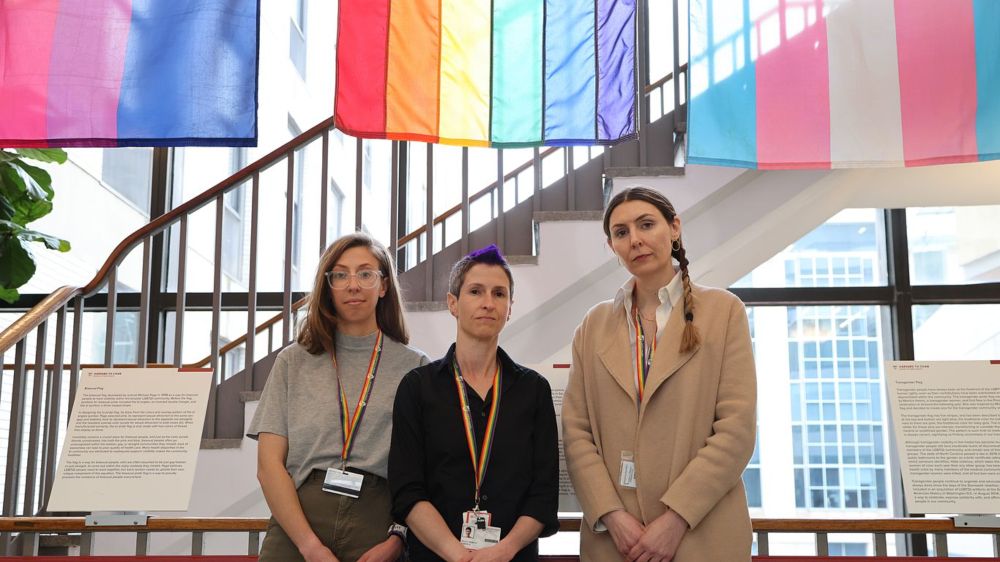
Judge orders Trump admin. to restore hundreds of terminated NIH grants
"I've never seen government racial discrimination like this," the judge said.
"I've sat on this bench now for 40 years. I've never seen government racial discrimination like this."
That's what a Reagan-appointed judge said about Trump cancelling hundreds of NIH grants.
We can't stop fighting Trump's assault on science, the NIH, and our values.
16.06.2025 23:26
👍 1550
🔁 404
💬 15
📌 5
We have always been here, and we always will. I wish there weren’t still so much to resist—but we will continue to resist. And we will not wait for some abstract, utopic future to claim joy, community, and rest.
I am proud of us.
Happy Pride. 🌈
5/5
01.06.2025 15:31
👍 1
🔁 0
💬 0
📌 0
I have never been more proud to be queer. I have never been more proud of the queer people in my life.
4/
01.06.2025 15:31
👍 2
🔁 0
💬 1
📌 0

