main goal for this year: find a new job! 🙂
looking for a role with fun & complex technical challenges & within a great community. my main expertise is in signal processing/EEG/MEG, but topic-wise I am quite flexible.
science/industry both great! starting mid-year. nschawor.github.io/cv
16.01.2026 10:14
👍 102
🔁 66
💬 3
📌 3
#PsychSciSky @theneuro.bsky.social
29.08.2025 12:20
👍 1
🔁 1
💬 0
📌 0
The paper discusses in depth the parallels with and potential insights for the bilingual language learning literature. This was a very fun collaborative project together with bilingualism experts @kleind.bsky.social and @kbyers.bsky.social
29.08.2025 12:20
👍 1
🔁 0
💬 1
📌 0

The development of parallel phonological representations varied based on the timing of language exposure, showing how earlier-learned languages shape the acquisition of subsequent ones.
29.08.2025 12:20
👍 1
🔁 1
💬 1
📌 0
We show that multiple phonological systems are organized through parallel representations, preserving the unique aspects of each language while maintaining shared articulatory features (here e.g. manner of articulation and consonant voicing).
29.08.2025 12:20
👍 2
🔁 1
💬 1
📌 1
The development of parallel phonological representations varied based on the timing of language exposure, showing how earlier-learned languages shape the acquisition of subsequent ones.
29.08.2025 12:13
👍 0
🔁 0
💬 0
📌 0

We show that multiple phonological systems are organized through parallel representations, preserving the unique aspects of each language while maintaining shared articulatory features (here e.g. manner of articulation and consonant voicing).
29.08.2025 12:13
👍 0
🔁 0
💬 1
📌 0
True. And before meeting Yue Sun I had no idea you could have conversations that last for hours about: syllables.
19.08.2025 19:54
👍 1
🔁 0
💬 0
📌 0
Big news indeed:)
23.07.2025 11:02
👍 1
🔁 0
💬 0
📌 0
documentary with a brief appearance of my PI arguing for basic shared values. the past few months here have been highly strange... (example: how to conduct lab meetings when your PI is not allowed to enter the building? 😶🌫️)
www.youtube.com/watch?v=n5nE...
14.03.2025 12:38
👍 12
🔁 5
💬 2
📌 0
Please repost to get the word out! @nkgarg.bsky.social and I are excited to present a personalized feed for academics! It shows posts about papers from accounts you’re following bsky.app/profile/pape...
10.03.2025 15:12
👍 164
🔁 117
💬 8
📌 13

People talk a lot about objects, but what about the softness of a cushion, the greenness of an emerald, or the viscosity of oil? In our work just published @pnas.org, we shed light on how we make sense of the hundreds of materials around us.
www.pnas.org/doi/10.1073/...
06.03.2025 21:36
👍 86
🔁 37
💬 1
📌 1

Asymmetric Sampling in Time: Evidence and perspectives
Auditory and speech signals are undisputedly processed in both left and right hemispheres, but this bilateral allocation is likely unequal. The Asymme…
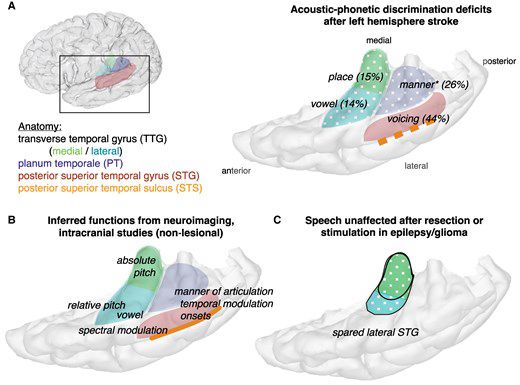
20+ years ago, an idea about cortical lateralization of audition was advanced: asymmetric sampling in time (AST). This extensive review/reevaluation by Chantal Oderbolz, me, and Martin Meyer assesses how the idea has fared. #notallwrong
www.sciencedirect.com/science/arti...
03.03.2025 09:44
👍 26
🔁 10
💬 0
📌 0
One week left to apply!
We'll have so much exciting data for projects: for example, neuropixel data from humans while they listen to sentences courtesy of @shaileejain.bsky.social, Eddie Chang, and his group.
28.02.2025 13:05
👍 6
🔁 4
💬 0
📌 0
I feel like you're already missing a spotlight here by not providing a link to your paper:)
14.02.2025 14:05
👍 2
🔁 0
💬 1
📌 0
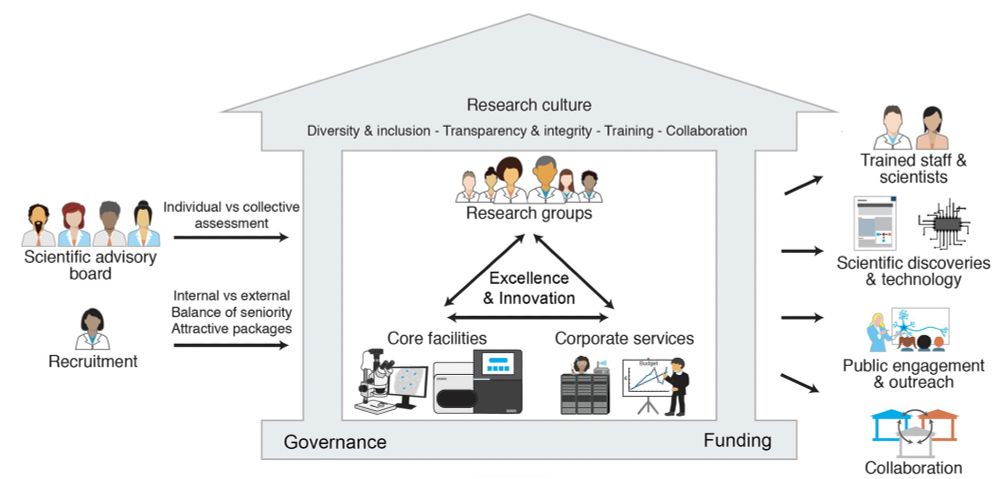
"Key attributes of successful research institutes" journals.plos.org/plosbiology/... – well-written perspective on what makes research institutes successful. having a lot of resources is not sufficient, if there is no positive research culture or good governance structure.
11.02.2025 08:55
👍 15
🔁 2
💬 1
📌 0
C, on all dimensions.
06.02.2025 17:48
👍 1
🔁 0
💬 0
📌 0
#PsychSciSky #neuroskyence
06.02.2025 15:46
👍 0
🔁 0
💬 0
📌 0
Thanks to @davidpoeppel.bsky.social and the members of the Poeppel lab for their support and feedback on this work.
06.02.2025 15:46
👍 0
🔁 0
💬 1
📌 0

We demonstrate the approach on a dataset collected using a speaker odd-one-out task, where we show that people’s first language can shape how they perceive continuous and categorical aspects of accents.
06.02.2025 15:46
👍 1
🔁 1
💬 1
📌 0
Item-level fitting, on the other hand, provides an estimate of the information present in the data that is not accounted for by prior knowledge and remains to be explained. We can use the fitted models for exploration and hypothesis generation.
06.02.2025 15:46
👍 1
🔁 1
💬 1
📌 0

(Q2) However, we show in simulations how to incorporate design matrices in the model fit. This allows us to quantify how well participants' odd-one-out choices can be explained using prior knowledge (here: stimulus categories).
06.02.2025 15:46
👍 1
🔁 1
💬 1
📌 0
Both the stimulus feature space and individual rater weights are optimized in a combined procedure using backpropagation. The model can be fitted without taking prior knowledge into account.
06.02.2025 15:46
👍 0
🔁 0
💬 1
📌 0

(Q1) In this task, human raters have to choose the odd-one-out in a triplet of 3 stimuli. In this simulated example two raters disagree on 1 triplet. Our approach assumes a common feature space that describes stimuli, but raters can weigh features differently in their choices.
06.02.2025 15:46
👍 1
🔁 1
💬 1
📌 0
The approach we propose is based on the odd-one-out task, which was used by @martinhebart.bsky.social to reveal dimensions of object representation.
06.02.2025 15:46
👍 0
🔁 0
💬 1
📌 0

A bookshelf. The books are not arranged in an apparent order.
(Q2) Sometimes the features underlying people’s similarity judgments are not obvious. How can we combine prior knowledge about stimulus domains with data-driven approaches to gain new insights?
06.02.2025 15:46
👍 1
🔁 1
💬 1
📌 0

two bookshelves: in one of them the books are sorted by size, in the other they are sorted by color.
In a new preprint with @kleind.bsky.social, we ask two questions: (Q1) People differ in how they perceive the similarity of stimuli in their environment. How can we model the features underlying similarity judgments in arbitrary domains, while accounting for individual differences? osf.io/agpb5_v1 🧵
06.02.2025 15:46
👍 20
🔁 7
💬 1
📌 1
Mu-rhythm in slow motion?
30.01.2025 10:32
👍 0
🔁 0
💬 1
📌 0