
This manuscript was illuminated by a circle of at least five highly organized manuscript painters active in the Flemish cities of Ghent and Bruges. The principal illuminator was Alexander Bening, who painted the majority of the book's miniatures. Manuscripts produced by this circle of artists are renowned for the decoration of their borders, which typically feature a rich variety of realistically-painted flowers, birds, and butterflies. This prayer book, called a book of hours, was intended not for a cleric, but for the private devotions of a lay person-in this case, Isabella the Catholic, Queen of Spain (1451-1504). Isabella's coat of arms embellishes the book's frontispiece. It is unlikely that the book was commissioned by the Queen herself; rather, she probably received it as a diplomatic gift from someone courting her patronage, perhaps Cardinal Francisco Jimenez de Cisneros. A Franciscan friar, Jimenez was dependent upon Isabella for his advancement, first to the post of Queen's confessor in 1492, and then to Archbishop of Toledo in 1495.
Hours of Queen Isabella the Catholic, Queen of Spain: Fol. 221v https://clevelandart.org/art/1963.256.221.b
07.03.2026 19:02
👍 0
🔁 0
💬 0
📌 0

Battle Axe
Battle Axe https://clevelandart.org/art/1916.1601
07.03.2026 17:19
👍 3
🔁 1
💬 0
📌 0
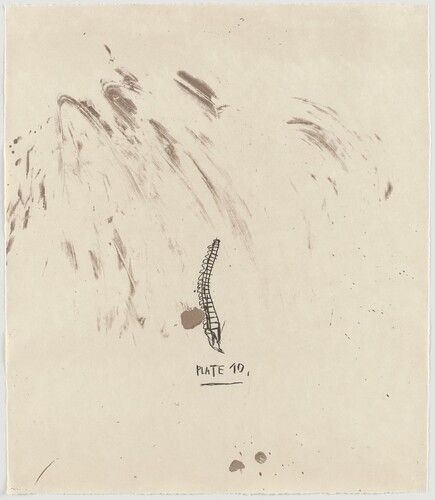
John B. Turner Fund
Untitled, From Leonardo, 1983
https://botfrens.com/collections/27/contents/1170585
06.03.2026 10:16
👍 12
🔁 9
💬 0
📌 0

This manuscript was illuminated by a circle of at least five highly organized manuscript painters active in the Flemish cities of Ghent and Bruges. The principal illuminator was Alexander Bening, who painted the majority of the book's miniatures. Manuscripts produced by this circle of artists are renowned for the decoration of their borders, which typically feature a rich variety of realistically-painted flowers, birds, and butterflies. This prayer book, called a book of hours, was intended not for a cleric, but for the private devotions of a lay person-in this case, Isabella the Catholic, Queen of Spain (1451-1504). Isabella's coat of arms embellishes the book's frontispiece. It is unlikely that the book was commissioned by the Queen herself; rather, she probably received it as a diplomatic gift from someone courting her patronage, perhaps Cardinal Francisco Jimenez de Cisneros. A Franciscan friar, Jimenez was dependent upon Isabella for his advancement, first to the post of Queen's confessor in 1492, and then to Archbishop of Toledo in 1495.
Hours of Queen Isabella the Catholic, Queen of Spain: Fol. 176v https://clevelandart.org/art/1963.256.176.b
07.03.2026 13:34
👍 0
🔁 0
💬 0
📌 0

Missale: Fol. 8r: November Calendar Page
Missale: Fol. 8r: November Calendar Page https://clevelandart.org/art/2006.154.8.a
07.03.2026 11:24
👍 1
🔁 0
💬 0
📌 0

Enkolpion with the Crucifixion (front) and Saints Theodore and George (back)
Enkolpion with the Crucifixion (front) and Saints Theodore and George (back) https://clevelandart.org/art/1972.94.a
07.03.2026 11:13
👍 1
🔁 0
💬 0
📌 0

Stater
Stater https://clevelandart.org/art/1916.986
21.02.2026 11:46
👍 1
🔁 1
💬 0
📌 0

Aureus (reverse)
Aureus (reverse) https://clevelandart.org/art/1969.158.b
06.03.2026 19:52
👍 3
🔁 0
💬 0
📌 0

The four gospels are preceded by a full-page portrait miniature of the appropriate evangelist. Per tradition, they are represented as contemporary scribes surrounded by all the tools of their trade—ink pots, quill pens, and penknives. The anonymous illuminator of these miniatures, called the Hausbuch Master, is known primarily for an album of lively drawings as well as some 90 copper engravings now in Amsterdam. He was also apparently a panel painter of some distinction. The skillful pen work, tracery, and vine scrolls, as well as the large initials, are the work of other artists. The binding is original.
Gospel Book with Evangelist Portraits https://clevelandart.org/art/1952.465
06.03.2026 16:42
👍 3
🔁 1
💬 0
📌 0

Fibula
Fibula https://clevelandart.org/art/1975.108
06.03.2026 15:08
👍 0
🔁 0
💬 0
📌 0

Hours of Queen Isabella the Catholic, Queen of Spain: Fol. 109r
Hours of Queen Isabella the Catholic, Queen of Spain: Fol. 109r https://clevelandart.org/art/1963.256.109.a
06.03.2026 14:40
👍 0
🔁 0
💬 0
📌 0

Purple Brown
Purple Brown
https://botfrens.com/collections/25/contents/4878
21.02.2026 16:47
👍 65
🔁 18
💬 0
📌 4

Askos, Wine Skin
Askos, Wine Skin https://clevelandart.org/art/1915.529
20.02.2026 13:27
👍 2
🔁 1
💬 0
📌 0

Powder Flask
Powder Flask https://clevelandart.org/art/1916.1856
06.03.2026 08:17
👍 2
🔁 0
💬 0
📌 0

This manuscript was illuminated by a circle of at least five highly organized manuscript painters active in the Flemish cities of Ghent and Bruges. The principal illuminator was Alexander Bening, who painted the majority of the book's miniatures. Manuscripts produced by this circle of artists are renowned for the decoration of their borders, which typically feature a rich variety of realistically-painted flowers, birds, and butterflies. This prayer book, called a book of hours, was intended not for a cleric, but for the private devotions of a lay person-in this case, Isabella the Catholic, Queen of Spain (1451-1504). Isabella's coat of arms embellishes the book's frontispiece. It is unlikely that the book was commissioned by the Queen herself; rather, she probably received it as a diplomatic gift from someone courting her patronage, perhaps Cardinal Francisco Jimenez de Cisneros. A Franciscan friar, Jimenez was dependent upon Isabella for his advancement, first to the post of Queen's confessor in 1492, and then to Archbishop of Toledo in 1495.
Hours of Queen Isabella the Catholic, Queen of Spain: Fol. 77v https://clevelandart.org/art/1963.256.77.b
05.03.2026 18:47
👍 0
🔁 0
💬 0
📌 0

James Thrall Soby Fund
Christian Sectarian (Christlicher Sectierer) http://www.moma.org/collection/works/34187
20.02.2026 10:36
👍 35
🔁 7
💬 0
📌 2
![Two Pounds [pattern] (reverse)](https://cdn.bsky.app/img/feed_thumbnail/plain/did:plc:3dly5roasg5ydnifqomx2smy/bafkreichlzu5rf6ourmci3226mc3wuij7iynmp6vdueuhgjlq3hdm5ghre)
Two Pounds [pattern] (reverse)
Two Pounds [pattern] (reverse) https://clevelandart.org/art/1969.216.b
05.03.2026 15:17
👍 2
🔁 0
💬 0
📌 0

This manuscript was illuminated by a circle of at least five highly organized manuscript painters active in the Flemish cities of Ghent and Bruges. The principal illuminator was Alexander Bening, who painted the majority of the book's miniatures. Manuscripts produced by this circle of artists are renowned for the decoration of their borders, which typically feature a rich variety of realistically-painted flowers, birds, and butterflies. This prayer book, called a book of hours, was intended not for a cleric, but for the private devotions of a lay person-in this case, Isabella the Catholic, Queen of Spain (1451-1504). Isabella's coat of arms embellishes the book's frontispiece. It is unlikely that the book was commissioned by the Queen herself; rather, she probably received it as a diplomatic gift from someone courting her patronage, perhaps Cardinal Francisco Jimenez de Cisneros. A Franciscan friar, Jimenez was dependent upon Isabella for his advancement, first to the post of Queen's confessor in 1492, and then to Archbishop of Toledo in 1495.
Hours of Queen Isabella the Catholic, Queen of Spain: Fol. 182v https://clevelandart.org/art/1963.256.182.b
05.03.2026 13:42
👍 0
🔁 0
💬 0
📌 0

Fragment of an Ornamental Crest from a Reliquary Shrine
Fragment of an Ornamental Crest from a Reliquary Shrine https://clevelandart.org/art/1990.29
05.03.2026 12:58
👍 0
🔁 0
💬 0
📌 0

Portrait of a Lady
Portrait of a Lady https://clevelandart.org/art/2013.256
19.02.2026 11:17
👍 0
🔁 1
💬 0
📌 0

This manuscript was illuminated by a circle of at least five highly organized manuscript painters active in the Flemish cities of Ghent and Bruges. The principal illuminator was Alexander Bening, who painted the majority of the book's miniatures. Manuscripts produced by this circle of artists are renowned for the decoration of their borders, which typically feature a rich variety of realistically-painted flowers, birds, and butterflies. This prayer book, called a book of hours, was intended not for a cleric, but for the private devotions of a lay person-in this case, Isabella the Catholic, Queen of Spain (1451-1504). Isabella's coat of arms embellishes the book's frontispiece. It is unlikely that the book was commissioned by the Queen herself; rather, she probably received it as a diplomatic gift from someone courting her patronage, perhaps Cardinal Francisco Jimenez de Cisneros. A Franciscan friar, Jimenez was dependent upon Isabella for his advancement, first to the post of Queen's confessor in 1492, and then to Archbishop of Toledo in 1495.
Hours of Queen Isabella the Catholic, Queen of Spain: Fol. 243v https://clevelandart.org/art/1963.256.243.b
05.03.2026 09:34
👍 0
🔁 0
💬 0
📌 0

This beautiful painting depicts two lovers of aristocratic rank enjoying a chaste embrace. The painting includes abundant symbolism in the flowers and colors. Their rings and the circlets crowning their heads indicate that they are newlyweds; the blossoming bower surrounding them promises their union’s fertility. The young man presents a flower to his bride thought to be forget-me-not, a symbol of remembrance. The brightly colored costumes of both the man and woman are an indication of wealth and the latest fashion. The colors of both costumes visually suggest that the couple belongs to each other. The colors of green, red, and brown respectively suggest chastity, love, and modesty. Though represented at the peak of their youth and health, this panel was once joined to another called the Rotting Pair (Strasbourg, Musée de l’Oeuvre Notre-Dame), in which the young couple transforms into a pair of hideous corpses. Together the ensemble constituted a memento mori, a macabre reminder of the vanity of all things in the face of death.
A Bridal Couple https://clevelandart.org/art/1932.179
04.03.2026 19:36
👍 1
🔁 0
💬 0
📌 0

The style and quality of this manuscript's decoration is typical of deluxe Parisian books made for aristocratic or royal patrons. Most of the book's decoration appears to be the work of the Master of the Boqueteaux, an artist active at the court of King Charles V (died 1380). His style was apparently shared by a number of book illuminators working in and around Paris. It is very possible that the <em>Gotha Missal</em> belonged to Charles V, but is not provable because the manuscript has no royal portraits and lacks a colophon. Given the book's magnificent decoration, however, it would seem that it was produced for a Valois prince, if not for the king himself. The manuscript receives its name from the German dukes of Gotha, its later owners.
The Gotha Missal https://clevelandart.org/art/1962.287
04.03.2026 16:56
👍 4
🔁 0
💬 0
📌 0

The Prince of Sleep (El principe de ensueno)
The Prince of Sleep (El principe de ensueno)
https://botfrens.com/collections/63/contents/21334
18.02.2026 17:54
👍 5
🔁 1
💬 0
📌 0

Byzantine Gold Coins
The vast number of surviving Byzantine coins attests to the level of trade across the empire. Controlled and supervised by the emperor, the producers of coins took care to represent his authority and reflect his stature. Talented artists were recruited to engrave the dies (molds) used for the striking of coins. Emperors increasingly came to include their heirs and co-emperors on their coinage, as well as other family members or even earlier rulers. Coins were recognized, then as now, as small, portable works of art. With their inscriptions and images, Byzantine coins provide valuable documentation of historical events and a record of the physical appearance of the emperors. The coins shown here include the solidus, the basic gold coin of 24 karats; the tremissis, a gold coin of one-third the weight and value of the solidus; and the nomisma, which in the 10th century replaced the solidus as the standard gold coin.
Nomisma with Constantine IX Monomachus (reverse) https://clevelandart.org/art/1968.63.b
04.03.2026 14:34
👍 3
🔁 1
💬 0
📌 0

This manuscript was illuminated by a circle of at least five highly organized manuscript painters active in the Flemish cities of Ghent and Bruges. The principal illuminator was Alexander Bening, who painted the majority of the book's miniatures. Manuscripts produced by this circle of artists are renowned for the decoration of their borders, which typically feature a rich variety of realistically-painted flowers, birds, and butterflies. This prayer book, called a book of hours, was intended not for a cleric, but for the private devotions of a lay person-in this case, Isabella the Catholic, Queen of Spain (1451-1504). Isabella's coat of arms embellishes the book's frontispiece. It is unlikely that the book was commissioned by the Queen herself; rather, she probably received it as a diplomatic gift from someone courting her patronage, perhaps Cardinal Francisco Jimenez de Cisneros. A Franciscan friar, Jimenez was dependent upon Isabella for his advancement, first to the post of Queen's confessor in 1492, and then to Archbishop of Toledo in 1495.
Hours of Queen Isabella the Catholic, Queen of Spain: Fol. 35r https://clevelandart.org/art/1963.256.35.a
04.03.2026 12:03
👍 1
🔁 0
💬 0
📌 0

Epitaphs chronicling the birthday, origins, and achievements of a deceased person were written on plaques of white porcelain and placed in the tomb of the deceased. The tablets varied in number, depending on the importance of the person. Epitaph plaques such as these were written in Han Chinese script. Although Korean script, or Hangul, had been invented by the time that these plaques were created, Korean script was then considered too common for important communications and Han Chinese script continued to be used for official and ritualistic documents. One edge of each tablet is numbered, and the opposite side notes that there are a total of 18 in this set. It is the epitaph of Yi Giha (Korean, 1646-1718) who was a military court official in the middle of Joseon period.
Epitaph Plaques for Yi Gi-ha https://clevelandart.org/art/1998.291.1
19.02.2026 14:25
👍 1
🔁 2
💬 0
📌 0

This precious volume was obviously highly prized by its owner, the French-born King of Navarre, who had his coat of arms painted on no less than twenty folios. Rather than directly commissioning this manuscript from a specific workshop, it seems that Charles the Noble acquired his book of hours -- perhaps ready-made for the luxury market -- while on a trip to Paris in 1404-05. A collaborative effort, six painting styles are evidenced within the pages of this codex, those of two Italians, two Frenchmen, and two Netherlanders. The painter who was responsible for the planning and decoration of the book, and who produced seventeen of the large miniatures, was a Bolognese artist known as the Master of the Brussels Initials. His principal assistant, responsible for most of the borders, was a Florentine who signed his name "Zecho" da Firenze on folio 208 verso.
Hours of Charles the Noble, King of Navarre (1361-1425): fol. 5r, May https://clevelandart.org/art/1964.40.5.a
04.03.2026 08:55
👍 1
🔁 0
💬 0
📌 0

Stater: Baal (obverse)
Stater: Baal (obverse) https://clevelandart.org/art/1917.995.a
17.02.2026 18:25
👍 1
🔁 1
💬 0
📌 0

The origins of this sculptural fragment are not known. It is perhaps the final trace of the once beautiful figure of a standing Virgin and Child.
Crowned Female Head (Fragment) https://clevelandart.org/art/1925.1194
03.03.2026 15:29
👍 1
🔁 1
💬 0
📌 0
