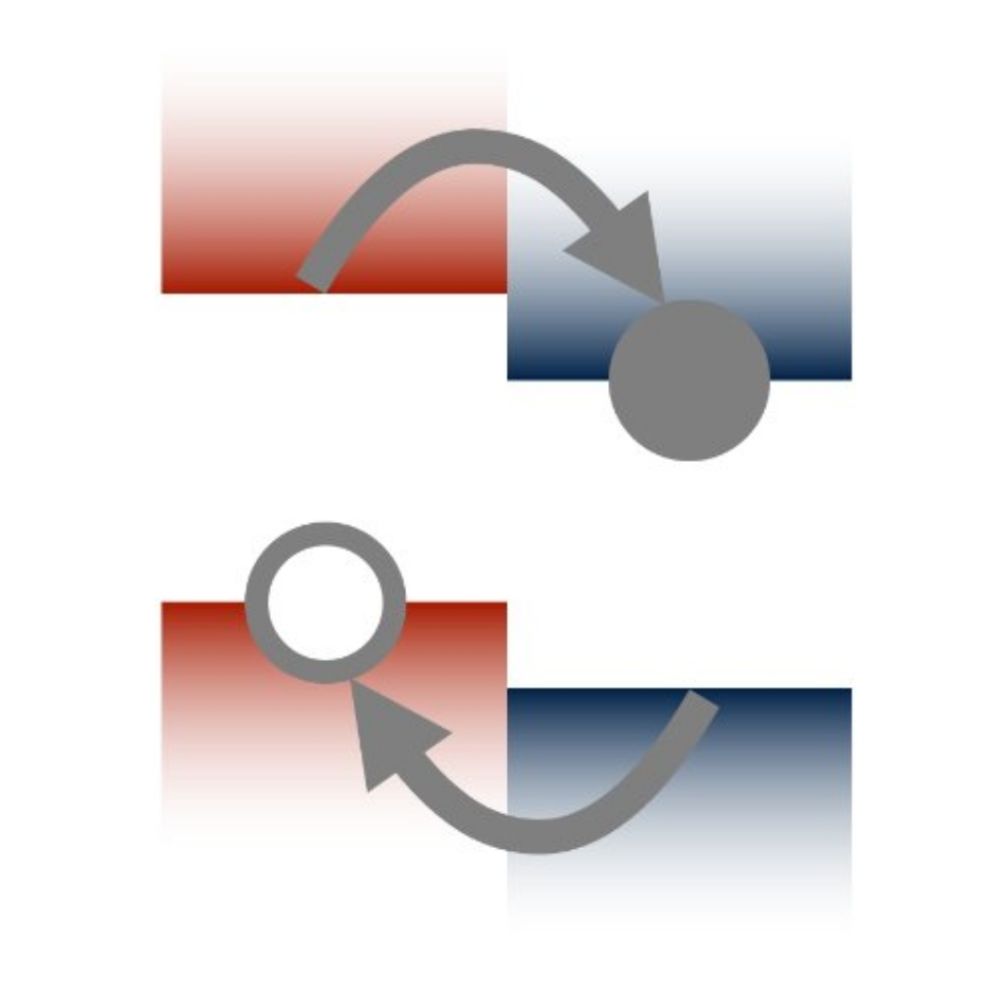
This combination of different measurement techniques allowed us to conclude that O-1 drives the oxygen evolution reaction because it is consumed at a rate commensurate to the reaction, whereas Ir5+ is unreactive.
27.02.2026 15:41
👍 0
🔁 0
💬 0
📌 0
This combination of different measurement techniques allowed us to conclude that O-1 drives the oxygen evolution reaction because it is consumed at a rate commensurate to the reaction, whereas Ir5+ is unreactive.
27.02.2026 15:38
👍 0
🔁 0
💬 0
📌 0
By identifying band-edge unpinning as the trigger for this crossover , we’ve reconciled two previously competing models into a unified framework for photoelectrochemical solar fuel production. Huge thanks to our collaborators at EPFL, LANL, MPI-CEC, and CNR-IOM for making this breakthrough possible!
02.02.2026 16:30
👍 0
🔁 0
💬 0
📌 0
Optical spectroscopic observation of these polarons (local distortions caused by coupling of charge carriers to lattice vibrations) in inorganic semiconductors is a big step towards better understanding how we can improve solar energy conversion efficiencies 🌞.
19.01.2026 15:10
👍 0
🔁 0
💬 0
📌 0

Highlights from our group Christmas party! 🎄✨
Had a blast at our group holiday party last week. It’s always good to recharge and enjoy some festive cheer together. Ready to take on the new year!
Happy Holidays everyone! 🥂
10.12.2025 14:08
👍 0
🔁 0
💬 0
📌 0
Check out this review on Spectroelectochemistry (SEC) Techniques by past and present Durrantites Ben Moss, @caiwu-liang.bsky.social and Reshma Rao together with @ifanstephens.bsky.social!
SEC is invaluable for our group's (photo)catalysis research & this summarises what we've learnt so far!
21.11.2025 14:33
👍 1
🔁 0
💬 0
📌 0

Great to meet so many students at the Graduate Open Day at the Oxford Chemical Research Laboratory last week (Oct 23)😃! We had a wonderful time sharing our research and introducing our group's work. Our group is excited to be moving to Oxford soon, and we can't wait to join this vibrant community!
03.11.2025 09:21
👍 1
🔁 0
💬 0
📌 0

We realise it's been quiet here but we'll try and catch up with sharing recent papers and big group news. For now, we're in peak district for this year's BANDGAP group conference. Stay tuned!
16.09.2025 15:57
👍 4
🔁 0
💬 0
📌 0
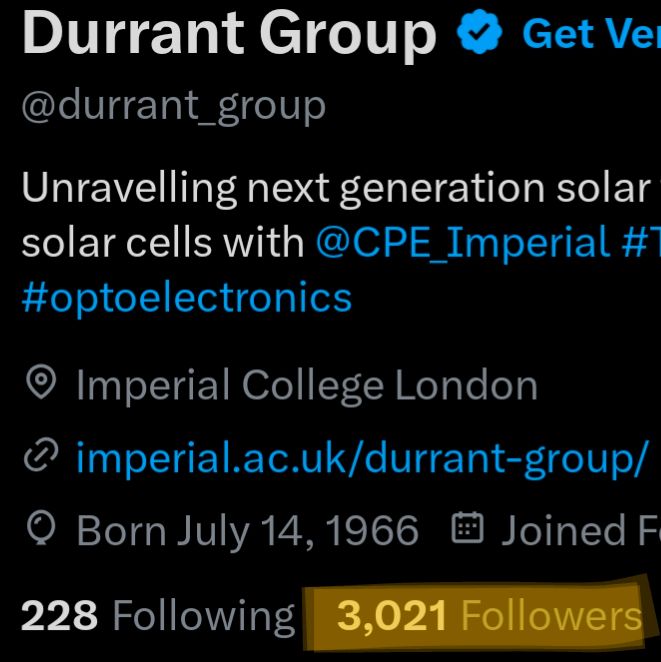
Screenshot of the twitter profile of the durrant group with 3021 followers and the screenshot of the new BSKY account with 100 new followers in the last 3 days.
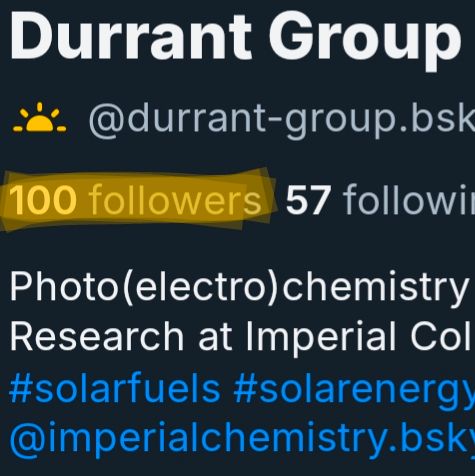
Three days on bluesky and happy to have found a lot of familiar faces already. Let's see if we can make more people move over :)
06.12.2024 14:54
👍 2
🔁 0
💬 1
📌 0
We're loving this! Already saw on your feed. Thanks youuu
03.12.2024 19:36
👍 1
🔁 0
💬 0
📌 0
Has anyone made follower lists of other scientists working in the field yet? Give us a shout to see who else is here!
03.12.2024 18:50
👍 2
🔁 0
💬 1
📌 0
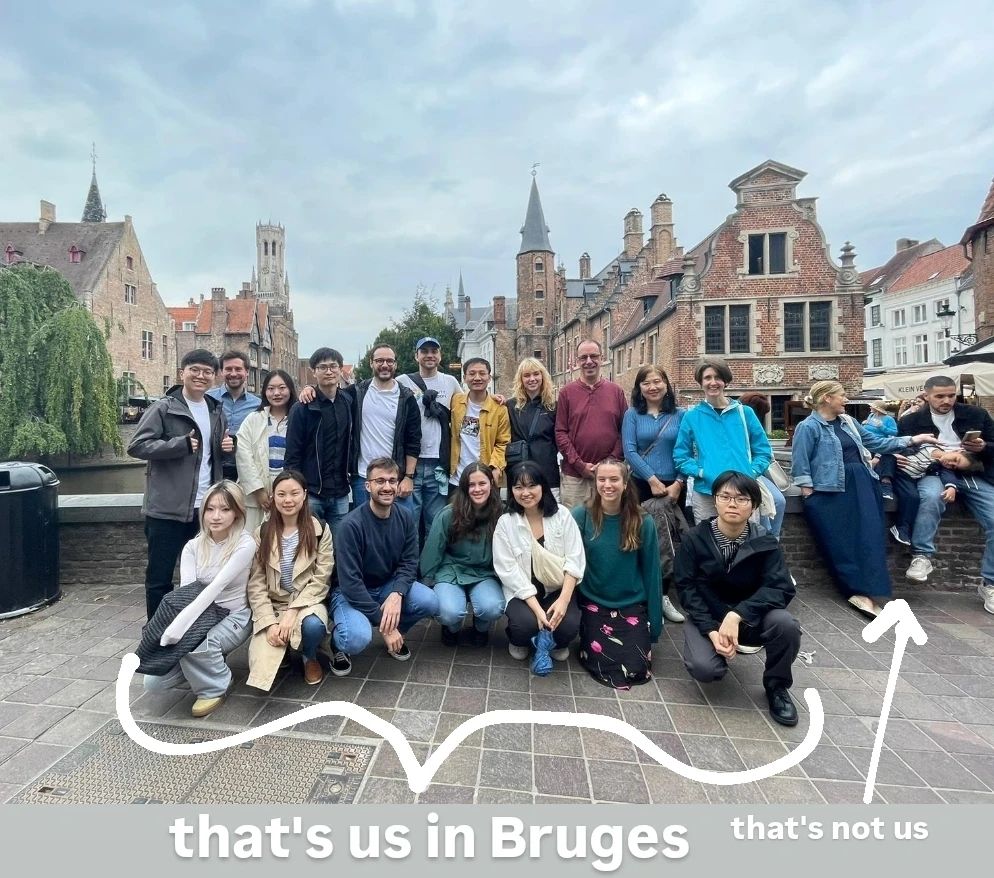
Hello Bluesky, we heard it's nicer on this side of the internet so we came here to share what we're up to. Our research is focused on #solarfuels, #solarenergy, #spectroscopy, #electrochemistry, and #photovoltaics.
Looking forward to connecting with scientists and science enthusiasts here!
03.12.2024 18:46
👍 22
🔁 3
💬 1
📌 0
About time! Let's goooo
03.12.2024 11:02
👍 2
🔁 0
💬 0
📌 0