
Hi everyone.
15.11.2025 13:23
👍 2
🔁 0
💬 0
📌 0
Hi everyone.
Nice. 🙂
Which one?
Wow, can S30 capture this with this much detail?
What do you prefer?
S30 or S50

This celestial image captured by NASA astronaut Don Pettit using a camera with low light and long duration settings pointed out a window on the SpaceX Dragon crew spacecraft shows the Milky Way beyond Earth's horizon crowned by an atmospheric glow. The Large and Small Magellanic Clouds are also distinguishable as the International Space Station orbited 257 miles above the Pacific Ocean.
The Milky Way Beyond Earth's Horizon.🔭
International Space Station

Researchers at Microsoft say they have created so-called topological qubits, which would be exceptionally resistant to errors, but their claim has been met with scepticism.
That's good news.
Yay! The asteroid 2024 YR4 appears to be even more unlikely to hit us. The y-axis is the time of closest approach, and x is when an estimate of its TCA was made. As of 2/20, the asteroid should pass us at 09:00 ±2ish hours, missing Earth (it has to pass us at 14:00 to hit).
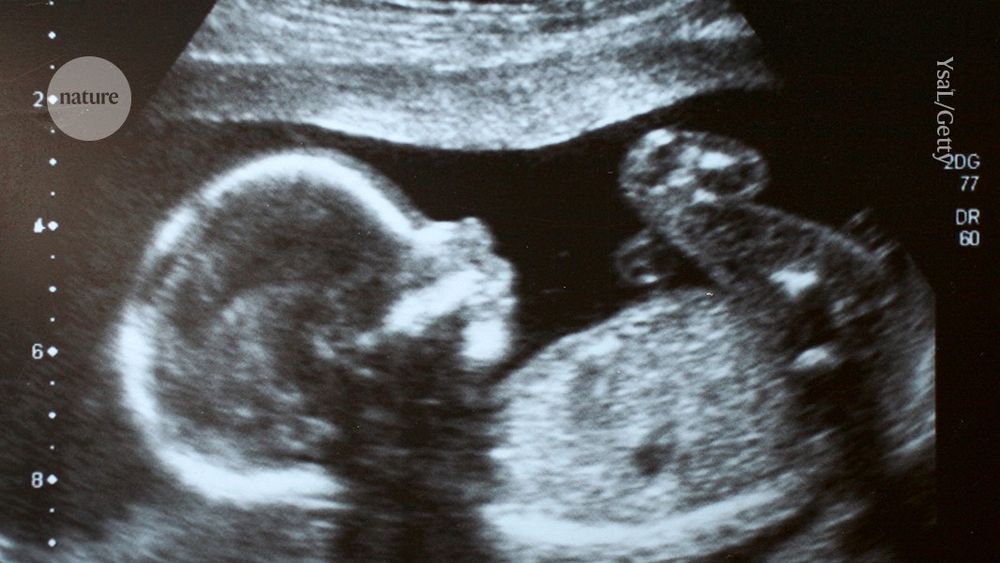
A two-and-a-half-year-old girl shows no signs of a rare genetic disorder, after becoming the first person to be treated for the motor-neuron condition while in the womb.
https://go.nature.com/41a7Zzj
That's not true. The Taurus Molecular Cloud is 140 parsecs away (about 430 light-years), not 140 light-years. So Rho Ophiuchi is indeed the closest star-forming region to Earth.
Can't believe it's been almost two years since the Webb Space Telescope captured this, it feels like it was just yesterday.
Wow, this is a great news.

First pharaoh's tomb found in Egypt since Tutankhamun's. 🧪 www.bbc.co.uk/news/article...

Glaciers in the Chugach Mountains of Alaska. This image, captured by the Copernicus Sentinel-2 mission on 6 October 2017, shows the melting Scott (left), Sheridan (middle) and Childs (right) glaciers feeding lakes and rivers in their forefields.
🌍🛰️ Almost 40% of glaciers in Central Europe were lost between 2000 and 2023.
A new study, using data from various satellite observations -including our CryoSat mission- reveals alarming insights about the declining rate of glaciers.
Read the full study🔗 esa.int/Applications...
Now it has increased to 3.1%
🌌

An UltraFex solar array, one of two cymbal-shaped solar arrays on the Northrop Grumman Cygnus space freighter, is pictured in the foreground as the International Space Station orbited 261 miles above the 214 million-year-old Manicouagan crater in Quebec, Canada.
The Manicouagan Crater from Space.🔭
The Manicouagan Crater Quebec, Canada.
International Space Station
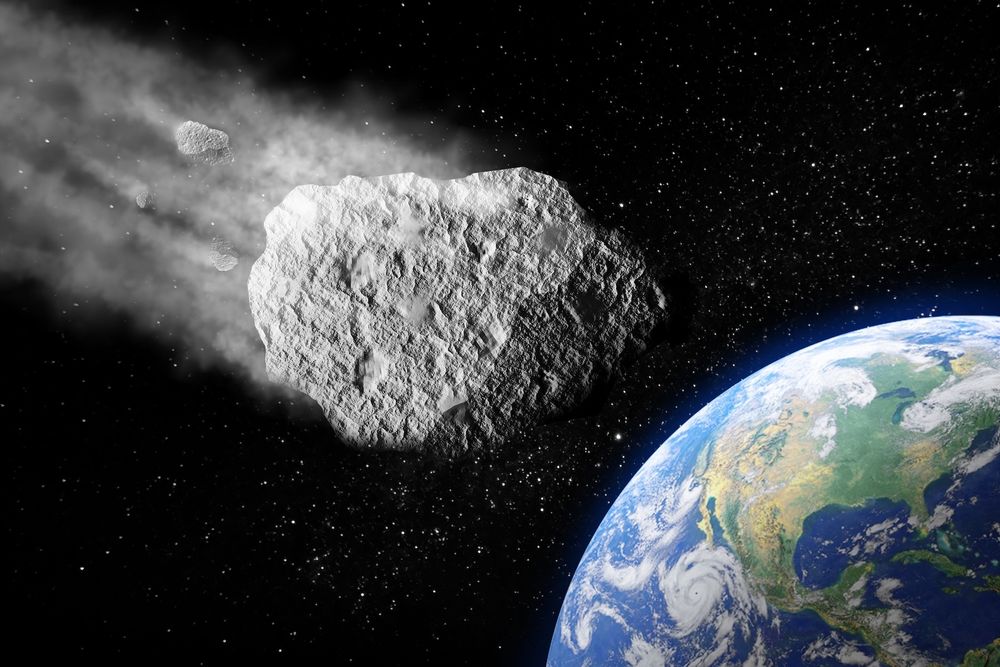
At the moment, mansion-sized Asteroid 2024-YR4 has a one-in-fifty chance of hitting Earth in the next eight years.
Now might be a bad time to reduce spending on Science. Just sayin’.
Next month will see two eclipses:
14th March- Partial Lunar Eclipse.
29th March- Partial Solar Eclipse.
Visible from the UK and the rest of Europe.
🔭 🧪 #astrophotography

Two weeks ago.

Picture of the Earth taken from a large distance.
Happy Pale Blue Dot Day.🔭
Think in 3D.
Yeah, i was thinking the same. Cis-trans stereoisomers.
There are also trans and cis stereoisomers in chemistry.
Sending you the love David. Be safe and healthy.
150 centimetres.

Picture of the Tarantula Nebula.
New composite image of the Tarantula Nebula from Hubble Space Telescope, Chandra X-Ray Observatory and ALMA Radio Telescope.🔭