Warm thank you to the editors @drclaraportela.bsky.social , Andrea Charron and @mirkosossai.bsky.social for making it happen and stirring the process expertly
09.12.2025 10:29
👍 2
🔁 0
💬 0
📌 0
Publication alert 🚨 : I'm glad to see that the Elgar Encyclopedia of International Sanctions is now available.
I have been entrusted with the contribution on the European Union as a Sanctions Taker 🇪🇺.
➡️European Union doi.org/10.4337/9781...
09.12.2025 10:24
👍 2
🔁 0
💬 1
📌 0
This is the crowing achievement of almost 5 years of research on history of EU sanctions under the supervision of Jeff Checkel and @stephofmann.bsky.social. A massive thank you as well to the two other jury members @drclaraportela.bsky.social and Niklas Bremberg.
19.09.2025 13:12
👍 3
🔁 0
💬 0
📌 0


I had the privilege this week of being awarded the title of Doctor of Political and Social Sciences from the @eui-eu.bsky.social after successfully defending my thesis on the EU sanctions policy.
19.09.2025 13:12
👍 9
🔁 1
💬 1
📌 1
Episode 03 | April 2025 | Renewed EU-US Convergence? | Jan Lepeu on the History of EU Sanctions
This Month in EU Sanctions · Episode
I had the pleasure to appear in Jan Dunin-Wasowicz's podcast to discuss the past, present, and future of EU sanctions. Among other things: how the Russia sanctions differ from previous sanctions, where do EU sanctions come from, and how they have evolved over time.
open.spotify.com/episode/681O...
12.05.2025 16:36
👍 4
🔁 2
💬 1
📌 0
Episode 03 | April 2025 | Renewed EU-US Convergence? | Jan Lepeu on the History of EU Sanctions
This Month in EU Sanctions · Episode
I had the pleasure to appear in Jan Dunin-Wasowicz's podcast to discuss the past, present, and future of EU sanctions. Among other things: how the Russia sanctions differ from previous sanctions, where do EU sanctions come from, and how they have evolved over time.
open.spotify.com/episode/681O...
12.05.2025 16:36
👍 4
🔁 2
💬 1
📌 0
How to organize European security? In this International Politics forum, we discuss European actors' choices between orchestrating existing and new institutional layers (compartmentalized multilateralism) or escaping consensus-making with new&old layers @eui-sps.bsky.social @eui-schuman.bsky.social
22.04.2025 18:03
👍 12
🔁 7
💬 1
📌 1
Big thank you to @stephofmann.bsky.social for organising the Forum, as well as to the editors of International Politics and the two very helpful anonymous reviewers.
Keep an eye out for the Forum, lots of very interesting contributions in there on the futur of European Security 👀
07.01.2025 18:11
👍 1
🔁 0
💬 0
📌 0
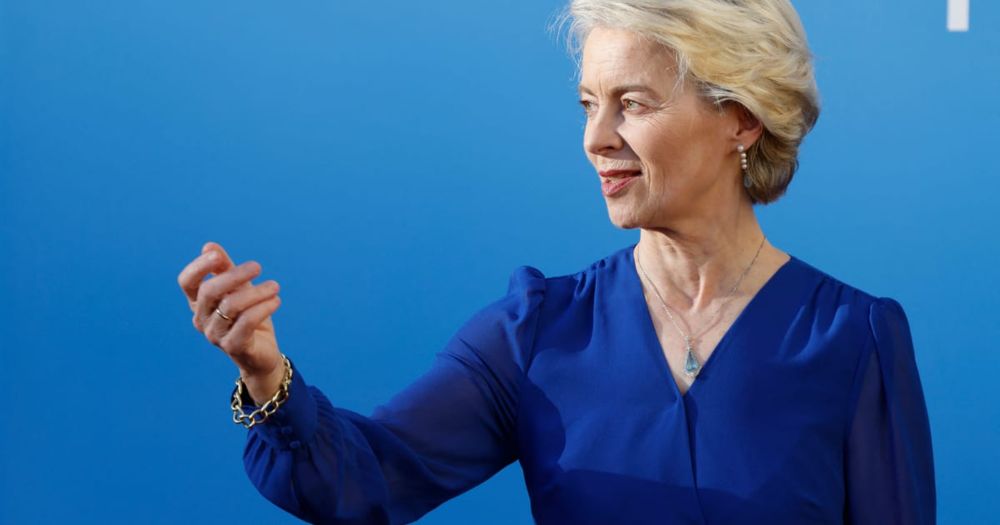
EU capitals fume at ‘Queen’ von der Leyen
Diplomats accuse European Commission president of overreach amid a furor over her trip to Israel.
It's all very 'inside baseball' on how 🇪🇺 foreign policy is done. But ultimately it's about power, about who gets to organise Europe's foreign and security policy and to what aim.
www.politico.eu/article/eu-g...
07.01.2025 18:11
👍 0
🔁 0
💬 1
📌 0
Big Q moving forward is wether it was :
(i) an exceptional reaction to an exceptional challenge
(ii) the latest iteration of a double trend of the de-targetization of EU sanctions and the increasing role of the Commission in EU foreign policy.
07.01.2025 18:11
👍 0
🔁 0
💬 1
📌 0
Or more bluntly put: the post Feb2022 de-targetization of EU's 🇷🇺 sanctions empowered the European Commission and its presidency, at the expense of the EEAS, the Council, and thus the Member States. Quite the departure from both existing practices and the spirit of the 🇪🇺Treaties.
07.01.2025 18:11
👍 0
🔁 0
💬 1
📌 0
The gist of my argument is that the 🇪🇺 turned this time to much more comprehensive forms of sanctioning (vs the very targeted sanctions we see in most EU sanctions regimes), and in doing so it changed the 🇪🇺sanctions-making processes, and crucially who's in control.
07.01.2025 18:11
👍 0
🔁 0
💬 1
📌 0
The Forum investigates how the full-scale invasion of Ukraine changed the 'who', 'what' and 'in what way' of the European security architecture. My contribution looks more specifically at how the invasion of 🇺🇦 affected sanctions-making processes inside the 🇪🇺.
07.01.2025 18:11
👍 0
🔁 0
💬 1
📌 0
Thanks, would love to be included
13.12.2024 23:31
👍 1
🔁 0
💬 1
📌 0
One of the reason we spend little on defense compare to the rest of the world is that whereas US/RUS/CHN defense spending is spent in the country (and partly on blue collar jobs), European 💶 often goes abroad.
Thus, most EU Defence spending is targeted towards collaborative projects across MS.
10.12.2024 16:41
👍 0
🔁 0
💬 1
📌 0
I think an important argument for EU spending on defense a bit overlooked here is: consolidate and integrate the European Defense Industrial Base (DIB).
Rightly or wrongly, EU defense spending is thought to try to tackle the fragmentation and bad inventive structure of European defense spending.
10.12.2024 16:41
👍 0
🔁 0
💬 1
📌 0
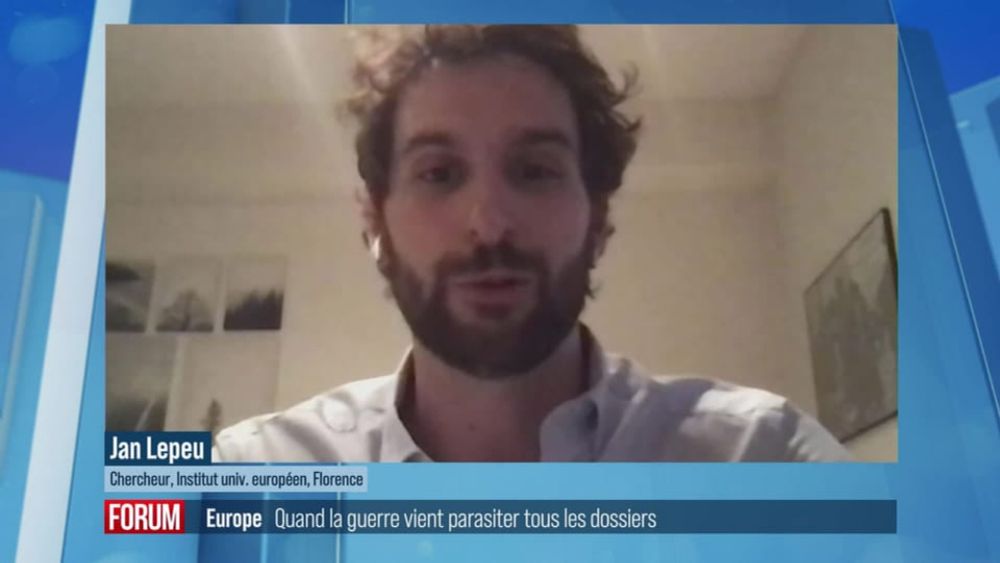
Forum - Sommet de l'Union européenne sur l'Ukraine: interview de Yann Lepeu - Play RTS
Interview de Yann Lepeu, chercheur de l'Institut universitaire européen de Florence.
Mon intervention hier sur la RTS au sujet du Conseil européen et de la possibilité d’utiliser les revenus des avoirs gelés de la banque centrale russe pour financer l’aide militaire à l’Ukraine.
Sommet de l'Union européenne sur l'Ukraine: interview de Yann Lepeu, Forum - www.rts.ch/play/tv/redi...
22.03.2024 06:10
👍 2
🔁 0
💬 0
📌 0