
www.science.org/doi/full/10....
06.02.2026 14:16
👍 4
🔁 4
💬 0
📌 0
@aizepellon
#MSCA Postdoctoral Fellow at CIC bioGUNE (Bilbao, Spain) || Host-microbe interactions || Fungal Immunology || Innate immune memory || Trained immunity || Immunometabolism || Microbiota #SinCienciaNoHayFuturo #MycoSky https://linktr.ee/aizepellonrodriguez
Thanks Jorge! Espero que te parezca interesante 😊

#bioGUNE_Research | 🦠 An international team including #CICbioGUNE @brtaeus.bsky.social shows how oral cells reprogram their metabolism in response to Candida albicans
Led by @aizepellon.bsky.social, the study reveals new metabolic pathways with therapeutic potential
🔗 ow.ly/hMwR50Y9eCq

If you’re interested in host–microbe interactions, immunometabolism, mucosal biology, or fungal pathogenesis, I hope you’ll check out the full article. 👇
@science.org
www.science.org/doi/10.1126/...
Thanks to all my colleagues and collaborators for this truly multidisciplinary effort.
@kingsdentistry.bsky.social @cicbiogune.bsky.social @gstt-nhs.bsky.social
Overall, our work shows that Candida doesn’t just trigger immune pathways — it rewires epithelial metabolism to create an environment that benefits the fungus and weakens host defenses.
Blocking GOT1 with a specific inhibitor reduced epithelial damage and inflammatory cytokine release.
This means the pathway is not just a marker — it’s functionally relevant.
Targeting host metabolism may offer new ways to manage mucosal fungal infections.
We confirmed that GOT1 and pyruvate carboxylase are upregulated during infection, and TCA metabolites (citrate, malate, α-ketoglutarate, etc.) decrease.
This aligns perfectly with the alternative pyruvate shunt predicted by our modelling.
In mice, reducing glycolysis with 2-deoxyglucose actually reduced fungal burden and weight loss, whereas adding extra glucose made disease worse.
This contrasts with macrophages and systemic candidiasis, showing that oral epithelial infections follow different metabolic rules.
One of the most interesting outcomes: Sugar availability dramatically changes infection outcomes.
High glucose → worse epithelial damage
Alternative hexoses (galactose/fructose) → impaired cytokine production
❗Metabolism and the nutritional environment really matter.
Our team used a multi-disciplinary approach combining:
• transcriptomics
• NMR-based metabolomics
• genome scale metabolic modelling
• epithelial infection assays
• a mouse model of oropharyngeal candidiasis
• human patient biopsies
This gave us a full view of the epithelial metabolic shift.
Why is this important? 🤔
Because this shunt helps determine the fate of infected cells, influencing:
• their ability to mount an immune response
• how much damage the fungus can cause
• the overall inflammatory landscape of the mucosa
Even more striking, we identified a previously unrecognized metabolic route activated during infection: a GOT1-dependent TCA cycle shunt.
This pathway diverts carbon away from the normal TCA cycle, producing aspartate and ammonia instead.
Our key finding: C. albicans forces epithelial cells to shift into aerobic glycolysis — a fast but inefficient way of generating energy, similar to the “Warburg effect" observed in cancer cells.
This happens early in infection and shapes how cells survive and respond.
Most people carry C. albicans in their mouth without issues. But when immunity weakens or the oral niche is altered, this fungus can overgrow and cause oral candidiasis.
Despite how common it is, we still lack a full picture of how epithelial cells react metabolically when infected.
We just published a new paper in Science Advances, where we uncover how #Candida albicans reprograms the metabolism of oral epithelial cells during infection.
As first and corresponding author, I’m excited to share what we found — and why it matters.
#Skytorial #Immunometabolism #MedMycoSky

Our paper on the mysterious Devonian organism Prototaxites has now finally been published! See the paper here (www.science.org/doi/10.1126/...) and our explainer thread below!
Prototaxites reconstruction by Matt Humpage

#bioGUNE_Research |🧬 An international study led by
@arkaitzcarracedo.bsky.social Lab #CICbioGUNE @brtaeus.bsky.social, published in @nature.com, shows how polyamines help cells make decisions and protect proteins
@contracancerinv.bsky.social @ciberisciii.bsky.social
🔗 ow.ly/xkuY50XWKRV

In our latest paper, just published in @natcomms.nature.com we show that soil conditions, landscape structure & land-use change shape global soil pathogenic fungal diversity. Landscape complexity and crops increase diversity, while grass and tree cover reduce it www.nature.com/articles/s41...
#bioGUNE_Outreach | 🎙️ Microbiota y sistema inmune
➡️ ¿Pueden nuestras defensas más básicas “recordar” infecciones y ayudarnos a combatir la resistencia a los antibióticos? Descúbrelo con @aizepellon.bsky.social #CICbioGUNE @brtaeus.bsky.social
#BioEnredados
🔗 cicbiogune.es/outreach/pod...
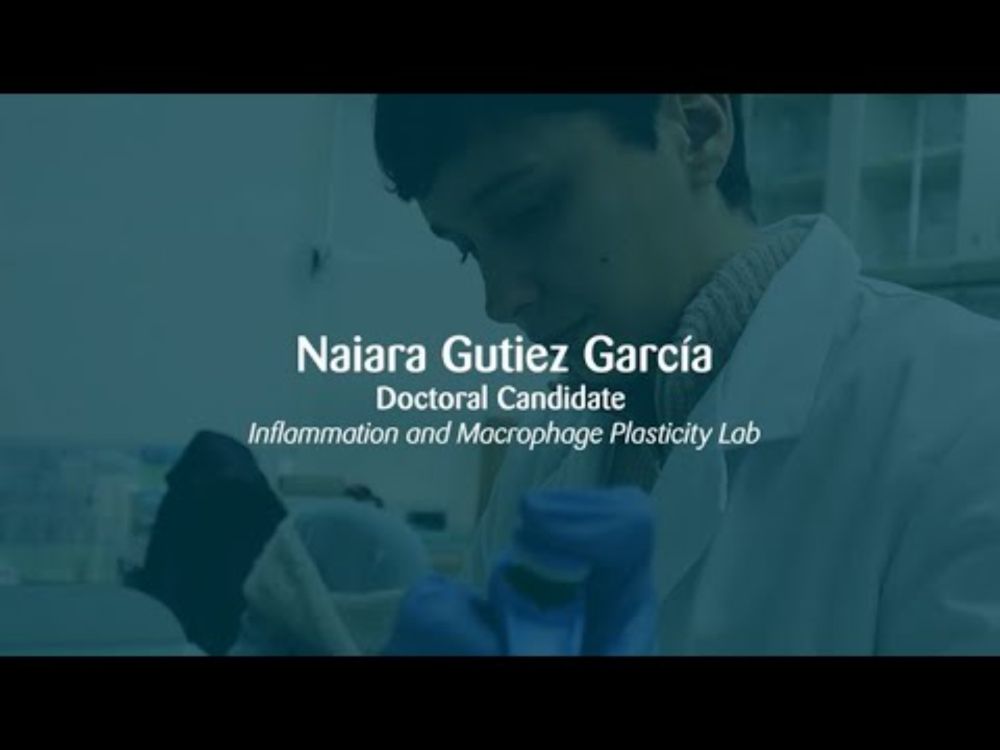
#bioGUNE_EmpoweringWomen | 🚺 Meet Naiara Gutiez
This #WomenInBiosciences episode features her research on how the gut microbiota influences colorectal cancer at @anguitalab.bsky.social
💡 Discover her work towards new cancer prevention strategies!
🎥 youtu.be/VPVGXQ-YuBU?...
Kudos to all co-authors and collaborators! Especially to Sam Pasco and Juan Anguita for leading this project.
@cicbiogune.bsky.social @neikerbrta.bsky.social
🧵6/6

🔚 Bottom line:
SAS induces a context-dependent innate immune memory that enhances protection but is reversible.
This opens doors to smarter vaccine design using adjuvants as immune trainers.
Read the full paper 👉 doi.org/10.1111/imm....
#Vaccines #TrainedImmunity
🧵5/6
📊 Bone marrow single-cell transcriptomic (scRNAseq) analyses revealed:
-Upregulation of immune genes (e.g. Elane, Gzmb, Fc receptors)
-Downregulation of epigenetic regulators and metabolic genes
→ A shift toward immune activation and metabolic rewiring.
#RNAseq #Immunometabolism
🧵4/6
🧬 SAS-trained mice showed:
-Reduced proinflammatory TNF production by macrophages
-Increased circulating monocytes and altered HSPC population dynamics
-Enhanced neutrophil antimicrobial activity
This suggests functional reprogramming of innate cells.
#Macrophages #Neutrophils
🧵3/6
💉 We used the Sigma Adjuvant System (SAS), which contains MPLA (TLR4 agonist) and TDCM (MINCLE agonist).
We treated mice and tracked long-term changes in bone marrow hematopoietic stem and progenitor cells (HSPCs).
Result: SAS shifted HSPC populations toward myeloid-biased progenitors.
🧵2/6
🚨 New paper alert!
Our team at CIC bioGUNE has just published a new study in "Immunology" exploring how adjuvants can induce innate immune memory and reshape hematopoiesis.
Let’s dive in 👇
#InnateMemory #TrainedImmunity #Immunology
@anguitalab.bsky.social @cicbiogune.bsky.social
🧵1/6

Stimulating immune cells in vitro is a common experimental lab model. We profiled 150K blood immune cells treated with 11 different stimuli to compare the effects. The data are freely available for researchers. See the preprint for our findings and to access the data 🧪 doi.org/10.1101/2025...
Very excited to announce launch of brand new journal npj Fungal Science! As EIC I'm joined by a fantastic board of academic editors from across the mycology field. You can learn more about the journal scope and submit your work here: www.nature.com/npjfungalsci/

Spain is on fire. Italy, Greece, Portugal — all burning. We have had summer fires before, but never like this. This is climate breakdown in real time. It is killing people, animals, and our future. DAMN the climate deniers. DAMN those who know and could do but do NOTHING www.bbc.com/news/article...
