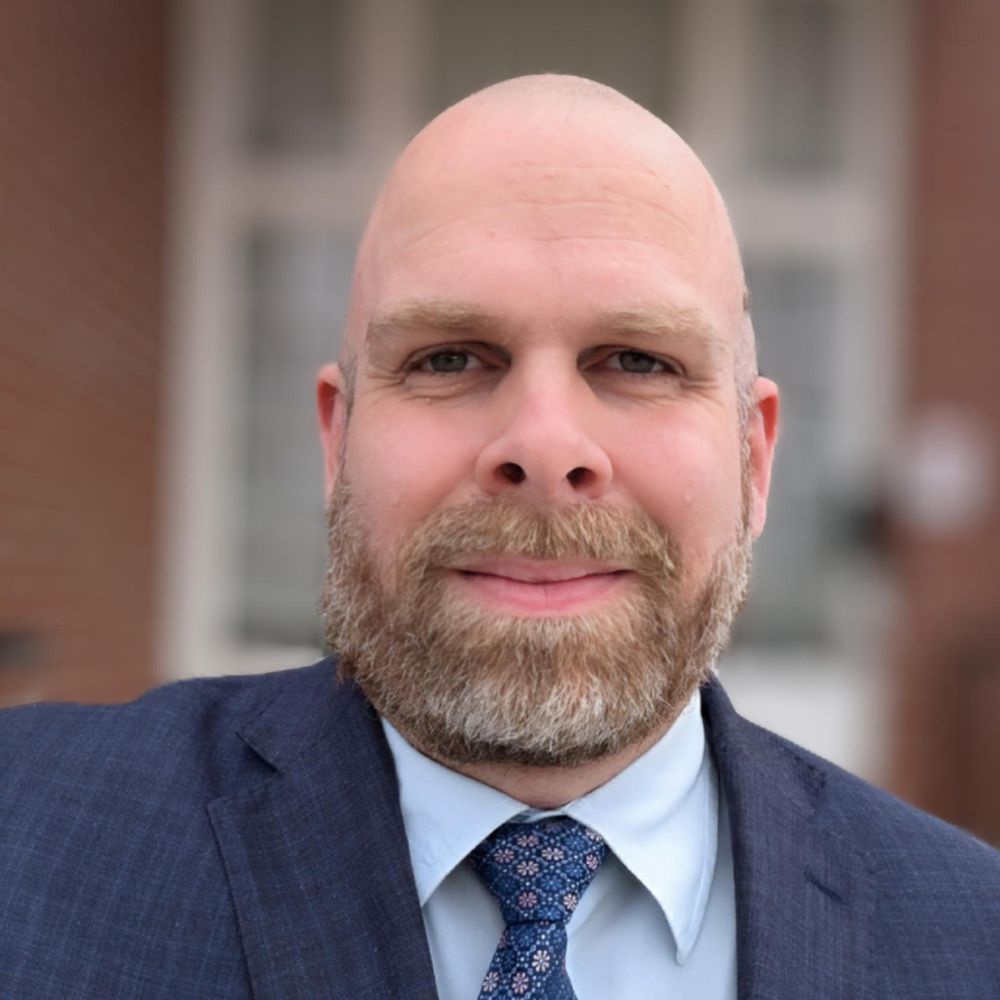
Nothing quite like going through old conference presentation slides and pulling material. "Who was this bright young historian? Whatever happened to him?"*
*Committee work, among other things.
06.03.2026 12:07
👍 13
🔁 0
💬 0
📌 0
Yesterday I got to incorporate my dissertation research into a classroom lecture in a meaningful way for...the first time? Ever?
It was pretty great.
06.03.2026 12:00
👍 345
🔁 13
💬 14
📌 0
NC primaries I'm watching tonight:
Congressionals in NC-04, NC-11
Does Phil Berger hold onto his state Senate seat?
Does Rodney Pierce fend off Michael Wray?
Who emerges in Cumberland County Commission At-Large and District 1?
Does the incumbent not yet elected sheriff hold on in Cumberland?
03.03.2026 23:34
👍 0
🔁 1
💬 1
📌 0
Do you like Caribbean pirates? Everyone does (myself included), but most people don't really know why. Why have we come to love characterizations of individuals who were so violent and brutal?
👇🏻👇🏻👇🏻👇🏻👇🏻👇🏻👇🏻
02.03.2026 19:20
👍 18
🔁 6
💬 2
📌 1
It's made way worse by shady PACs but yes it's gotten really bad.
02.03.2026 18:13
👍 3
🔁 0
💬 0
📌 0
(enslaved) foremen would blow the whistle sometimes and offer themselves to the absentee owners as a replacement manager, but no cases of the owner accepting THAT offer have survived.
01.03.2026 16:25
👍 3
🔁 0
💬 0
📌 0
The prime point to reach to "make it" was work as a manager, who would embezzle labor from the absentee owner (ie, send the enslaved workers to /your/ land, at least some of the time).
One way we know about this manueveur is because...
01.03.2026 16:25
👍 3
🔁 0
💬 1
📌 0
Sarah lays out in this video how the "agricultural ladder" worked in the US midwest in the early 1900s. It's been interesting comparing it with colonial Haiti, where:
01.03.2026 16:25
👍 5
🔁 2
💬 1
📌 0
That's my vote as well, as I'm constantly flipping between two copies of the pdf to look at the notes.
28.02.2026 18:05
👍 0
🔁 0
💬 1
📌 0
University presses should pick:
Either only giving reviewers the pdf OR using endnotes instead of footnotes.
Not both.
28.02.2026 17:54
👍 4
🔁 0
💬 1
📌 0

UNC-Chapel Hill scraps secret recording policy in surprise reversal
Chancellor Lee Roberts announced Friday that the university is reversing course.
Big news out of Chapel Hill:
"Part of the reason to scrap it, in addition to the fact that it’s clearly created a lot of disquiet…is that [since] the original incident…I have not heard of a single instance…in which we debated surreptitious recording and decided to do it. It just hasn’t come up."
27.02.2026 22:00
👍 5
🔁 1
💬 0
📌 0

That Won't Work, Bro
Announcing my new ed tech consultancy.
Maybe I shouldn't be, but I'm surprised people take this Alpha School thing at all seriously. Does no one remember Rocketship or AltSchool or the other attempts at this digitally automated schooling? Time to re-up this from the AltSchool days. www.insidehighered.com/blogs/just-v...
27.02.2026 13:17
👍 79
🔁 20
💬 8
📌 6
Thanks for covering this! Just a quick note: the part about "clearly unrelated" was removed in the final version of the policy ("Attachment B"). That part now reads as follows:
"Teaching content that lacks pedagogical connection to the course, discipline, or subject matter."
26.02.2026 23:42
👍 1
🔁 0
💬 1
📌 0
I don't disagree on the rise of a culture of faculty surveillance (especially at/against Chapel Hill). I do think that makes it even more important to have a positive statement affirming the rights and responsibilities that seem obvious to us as faculty.
26.02.2026 21:14
👍 1
🔁 0
💬 0
📌 0
ps. with this more detailed definition, there IS one phrase that is now included in the UNC Code and Policy Manual where it wasn't before:
"shared governance."
26.02.2026 21:01
👍 1
🔁 0
💬 0
📌 0
While there ARE bona fide attacks on academic freedom, I see the more-detailed definition that the Board of Governors adopted today more as an occasion for campus & departmental conversations about the importance and practice of free inquiry, inside and outside of the classroom. (8/8)
26.02.2026 20:46
👍 0
🔁 0
💬 1
📌 1
Note that "political activity" is laid out in pre-existing UNC policy, in a way that broadly aligns with the protections and responsibilities the AAUP says faculty should have for "extramural speech," including as citizens in a society. (7/8)
26.02.2026 20:46
👍 0
🔁 0
💬 1
📌 0

Screenshot, including strike throughs of text.
The phrase "The Parameters of Academic Freedom Do Not Include" has been modified to be all lower case instead of title case.
The sentence "Teaching content clearly unrelated to the course description or unrelated to the discipline or subject matter" has been replaced with "Teaching content that lacks pedagogical connection to the course, discipline, or subject matter."
The sentence "Using university resources for political or ideological advocacy in violation of university policy" is now "Using university resources for political activity in violation of university policy."
The sentence "Refusing to comply with institutional policies or accreditation standards to which the university is subject" has been modified to remove "accreditation standards."
And this is where good-faith engagement by elected faculty representatives and leaders really did make a difference across the past month. I'm glad we can use a fuller range of examples in class and that the prohibition on "ideological advocacy" (a term undefined in UNC code or NC law) was dropped.
26.02.2026 20:46
👍 0
🔁 0
💬 2
📌 0

Screenshot of the AAUP's 1940 statement on academic freedom that reads as follows: "Academic Freedom
1. Teachers are entitled to full freedom in research and in the publication of the results, subject to the adequate performance of their other academic duties; but research for pecuniary return should be based upon an understanding with the authorities of the institution.
2. Teachers are entitled to freedom in the classroom in discussing their subject, but they should be careful not to introduce into their teaching controversial matter which has no relation to their subject. Limitations of academic freedom because of religious or other aims of the institution should be clearly stated in writing at the time of the appointment.
3. College and university teachers are citizens, members of a learned profession, and officers of an educational institution. When they speak or write as citizens, they should be free from institutional censorship or discipline, but their special position in the community imposes special obligations. As scholars and educational officers, they should remember that the public may judge their profession and their institution by their utterances. Hence, they should at all times be accurate, should exercise appropriate restraint, should show respect for the opinions of others, and should make every effort to indicate that they are not speaking for the institution."
The phrase "but they should be careful not to introduce into their teaching controversial matter which has no relation to their subject" is highlighted in the screenshot.
As Ryan notes in his article, UNC's definition includes many of the same protections found in other descriptions of academic freedom, along with some parameters.
NB: other definitions, including the AAUP's 1940 statement, also include parameters. The question then becomes where to draw the line.
26.02.2026 20:46
👍 0
🔁 0
💬 1
📌 0
Here's what I see as the biggest benefit of a more detailed definition of academic freedom:
As a practical guide for training students, new faculty, & admin. Of course faculty can teach, research, publish, even on "controversial topics." Students can disagree, but still have to do the work.
26.02.2026 20:46
👍 0
🔁 0
💬 1
📌 0
First, this isn't an endorsement of the full text of the expanded definition, and definitely not an endorsement of every decision made across the UNC System.
Second, this is just me in Feb 2026, not my university, the UNC Faculty Assembly, or any other group/organization.
With that, let's dig in.
26.02.2026 20:46
👍 0
🔁 0
💬 1
📌 0
Some thoughts on academic freedom, and what just happened in the UNC System. 🧵 (1/8)
26.02.2026 20:46
👍 3
🔁 1
💬 1
📌 0
FWIW using Einstein would violate my university's acceptable use policy because it would be sharing PID and passwords with outside parties and allowing unauthorized access to the university network
www.vt.edu/acceptable-u...
23.02.2026 19:48
👍 118
🔁 32
💬 3
📌 2
Thanks, Jake. We're doing a fair amount of thinking along these lines in the UNC System so it's been on my mind.
23.02.2026 20:16
👍 1
🔁 0
💬 0
📌 0
Yes. Having more people learn in depth and breadth and engage in free inquiry, civil discourse, and dialectic thinking has tremendous benefit for all of us.
23.02.2026 19:46
👍 13
🔁 3
💬 1
📌 0
One problem with using ChatGPT for brainstorming is it takes students down the most well-worn paths when part of the writing process should be discovery.
23.02.2026 09:32
👍 5
🔁 0
💬 0
📌 0
Ballerina Farm's Raw Milk Fail
YouTube video by Farm to Taber
Ballerina Farm's back in the news, for raw milk problems this time.
The reporting has been a little sparse on details with exactly what happened. So since I have some professional food safety experience, I went through the reporting to fill in some of the blanks.
youtu.be/mdOyeNCkC0I
22.02.2026 15:12
👍 173
🔁 40
💬 6
📌 4