

Graphic with a 10 surrounded by fireworks and the Open Targets Platform logo
#OnThisDay 10 years ago, we launched the Open Targets Platform! 🎂 🧬🖥️
08.12.2025 10:21
👍 11
🔁 3
💬 1
📌 2
Graphic with a 10 surrounded by fireworks and the Open Targets Platform logo
#OnThisDay 10 years ago, we launched the Open Targets Platform! 🎂 🧬🖥️

Now published! Our paper on:
(1) Accurate sequencing of sperm at scale
(2) Positive selection of spermatogenesis driver mutations across the exome
(3) Offspring disease risks from male reproductive aging
[1/n]
www.nature.com/articles/s41...
Happy to share that this work together with @opentargets.org is now out at Nature Communications.
Shamelessly adapted from this www.reddit.com/r/Programmer... with nano banana


Scientists have uncovered hidden genetic drivers of conditions like IBD by stimulating immune cells. 🔬
The findings have resulted in a dataset called MacroMap, which offers insight into why some people are vulnerable to certain conditions.
sanger.ac.uk/news_item/ac...
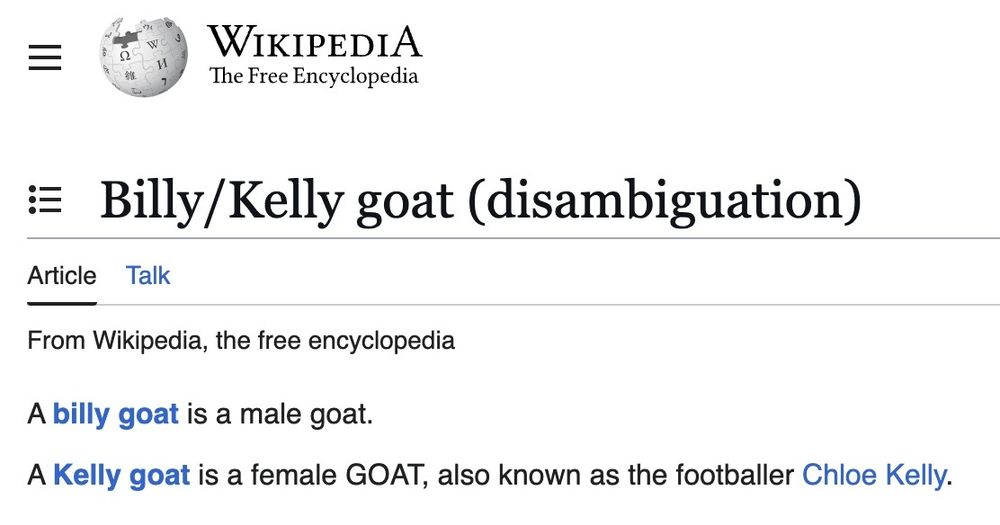
KELLYGOAT
expect going in! More in prev paper if you're curious:
medrxiv.org/content/10.1101/2023.09.06.23295056v3.full-text
a bit older than the disease arm (as you typically get screened for things later in life) and potentially had a family history of bowel cancer. The uninflamed CDs (but had history of inflammation in biopsied region) were very similar to the healthies, transcriptomically at least, which I didn't
Thanks! And fairly healthy! The controls were getting an endoscopy for innocuous reasons (e.g. anaemia surveillance or bowel cancer screens) but excluded if they had a history of cancer, were on antibiotics or any immune modulating medication. The unhealthiest things about them were that they skewed
Guilty of this trope and agree with the point!
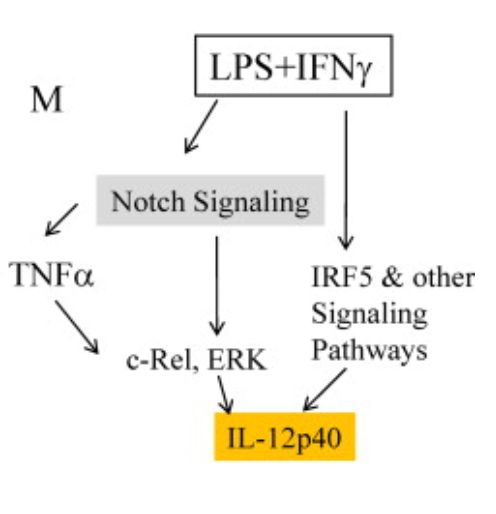
It seems like it may act via c-Rel/ERK which leads to expression of IL12/IL23. In all honesty we've had a fair few cool findings (and some fires to put out!) so I haven't had the time to flesh this out as much as it deserves - hoping we can whilst under review!
www.sciencedirect.com/science/arti...
Thanks Luke! Hopefully MAML2 is a familiar sight as it's a locus from Jostins, Ripke et al. 2012 and although our cis-eQTL is a novel coloc, it has colocalised with trans pQTLs for IL12A and IL12B (targeted by ustekinumab afaik). Really cool locus + coloc!
platform.opentargets.org/credible-set...
…samples or assisting with analysis. Also the folk outside those groups who contributed! Thank you!! A huge thanks to our funders @opentargets.org, @crohnscolitisfdn.bsky.social & @wellcometrust.bsky.social trust. And finally thank you to the individuals who donated samples to make this all possible
I’ve loved working on this project (IBDverse) and these results wouldn’t have been possible without co-first author
@bradleyomics.bsky.social
the two supervisors
@carlanderson.bsky.social
and Tim Raine, as well as everyone in their teams, especially those who played a direct role processing…

Sadly this thread is long enough without me diving into genetics too but fortunately co-first author and eQTL superstar
@bradleyomics.bsky.social
has made an excellent thread covering our thoughts as to WHY we think sc-eQTL approaches are better-suited to GWAS:
bsky.app/profile/brad...

Whilst we’re incredibly excited about our biological findings, what excites us most is that this tissue-based, single-cell approach could be applied to other complex diseases to gain similar insights and unlock the hidden potential of GWAS!
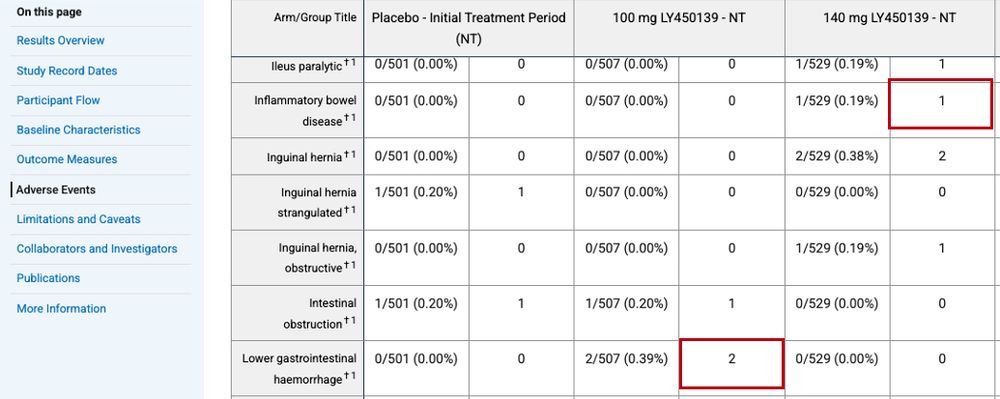
…past phase 3 clinical trials in-part due to the gastrointestinal symptoms that even included IBD in one individual! Our results could’ve identified these symptoms arising without the expensive clinical trials - human genetics can identify novel targets AND safety issues!
…are both existing targets for gamma secretase inhibitors (Alzheimer’s) and mitochondrial complex I inhibitors/metformin (diabetes), respectively. But both drugs have had IBD-like side effects reported (diarrhoea, weight loss, abdominal discomfort/bleeding). GSIs never made it…
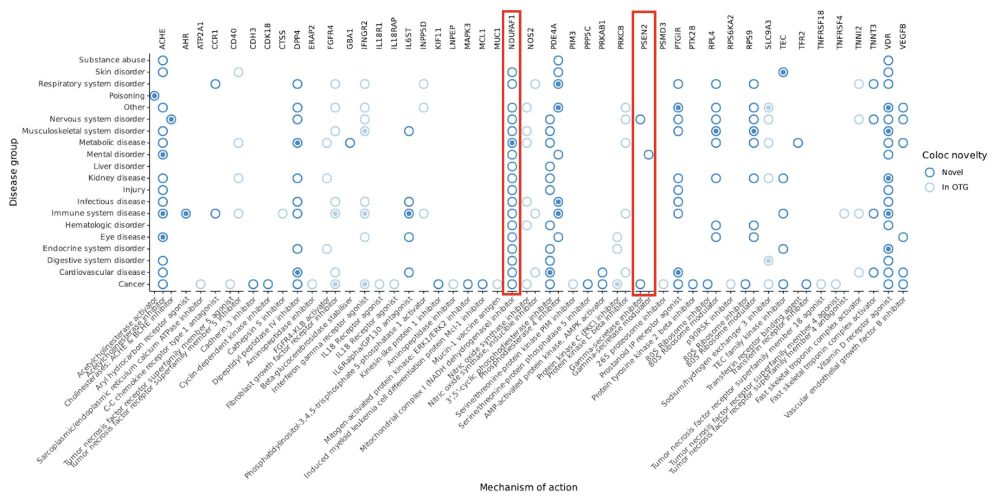
Last but by no means least, we chose to take a reversed approach and check which of our colocalised IBD genes were ALREADY drug targets for non-IBD diseases. With a little help from
@chembl.bsky.social
and
@opentargets.org
, we noticed two particularly interesting cases: PSEN2 and NDUFAF1…
…in and/or explained the most variance in epithelial cell types, offering a possible avenue to therapeutics which don’t target the immune system (unlike most IBD drugs). But the role of Wnt signalling in cancer necessitates a careful approach to avoid harmful side effects.
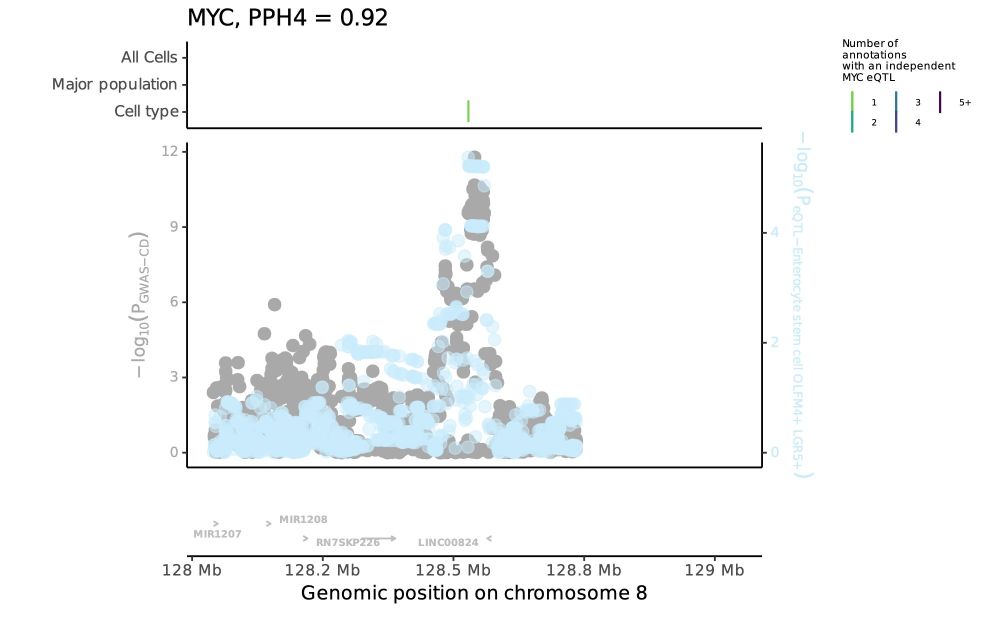
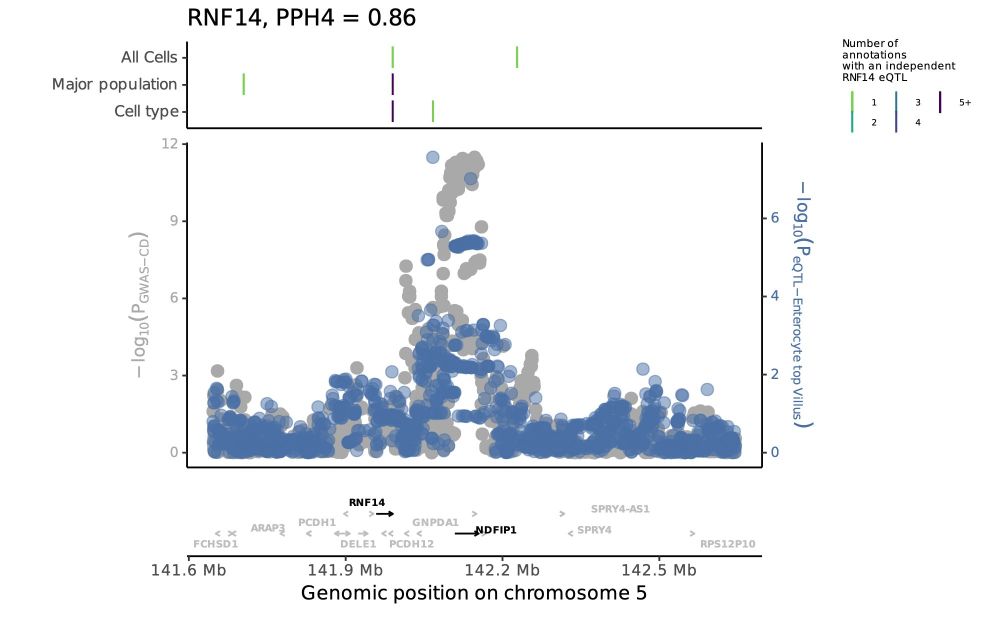
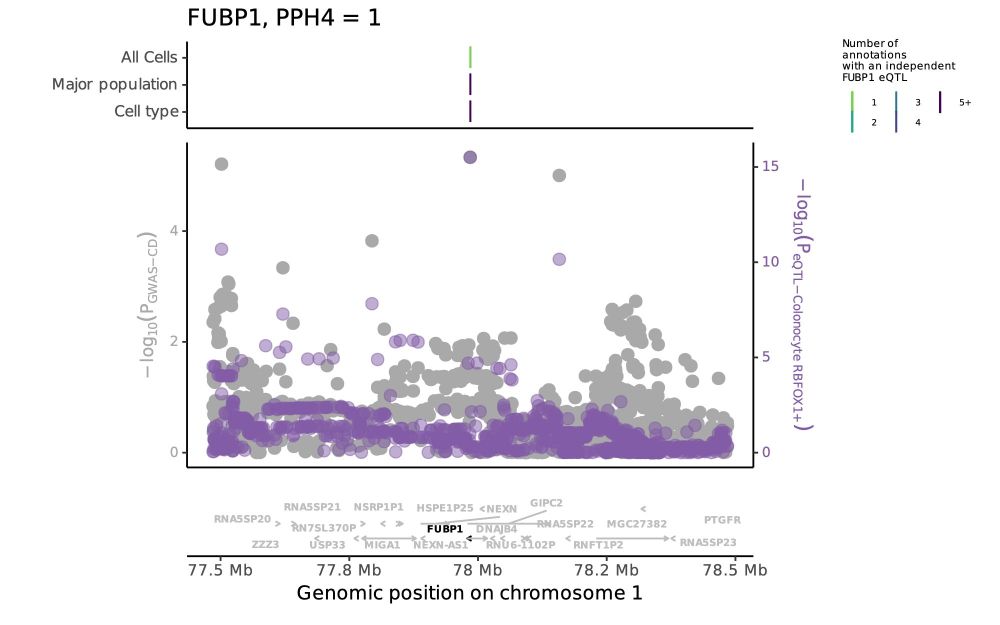
Another story which emerged was that many eQTLs for genes involved in Wnt signalling colocalised with independent IBD GWAS loci too! These included MYC (a cancer gene), RNF14 (eQTL only seen in inflamed bowels), FUBP1 (binds MYC) amongst others. These eQTLs were observed…
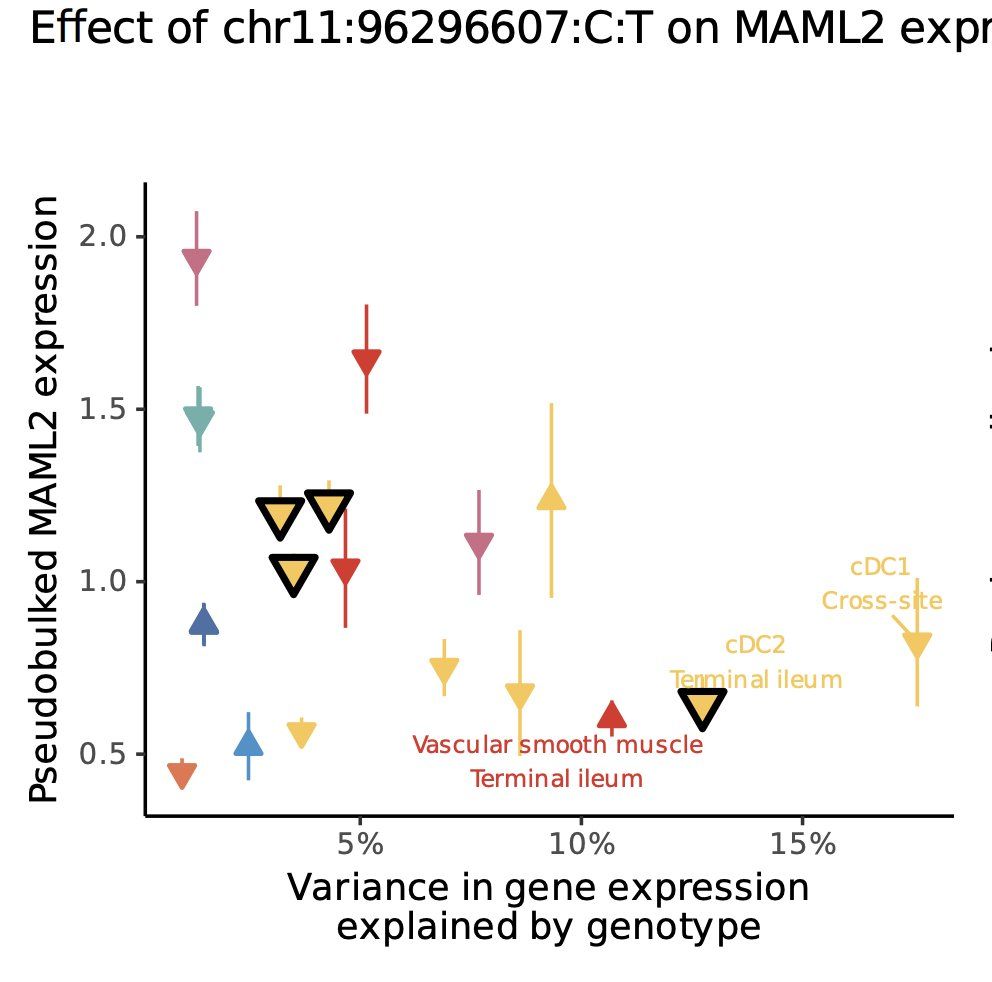
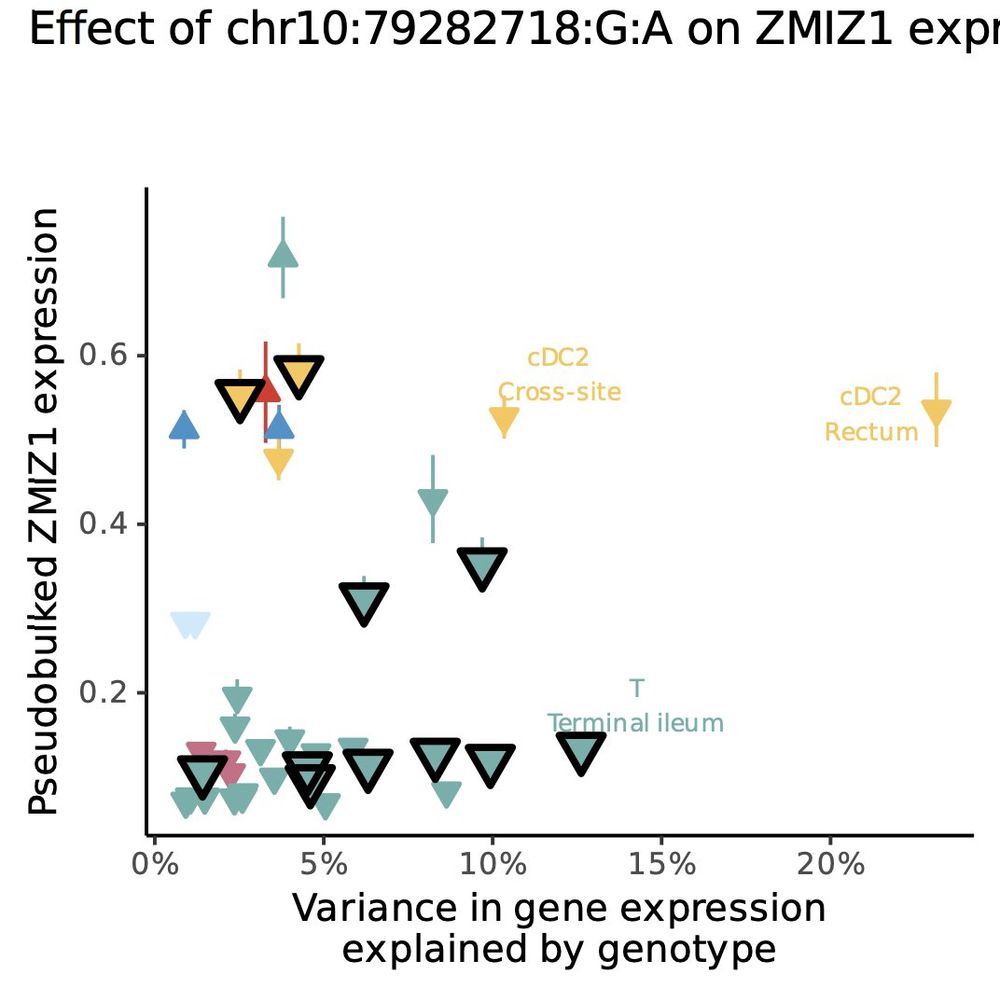
…by leaning on the diversity of cell types in our atlas AND the genotype data paired with each cell type, we were able to probe where the lead variant’s effect was strongest and identify likely effector cell types for these Notch pathway genes, which were both strongest in cDCs!
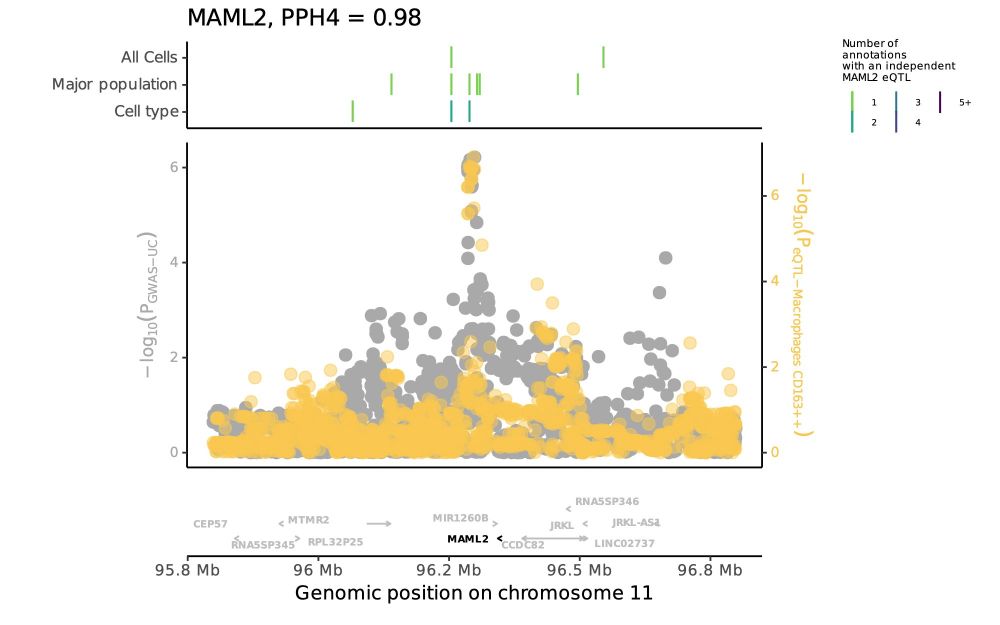
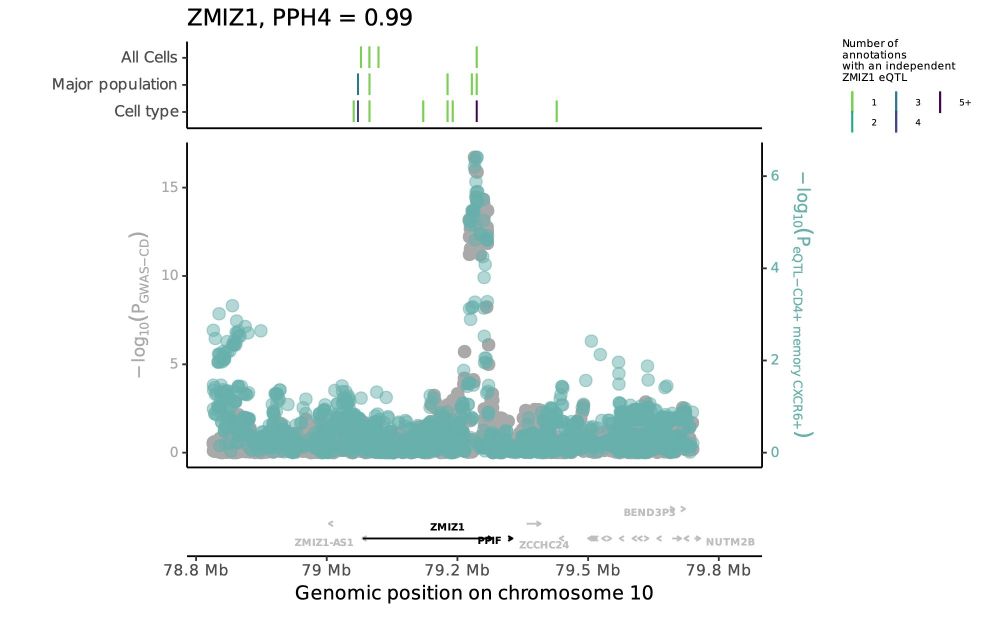
…MAML2 and ZMIZ1 (both key players in Notch signalling) - they each had an eQTL colocalise with an independent IBD GWAS locus, on chromosomes 11 and 10, respectively. And both showed the strongest evidence of colocalisation in very distinct cell types (T cells and macrophages) but…
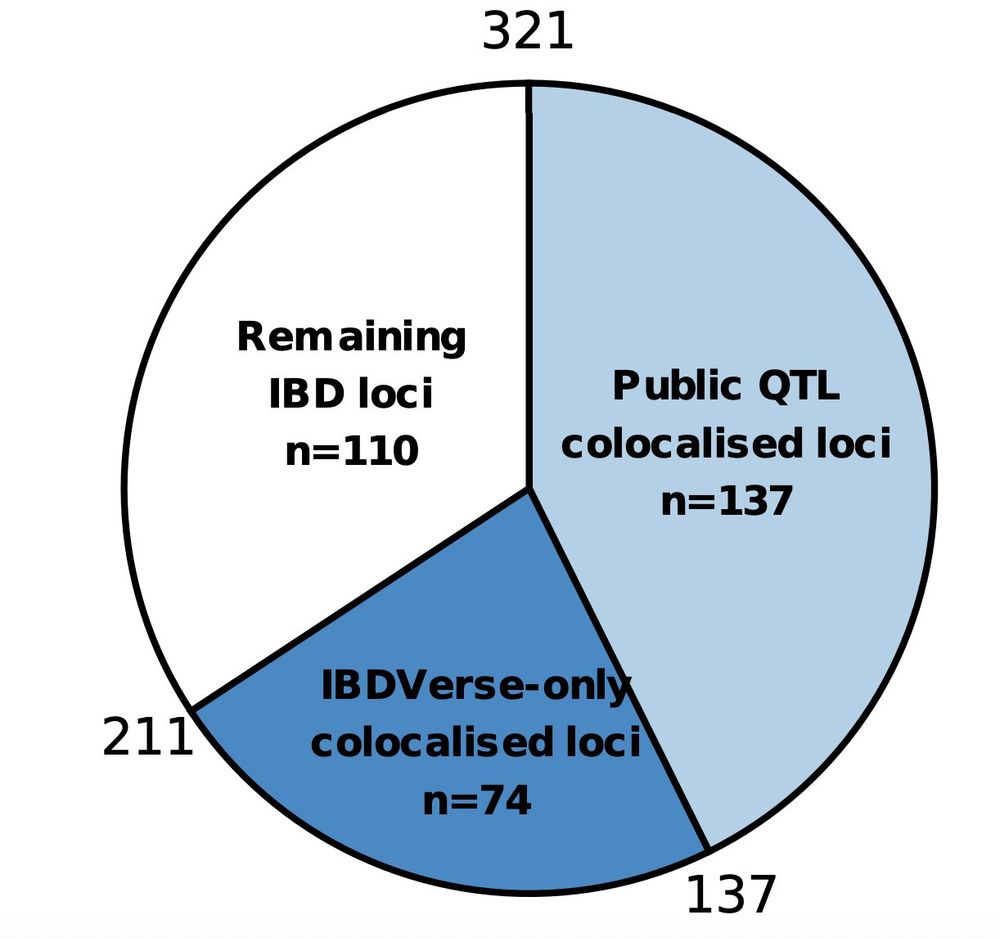
..and what we found was STRIKING! With our high resolution, IBD-relevant, single-cell data, our eQTLs colocalised with 74 (!) genomic regions where IBD genes couldn’t previously be found (more in
@bradleyomics.bsky.social
’s thread as to why we think this might be). These genes included…
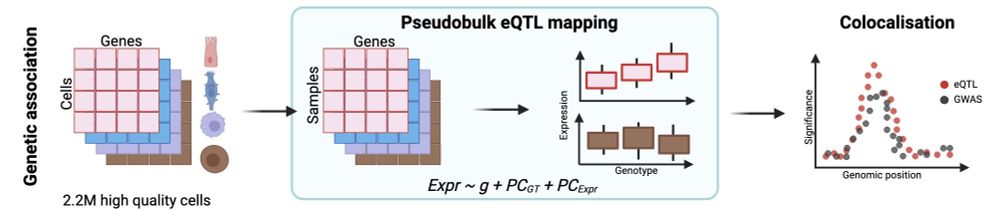
We used this atlas to map eQTLs (genome-wide association of genetic variants to gene expression) across the 86 cell types and 9 major populations in our atlas. With statistical colocalisation, we tested if our eQTLs were driven by the same genetic variants as IBD GWAS signals…
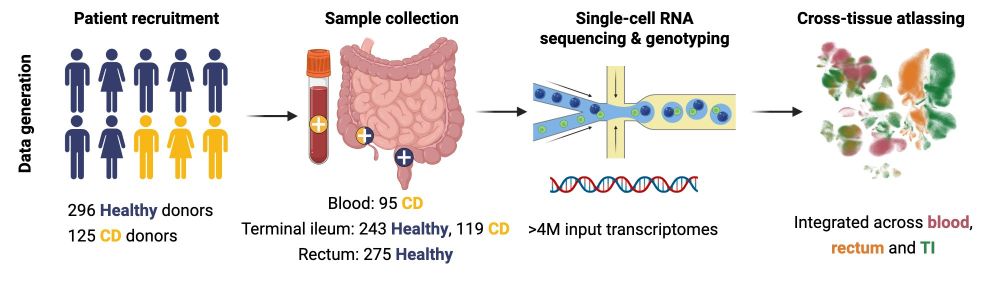
…as a result generated a HUGE cross-tissue single-cell atlas using the three most relevant tissues for IBD: terminal ileum (most frequently inflamed in Crohn’s), rectum (most frequently inflamed in colitis) and IBD blood (enriched for immune cells often tricky to find in gut).
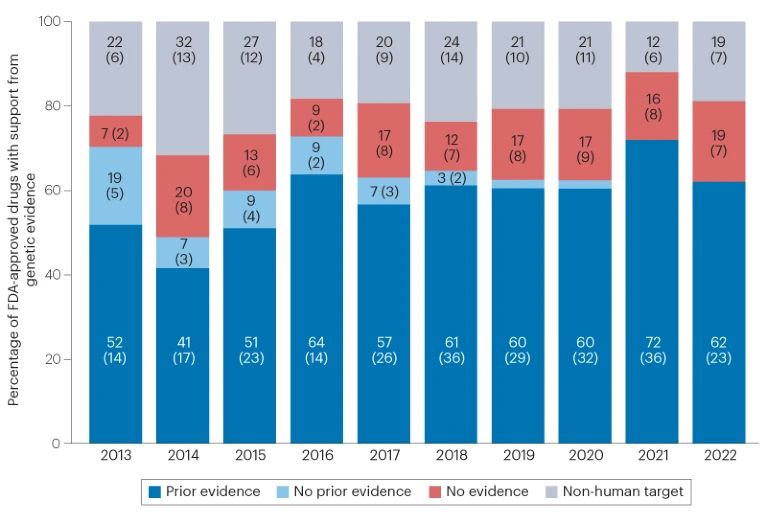
…thus there is a need for new IBD drugs to be developed. As reported by @OpenTargets and others, drug targets with genetic support are far more likely to be approved for use in the clinic. We set out to create a dataset for finding novel IBD genes supported by genetics and…
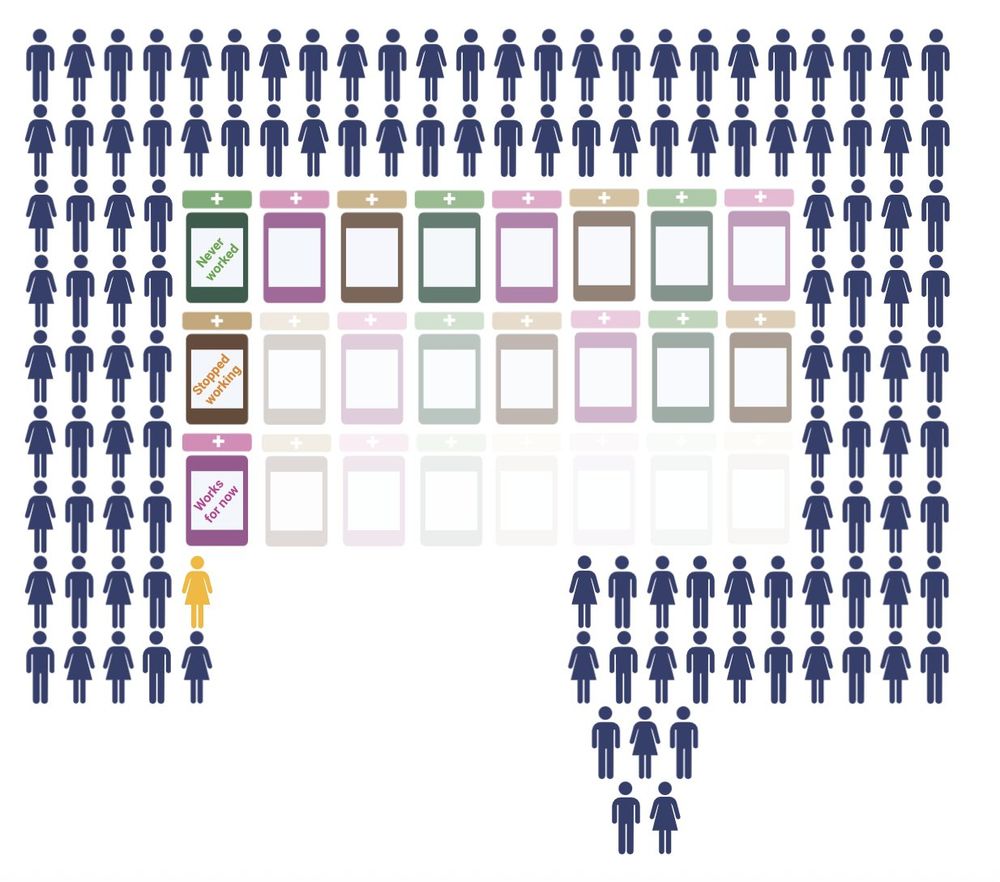
Inflammatory bowel diseases such as Crohn’s disease and ulcerative colitis are incurable, often debilitating diseases which affect 1 in 123 people in the UK. Whilst drugs exist to treat them, for many these can be ineffective or lose efficacy over time…