
We had a fantastic talk today with @ZhenggangZhu on "The Dopamine Pedal"! He presented fascinating research on how our brains drive us to overeat. Thank you for the insightful presentation! #Neuroscience #Dopamine #BrainResearch
10.12.2025 17:05
👍 1
🔁 1
💬 0
📌 0

Flyer for SYNAPSES Symposium (Thursday October 23rd at Room 116 at 100 College Street) with talks by Ann Rose Bright, PhD at 9:00am, Peter Hasenhuetl, PhD at 10:00am, Minhyeok Chang, PhD at 11:15am, and Zhenggang Zhu, PhD at 12:15pm. Registration QR code at top right.
Join us next Thursday (10/23) for #SYNAPSES, a senior postdoc symposium @yaleneuro.bsky.social @kavliatyale.bsky.social
Talks will be given by:
- @annrosebright.bsky.social, PhD👩🔬
- Peter Hasenhuetl, PhD 🔬
- Minhyeok Chang, PhD 🧑🔬
- @zhenggang.bsky.social, PhD 🥼
Register Today! Yale only.
16.10.2025 17:16
👍 5
🔁 6
💬 0
📌 0
Sign In
JavaScript is required. This web browser does not support JavaScript or JavaScript in this web browser is not enabled.
We’re hiring!
My new Gut–Brain Axis Lab at Northwestern is looking for a Research Technologist 2 to help build the lab and explore how the nervous system shapes gut health and disease.
🔬 Apply here: myhr.northwestern.edu/psp/hrnu/EMP...
30.09.2025 22:32
👍 43
🔁 23
💬 2
📌 1

Excited to share our latest paper - now out in @science.org - we showed how oxytocin modulates maternally-directed behavior in young mice (P15).
12.09.2025 15:21
👍 106
🔁 34
💬 4
📌 1
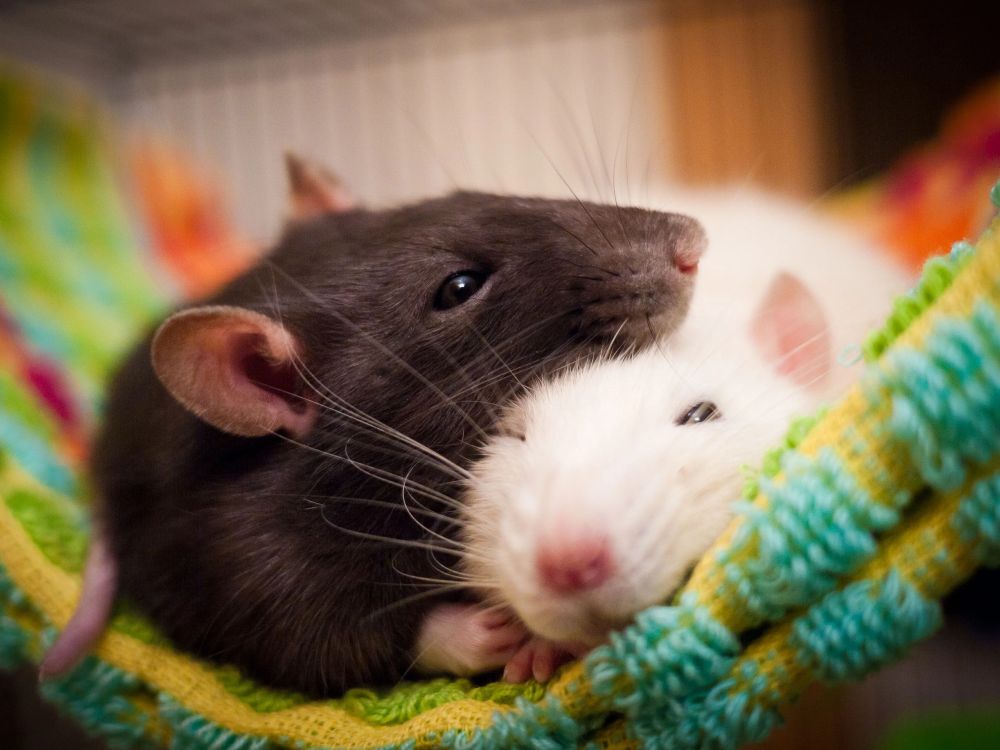
Proposal recommended for funding! Which means we have a fresh, 3-year-funded position available for a computational postdoc interested in studying dynamics of social interactions in rats, with simultaneous Neuropixels data to follow 🐀🐀🐀
Proper job ad pending, but email me if interested!
15.07.2025 20:54
👍 140
🔁 33
💬 1
📌 0
Congrats, Josh and Xiaowei!
14.05.2025 23:52
👍 3
🔁 0
💬 1
📌 0
Congratulations! Well deserved!
07.05.2025 17:08
👍 1
🔁 0
💬 0
📌 0
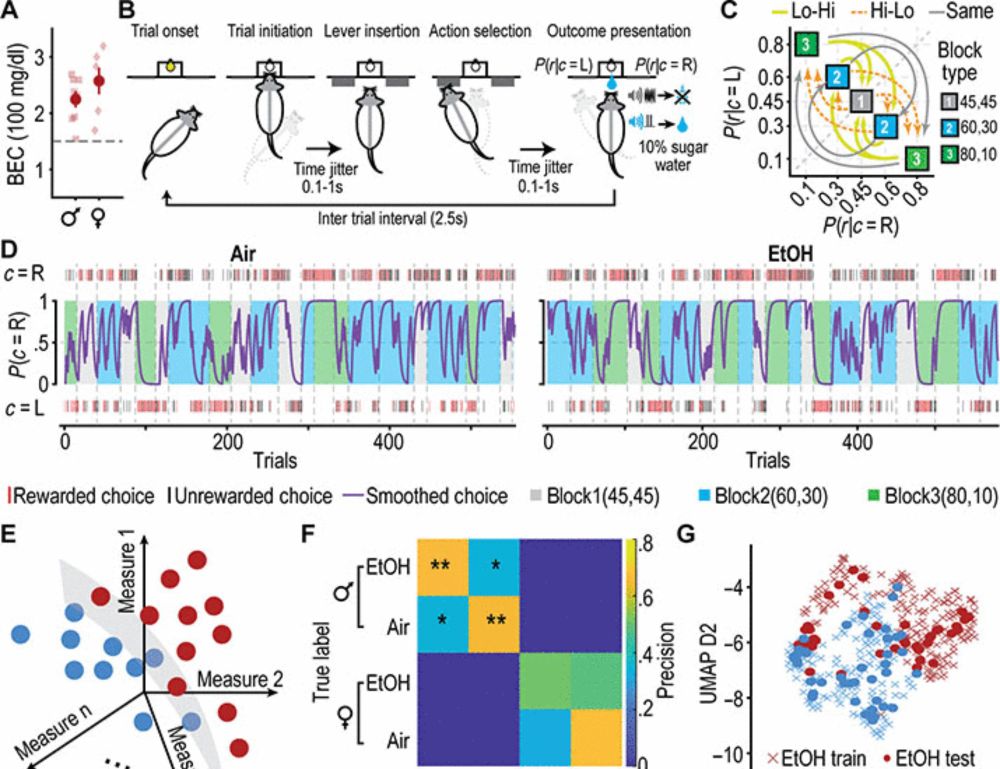
Chronic ethanol exposure produces sex-dependent impairments in value computations in the striatum
Chronic ethanol exposure disrupts adaptive decision-making and striatal neurocomputations in a sex-dependent manner.
Thrilled to share our work in ScienceAdvances: “Chronic ethanol exposure produces sex-dependent impairments in value computations in the striatum.” Huge thanks to Tricia @janaklab.bsky.social, Daeyeol @ungteoriz.bsky.social, Angela, and my friend Robin!
www.science.org/doi/full/10....
02.04.2025 21:03
👍 25
🔁 11
💬 1
📌 0

Many of us use 2p scopes to image 3D volumes of brain. But then we analyze the data plane by plane, resulting in duplicated neurons, missed neurons, and low s/n. Let's go 3D!
Suite3D: Volumetric cell detection for two-photon microscopy
by @haydari.bsky.social & team.
www.biorxiv.org/content/10.1...
01.04.2025 11:10
👍 90
🔁 27
💬 0
📌 2
Congrats! Very important work!
02.04.2025 19:33
👍 2
🔁 0
💬 0
📌 0
(n/n) This work wouldn’t have been possible without the incredible efforts of the entire Sternson Lab (@BrainCaRMA, @ronggong, @vicente-rodriguez.bsky.social) and many others—whose contributions have been invaluable. Special thanks to @hhmi.org and @ucsdmedschool.bsky.social. Thank you for reading!
30.03.2025 03:36
👍 2
🔁 0
💬 0
📌 0

(9/n) In short, our study shows that VTADA neurons encode food palatability at intermediate timescales, sustaining hedonic eating. Precise dopamine release timing is key for controlling the consumption phase, while GLP-1R activation during palatable food intake dampens this dopamine-driven effect
30.03.2025 03:29
👍 1
🔁 0
💬 1
📌 0

(8/n) We tested semaglutide (Ozempic), with a ramped daily dose to engage satiety pathways. Initially, it shortened feeding bouts and suppressed VTADA responses to palatable food. Yet as the dose increased, VTADA neurons rebounded—driving overconsumption, an effect reversed by targeted inhibition
30.03.2025 03:26
👍 1
🔁 0
💬 1
📌 0

(7/n) Do VTADA neurons truly sustain hedonic eating? We boosted their activity during feeding and observed a hedonic contrast effect: laser-OFF blocks elicited a negative response, while stimulation significantly prolonged feeding bouts. Conversely, suppressing VTADA neurons reduced bout duration
30.03.2025 03:22
👍 1
🔁 0
💬 1
📌 0
(6/n) Switching from high- to low-palatability food abruptly reduces feeding and VTADA signals—revealing a “hedonic contrast” effect—while lower-palatability food elicits shorter bout durations and negative DA responses. VTADA neurons may encode food palatability to sustain hedonic eating over time
30.03.2025 03:15
👍 1
🔁 0
💬 1
📌 0

(5/n) Prior work shows VTADA neurons respond to food cues, reward utility, and post-ingestion, yet how they encode palatability at intermediate timescales remains unclear. We found VTADA neurons remain active throughout palatable food consumption, with their activity scaling to palatability
30.03.2025 03:13
👍 1
🔁 0
💬 1
📌 0

(4/n) The VTA is diverse—its inhibitory VTAVGAT neurons can suppress VTADA cells. So how do the periLCVGLUT2 neurons fit in? We uncovered a pathway where periLCVGLUT2 neurons activate VTAVGAT neurons, which then dampen VTADA signaling to the nucleus accumbens by reducing dopamine release
30.03.2025 03:09
👍 2
🔁 0
💬 1
📌 0

(3/n) Our group discovered that the peri‐locus coeruleus (periLC), downstream of hunger centers, plays a key role in promoting hedonic eating via double-negative inhibition. But how exactly does it work? Intriguingly, we identified a direct periLC→VTA pathway that selectively prolongs feeding bouts
30.03.2025 03:05
👍 2
🔁 0
💬 1
📌 0

(2/n) Hedonic eating means indulging in food for pleasure rather than necessity—think of the “salted-nut phenomenon.” In our study, we offered a highly palatable Ensure alongside a less tasty version and found that the tastier option led to longer feeding bouts, though not more bouts overall
30.03.2025 02:58
👍 1
🔁 0
💬 1
📌 0

(1/n) Why is it so hard to stop eating when something tastes amazing? Our new @ science.org paper reveals that dopamine helps sustain our drive for tasty treats—and may explain how anti-obesity Ozempic tames those urges. doi.org/10.1126/science.adt0773
30.03.2025 02:51
👍 58
🔁 10
💬 2
📌 0
Congratulations!!! Truly grateful for your outstanding contribution!
29.03.2025 15:13
👍 1
🔁 1
💬 0
📌 0

Conjoint specification of action by neocortex and striatum
Park et al. show that motor cortex and subcortical striatum act in concert to specify
the movement parameters of a reach-to-pull action in mice.
Our paper from Junchol Park and collaborators that has been brewing for a while. Trying to capture our thinking about what action specification in striatum means and what would constitute evidence for such a model. Longer thread soon, but it’s online now. www.cell.com/neuron/fullt...
24.01.2025 01:34
👍 52
🔁 18
💬 1
📌 0
HCN1 channels in GABAergic amygdalar neurons underpin male-biased aggressive behaviors https://www.biorxiv.org/content/10.1101/2024.12.07.627305v1
08.12.2024 13:15
👍 14
🔁 3
💬 0
📌 1


