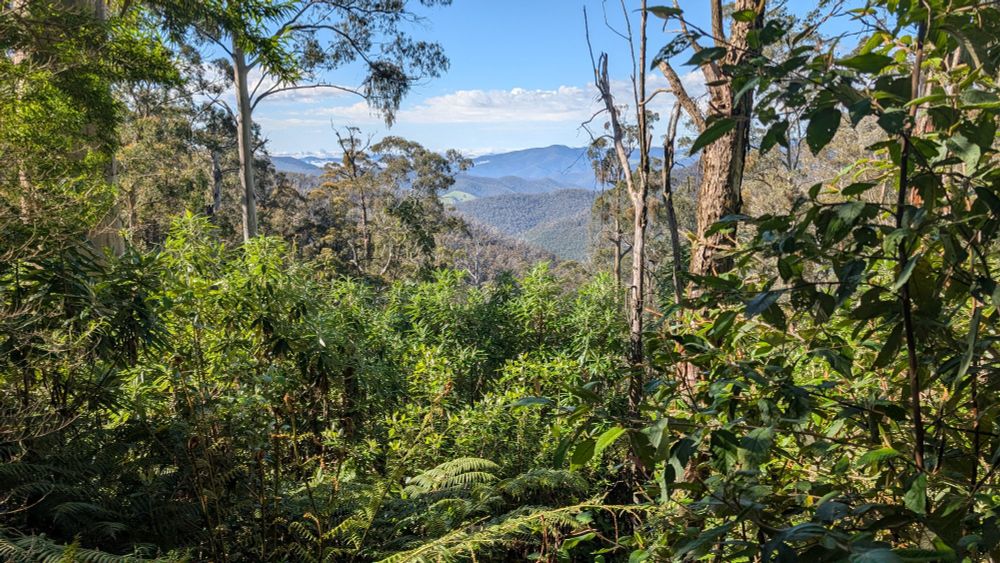
In her 1931 study of the life history of Calliphora ochracea (pictured above) she wrote that each day she would release the captive fly she was studying so it could "fly around the insectary in the sunlight for a period of time". I think this is so sweet!
11.12.2025 00:06
👍 1
🔁 0
💬 0
📌 0

Mary E. Fuller pioneered the field of carrion ecology. Her work was cited by Charles Elton in 1966 (The Pattern of Animal Communities) as "the only full-dress account of the whole community in natural carrion and its
stages of succession".
11.12.2025 00:06
👍 3
🔁 0
💬 1
📌 0

Some possible forms of sex-specific plasticity in each infection component and how they may lead to non-intuitive predictions for sex-biases in pathogen transmission. Using a horizontally transmitted pathogen as an example, transmission capacity through each sex depends on the sex-specific differences in host susceptibility, pathogen loads, and death rates. Hypothetically, each component could have a unique form of sex-specific plasticity – susceptibility might be plastic only for males (i.e., sex-specific), equally plastic in both sexes in the same direction (i.e., equivalent), and equally plastic in both sexes but in opposing directions (i.e., divergent). Yet considering overall disease spread would suggest a strong male-bias in transmission in environment 1, but no bias at all in environment 2, and that this shift in the extent of the ‘sicker sex’ (in regard to the sex where pathogen transmission is highest) would be underpinned entirely by plasticity in male transmission only.
🆕 in "Ecology": Who spreads more disease - males or females? At least in water fleas, it depends on temperature
📄The sicker sex is plastic: Thermal plasticity determines sex biases in pathogen transmission
doi.org/10.1002/ecy....
25.11.2025 20:16
👍 13
🔁 10
💬 0
📌 0
The courtship display of Apotropina ornatipennis (Diptera: Chloropidae) from Australia
YouTube video by Nathan
New preprint!
Courtship choreography is stabilised among genetically isolated populations
Check out the mesmerising courtship display of Apotropina ornatipennis (Diptera: Chloropidae)
doi.org/10.1101/2025...
with @bioblake.bsky.social, @angmcgaughran.bsky.social, @thekeithing.bsky.social, et al
11.09.2025 09:59
👍 9
🔁 4
💬 0
📌 0
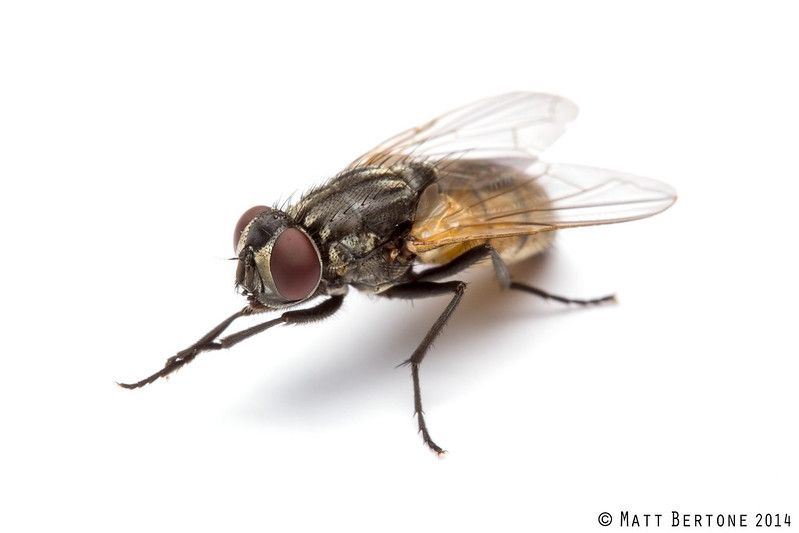
The house fly (Musca domestica). Credit Matt Bertone 2014.
"The house fly is a migrant, and it appears to suffer from an incurable case of wanderlust. The fly is born in a mass of filth, being, according to one philosopher, the resurrection, the reincarnation of man's own dirt and carelessness" - Murvosh & Thaggard 1966 Ann Ento Soc Am. Photo by M. Bertone
22.04.2025 23:09
👍 2
🔁 1
💬 0
📌 0

Carrion‐breeding flies of Australia and New Zealand: A review and key to adults
Carrion-breeding flies are diverse with over 70 species in the Australasian/Oceanian region, predominantly from the families Calliphoridae and Sarcophagidae. These flies play crucial roles in ecosyst....
Excited to have this one published!
Carrion-breeding flies of Australia and New Zealand: A review and key to adults.
We summarise over a century of information on the ecology and physiology of the many beautiful carrion flies 🪰
An enormous effort led by Nikolas Johnston
doi.org/10.1111/aen....
14.03.2025 01:55
👍 11
🔁 1
💬 0
📌 1

A large black asiloid fly with blue eyes, white stripes on the thorax, and red-tinted legs.
I'm Nathan - I research and photograph bugs. To start my bluesky account, here is a cool fly I found from Raglan, New Zealand. 🦟
02.12.2024 03:16
👍 25
🔁 0
💬 1
📌 0
One of the #strangerthings find in the Upside Down, whoops I mean #DownUnder is the Western Clawless Upside-down fly - Nothoasteia clausa. Always facing down, they dart around inside Xanthorrhoea grass trees. I'm looking forward to exploring the mystery of their relationships to other #Diptera
02.12.2024 02:59
👍 14
🔁 5
💬 1
📌 0
Incredible news! Huge congratulations Shawan! 🪲🎉
02.12.2024 01:21
👍 1
🔁 0
💬 1
📌 0

A dream comes true! In Feb'25, I will join @MonashUni as a group leader on Global Change Biology. Our lab's primary focus will be understanding how animals respond to global change using heterogeneous data and developing an efficient conservation plan to mitigate the impact. (1/3)
26.11.2024 02:14
👍 92
🔁 6
💬 14
📌 0