Free-meal eligibility for families on Universal Credit should therefore be widened to all children in the early years - regardless of setting or hours attended.
13.06.2025 11:10
👍 0
🔁 1
💬 1
📌 0

Auto-enrol eligible children for free school meals, government told
Free school meals will remain a "postcode lottery" unless the government automatically enrols disadvantaged families, a report has warned.
Our new @nuffieldfoundation.org funded report on free school meals (FSM) and free early years meals (FEYM) reveals significant variation in whether nurseries across England provide free early years meals to children living in poverty.
www.bigissue.com/news/social-...
13.06.2025 11:10
👍 3
🔁 3
💬 1
📌 1
The expansion in FSM eligibility is a positive step but without a national system of auto-enrolment disadvantaged children will continue to miss out on the meals they are entitled to. See our latest research out today 👇🏻 #freeschoolmeals #FSM
12.06.2025 14:10
👍 3
🔁 0
💬 0
📌 0
Exciting opportunity to work on this important report with the @suttontrust.bsky.social
25.02.2025 07:13
👍 6
🔁 5
💬 0
📌 0
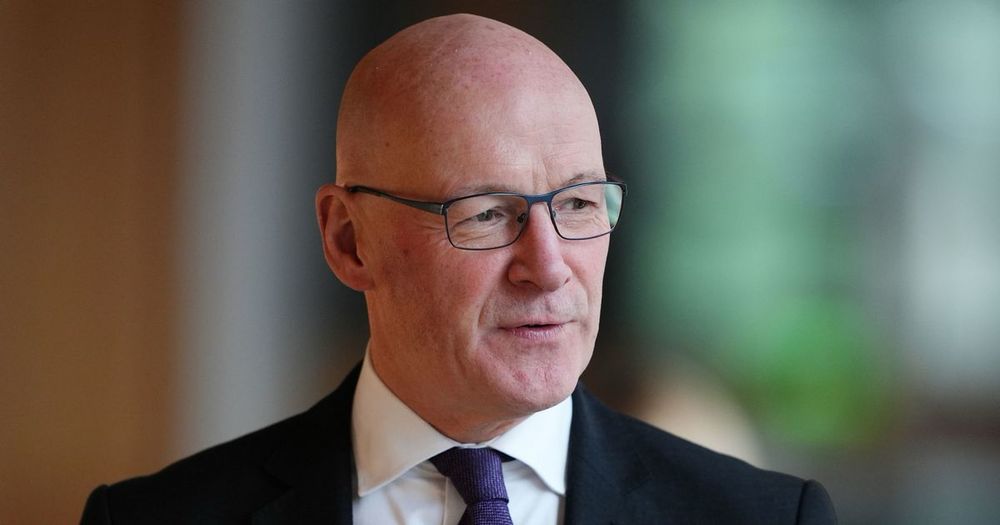
John Swinney to lift two child benefit cap in Budget announcement
The Scottish Government will move to scrap a policy critics say pushes families into poverty.
This is absolutely huge from the Scottish Parliament. Combined with the Scottish Child Payment it means a family with 3 children on Universal Credit will be *£7k* per year better off than if they lived in England. And we know that will make a massive difference www.dailyrecord.co.uk/news/politic...
04.12.2024 18:06
👍 51
🔁 23
💬 4
📌 1
Check out our new report on networks of headteachers and schools👇
26.11.2024 10:45
👍 1
🔁 3
💬 0
📌 0

The Knowledge: Early years food poverty and how to address it
A new EPI report calls on government to close the gap between meal provision in schools and in the early years
Why do we have free meals for early primary children but not for our pre-school children? We know nutrition in early years is vital for healthy development and we know under-fives face higher risk of food poverty - my piece in @schoolsweek.bsky.social schoolsweek.co.uk/early-years-...
28.11.2024 10:42
👍 9
🔁 5
💬 1
📌 1
We need to talk about #foodpoverty in the #earlyyears - under-fives are more likely to face food poverty which is damaging for early development - see our new report on this important but neglected topic
28.11.2024 10:35
👍 4
🔁 4
💬 0
📌 0
Some really interesting analysis by Jenna Fowler using machine learning to predict FSM under-registration #freeschoolmeals
21.11.2024 14:22
👍 0
🔁 1
💬 0
📌 0

▶️Data suggests in local authorities on the map shaded in red, registration for FSM is lower than expected, compared to deprivation (IDACI) rates.
21.11.2024 09:48
👍 1
🔁 1
💬 1
📌 0
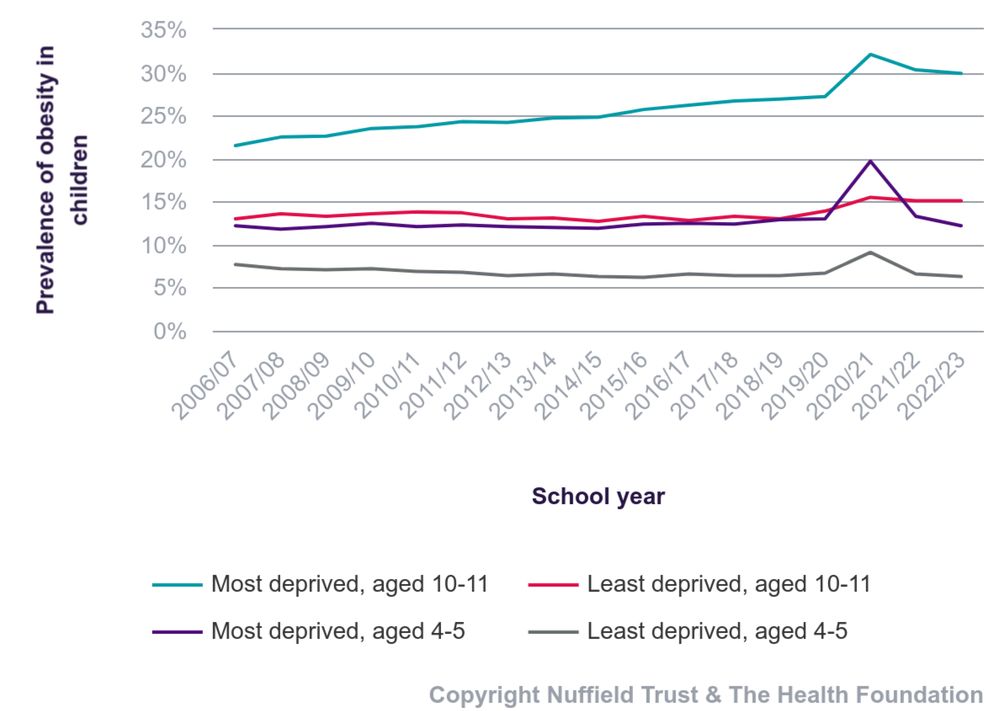
There is a strong association between deprivation and #obesity in children.
For both reception and year 6 children in 2022/23, the prevalence of obesity in the most deprived areas was double the value in the least deprived areas.
Find out more: www.nuffieldtrust.org.uk/resource/obe...
19.11.2024 15:00
👍 16
🔁 7
💬 0
📌 1
Not quite back to 1937, but you can see the gradual decline over 60 years here from @jrf-uk.bsky.social's Guarantee our Essentials Full Report at www.jrf.org.uk/social-secur...
18.11.2024 08:43
👍 11
🔁 7
💬 0
📌 2
Speaking at the launch paper for Unsung Britain, Abigail McKnight discusses the disproportionate burden of care borne by women.
Just as women in low-to-middle income families are participating in the labour market more, might caring responsibilities reverse that trend?
👉 buff.ly/3Yycpj6
15.11.2024 10:12
👍 9
🔁 3
💬 0
📌 0

📝New report by EPI published today examines the impact of the national phonics screening check (PSC) on early reading development in primary schools across England
Read the full report▶️ epi.org.uk/wp-content/u...
05.11.2024 18:23
👍 2
🔁 2
💬 0
📌 0
The living standards of low-to-middle income Britain changed significantly since the mid-1990s.
After about a decade of significant growth, income growth has stagnated since the mid-2000s.
Here are the key things you need to know ⬇️
14.11.2024 16:13
👍 8
🔁 3
💬 0
📌 0