

Our phylogenetic classification of >400 diatom genera is now published in Journal of Phycology.
onlinelibrary.wiley.com/doi/10.1111/...
07.03.2026 04:23
👍 22
🔁 10
💬 1
📌 3
Our phylogenetic classification of >400 diatom genera is now published in Journal of Phycology.
onlinelibrary.wiley.com/doi/10.1111/...

MicroSEA (Microbial Sea Eukaryotes) course is a one-week, field-based summer school to train early-career researchers in the diversity, ecology, and single-cell biology of marine protists. MicroSEA course integrates lectures, field sampling, and lab-based practicals in advanced techniques, such as flow cytometry, microscopy, culturing, and molecular analysis. The main objectives of MicroSEA course are: Fostering a deep understanding of marine protist diversity, ecology and biology; Providing hands-on training in advanced single-cell methods that are not commonly available in university programs; Building participants' confidence in designing and conducting research projects from field to data analysis; Promoting international collaborations and peer networking among students and speakers/trainers. The course will take place at the Station Biologique de Roscoff - SBR (France) - 7th to 12th of June, 2026 (arrival on the 6th, departure on the 13th). 20 participants will be selected, including 10 from EuroMarine member institutes. https://opbc.sciencesconf.org/
Protist lovers: Please apply for a week of rhapsody! Learn by doing:
MicroSEA (Microbial Sea Eukaryotes) course is a one-week, field-based summer school to train early-career researchers in the diversity, ecology, and single-cell biology of marine protists. opbc.sciencesconf.org
#protistsonsky

Why did consciousness evolve at all? A superb special issue of @royalsocietypublishing.org brings together experts across disciplines to explore the functions of consciousness and why it emerged in some species but not others. @tecumsehfitch.bsky.social royalsocietypublishing.org/rstb/issue/3...

Left: schematic evolutionary tree of eukaryotes highlighting the position of apusomonads close to opisthokonts. Right: Simple schematic representation of the cell of apusomonads.
Discovery of a photophobic response in #Apusomonads reveals insights into Opisthokont origins phys.org/news/2026-02...
New #ISEPpapers! Photophobic response in Podomonas kaiyoae is mediated by coordination of cilia, actin filaments: Aika Shibata et al. www.nature.com/articles/s42...
#Protists


Comparative Genomics of Unicellular Eukaryotes (San Feliu, Spain):
Abstract submission is open, with a short deadline! comparativegenomics2026.com
Join us as we explore the most diverse, surprising, and still largely uncharted branches of the eukaryotic tree.
The day is finally here!! On behalf of all the co-organizers the Comparative Genomics of Unicellular Eukaryotes website is open.
comparativegenomics2026.com
Invited speakers will be added to the website in the coming weeks. Watch this (well, that^) space!


Our research scientist Núria Ros-Rocher won the 1st prize @zeiss-microscopy.bsky.social microscopy contest with this beautiful choano colony www.zeiss.fr/microscopie/... 🥳
C. flexa might not yet be a genetic model, but it is now at least a calendar model, which counts for something. I think.

Thanks @jcellsci.bsky.social for this opportunity to contribute to your centenary collection with our take on the state of the field - 10 years after its modern reincarnation 🧪🌍
W/ @alebenoit.bsky.social @eelcotromer.bsky.social @fritzlaylin.bsky.social
journals.biologists.com/jcs/article/...
Lets find a culture! They are a scarce sadly…

Are you very busy but still want to learn what Aphelids are and why they are important to understand the evolution of Fungi?
Then check out our “Quick guide” on Aphelids published in collaboration with @deemteam.bsky.social, Sergey and Guifré. #protistsonsky
doi.org/10.1016/j.cu...

With our old friends Sergey, Luis and Guifré, we have published a minireview in @currentbiology.bsky.social about aphelids, the sister group to fungi, including why we think they are not fungi but, nevertheless, key to understand early fungal evolution.
authors.elsevier.com/a/1mH793QW8S...

Call for Letters of Intent - HFSP Research Grants 2027
Attention scientists from all over the world🙃
The Call for Letters of Intent for #HFSPResearchGrants 2027 is now open! 🧪
Get your international & interdisciplinary team. It's time to put your bold research idea into practice!
🔗https://bit.ly/48VsGCG
📅 15 Dec 2025–26 Mar 2026
#sts #LifeSciences

Save the date! The next instalment of Comparative Genomics of Unicellular Eukaryotes is a GO! Join us next year for a programme of talks, posters, ECR/networking activities.
Website and registration details to follow in the coming weeks.
See you October 5-10 2026 in beautiful San Feliu!!
So happy to announce our new preprint, “A geothermal amoeba sets a new upper temperature limit for eukaryotes.” We cultured a novel amoeba from Lassen Volcanic NP (CA, USA) that divides at 63°C (145°F) 🔥 - a new record for euk growth!
#protistsonsky 🧵


Is it a flagellate? A tiny ball with tentacles? Contamination in my ciliate culture? NEW SUPERGROUP OF EUKARYOTES? Yes to all 4! Meet Solarion - just out in #Nature doi.org/10.1038/s415... Huge congrats to Marek Valt, Cepicka Lab & the star team! Very happy to be part of this project. #ProtistsOnSky
How do cells adapt morphology to function? In a 🔥 preprint by @zjmaggiexu.bsky.social , with @dudinlab.bsky.social and @amyweeks.bsky.social , we identify a self-organizing single-cell morphology circuit that optimizes the feeding trap structure of the suctorian P. collini. 🧵 tinyurl.com/4k8nv926

Out today, our take on 6-methyladenine #6mA evolution in Eukaryotes @natgenet.nature.com. We asked a simple question, is really DNA 6mA common across the eukaryotes? The answer is "yes" if you're a unicellular eukaryote 🦠, not so if you're multicellular 🐝🌱🍄. www.nature.com/articles/s41... 1/9
Wow! Congrats @fmikus.bsky.social @gautamdey.bsky.social @dudinlab.bsky.social and all authors! Superb resource!
🚨Our collaboration with @centriolelab.bsky.social & @gautamdey.bsky.social is out today in @cp-cell.bsky.social
We show that #Expansion #Microscopy is a broad-spectrum modality for Euks, enabling 3D phenotypic maps rooted to phylogeny.
#ProtistsOnSky #SciComm #SciSky
www.cell.com/cell/fulltex...

Now online! Charting the landscape of cytoskeletal diversity in microbial eukaryotes

New publication: "A novel taxonomic database for eukaryotic mitochondrial cytochrome oxidase subunit I gene #eKOI, with a focus on #protists diversity" with Daniel Vaulot @daniel-vaulot.bsky.social from @biovitenskap.bsky.social
Published in Database by @oxfordacademic.bsky.social
Amazing work! Congrats!
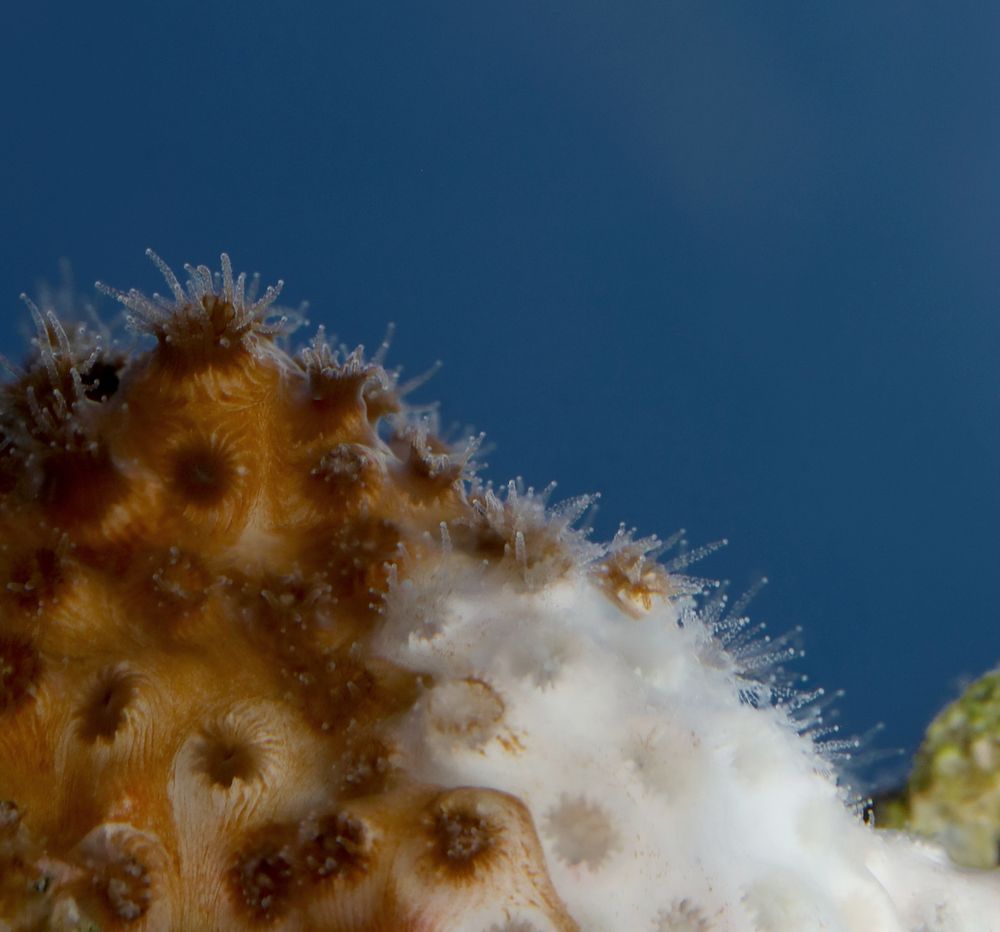
We are happy to share our latest work in @nature.com . We study the genomic and cellular basis of facultative symbiosis in Oculina patagonica - a Mediterranean coral remarkable for its ability to survive long periods without algal symbionts. Led by Shani Levy and @xgrau.bsky.social
rdcu.be/eLbaZ
Thank you Varsha!

Just 5 more days left to apply to the Workshop on Genomics 2026, in Cesky Krumov, Czechia! evomics.org/apply-worksh... (Deadline 20th of October) Do not miss your chance! 💻🤗 #Bioinformatics #Genomics #evomics2026
Thank you Felipe!
Muchas gracias!!

Online now!!! Apusomonad rhodopsins: A new family of ultraviolet to blue light–absorbing rhodopsin channels www.pnas.org/doi/10.1073/...
Our study on the first rhodopsin channels known to respond to UV light is now published in PNAS! And they come from our favourite protists, apusomonads! #protistonsky
www.pnas.org/doi/full/10....
#protistonsky

